51 Matching Annotations
  1. Dec 2019
    1. who created great suicidal dramas on the appartment cliff-banks of the Hudson under the wartime blue floodlight of the moon & their heads shall be crowned with laurel in oblivion

      Wearing a crown of laurel is a reference to Ancient Greece and Rome, only those who does something heroic gets one. So is the speaker telling us that if they commit suicide they would be given a crown of laurel because they were being heroic for killing themself?
    2. who poverty and tatters and hollow-eyed and high sat up smoking in the supernatural darkness of cold-water flats floating across the tops of cities contemplating jazz,

      Each line in this section of the poem describes the action of the "best minds" of the speaker's generation. These people are poor, and/ or on drugs, these people don't seem to be sober or thinking clearly (which adds to the dream-like language of this poem). It seems that "the best minds" could be many different people.

    3. yacketayakking screaming vomiting whispering facts and memories and anecdotes and eyeball kicks and shocks of hospitals and jails and wars,

      I wonder if the speaker is using the word "vomiting" metaphorically here in this line because it seems that there's a lot of talking going on. Also, since there are no commas, everything feels so fast paced.

    1. Oh, let’s build bridges everywhere And span the gulf of challenge there.

      The way this poem ends feel cynical to me because of the last line. By ending the poem with “span the gulf of challenge there” it’s as if the speaker is sarcastically expressing that the idea of “building a bridge” will actually bring more challenges.

    2. You do not know the monster men      Inhabiting the earth, Be still, be still, my precious child,      I must not give you birth!

      The speaker doesn’t want to let the child “in” because they don’t want them to be born into a world that is full of monstrous people who will not understand them.

    1. Your soul leaps up—and flashes Star-like, white, flame-hot.

      It seems that Inez is a performer of some sort, and they are in the spot light performing successfully.

    2. You need me, Christ! It is no roseate dream That beckons me—this pretty futile seam, It stifles me—God, must I sit and sew?

      The speaker feels their potential is being wasted by doing this type of homely task, they feel they can serve more of a purpose, especially during war time. At the end of the poem, the speaker seems resentful.

    1. And he’d be dancin’ black and naked and gleaming. And he’d have rings in his ears and on his nose And bracelets and necklaces of elephants’ teeth. Gee, I bet he’d be beautiful then all right.

      The speaker is visualizing what this man would look like if he were in a jungle. His appearance is connected to his culture, the yellow gloves and swallow tail coat represents his assimilation to America. Where the face piercing, elephant teeth jewelry, and nudeness represents his and the speaker’s true culture.

    2. I saw a darky dressed fit to kill In yellow gloves and swallow tail coat And swirling a cane. And everyone Was laughing at him. Me too, At first, till I saw his face

      The speaker, along with everyone else around him, seems to be amused by this person’s way of dressing.

  2. Nov 2019
    1. Singin’ in de moonlight, Sobbin’ in de dark. Singin’, sobbin’, strummin’ slow … Singin’ slow, sobbin’ low. Strummin’, strummin’, strummin’ slow … Words are bright bugles That make the shining for my song,

      Bennett is using the “low-down folks” dialect, and it’s a poem about music. She’s celebrating her cultural heritage by writing these lines in this way (I’m assuming she’s writing about jazz music), I wonder if she was inspired by Hughes’ “The Weary Blues”, they seem to be similar in themes and tone.

    2. Sighing to the stars With tendrils drinking at the Nile … I want to feel the surging Of my sad people’s soul

      A reference to the Nile, just like in Langston Hughes’ “The Negro Speaks of Rivers”. In this poem it seems that the Nile is a connection to the African American heritage. Bennett is expressing her desire to experience her racial heritage in this poem.

    3. Upon a Chinese shelf. And let us be contained By entities of Self … Not still with lethargy and sloth, But quiet with the pushing of our growth. Not self-contained with smug identity But conscious of the strength in entity.

      Gwendolyn B. Bennett is using rhymes in this poem, but don’t think there’s a set pattern or form to the rhyme scheme. The rhyming does give the poem a flow to it, and the rhyming seems more natural.

    1. St. Peter said, “Well, You got back quick. How’s de devil? An’ what’s His latest trick?” An’ Slim Say, “Peter, I really cain’t tell, The place was Dixie That I took for hell.”

      The things that Slim saw were things that many southern African Americans witnessed and experience during that time, it seems that Brown is explaining what living in the south was like during that time. These things are the “push factors” for African Americans, they are the reasons why people decided to migrate north.

    2. Dere wasn’t much more de fellow say: She jes’ gits hold of us dataway.

      The speaker here is stating that what Ma Rainey does simply cannot be put into words, she creates more of a resonating feeling. The poem captures some of that feeling, but by ending it this way the speaker is trying to express that her music is so much more powerful live.

    3. O Ma Rainey, Sing yo’ song; Now you’s back Whah you belong, Git way inside us, Keep us strong. . . . O Ma Rainey,

      This poem is like an ode to Ma Rainey’s music, in subject matter, but it is written without a specific form. The poem is written in a language used by the “low-down folks” it’s in their perspective, and it’s a celebration of an artist who addresses issues they understand and relate to. In these lines the poet uses the word ‘us’ as an indication of a shared experience, because they are all there witnessing Ma Rainey healing souls with her songs.

    1. O Blues! Swaying to and fro on his rickety stool He played that sad raggy tune like a musical fool. Sweet Blues! Coming from a black man’s soul. O Blues! In a deep song voice with a melancholy tone

      The form of this poem is free and it isn't bound by structure, like Jazz music. This music is coming from the soul of the musician because it's not how the music is played, but how the musician expresses it.

    2. I am the darker brother. They send me to eat in the kitchen When company comes, But I laugh, And eat well, And grow strong.

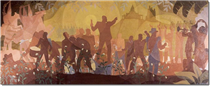
      The color of the speaker's skin and how they are sent to eat in the kitchen indicates that the speaker is a slave, but the speaker is expressing that they and their people will grow strong despite that. This image by Aaron Douglas depicts the progression of African Americans from slavery to the new negro movement, supporting the idea presented in the poem.

    3. What happens to a dream deferred? Does it dry up

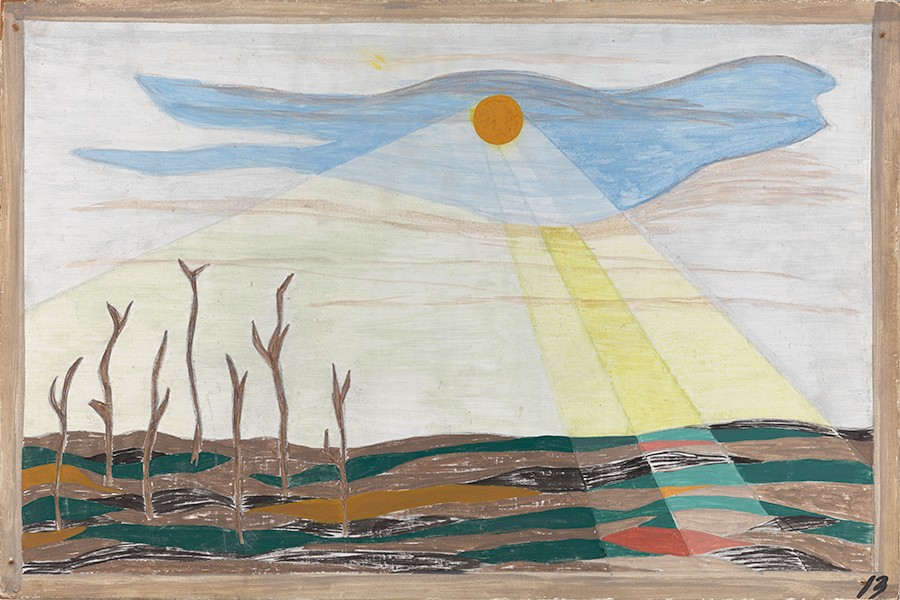
      In the south many African Americans worked in the field, but once the conditions started to change (due to natural factors like boll weevils) the field was no longer providing crops. The dying field is like a symbol of the people's source of living , dreams of prosperity, and their opportunities are as dry and dead as the crops on these failing farms.

  3. Oct 2019
    1. Here is no water but only rock Rock and no water and the sandy road The road winding above among the mountains Which are mountains of rock without water If there were water we should stop and drink Amongst the rock one cannot stop or think

      The way Mordor was depicted in the Lord of the Rings movie alluded to the fact that it was a dry desolate land, and there was no water to drink (and I keep thinking about that scene where Frodo was super dehydrated when he was nearing Mt. Doom, and Sam gave him the little amount of water he had left). When I imagine a waste land in “What the Thunder Said” I think of this scene from the movie. There’s thunder and lightning, but the land is dry and it never rains. The only kind of creature that makes up this waste land are monsters, in the gif the monsters are "fell beasts" flying around.

    2.   Madame Sosostris, famous clairvoyante, Had a bad cold, nevertheless Is known to be the wisest woman in Europe, With a wicked pack of cards. Here, said she, Is your card, the drowned Phoenician Sailor

      I remember this image feeling very mystic when I first saw it because of how the loops extend from the head. This lithograph by Odilon Redon, Oannès: Moi, la première conscience de chaos (translation from French: I, the First Consciousness of Chaos), is in black and white, which gives the image an ominous aura about it. The figure looks like a spooky clairvoyant to me, with the eyes closed it’s like the figure is doing a reading. The figure is surrounded by a dark void, and on the area of the figure's shoulders, the round objects look like eyeballs. The eyeballs are what sees the "wicked pack of cards".

    3. Summer surprised us, coming over the Starnbergersee With a shower of rain; we stopped in the colonnade, And went on in sunlight, into the Hofgarten, And drank coffee, and talked for an hour.

      “I WENT to the dances at Chandlerville,/ And played snap-out at Winchester./ One time we changed partners,/ Driving home in the moonlight of middle June"

      Just like Edger Lee Master’s poem “Lucinda Matlock” the speaker here seems to be recalling a memory from their past. Both speakers have feelings of nostalgia for simpler times in their lives. Both lines are about summertime, and in a way they both feel like a contrast to the cold of winter.

    1. Those are pearls that were his eyes. “Are you alive, or not? Is there nothing in your head?”                                                                            But O O O O that Shakespeherian Rag—

      Isn't this a line from The Tempest? I think is it because a couple of lines later Shakespeare is mentioned.

    2.   “My nerves are bad tonight. Yes, bad. Stay with me. “Speak to me. Why do you never speak. Speak.   “What are you thinking of? What thinking? What? “I never know what you are thinking. Think.”

      The speaker seems to be having a nervous/ mental break down here. Is there only one speaker in this poem, who are they speaking to?

    3. The Chair she sat in, like a burnished throne, Glowed on the marble, where the glass Held up by standards wrought with fruited vines From which a golden Cupidon peeped out (Another hid his eyes behind his wing) Doubled the flames of sevenbranched candelabra Reflecting light upon the table as The glitter of her jewels rose to meet it, From satin cases poured in rich profusion; In vials of ivory and coloured glass

      The imagery Eliot describes here is very opulent, the woman must be very wealthy.

    4. “That corpse you planted last year in your garden, “Has it begun to sprout? Will it bloom this year?

      Is the speaker referring to an actual corpse because Belladonna was mentioned earlier in the poem (when the belladonna blooms it smells like a corpse); however, the Belladonna that was mentioned was a reference to a person. Now I'm wondering if the corpse is literal or figurative, this is confusing me a little here.

    5. “You gave me hyacinths first a year ago; “They called me the hyacinth girl.”

      Is the speaker now speaking to someone, in the poem, or did someone say this to the speaker?

    6. Summer surprised us, coming over the Starnbergersee With a shower of rain; we stopped in the colonnade, And went on in sunlight, into the Hofgarten,

      I looked up "Starnberfersee" and 'Hofgarten', they are both located in Germany, which explains the German phrases that followed. Gives me an indication of the speaker's location.

    1. Next to barber. Next to barber bury. Next to barber bury china. Next to barber bury china glass. Next to barber china and glass. Next to barber and china. Next to barber and hurry. Next to hurry. Next to hurry and glass and china. Next to hurry and glass and hurry. Next to hurry and hurry. Next to hurry and hurry.

      She's adding to each of these "Next to barber" lines, then shifts to "Next to hurry" and started adding to that. It feels like a flowing stream of thoughts, almost as if she's trying to find words that fit. It seems though, in her case, all of the words fit.

    2. Murmur pet murmur pet murmur.

      I noticed these kinds of lines where Stein repeats two words, but they don't make any sense. I wonder if this poem is suppose to be read in a certain way?

    1. and promiscuity between devil-may-care men who have taken to railroading out of sheer lust of adventure— and young slatterns, bathed in filth

      I wonder if this Elsie person grew up in some unfortunate ways. The word choice in these stanzas alone are quite depressing, and it continues to be depressing and unfortunate.

    2. Forgive me they were delicious so sweet and so cold

      The speaker asks for forgiveness for eating the plums, but by ending the poem "so sweet, and so cold" seems to imply that the speaker isn't really sincere about what they have done.

    1. The apparition of these faces in the crowd; Petals on a wet, black bough.

      Though this poem is just a couplet, it still has a lot of imagery working for it; however, I wonder why it's so short.

  4. Sep 2019
    1. His stalk the dark delphinium Unthorned into the tending hand Releases. . . yet that hour will come. . . And must, in such a spiny land. The sikly, powdery mignonette Before these gathering dews are gone May pierce me–does the rose regret The day she did her armour on?

      The speaker mentions delphinium and rose, I think the two flowers are metaphors for two different people in the poem. I am guessing a male is the delphinium, because of the first line, and the rose is a woman because the speaker asks if the “rose regrets, The day she did her armour on?”.

    2. To lay aside the lever and the spade And be as dust among the dusts that blow?

      The speaker is saying that this person can “lay beside spade” (a spade used to dig graves) and become dust among the dust that blows, becoming a part of those already dead?

    3. Love can not fill the thickened lung with breath, Nor clean the blood, nor set the fractured bone;

      In this section, the speaker is explaining that love cannot really cure anyone of aliments. Though it feel nice to have love, it is not what one needs to survive in this world. I seems as if the poet is trying to get someone to understand this in some way. A sonnet about how love is not what you need seems pretty ironic too, very anti-form and avant garde.

    1. My little horse must think it queer To stop without a farmhouse near Between the woods and frozen lake The darkest evening of the year. He gives his harness bells a shake To ask if there is some mistake.

      All of Robert Frost’s poems stick to a tight rhyming scheme, but it seems that this poem in particular has perfect hard rhymes. I feel that Frost is comfortable with using form and sticking to that form for his poetry.

    2. Two roads diverged in a wood, and I- I took the one less traveled by, And that has made all the difference.

      The way this poem ends is very mysterious because the speaker does not explain whether their decision was a good one or a bad one. Is the speaker happy with their decision to take this path? It made some sort of an impact, but what kind of an impact did it make?

    3. There where it is we do not need the wall: He is all pine and I am apple orchard. My apple trees will never get across And eat the cones under his pines, I tell him. He only says, “Good fences make good neighbors.”

      The speaker expresses that on his property there’s an apple orchard, and his neighbor’s property contains pine trees, there’s no meandering animals to cross over to the other person’s property to justify having the wall. However, when confronted with this, the neighbor just replies, “Good fences make good neighbors”; I wonder why the neighbor thinks this.

    1. Enjoying, working, raising the twelve children, Eight of whom we lost Ere I had reached the age of sixty. I spun, I wove, I kept the house, I nursed the sick, I made the garden, and for holiday Rambled over the fields where sang the larks,

      It seems that the persona of this poem, Lucinda Matlock, is recounting her life. She had twelve children, but eight has died by the time she reached the age of sixty. She’s recounting all the things she did, and it seems like she was a simple, middle class woman. She had no complaints about her life and seems to have loved living it.

    2. Life all around me here in the village: Tragedy, comedy, valor and truth, Courage, constancy, heroism, failure– All in the loom, and oh what patterns!

      The village the persona lives in is rich with tragedy, comedy, valor, truth, courage, constancy, heroism, and failures, they are intertwining in a way. All these things combining is like a loom moving (a little device that weaves threads to make cloths and rugs). The things that make up this village is a pattern that came out of this loom.

    1. And Eben, having leisure, said aloud, For no man else in Tilbury Town to hear: “Well, Mr. Flood, we have the harvest moon Again, and we may not have many more; The bird is on the wing, the poet says, And you and I have said it here before. Drink to the bird.” He raised up to the light The jug that he had gone so far to fill,

      Eben Flood, the main subject of this poem, is out at night. I think from the lines “said aloud, For no man to hear” Eben Flood is there alone. He tells himself that there’s a harvest moon, which are very big and bright. He tells himself he may not have many more, meaning that he might be close to death or is thinking about death. He’s talking to himself and also he’s drinking and he gives a toast to a nearby bird.

    2. He raised again the jug regretfully And shook his head, and was again alone. There was not much that was ahead of him, And there was nothing in the town below– Where strangers would have shut the many doors That many friends had opened long ago.

      Eben is feeling lonely and is feeling like there’s nothing left for him. The town he lives in seems unwelcoming and there seems to be an indication that the friends he had have all died or left in some way.

    1. I kept on creeping just the same, but I looked at him over my shoulder. “I’ve got out at last,” said I, “in spite of you and Jane. And I’ve pulled off most of the paper, so you can’t put me back!” Now why should that man have fainted? But he did, and right across my path by the wall, so that I had to creep over him every time!

      Before the narrator sees a woman “creeping" on the wallpaper, she was seemingly just a shadow; however, as time passes the narrator begins to associates herself as a creeping woman. She explains how she “creeps” herself, then she starts to see many women trapped and creeping in the wallpaper. Finally, she is consumed by the wallpaper and her frenzied attack of the wallpaper, it’s almost as if she fully transformed into the “creeping” trapped woman of the yellow wallpaper.

    1. To be a poor man is hard, but to be a poor race in a land of dollars is the very bottom of hardships. He felt the weight of his ignorance,—not simply of letters, but of life, of business, of the humanities; the accumulated sloth and shirking and awkwardness of decades and centuries shackled his hands and feet.

      Du Bois uses the imagery of shackled hands and feet to explain that being even though there is emancipation, African Americans are still not free because they do not have the same rights and freedom as white Americans. He explains that African Americans are the “poor race” because they cannot get the same access to education, and that America is trying to keep African Americans from gaining access to things such as rights to education and voting. They are by law free, yet they are still slaves to the white American system of inequality.

    2. He would not bleach his Negro soul in a flood of white Americanism, for he knows that Negro blood has a message for the world.

      The metaphor Du Bois uses for Americanization here is particularly poignant and attention grabbing because of how it connects to the intersectionality of him as not only a black man but as a one living in America.

    1. Adams began to ponder, asking himself whether he knew of any American artist who had ever insisted on the power of sex, as every classic had always done; but he could think only of Walt Whitman; Bret Harte, as far as the magazines would let him venture; and one or two painters, for the flesh-tones. All the rest had used sex for sentiment, never for force; to them, Eve was a tender flower, and Herodias an unfeminine horror. American art, like the American language and American education, was as far as possible sexless. Society regarded this victory over sex as its greatest triumph, and the historian readily admitted it, since the moral issue, for the moment, did not concern one who was studying the relations of unmoral force. He cared nothing for the sex of the dynamo until he could measure its energy.

      In this passage, is Adams criticizing America for its attitudes towards sex in general? The Victorian era brought in censorship on sex and anything related to it; thus, began an era of ridged purity and punishment in regard to sex and sexuality. How does Adams approach the ‘dynamo’ and the American’s mindset on sex?

    2. Indeed, few men of science measured force in any other way. After once admitting that a straight line was the shortest distance between two points, no serious mathematician cared to deny anything that suited his convenience, and rejected no symbol, unproved or unproveable, that helped him to accomplish work. The symbol was force, as a compass-needle or a triangle was force, as the mechanist might prove by losing it, and nothing could be gained by ignoring their value.

      The word force comes up a lot in this chapter, and it seem that within this section he associates it further with science rather than in idea tied to spirituality. What I wonder though, is Adams suggesting that force needs to studied more, or that maybe we shouldn’t stop asking questions in general even if when it comes to science or spirituality?

  5. Aug 2019
    1. From the furred ear and the full jowl come The repose of the hung belly, from the purpose

      Imagery of the lion, from it's ears to it's hung belly. However I cannot decipher what the poet means in terms of "from the purpose".