which positively affects motivation,
Very important
which positively affects motivation,
Very important
it does take the best out of two worlds and accommodates different learning needs, styles, and preferences
This is true. Some students value having the chance to be autonomous and do things on their own time. Some students like being guided more closely, having more face to face interaction. Some like both. Used correctly, this helps all students feel the best they can with their education.
It is interesting to see that part-time students are opting for a MOOC more and more,
This is a good option for students who work or have other responsibilities, as it allows them to organize the time dedicated to studying around their other priorities. So this makes sense!
recognized the importance of self-discipline to stay on track with the MOOC
This is definitely one of the most necessary traits to have when taking a MOOC. Also, being very interested in the course topic helps, of course. We are very used to having someone checking up on us, seeing how we are doing, making sure we are working. It can be hard for some people to change this and be accountable to themselves.
computer literacy and technology acceptance are general challenges
Many people feel blocked when it comes to technology, in a way it seems like they refuse to learn. I think as teachers we have to be willing to adapt to these changes that take place in society.
thoughtful integration
I liked this way of explaining Blended Learning. It's not just mixing the 2, but doing it with purpose, in a way that they complement each other and help learners.
part-time students in achieving their learning goals.
I agree with Adriana, this part also piqued my interest. It seems that MOOCs can be used to accommodate nicely to some students' needs, if used with that in mind.
balanced student workload
This is an interesting idea, integrating MOOCs, and keeping mind students' workload. We go back to technology making our lives better, not harder.
However, there are drawbacks, critics suggest it is rigid, cumbersome, driven by predetermined objectives, thus incompatible with learner-determined objectives. The model is also instructor-focused, assumes the learner is a consumer of content and materials, and not active in the learning process
Considering these criticisms, it feels like maybe this is not the best model to follow for designing an online course, since these usually require learners to be active in their process.
Trying to learn more about e-learning and how covid-19 impacted the way people perceive it, I found this infographic. E-learning has several advantages, but it is clearly very important that it is done well! https://blog.otter.ai/content/images/2021/03/Online_Education_Statistics.png
learners are empowered
This is a great point! Learners know how they learn, and this gives them agency. I also think it must be empowering for students to be able to go at their own pace (slow down if they need it, or learn beyond if they are interested). What other ways could there be for e-learning to empower learners?
Images are described as well so learners don’t risk experiencing cognitive overload,
On a slightly different note, I also think audio narration is helpful for visually impaired learners. In general, I think e-learning has much potential for helping people with disabilities, but it is still necessary to teach them how to use the tools that are available.
provide them with exactly what they need
I find this idea interesting. Maybe it can provide students with what they are supposed to do next, or answer some pre-determined answers. It would be interesting to interact with software intuitive enough to find exactly what a learner is struggling with.
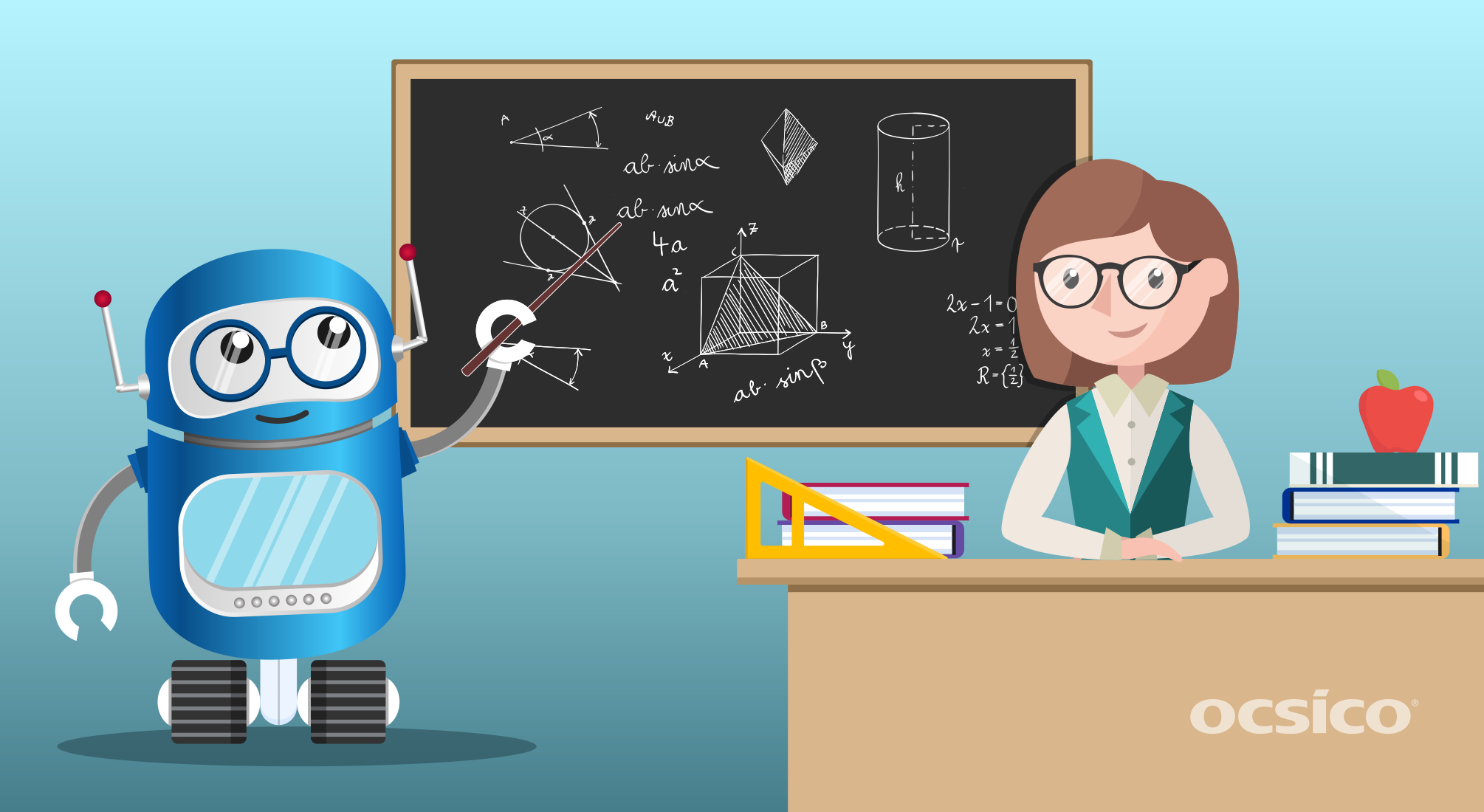
This picture shows a robot (representing AI) working with a teacher. I think this would be the ideal, it would allow the teacher to focus on what matters more to them, while having an extra help for students who may need it. Also, it led me to this interesting article about AI in education, which I am linking here for you to read if you'd like.
”
This make me think, maybe AI could be useful for teachers by helping us grade students' work. Then, teachers could review specific cases (outstanding work or students who need extra help). This wouldn't work for all types of student work, but it could still be practical.
humans to eventually rely on machines
This idea makes me a little nervous. I think it is better for humans to have the control, and the machine to be the helper. Maybe I am misunderstanding what they mean in the article, but I don't think it's safe to give machines too much power.
.
It just occurred to me that there seems to be more concern about developing and using AI for war/armies, than for education. So, bringing back the concept of AI arms race- it would be so good for there to instead be a race to have the best education, or to make teachers' jobs better, thus helping students.
I understand the concerns about humans being replaced by AI, but in education maybe AI could do part of the work, making it so teachers have more time to focus on other (more human?) aspects of the job.
necessity
I wonder if AI will ever become a necessity in education. Currently, and in particular during the pandemic, technology has become a necessity, but not AI in particular. It would be interesting to see how it could be implemented in education. I don't think that, for example, teachers could be replaced by AI, considering we do more than transfer information. I'd like to know what someone else thinks... Could AI become important enough in education to be a necessity? What role could it play? Would teachers be replaceable?