16 Matching Annotations
  1. Aug 2020
    1. they reflect our desire to render the natural world as legible

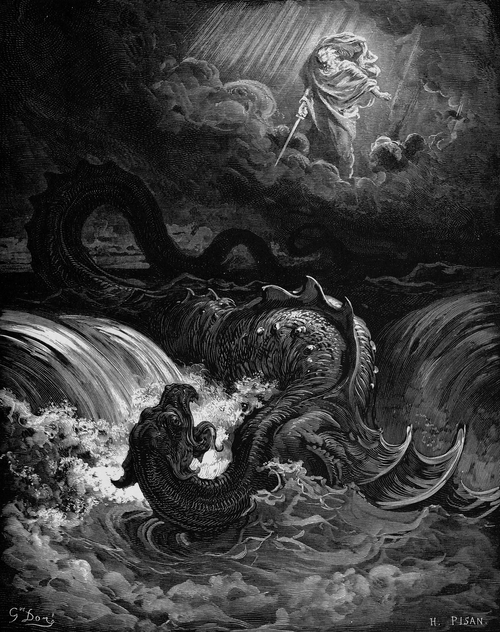
      Monsters are a representation of what we do not yet understand. Why not let kids go out alone at night? Because they might get lost, kidnapped, or hurt in many different ways. To represent the class of these undesired possibilities, we conjure up an image of a monster who lives in the dark and does terrible things.

    2. We love to be at once, miserable, and unhurt

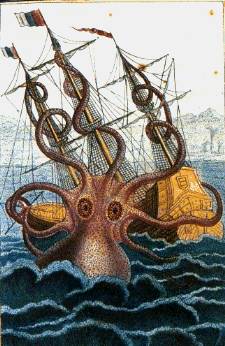
      The vicarious pleasure Malcolm Gladwell talked about. We look at the police pulling someone over with some degree of pleasure because we are relieved that we are not the one who is having to deal the situation.

    3. its supernatural essence can respond to the change that occurs around it, as the basic story metamorphoses in reaction to new particulars

      A myth can speak of a truth that applies not just to a phenomenon, but to a whole class of phenomenon(?)

    4. what if the thing we expect to explain and provide order to the world is somehow insufficient?

      Frankenstein: the advance of science can do us all in. Dracula: the rejection of traditional systems of belief can have damaging ramifications.

    5. The great earthquake confounded this theology

      What is in the dark is unknown to us. What is unknown can always be dangerous, and therefore anxiety provoking and terrifying. By the same token, when the established belief collapses, chaos emerges. People do not know what is true and what is false. Chaos is unknown, and what is unknown can always be dangerous, anxiety-provoking, and terrifying.

    6. A figure that is both terrifying and unknown, it resists easy classification, emerging from a dark netherworld where our usual explanations have no power.

      I came across the root word of monster, which is the Latin word monstrare. Monstrare means "to show" or "to demonstrate." Given this definition, a monster seems to demonstrate to us something we do not yet understand. This brings together all the key words in the highlighted sentence. Something that we do not understand is "unknown," cannot be "classified," and therefore "terrifying."

    7. for the simple pleasure of the terrible feelings they evoked

      I have a difficult time accepting this statement. I don't believe that in the late 18th century, stories about monsters were read merely for pleasure. For example, a monster story such as Dracula is certainly pleasing to read, but that is mainly due to the fact that vampirism contains the deeper elements of sexuality and seduction as well as selfishness, temptation, and exploitation. These deeper meanings that are embedded in the story make for a much richer and more profound experience than simple pleasure.