19 Matching Annotations
  1. Jun 2019
    1. Gauguin

      Paul Gauguin was a Frenchman who actually worked as a stockbroker and painted for his own enjoyment. When the stock market crashed in 1882 he suffered a financial blow and committed himself full time to his art. He experimented with form and colour, which set aided in kickstarting the Primitive movement, featuring exaggerated geometric designs and body proportions and held high contrast. He also worked along with Vincent Van Gogh for a short time.

    2. Cèzanne

      Paul Cézanne was a French artist known for his post-impressionist work and is now recognised as being influential in shifting from impressionism to modernism. His painting technic of using small brushstrokes resulted in supporting the idea that each portion of a work should contribute to its full structural effect. He sought the use of cylinders, spheres, and cones to represent nature.

      One of Cézanne's landscapes. Montagne Sainte-Victoire 1887.

    3. autumn salon

      The Autumn Salon is an art exhibition held each year in Paris, France. The first exhibition was put together in 1903 as a reaction to the conservative policies that the Paris Salon held, showcasing all forms, styles, and mediums of art. It was meant to allow the works of new artists to be viewed, and to support the technics and styles that were emerging. It has been the event that has helped launch the style of both Fauvism and Cubism and introduce them to the public.

    4. Guillaume Apollinaire

      Guillaume Apollinaire was a French writer and art critic. He was also a defender of Cubism and a forefather of Surrealism. He worked in a bank as a clerk. In 1914 he enlisted in the infantry during World War I. After receiving a head wound in 1916 he returned to Paris. In 1917 he wrote a poetic manifesto and a collection of poetry. he died of the Spanish Flu the following year in 1918, shortly after marrying Jacqueline Kolb.

    5. Isadora

      Angela Isadora Duncan was an American and French dancer. She was born in California but lived in Western Europe and the Soviet Union since the age of 22. She developed a intuitive form of dance that was a radical notion at the time. She is known for having liberated herself and others from dancing in restricting clothing of the time as well as preforming to great music. Both the music critics and ballet aficionados were shocked by the scandal of her dancing in her bare feet. She died in 1927 at the age of fifty, when her scarf got caught in the wheel on the car she was riding in. Her brother was Raymond Duncan, a craftsman, poet, philosopher, dancer, and artist.

    6. Duret

      Théodore Duret was a journalist and author as well as an art critic. He was one of the first advocates and supporters of the impressionist movement. Duret did much travelling both for his profession as well as himself. He was much interested in Far Eastern art and was influential popularising Japanism. One of the artists that painted his portrait was Whistler, this painting was exhibited in the Paris Salon in 1885.

    7. Jo Davidson

      Joseph Davidson was an American sculptor who specialized in realistic busts. He would work with clay with the finish product being cast in bronze or carved from marble. He won the National Academy of Design's Maynard Prize in 1934. He even did a sculpture of Gertrude Stein.

    8. Diaghilev

      Sergei Diaghilev was a Russian art critic, ballet impresario and founder of the Ballets Russes. He was a promoter of the arts and revitalized the ballet by incorporating other forms of art with it such as music, painting, and drama with the dances. He produced three masterpieces by Igor Stravinsky. He graduated in law but wished to have a musical career. In 1899 he was appointed assistant to Prince Sergey Volkonsky, the director of Imperial Theatre. He was inspired by the dances of Isadora Duncan.

    9. armistice

      An armistice is an agreement between warring parties to put an end to their fighting. It is a cessation of hostilities allowing for a peace agreement to be negotiated. The armistice of November 11th 1918 marked a victory for the Allies of the Great War even though it was not a formal surrender. This armistice ended the battles of the Wester Front but it was prolonged three times until on June 28th 1919 the Treaty of Versailles was signed. This armistice left many uncomfortable and unsatisfied with the lack of a proper victory.

    10. American Fund for French Wounded

      The American Fund for French Wounded was founded by American women who lived abroad and wanted to help soldiers during World War I. It was originally under a British organization, the London Committee of the French Emergency Fund before it became independent in 1915. Funds were raised by a number of organizations such as the American Red Cross and the American Committee for Devastated France. Their goal was to provide medical assistance for soldiers and civilians, as well as other forms of support for refugees.

    11. Marie Laurencin

      Marie Laurencin was a French painter. She would attend Natali Barney's neo-Sapphic gatherings, where lesbian and bisexual women could socialise and discuss female desires and creative production. She had her debut at the 1907 Salon des Independants, where Picasso introduced her to Guillaume Apollinaire. Cubists at the Salon tried to claim her as being among them. Marie did not care for her work to such characterization. She made her first sale to Gertrude Stein in 1908.

    12. Gladys Deacon

      Gladys Marie Spencer-Churchill, Duchess of Marlborough was a French American aristocrat. She was also known for her beauty, intelligence, and charm. Her marriage with the Duke did not work out and he had her evicted from the palace. She sought a procedure that plastic surgeons were using at the time of injecting the skin with paraffin wax. She had the procedure done on her nose and jawline, but the procedure went wrong and the wax slid down to her chin. After this incident she became a recluse. The authorities eventually had to have her removed from her home. She was placed in an asylum and resided in St. Andrew's Hospital for the remainder of her days.

    13. Kathleen Bruce

      Edith Agnes Kathleen Bruce was a British sculptor. She enrolled in the Académie Colarossi in Paris. where she befriended Rodin, who introduced her to Isadora Duncan. When she returned to London, she met George Bernard Shaw and J.M. Barrie. She was also a member of the International Society of Sculptors.

    14. Picasso

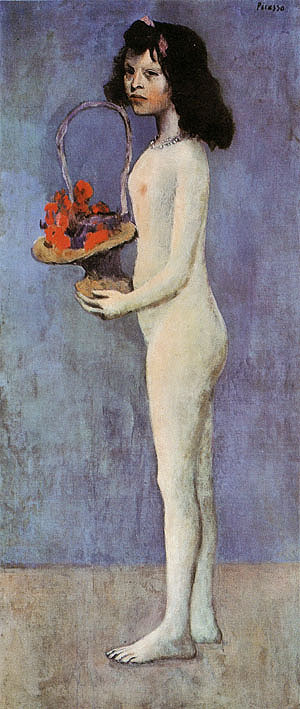
      Pablo Picasso was a Spanish painter, sculptor, stage designer, poet and playwright. He went through periods where he would focus on a single colour in his works, such as the rose period and the blue period. He was a founding father of Cubism. His own brand of Surrealism is best found in his poetry rather than in his paintings. Later 1941 he wrote a Surrealist play "Desire Caught by the Tail".

    15. The Making of Americans

      The Making of Americans: Being a History of a Family's Progress is a novel by Gertrude Stein. Excerpts of it were published in the Transatlantic Review in 1924. It was published by Contact Press in Paris the following year with a run of 500 copies. In 1934, Harcourt Brace published an abridged edition, yet the full version of it would not be published until 1966 when it was republished by Something Else Press. The story contains a number of autobiographical elements that some scholars have puzzled over.

    16. Whistler

      James Abbott McNeill Whistler was an American artist, he believed in the idea of art for art's sake. As the popularity of Japanese prints grew, Whistler, for a time, would include Asian accessories as props in his paintings. later on he would be inspired by a critic who referred to his painting "The White Girl" as "symphony in white" to use the language of music in titling his work, such as harmonies, nocturnes, compositions, and the like.