似的
pretend to be relieved
似的
pretend to be relieved
太聪明
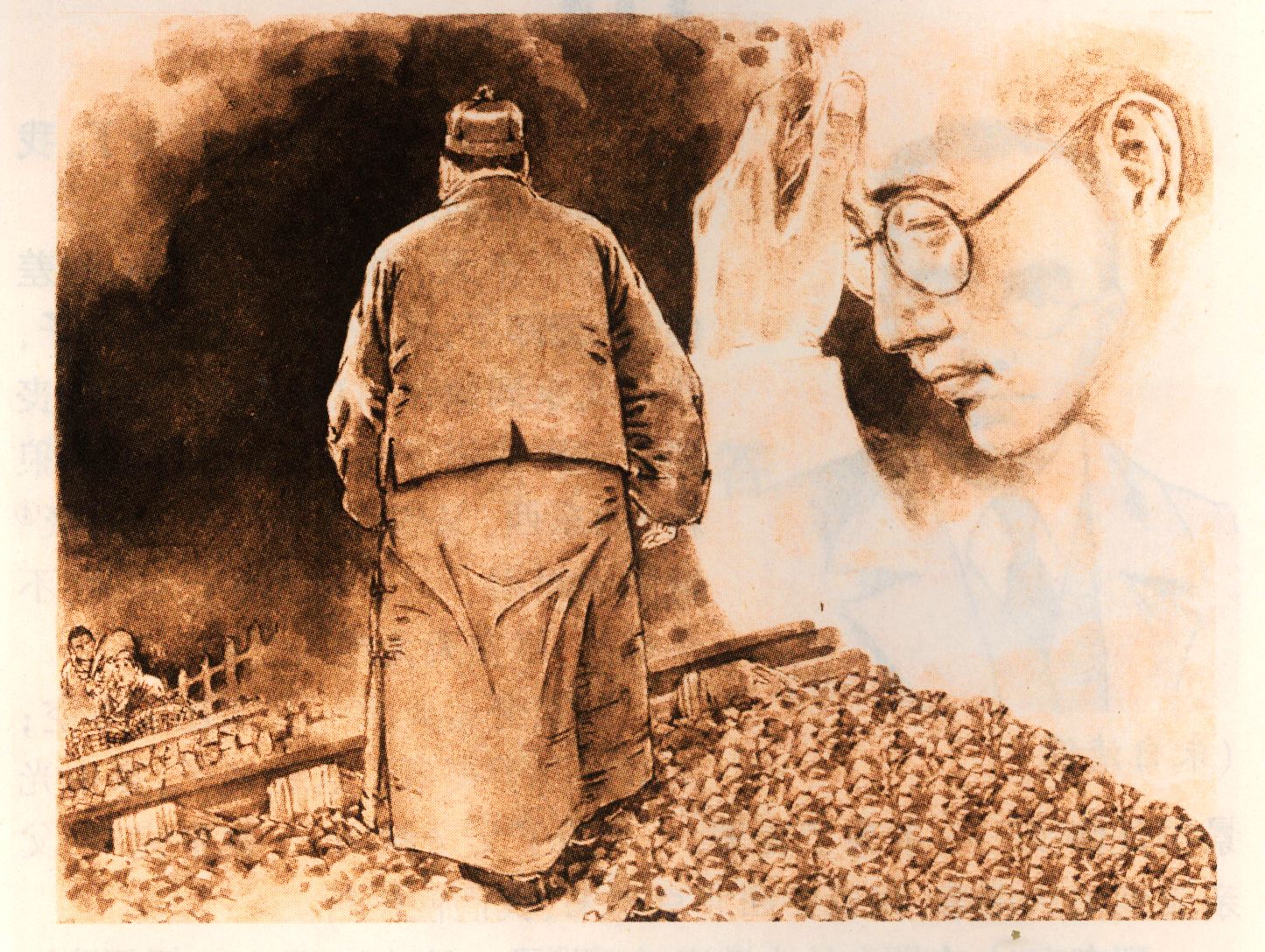
This paragraph shows a image of a devoted father and the image of a young person who thinks highly of himself. But when he looked back, he regretted what he did and missed his father throughly
甚
very
妥帖
considerate
勾留
stay
惨澹
It's misfortune for the family, but also shows depression of the society.
等他的背影混入来来往往的人里,再找不着了,我便进来坐下,我的眼泪又来了。
The author felt lost.
我的泪很快地流下来了
The author was touched to cry. His father tried so hard to climb up onto the railway platform only for some oranges for his son to eat on the way.
他戴着黑布小帽,穿着黑布大马褂12,深青布棉袍
He was with a black cap on his head, in a black jacket and a dark blue turquoise cotton padded robe. Appearance description of his father, shows the characteristic of an old, tradition man. This appearance left great impression on the author.
我买几个橘子去。你就在此地,不要走动
The highlight and most important sentence of this prose. This are words from his father, saying that he was going to buy some oranges and let the author stay there waiting for him. Then comes the action description from the sight of the author. This seems to be a very normal thing with normal words but this part shows the great emotion change and attitude towards his father.
再三
again and again The author's father told the waiter repeatedly to take care of him on his way to Beijing. This word shows that his father really worries about him and still considered the author as a child who needed protection.
料理
look after
迂
dull and stubborn
受凉
have a cold
嘱
tell again and again. Here reflects my father really cares about me.
定
bargain
拣定
choose
扑扑
whisk away
一股脑儿
all
不大难
not too difficult
探身下去
bend forward
终于
eventually shows the deep concern and anxiety towards the author.
月台
railway platform
踌躇
His father hesitated for a while, deciding whether to company the author to the train station. Finally he made his mind to go with the author because he thought it was not good to let other people see him off. "I don’t trust him with you."
青布棉袍黑布马褂的背影

忘却
forget
琐屑
trifles
情郁于中,自然要发之于外
(ancient chinese) sorrows were stuck inside and needs to be released.
自然情不能自已
cannot resist the deep sorrow
触目伤怀
sad wherever he saw
插嘴
interrupt
不大漂亮
His words are not satisfactory and make persons unwilling to listen to.
颓唐
downcast
光景是一日不如一日
get worse off
东奔西走
never settled and run their own businesses
聪明过分
On the surface it means the author is very smart at that time.But in fact, when he looks back on this period, he thinks he is too arrogant and always does things he thinks right.
熟识的茶房
a waiter who was an acquaintance
祸不单行
Double tragedy
厉害
badly
赋闲
stay at home without having a job
背影
光景
situation
丧事
funeral
讲价钱
bargain
小费
tips
还了亏空
paid off the debts
脚夫
porter
典质
pawn
照看
keep an eye on
天无绝人之路
There is always a way out
不禁
can't help crying
簌簌
rustle
满院狼藉
A mess in the whole yard
大去之期
date of death
箸
chopsticks
老境
in old age
奔丧
Return home after hearing the death of a family member
二年余
more than two years
差使
job