Rogue One: A Star Wars Story was to be moreimportant to Disney’s designs for Star Wars thanThe Force Awakens
Was Rogue One the first Star Wars movie Disney produced after buying?
Rogue One: A Star Wars Story was to be moreimportant to Disney’s designs for Star Wars thanThe Force Awakens
Was Rogue One the first Star Wars movie Disney produced after buying?
Rear projection represented an attempt to recon-cile the conflicting demands of star performances andaction sequences: the stars’ close ups and dialoguecould not necessarily be recorded during scenes involv-ing dramatic action (or even driving a car).
Hence the solution: rear projection, but what rear projection fails to do is align the perspective. I noticed a lot in Europa while driving and even walking through the (I think factory, I couldn't tell but towards the beginning of the movie), were unbalanced. Another moment was when the kid shot the guy on the train; I'm assuming how it went was the kid aimed at the rear projection, since the guy looked so much larger then he did moments ago feeding the child chocolate then shows him wounded. What I did like the usage of rear projection was when "werewolf" appeared behind the guy (no idea his name, but the one visiting his uncle).
Fernand Léger tried to define something of the radical possibilities of the cin-ema. The potential of the new art did not lie in “imitating the movements ofnature” or in “the mistaken path” of its resemblance to theater
I have never heard of the French painter, Fernand Lager, so I took sometime to look at some of his artwork to better understand the statement "Imitating the movements of nature." One of his works is "The Acrobat and his Partner (1948)" 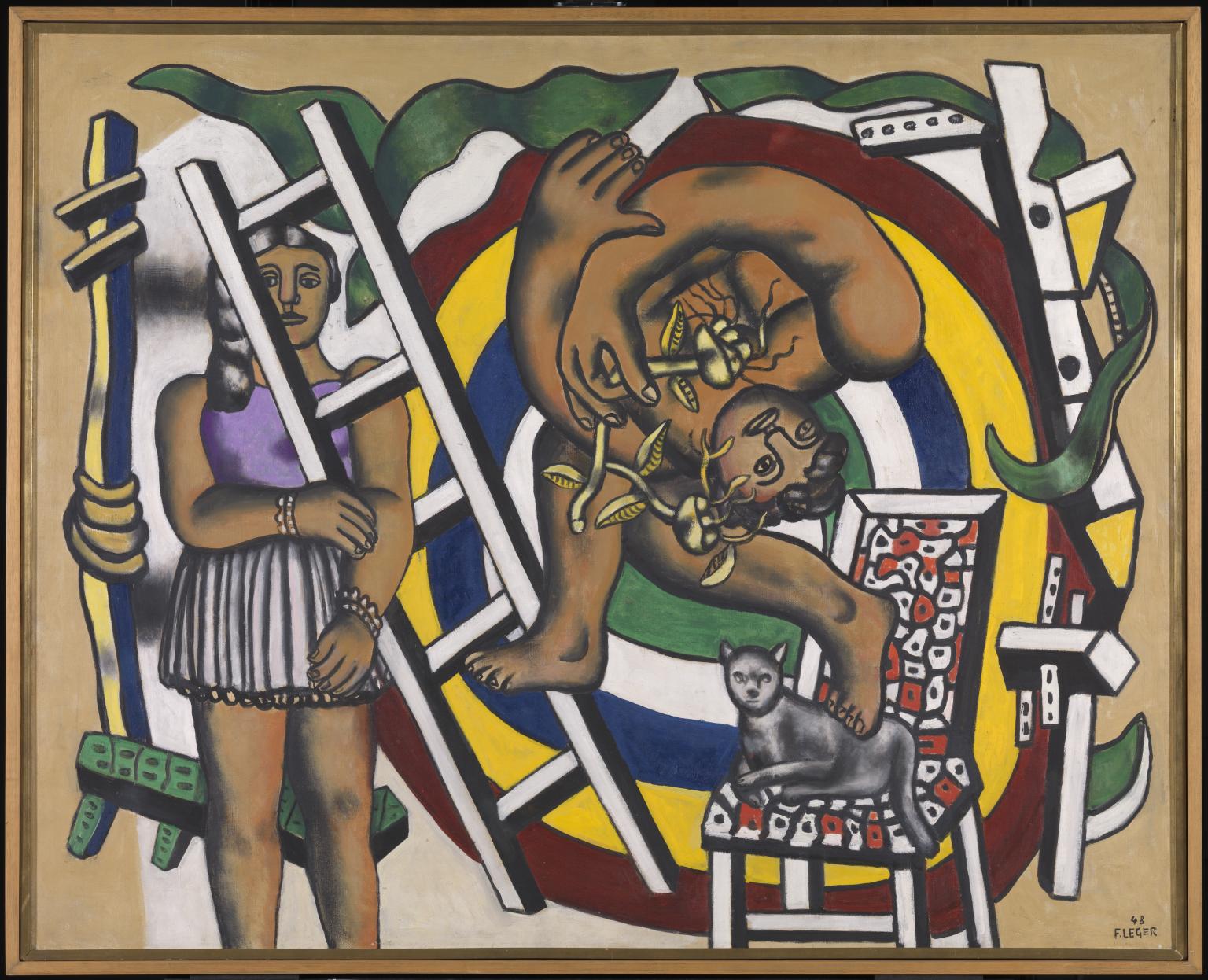 Though the canvas may not be moving, the shape in which the acrobat is and how the colors warp and the white objects, make the art feel like it's moving.
To be on the more nature movement side, his cubist painting, "Nudes in the Forest"
Though the canvas may not be moving, the shape in which the acrobat is and how the colors warp and the white objects, make the art feel like it's moving.
To be on the more nature movement side, his cubist painting, "Nudes in the Forest"  felt, for me, movement though I am unsure how it got it's title...? Maybe someone sees something that I do not.
Lastly, I wanted to share Leger's "Two Women Holding Flowers (1954)" as his usage of color seems to have moved the painting with how the women sit in the space.
felt, for me, movement though I am unsure how it got it's title...? Maybe someone sees something that I do not.
Lastly, I wanted to share Leger's "Two Women Holding Flowers (1954)" as his usage of color seems to have moved the painting with how the women sit in the space. 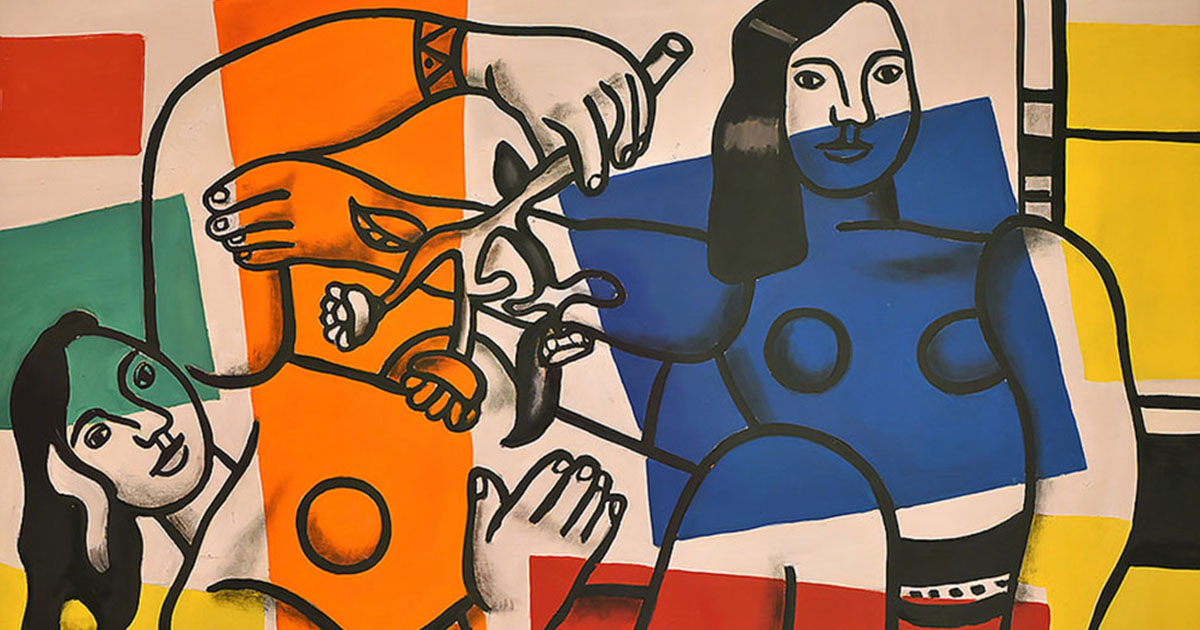 Just some of his work that caught my eye!