25 Matching Annotations
  1. Apr 2021
    1. Citations

      Auxier, Brooke. “How Americans View Tech in the Time of COVID-19.” Pew Research Center, Pew Research Center, 18 Dec. 2020, www.pewresearch.org/fact-tank/2020/12/18/what-weve-learned-about-americans-views-of-technology-during-the-time-of-covid-19/.

      “Carey and Elton 2009 - The Other Path to the Web.pdf: Powered By Box.” Carey and Elton 2009 - The Other Path to the Web.pdf | Powered By Box, app.box.com/embed/s/dcxjcslfc8te2a81d7i06q19jyandr7l?view=list&sortColumn=name&sortDirection=ASC&showItemFeedActions=true&showParentPath=true.

      Nasajpour, Mohammad, et al. “Internet of Things for Current COVID-19 and Future Pandemics: an Exploratory Study.” Journal of Healthcare Informatics Research, Springer International Publishing, 12 Nov. 2020, www.ncbi.nlm.nih.gov/pmc/articles/PMC7659418/.

      “Noble 2018 - Searching for Protections from Search Engines.pdf: Powered By Box.” Noble 2018 - Searching for Protections from Search Engines.pdf | Powered By Box, app.box.com/embed/s/z35tdx461ulmnn1hlkoypmpd8gplv4zr?view=list&sortColumn=name&sortDirection=ASC&showItemFeedActions=true&showParentPath=true.

      Osborne, Charlie, and Zack Whittaker. “Cybersecurity 101: Protect Your Privacy from Hackers, Spies, and the Government.” ZDNet, ZDNet, 8 Dec. 2020, www.zdnet.com/article/online-security-101-how-to-protect-your-privacy-from-hackers-spies-and-the-government/.
    2. ARPANET

      The John Carey and Martin Elton reading from class explains how ARPANET was created. "The most widely-told version, which is decidedly US-centric attributes their germination to the US Department of Defense and a set of projects that it funded, beginning in the late 1960s, that led to the ARPANET (Advanced Research Projects Agency Network) computer network, which evolved into the internet – the infrastructure that allowed the world wide web to emerge" (242).

      The creation of ARPANET was the beginning and eventually led to more creations such as videotext, hypertext, and black software.

    3. Even without 5G, the internet of things supported health care this year. Researchers used the GPS in mobile phones to track the spread of the virus, public health workers used sensors to monitor patients under quarantine, and doctors used internet-connected devices, like drones and robots, to deliver drugs and check on patients without risking contact.

      This academic article on PubMed Central analyzes a study that was conducted to see the relationship between COVID-19 and Internet of Things technology:

      "Internet of Things (IoT) technology has shown promising results in early detection, quarantine time, and after recovery from COVID-19; however, as we learn more about the virus and its behavior, we should adjust and improve our approaches in different phases."

      "As a part of smart living in the Smart City, smart home IoT-based technologies can also reduce the infection rate of COVID-19. For instance, smart home doorbells and security systems can be implemented to prevent users from touching surfaces, so there will not be any contamination of the virus from touching those surfaces"

      The study explains the advancement of technology in relation to the medical field and how it can essentially keep individuals safer during the pandemic.

    4. The threat to internet-connected devices comes not just because they’re connected to the internet, but because device manufacturers have not always designed their products with security as a priority.

      When it comes to the big name brands that sell the majority of these devices I feel as if they are more concerned towards profit rather than the security features of the product itself, like this sentence mentions.

      This article from ZDNet discusses the security risks that come with using public Wi-Fi, "The problem with them is simple: As you do not need authentication to access them, neither do cyberattackers -- and this gives them the opportunity to perform what is known as Man-in-The-Middle (MiTM) attacks in order to eavesdrop on your activities and potentially steal your information, as well as manipulate traffic in a way to send you to malicious websites."

      This shows how necessary it is to take important steps such as creating strong passwords and setting up two-factor authentication.

    5. But it’s also given our objects—and the companies that make them—more control over us.

      GIF

      In the Safyia Noble reading from class, she discusses the changes and reforms that have been made in countries such as France regarding the right individuals have over their privacy and information. She states, "In 2009, the French government signed the “Charter of good practices on the right to be forgotten on social networks and search engines,”9 which stands as a marker of the importance of personal control over information on the web.10 Since then, considerable debate and pushback from Google has ensued, highlighting the tensions between corporate control over personal information and public interest in the kinds of records that Google keeps" (121).

      This example is particular to the rights individuals have over their privacy and information on social networks and search engines, yet it can be connected to digital objects as well. If bigger platforms and websites are allowing for individuals to make decisions regarding their personal details, digital devices should allow for the same.

    6. In 2014, Amazon introduced the Echo, a speaker with a helpful voice assistant named Alexa built in. Apple had introduced Siri, its own voice assistant, four years prior—but Siri lived on your phone, while Alexa lived inside the speaker and could control all of the “smart” devices in your house.

      Siri vs. Alexa rap battle

    7. In 2020, as the coronavirus pandemic sent daily work and life into cyberspace, the FCC accelerated its timeline for improving existing internet infrastructure.

      Much of this article has discussed the history of the internet or the problems that come with the internet and technology. Living in the world today though, technology is what's assisting us in still being able to stay connected to the world and carry out our daily tasks such as going to work or school. It's where we spend most of our time these days. Without it, it would be that much more difficult to perform our responsibilities.

      According to this article from the Pew Research Center, "A month into the COVID-19 outbreak, 87% of U.S. adults said the internet had been at least important for them personally during the outbreak, including 53% who deemed the internet as “essential” for them personally, according to a survey conducted in April 2020."

      The internet has had a huge part in individual's lives during COVID-19, but it is not perfect. This experience has also showed the aspects of the internet that need to be improved.

    8. Depending on who you ask, the growing internet of things either represents the promise of technology—the thing that will reinvent modern life as we know it—or that which will be our technological undoing.

      The last sentence of this paragraph is related to the first module of the class where we learned about "envisioning the internet".

      We discussed:

      1) Technological determinism - "A belief or way of talking about technology that sees technology as the cause of cultural and social change."

      2) Cultural determinism - "The idea that technologies are merely tools or instruments, what matter is how we use them."

      We also discussed utopian views vs. dystopian views which are two opposing viewpoints regarding technology. A utopian view is a more positive outlook towards technology where it is seen as resourceful. On the other hand, a dystopian view is a more negative outlook and believes that technology limits opportunities and growth in relation to society and culture.

    9. In 2017, Google announced Project Jacquard, an effort to create the connected wardrobe of the future.

      Jacquard by Google

      In the commercial for Jacquard by Google, they use phrases such as being able to be "freer" while being even more "connected". This seems a bit ironic to me because if you were truly "freer" from technology you wouldn't be needing to use any electronic devices at all, including the one being advertised.

    10. Google and Apple both admitted, in 2019, that the recordings captured by their smart speakers are reviewed by contractors, including awkward and intimate snippets of audio. Amazon has partnerships with over 400 police departments, who use the footage from its Ring doorbell cameras to keep watch on neighborhoods.

      I am not sure how I feel about this. In the case of Amazon partnering with police departments to watch neighborhoods or to go over footage for an important police case seems reasonable. The part about this that seems like a violation of privacy to me is where Google and Apple admitted to listening in on people's conversations. No matter how big of a company you are I feel like it does not give you the right or power to be taking personal information without consent.

    11. In 2019, Amazon faced a $5 million class action lawsuit from customers who alleged that their internet-connected Ring doorbells had been left open to cyberattacks. Those customers shared stories of hackers who, through their doorbells, harassed them and demanded ransom money. (The company denied blame, claiming instead that it was the customers’ fault for using weak passwords.)

      Companies that do not take responsibility for the faultiness of their own products do not truly care about their customer's safety and concerns, in my opinion.

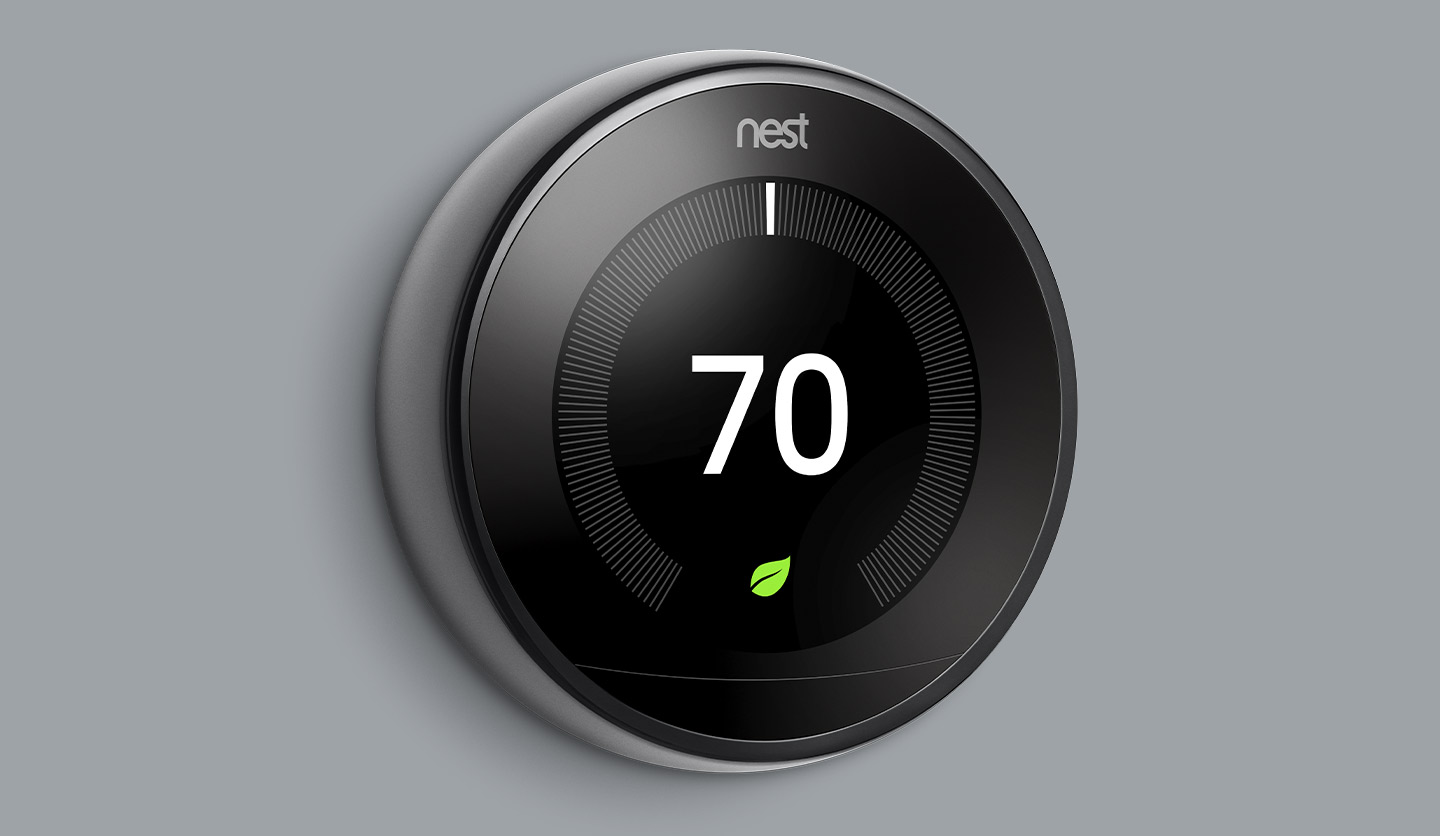
    12. When your Wi-Fi goes down, so do your devices. Router problems? That means you can’t turn on the heat with your smart thermostat, or unlock your smart door lock. Things that used to be easy become potentially faulty, if not impossible, when they require an Alexa command or a smartphone control rather than a physical button. Many of these devices also run on proprietary software—meaning, if their manufacturer goes bunk, gets sold, or stops issuing software updates, your clever little gadget becomes a useless hunk of plastic.

      GIF

      Connecting this paragraph to my personal life, I've noticed that there is such a huge difference between my attitudes/behaviors towards technology versus my younger brother's attitudes/behaviors. Being a current college student who grew up while the internet was still going through many changes in the way it looked and performed, I'm not as dependent on it. My brother, on the other hand, is a middle schooler and has grown up in an environment and time period where the internet and social media was much more advanced. Whenever the Wi-Fi goes down in our house, he's the first to notice and it's a crucial part of his day to day life.

    13. By 2014, the number of internet-connected devices would surpass the number of people in the world.

      This statement makes me wonder about the accessibility of these devices. Like we learned in the module about "digitizing difference", individuals have various experiences in relation to technology depending on factors such as race, class, gender sexuality, and more. It would be interesting to find out where exactly in the world do citizens own the most devices, what are the age groups of these citizens, and other information regarding demographics. I feel as if this is important to understand so that we can further analyze the usage of technology and make inferences regarding what countries for example are more digitally advanced and what that means for the future.

    14. The first of these, LG’s internet-connected refrigerator, hit the market in 2000. It could take stock of shelf contents, mind expiration dates, and for some reason, came with an MP3 player. It also cost $20,000.

      It's very interesting and somewhat surprising to me that one of the first smart fridges was introduced in 2000, over 20 years ago. In my head, I always saw this technology as somewhat new and modern. My thought was that touch screen fridges were an invention from within the past 6-8 years or so, but they have been around much longer than that!

    15. If cameras and microphones are studded around your home, they are definitely watching and listening to you. Everything in the internet of things collects data—and all that data has value.

      GIF

    16. The net benefit of these gizmos was, for the most part, liberation from housework. At the 1959 American National Exhibition in Moscow, Whirlpool created an exhibit called the “Miracle Kitchen”—a futuristic display meant to show what life in capitalist America was like. It included a dishwasher that cleared the table and a proto-Roomba to sweep the floors. “In America, we like to make life easier for women,” Richard Nixon said to Nikita Khrushchev, the President of the Soviet Union, in an apparent jab on the showfloor.

      This specific description of what Richard Nixon imagined the "Miracle Kitchen" to have reminded me of the Disney Channel original movie, "Smart House".

      Smart House (1999) clip