10 Matching Annotations
  1. May 2018
    1. 40] The truth is that a freeze now would be a very dangerous fraud, for that is merely the illusion of peace. The reality is that we must find peace through strength. [Applause] [41] I would a-[Applause continuing]…I would agree to a freeze if only we could freeze the Soviets’ global desires. [Laughter, Applause] A freeze at current levels of weapons would remove any incentive for the Soviets to negotiate seriously in Geneva and virtually end our chances to achieve the major arms reductions which we have proposed. Instead, they would achieve their objectives through the freeze.

      Note how Reagan continues his rhetoric through the applause of the Audience.

      This is an example of Reagan striving to achieve his purposes in this rhetoric by using the success of one purpose as an agency in achieving the other.

      By rhetorically powering through applause as seen around the 23:00 mark in this video, Reagan is using his success in riling up the audience as a steroid in achieving the purpose of making himself appear powerful to the Soviets and all those who are watching.

      Note how the applause is at a height right as soon asItalic** Reagan endulges in to the HEART of his message; the most difficult and prominent aspect of his speech; Dealing with the Soviets and their military.

      Exposing this shows us how Reagan is using an audience, through methodological agencies, in order to deliver a message.

    2. You…You may remember that when abortion on demand began, many, and indeed, I’m sure many of you, warned that the practice would lead to a decline in respect for human life, that the philosophical premises used to justify abortion on demand would ultimately be used to justify other attacks on the sacredness of human life–infanticide or mercy killing. Tragically enough, those warnings proved all too true. Only last year a court permitted the death by starvation of a handicapped infant. [27] I have directed the Health and Human Services Department to make clear to every health care facility in the United States that the Rehabilitation Act of 1973 protects all handicapped persons against discrimination based on handicaps, including infants. [Applause] And we have taken the further step of requiring that each and every recipient of federal funds who provides health care… services to infants must post and keep posted in a conspicuous place a notice stating that “discriminatory failure to feed and care for handicapped infants in this facility is prohibited by federal law.” It also lists a twenty-four-hour; toll-free number so that nurses and others may report violations in time to save the infant’s life. [Applause]

      An educative guide to audience analysis for a speaker provided by Lumen Learning shows that speakers should "plan a message" for their audiences. This guide shows how a speaker should take into account the "gender, education, religion, and culture" of the audience as well as their "values, attitudes, and beliefs." Doing so allows a rhetor to PLAN a MESSAGE.

      Note how the overall subject matter of this speech pertains to the USSR. Then take note of how Reagan sidetracks and dives into the topic of abortion.

      This is evidence of Reagan utilizing Audience Analysis. He takes the Evangelical Crowd and MODIFIES (or, planned his speech according to the audience. This particular audience, given their religious devotation, can inferred as anti-abortion.

      Reagan planned to use anti-abortion rhetoric to captivate his audience. This is a method of AGENCY that allows us to expose Reagan's deeper rhetorical strategy in achieving his PURPOSE.

    3. Now, I don’t have to tell you that this puts us in opposition to, or at least out of step with, a–a prevailing attitude of many who have turned to a modern-day secularism, discarding the tried and time-tested values upon which our very civilization is based. No matter how well intentioned, their value system is radically different from that of most Americans. And while they proclaim that they’re freeing us from superstitions of the past, they’ve taken upon themselves the job of superintending us by government rule and regulation. Sometimes their voices are louder than ours, but they are not yet a majority. [Applause]

      This particular instance of Rhetoric is interesting because it shines as Reagan's transition into the primary message of this instance of Rhetoric.

      Identifying Reagan's PURPOSE, as per Pedantic Criticism, in this instance, can be tricky - due to the fact that this rhetoric is split in purpose.

      The first purpose is, as it has been mentioned over the course of annotation, to incite APPLAUSE and RESPONSE from the audience - as he does in this instance, made clear by the applause at the end of the utterances. The reason this is 1/2 of his purpose is due to how this speech was televised; and Reagan needed to appear powerful and liked.

      The other PURPOSE in his speech is to ACTUALLY deliver a message - although draped and drowned in appeals to his audience.

      This instance of rhetoric marks Reagan's identification of the ACT in terms of Pedantic criticism. The ACT defines WHAT is happening; WHAT needs to be done, etc.. in the grand scheme of his PURPOSE.

      This instance of Rhetoric shows Reagan using language to create a distinction between the government of the USSR and the government of the United States. This instance of speech reflects a strong attitude, and is met with applause from his audience.

    4. Thank you for your prayers. Nancy and I have felt their presence many times in many ways. And believe me, for us they’ve made all the difference.

      Almost immediately, we see President Reagan's rhetoric reflect aspects of both Neo-Aristotelian Criticism and Pedantic Criticism NEO-ARISTOTELIAN: This could be considered as an appeal to PATHOS; Something that is heavy in this speech; and will be further discussed through Pendantic Analysis. He is appealing to the emotions of the Audience by acknowledging their prayers, and assuring that they make a difference.

      THIS is where the SCENE comes into importance, as I mentioned it would earlier. The SCENE is important to discuss here because it serves as an identifier of the audience. The audience here are those in attendance at the National Association of Evangelicals; who, obviously; are staunchly religions.

      PEDANTIC: This could be seen as one specific AGENCY of Reagan's Rhetoric: to garner a reaction based on an appeal to PATHOS. Note how elements of Pedantic Criticism are directly correlated to elements of Neo-Aristotelian criticism.

      This is how Pedantic Criticism, through simple identification of key factors within speech, can help an analyst dissect an instance of rhetoric by feeding off of other methods of Rhetorical Criticism.

    5. 6] An evangelical minister and a politician arrived at Heaven’s gate one day together. And St. Peter, after doing all the necessary formalities, took them in hand to show them where their quarters would be. And he took them to a small, single room with a bed, a chair, and a table and said this was for the clergyman. And the politician was a little worried about what might be in store for him. And he couldn’t believe it then when St. Peter stopped in front of a beautiful mansion with lovely grounds… many servants, and told him that these would be his quarters. [7] And he couldn’t help but ask, he said, “But wait, how–there’s something wrong–how do I get this mansion while that good and holy man only gets a single room?” And St. Peter said, “You have to understand how things are up here. We’ve got thousands and thousands of clergy. You’re the first politician who ever made it.” [Laughter and Applause]

      This use of rhetoric is interesting in terms of analysis.

      Note that this comes at the beginning of the rhetoric.

      This could be seen as Reagan, again, using pathos as an AGENCY of getting his AUDIENCE (based on SCENE) going. He tells a story relevant to religion, and incites laughter.

      What is now important to note is the ACT in Reagan's Speech.What is the MAJOR ACTION being Taken to achieve Reagan's purpose?

      Firstly, Reagan's purpose should be noted. The PURPOSE in this speech is to generate a positive crowd reaction to his Rhetoric; in order to appear imposing, respected, and powerful for NATIONAL TELEVISION.

      The ACT here is clearly to make oneself appear likable and relatable to the crowd through instances of appeals to pathos, etc.

    6. ] The American experiment in democracy rests on this insight. Its discovery was the great triumph of our Founding Fathers, voiced by William Penn when he said: “If we will not be governed by God, we must be governed by tyrants.” Explaining the inalienable rights of men, Jefferson said, “The God who gave us life, gave us liberty at the same time.” And it was George Washington who said that “of all the dispositions and habits which lead to political prosperity, religion and morality are indispensable supports.”

      Here, we see Reagan becoming more serious in his Rhetorical approach - while still vaguely treading the waters of Religious pathos.

      He refers to the "American Experiment in Democracy," and uses quotes from past US leaders in order to elaborate on the standards he wishes to purport his Administration as holding.

      This, ignoring the references to God (in order to draw support from the overly-religious audience), is an appeal to Ethos. He is using America's original ideological blocks as the vertebrae to his upcoming argument.

      This is an agency to his purpose in drawing crowd support in order to appear powerful and liked on television in how he combines appeals to ethos and pathos - to American ideology (Ethos) and to God (Pathos, for the Crowd), to distinguish his argument as being legitimate in grounded reason as compared to a simple rattling-off-of crowd-pleasing lines.

    7. . Freedom prospers when religion is vibrant and the rule of law under God is acknowledged. [Applause]

      Here we see Reagan making a strong reach in an appeal to Pathos.

      It has become clear that in this particular instance of Rhetoric, Reagan's core agency in this rhetoric is to link his ethos-driven arguments regarding American ideology and the standpoints of his administration WITH religious ideologies IN ORDER TO achieve the PURPOSE of drawing a response from the audience. Note the Applause after this particular instance of Rhetoric.

    8. wrong and good and evil.

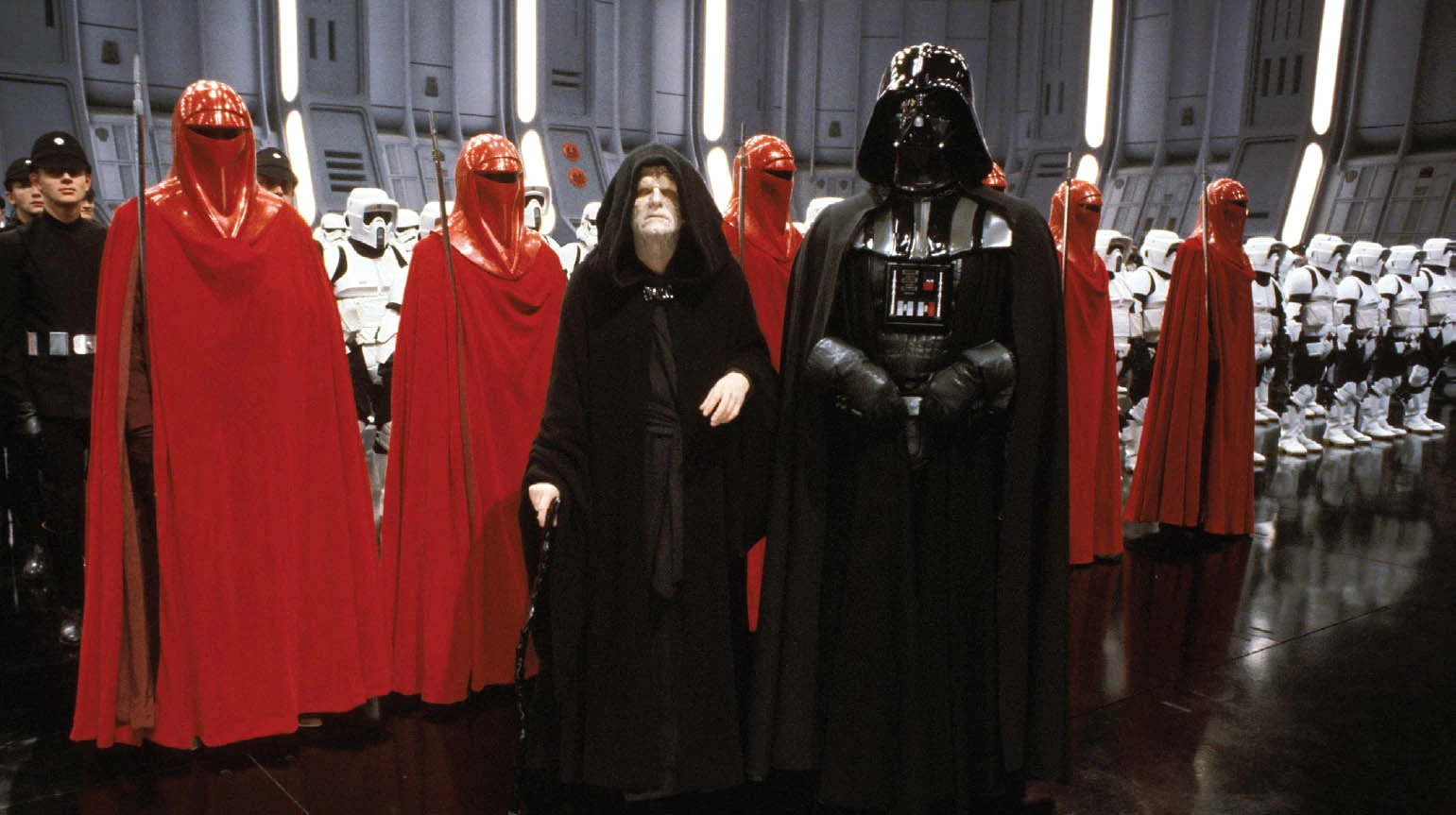
      What must first be understood about Reagan's references to an "evil empire" is the historical background in which it entails. Provided is a link to a video that entails the commencement Reagan's "Star Wars" program, which was an Anti-Soviet missile defense system implemented by the United States.

      Within the context of "STAR WARS," Blockbuster American movie series, the "EVIL EMPIRE" is the tyrannical governing body that serves as an antagonist to the Rebel Alliance.

      When analyzing Reagan's use of "evil empire" and his following use of "good vs. Evil," taking into account his previous declaration of "Star Wars," a few points can be drawn in terms of Neo-Aristotelian and Pedantic Criticism.

      Reagan, by using terms and rhetorical language relative to Star Wars , it is clear that one method in Reagan's agency here is to create a rhetorical image in the head of the audience that relates to FICTION.

      Reagan accomplishes this by creating a distinction between the US and its enemy as being the "Evil Empire" vs "The Good Guys,"

      This is an example of Reagan appealing to the Audience through their RELATIVE KNOWLEDGE regarding Star Wars.

      He is taking a real-life situation and using a fictional work as an illustration of how HE wants it to be seen for the audience.

    9. RONALD REAGAN, “EVIL EMPIRE SPEECH” (8 MARCH 1983)

      The Aim of this Digital Annotation is to provide the reader with in-depth, transparent exposure of instances in Ronald Reagan's "Evil Empire" speech that pertain to two different branches of Rhetorical Criticism: Neo-Aristotelian Criticism & Pedantic Criticism.

      Neo-Aristotelian Criticism revolves around the analysis of THREE different Rhetorical Appeals. PATHOS: Appeals to the emotions of others. Take for instance usage of the word "pathetic," meaning something that aims to gather the sympathies or emotions of others. ETHOS: Ethos involves appeals of Credibility. Take for instance a pitcher telling his coach "Hey Coach, you should put me in - I haven't let up a hit in 20 games." The pitcher disposing this fact to his coach is an appeal to his own credibility toward his audience. LOGOS: Instances of logos involve appeals to Logic. This is when a rhetor uses logic in order to bolster an argument. Take for instance a debate between two friends about who is to walk to the store for snacks; and one says "My leg is broken, so it will take longer - you should go." This is an appeal to a logical approach to the situation.

      Pedantic Criticism: This method of criticism involves the identification of 5 different factors within an instance of Rhetoric. Once these 5 factors are sufficiently identified, it becomes a breeze for an analyst to dig into the core of an instance of rhetoric. The 5 factors are as follows: Agent, Act, Scene, Purpose, Agency.<br> Agent: The Protagonist or item of Rhetor within an instance of rhetoric. Scene: The Physical Location of the instance of Rhetor. While this "factor" may be unimportant in some instances of rhetoric, it can prove to be essential in others - especially in this particular Reagan speech. Act: This is the MAJOR ACTION taken by the rhetor in order to achieve a PURPOSE Purpose: This is the GOAL of the Rhetor; the AIM of INFLUENCE upon the audience Agency: The "Agency" refers to the different METHODS used in the ACT of achieving the Purpose