2 Matching Annotations
  1. Jun 2019
    1. married

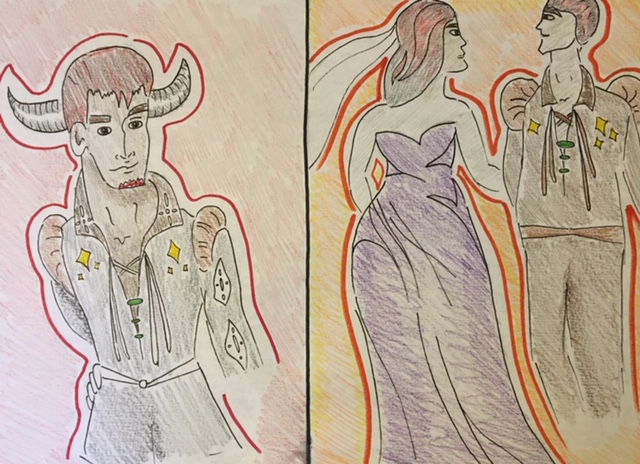
      This drawing depicts Benedick before and after the events of Much Ado About Nothing played out. Cut into two frames, the first frame on the left shows Benedick before the events of the play occurred and the frame on the right is after. The first frame shows Benedick alone with a pair of horns on his head. In Scene 1 act 1, Benedick says that he does not want to marry because he would likely cheat on his wife. Based on old tale, cuckolds would grow horns on one’s head. The scene on the right shows Benedick after marrying Beatrice. Beatrice and Benedick seemed to have a complicated relationship but after they both were “tricked” into confessing their love for each other, they end up vowing to marry in act 5 scene 4. The contrast between Benedick at the beginning of the play and after shows just how much he changed and grew as a person. He went from never wanting to marry to marrying the girl he loves.

    1. The savage bull may; but if ever the sensible Benedick bear it, pluck off the bull’s horns and set them in my forehead

      In these lines, Benedick is talking directly to Claudio and Don Pedro about the topic of marriage. Benedick’s reference to the taming of the “savage bull” most likely is alluding to marriage and fidelity. Benedick is explaining that even the most “savage bulls” would eventually become tame and subject themselves to marriage. Perhaps his mentioning of the “savage bull” is about Beatrice and her witty and sarcastic banter towards him. At this point in the play, both characters don’t have any noticeable clear and strong feelings towards each other but Benedick could be referencing Beatrice due to the tension they exhibit at the beginning. In this scene Benedick is imagining a situation in which the horns of the bull have been plucked off and placed on his head. Back then, bull horns were imagined on the head of men whose wives cheated. Benedick is suggesting that maybe any woman who marries him would likely cheat, branding him with a pair of horns after.