Miroslav Šašek illustrations<br /> https://en.wikipedia.org/wiki/Miroslav_%C5%A0a%C5%A1ek
12 Matching Annotations
- Jun 2026
- Mar 2026
-
www.atticpaper.com www.atticpaper.com
- Oct 2025
-
-
“Letters by radio”, Science and Invention, (Artist Unknown) 1922<br />

-
- Jul 2025
-
Local file Local file
-
In February 1498, Maestro Lucacompleted De Divina Proportione, which was illustrated by ‘the graciousleft hand’ of his new friend, as Leonardo showed off his mastery ofperspective and geometry with a set of precise, fenestrated illustrations ofthe six Platonic solids, from the four-faced tetrahedron to the twenty-sidedicosahedron.
Tags
Annotators
-
- Feb 2025
-
harpers.org harpers.org
-
 Illustration by Beppe Giacobbe
Harper's Magazine, April 2022, page 26 https://harpers.org/archive/2022/04/
-
- Apr 2023
-
www.howlingwolfbooks.org www.howlingwolfbooks.org
- Feb 2023
-
Local file Local file
-
Traditions about Usal and the Zugubals are based on the story of Thoegay, a fiercewarrior, Zogo Le, and skilled navigator who commanded a ship crew of thirteen: a firstmate named Kang and a crew of twelve men, called the Zugubals. The group embarkedon a long expedition at sea on a hot day. Before long, the crew began consuming theirrations in zest. They were warned by Kang to conserve their supplies, but before longthey had consumed the water for the entire trip, including Thoegay’s. When Thoegayrealised this, he flew into a fit of rage and killed the 12 men. Because the Zugubals werealso spiritual beings, they could not die, so Thoegay cast them into the sky as two groupsof six stars: Usal (the six brightest stars of the Pleiades) and Utimal (the six brightest starsof Orion’s belt and scabbard). Thoegay then ascended into the opposite side of the sky,taking Kang and his canoe with him. He can be seen as a large constellation holding aspear in his left hand (the Southern Cross) and a Eugenia fruit in his right hand (theconstellation Corvus), standing at the bow of his celestial canoe (Scorpius) with Kang(Antares; Alpha Scorpii) sitting at the stern (Robinson 2016a).
This is a great story, but interestingly, without the appropriate art to explicitly map the idea onto, it's much harder to remember or to help those unaccustomed to these ideas. Presumably the audience of this book doesn't/wouldn't.
A simple drawing here or an overlay onto an existing image would be immensely helpful. Perhaps the Robinson reference has one? (it doesn't)
Tags
- Utimal
- Kang
- constellations
- folklore
- illustrations
- Usal
- Indigenous astronomy
- Thoegay
- diagrams
- Zugubals
Annotators
-
- Nov 2021
- Mar 2021
-
paulopinto.page paulopinto.page
-
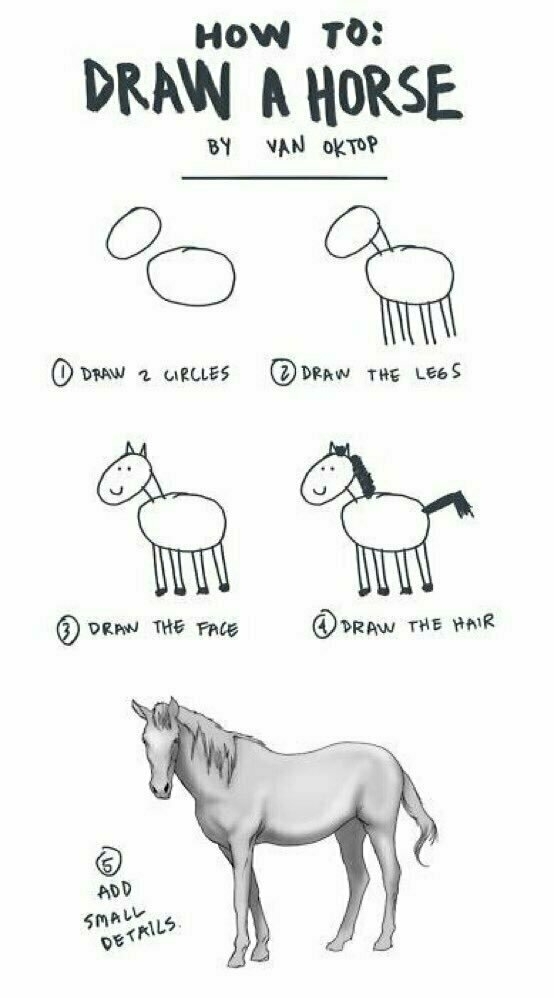
Following on the IndieWeb's "just" conversation, this illustration is a good example of the idea, though step 5 doesn't include the words "just" or "simply". It can reflect the problems of leaving these words out without providing the additional context they're papering over.
-
-
www.theprojecttwins.com www.theprojecttwins.com
-
<small><cite class='h-cite via'>ᔥ <span class='p-author h-card'>Nature</span> in Annotating the scholarly web : Nature News & Comment (<time class='dt-published'>12/09/2019 07:11:28</time>)</cite></small>
Tags
Annotators
URL
-
- Feb 2021
-
fivethirtyeight.com fivethirtyeight.com
-
Illustration by Shout

I really love this illustration.
-
- Jun 2020
-
litvinovs.net litvinovs.net
-
This website has plenty of illustrations of The Master and Margarita, made by various artists from all over the world. The website is in Russian.
-