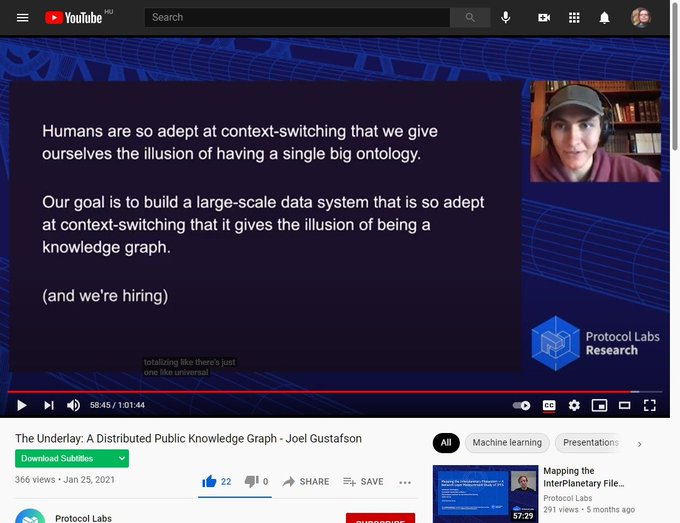
all participants coming out of that dialogue enriched, expanded, wiser even.
participants all the wiser
all participants coming out of that dialogue enriched, expanded, wiser even.
participants all the wiser
steel-manning
guess this is the opposite of straw-man. Seeking to find the strong points of a an opposing view
Or as |Ken Wilber said "Nobody is that smart to be wrong all the time" find the things that expands your perspective with a fresh insights
inviting the people with those perspectives into dialogue.
interpersonal trusted connections leveraged to create discussion threads
intellectual/academic papers in a multi-perspectival way
indeed and with full provenance of all incident conversations
⧆ (SQUARED ASTERISK) utf-8 character icon
⧆
CSS Flex Container
=
A modern way of creating two columns, is to use CSS Flexbox. However, it is not supported in Internet Explorer 10 and earlier versions.
do how = web - CSS flexbox
go to key signing events or anything dorky like that.
key signing events dorky
every type of content in Perkeep is represented using content-addressable blobs
it will inevitably, one day, be shut down with very little warning, because that’s just what Google does
app script
Google has a service called Apps Script. It means that anyone can write simple code to easily change and automate things in Gmail, Calendar, Docs, YouTube, whatever. It’s a brilliant service, I’ve no idea how it ever got made! And it will inevitably, one day, be shut down with very little warning, because that’s just what Google does. But Apps Script meant that to fix this problem, I could just spend an hour or so writing a bit of code
Useful new technologies generally follow a sigmoid curve
Useful new technologies generally follow a sigmoid curve. You have a slow takeoff as the technology is invented and the major pain points get sorted out, and then you have this incredible explosion of growth as people find it useful and the technology gets better and better and better and better, and loads of competitors enter the market, and people find more and more and more and more real-world, practical uses for it. And there’s this massive race to make newer, better, bigger things that people keep making more stuff with. And then you reach the limit of what’s possible with that technology, and the rate of progress flattens out again
Everything is about to change

What is continuous development?
Agile
continuous inception
we see that now with large-scale models they're very large-scale models like gpt-3 01:06:06 it started two years ago four years ago it wasn't feasible in fact they did create gpt-2 which didn't work 01:06:18 so it required a certain amount of timing having to do with this exponential growth of computing power
gpt-2 large scale models
your genius versus that its time has come
genius vs its time has come
futurism in some sense is a study of timing 01:06:31 trying to understand how the world will evolve
futurism study of timing
imagine you're giving a speech about how you created this well you'd 01:04:50 have to then work backwards as to how you would create it in order to make it work
speech work backwards make it work
put yourself in the position 01:04:25 what you're trying to create already exists and then you're explaining like how it works exactly
Anything is possible if you deem it so
and figure out what would it take to make it so
can you speak to the process of thinking of how to think how to think creatively
how to think creatively
use lucid dreaming to think to come up with ideas as a source of 01:03:44 creativity
lucid dreaming as source of creativity
never forever
=

we'll achieve longevity escape velocity i think that we'll start with people who are very diligent about this
longevity escape velocity
i do spend a lot of time just tinkering with my own body to keep it going
tinkering keep it going
advance my life expectancy more than a year every year
extend life expectancy
the universe is computational
comment :
📇 (CARD INDEX) utf-8 character icon
📇
📇
📇
The nested hierarchy of subjective (phenomenal) experience (reinterpretation of Fig. 2). In this nested hierarchy the higher-level phenomenal entities are based on complex organization of lower-level phenomenal entities all the way down to the simplest phenomenal qualities.
for : plex
you can link out
you can link out in - paragraph form as a bullet list through numbers - whatever floats your boat they - can serve as - dashboards or - overviews in your system and - can also serve as Hub Spots - for all your research on a given topic
map of content is a summation of a bunch of other related notes it's
gloss : map of content - is a : - summation of a bunch of other related notes - a normal note in your obsidian Vault that - links out to about bunch of other notes
favorite quotes
.png)
mock Central
emergence level five the highest level of emergence comes when you create a home note with all of your highest order notes the home note is your beginning and your end your launch pad and home base your home note allows for simultaneous top-down Thinking by looking at your system from the home nut or bottom up thinking by creating Atomic notes and adding them to mocks linked to your home note
.png)
colliding phase of mock creation
at emergence level four mocks start to get linked to other mocks you're in the colliding phase of mock creation and linking your mocks this allows you to fly around your note Library rapidly organically getting unforced Behavior space repetition you can see in my happiness mock how my mock links to other mocks that I have in my system
comes a point in the process where you want a bird's eye view of the relationships between the notes you're connecting or 00:07:26 you just want to be a bird either is fine
bird's eye view
ask if you really need to migrate all those nodes from your old system into the new one
ask need to migrate?
hit a mental 00:04:43 squeeze point
point which is when you notice so much notes in your Vault that are not organized that you just have to create some form of organization and another is if you're migrating from another system into obsidian I already have a ton of notes you want to create a box out of
do too much organizing to the point where you don't even create anything
too much organizing
do the thinking and linking first and the organization later
thinking and linking first
benefits of mod creation
what mock organized systems reduce the need for folders and tags instead you can - use links as your primary organization feature
they also allow you to - see the relationship between seemingly unrelated ideas as notes - connect you assemble them together and this only - becomes more magical once - mocks start linking to other mocks and
flesh out notes that I've recently created and I'm still thinking about
flesh out notes
have the most recent notes
I can go in here and flesh out notes that I've recently created and I'm still thinking about
.png)
a data view query that pulls all of the most recent notes in my encounters folder
.png)
my encounter box
serves as an - overview of my encounters - the most recent notes from my encounters folder - a folder that collects all the notes that I create in my system - when a note is created it is put in the encounters folder
.png)
I have all these ideas on things
that are related to that these are all notes in themselves that are linked to other notes and other things that my personal Knowledge Management PKM MOC =
.png)
.png)
my personal Knowledge 00:02:47 Management mock
my happiness mock
.png)
Nick 00:01:43 Milo
originator if the tern = MOC is = Nick Milo
assimilate them into a home note which will serve as your navigational home page
assimilate into - navigational - home page
the most effective easy to understand and interesting way to organize my notes is through maps of content
= maps of content
.png)
create some notes and let your future self do with your problems just like in real life
future self deal with the problem
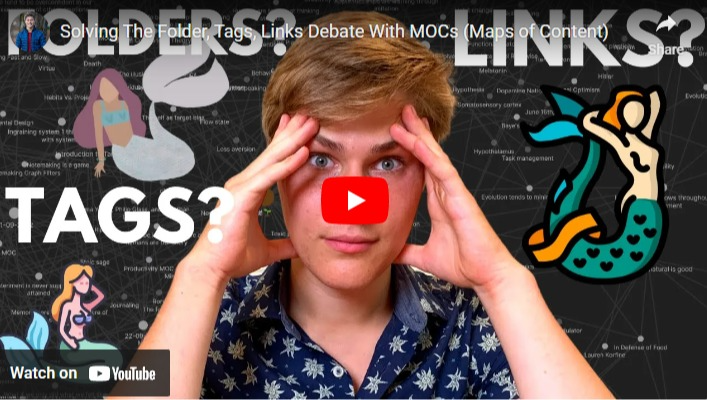
Solving The Folder, Tags, Links Debate With MOCs (Maps of Content) 5.9K views 3 months ago How I Use Obsidian
obstacles to = collaboration - c - d
scond clue = target - versus = something else - eee - kk
kdkd
Rebuilding Society on Meaning (Improved version)
The Markdown Guide is a free and open-source reference guide that explains how to use Markdown, the simple and easy-to-use markup language you can use to format virtually any document.
<svg version="1.1" id="Layer_1" xmlns="http://www.w3.org/2000/svg" xmlns:xlink="http://www.w3.org/1999/xlink" x="0px" y="0px" width="208px" height="128px" viewBox="0 0 208 128" enable-background="new 0 0 208 128" xml:space="preserve"> <path fill="none" stroke="#499bea" stroke-width="10" d="M15,5h178c5.523,0,10,4.477,10,10v98c0,5.523-4.477,10-10,10H15 c-5.523,0-10-4.477-10-10V15C5,9.477,9.477,5,15,5z"/> <path fill="#499bea" d="M30,98V30h20l20,25l20-25h20v68H90V59L70,84L50,59v39H30z M155,98l-30-33h20V30h20v35h20L155,98z"/> </svg>
svg source ```html
<svg version="1.1" id="Layer_1" xmlns="http://www.w3.org/2000/svg" xmlns:xlink="http://www.w3.org/1999/xlink" x="0px" y="0px" width="208px" height="128px" viewBox="0 0 208 128" enable-background="new 0 0 208 128" xml:space="preserve"> <path fill="none" stroke="#FFFFFF" stroke-width="10" d="M15,5h178c5.523,0,10,4.477,10,10v98c0,5.523-4.477,10-10,10H15 c-5.523,0-10-4.477-10-10V15C5,9.477,9.477,5,15,5z"/> <path fill="#FFFFFF" d="M30,98V30h20l20,25l20-25h20v68H90V59L70,84L50,59v39H30z M155,98l-30-33h20V30h20v35h20L155,98z"/> </svg> ```
= highlight colours

VS Code Markdown Support

Linking Personal & Collective Knowledge Ecosystems for Nurturing Systemic Wisdom

ḥ LATIN SMALL LETTER H WITH DOT BELOW LATIN SMALL LETTER H WITH DOT BELOW is a character in the Latin Extended Additional Unicode subset.
for hypothesis social annotation
-eme
in linguistics, noted as an active suffix and word-formation element from 1953; from French -ème "unit, sound," from phonème (see phoneme).
"unit of language structure."
= grapheme
one provider
no provider, open, ubiquitous evergreen
decentralized technologies
not decent enough, still server based If you depend on a server you are still a slave
We need autonomous People's Networks tht works for people, and let them do it for themselves
The latest from Bluesky.
according to a blog post
to : https://blueskyweb.xyz/blog/10-18-2022-the-at-protocol
Departed Twitter Founder Jack Dorsey Is Launching a New Social NetworkbyMaggie Harrison
web : https://futurism.com/the-byte/twitter-founder-jack-dorsey-web3-social-network print : https://bafybeidneevme7odpdwjmy5kpx6jxzj647zwkhe6yn67x5lcjl2aiqmx24.ipfs.w3s.link/Departed%20Twitter%20Founder%20Jack%20Dorsey%20Is%20Launching%20a%20New%20Social%20Network.pdf
Co-creating a common data language for the DWeb By Connor Turland
Commento++
Build UIs without the grunt work
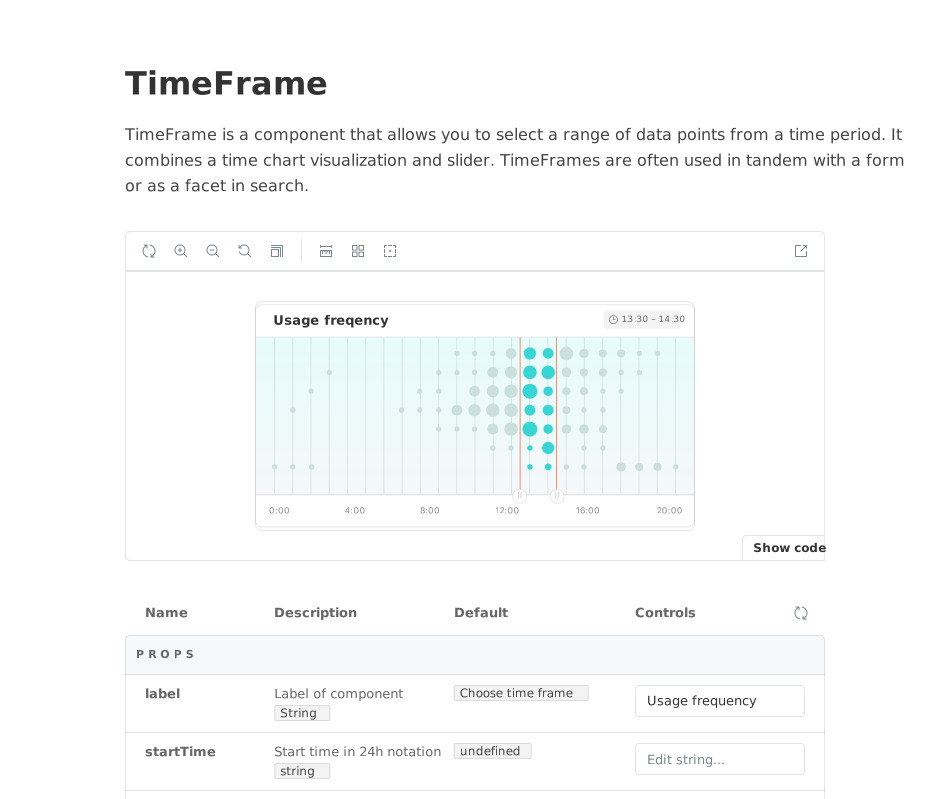
Comento UI Vue UI components used in Comento
commento UI

RealWorld repo.
https://hyp.is/hrETYqx_Ee2q_Ptpg02TwQ/github.com/gothinkster/realworld
something more than a “to do” app. Usually “to-dos” don’t convey enough knowledge and perspective to actually build real applications.
real perspective
A RealWorld Comparison of Front-End Frameworks 2020
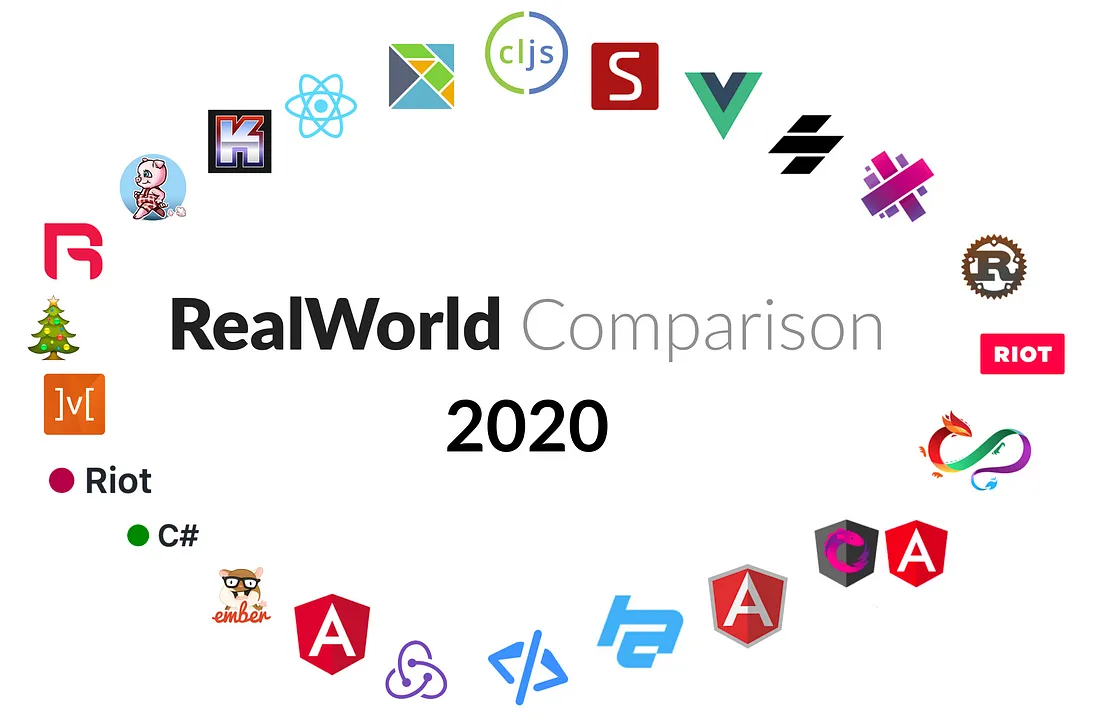
That said AppRun, Elm, and Svelte are really impressive.

The sooner you paint and the sooner someone can do something, the better the experience for the person who is using the App.
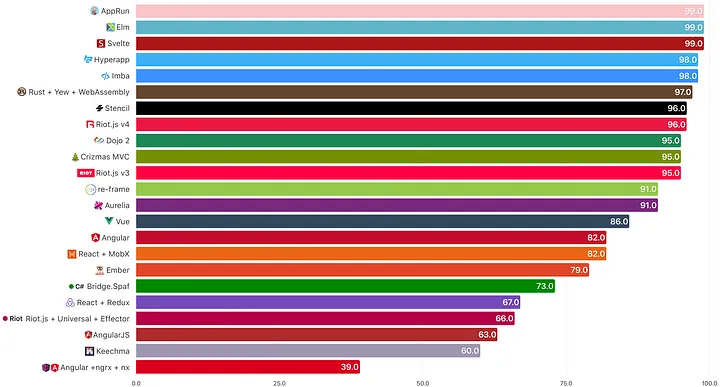
About "The mother of all demo apps" — Exemplary fullstack Medium.com clone powered by React, Angular, Node, Django, and many more 🏅

Top 9 Wayback Machine Alternative Sites (Web Archive Sites) January 12, 2023

what's always stuck with me is the complete effortlessness of meditation
effortlessness

The Effortless Meditation, Peter Russell
we just drop back into our own beingness and it's so so simple and it's that for me that allows me just 00:02:42 a sense wake up at any time I want to I mean I'm going to five seconds later I'll be caught up in thought again maybe but that doesn't matter it's not about how do we stay there the practice for me 00:02:55 it's not about staying in that state but it's about how do we come back to it recognizing would be drawn off then how do we come back
not stay how to come back
more about attending to the quality of the attention and notice whenever this is 00:02:30 tightness in the attention just to let it soften and relax
attending to the quality of the attention
and in my case instead of pursuing the details of the thought process that I am engagred with, stop trying tom pursue and think it through and shift the attention to the the point of it all and just be grateful for the chance of that persistent engagement
whenever we're 00:01:13 caught in some thoughts I'm thinking whatever it is that always creates some slight sense of tension or constriction 00:01:25 in the mind and if we can notice that it's very faint but with practice we begin to notice how as soon as we're caught up in thinking whatever it is or focusing the attention anyway this is 00:01:38 very slight sense of tightness comes into the mind if we can notice that and recognize that's also part of the present moment there's nothing wrong with that that's just how this i
notice tightness nothing wrong with that
do not try to empty your mind
meditation is allowing the mind to relax and when we allow the mind to relax were allowing our thoughts to relax we begin to drop back into our own essential nature back 00:01:01 into our beingness back into that sense of just fundamental self
this would only work if you do not think that the self is an illusion but quite the opposite the only thing that let's you connect with what is real
Ontology defined as an "explicit specification of a conceptualization," is just the tip of an iceberg giving us the illusion of understanding. Part of the Quest for normative surety that surely brings ruin: "Knowledge without the situated knower" result: View from nowhere
ontology = consistent naming is essential
It is not to be mistaken for what is being named
Magical thinking: "Anything is possible if you deem it so"
But you need to find it's true name , which is only and index to an associative comPLEX https://indylab-2022.fission.app/hyp/?view%20point&user=gyuri
I built the same app 10 times // Which JS Framework is best?
Gyuri Lajos 1 second ago Still congratulate on the very nice summaries of the frameworks. Svelte is rightly coming up. Show less Read more 1.0x 0 Like 0 Dislike Reply Gyuri Lajos 0 seconds ago https://hypothes.is/a/EmQxSqvcEe2ivIMtMs4kww unlike react it does not need to be refactored every year or so. If the you cannot get the concept right, state management is a broken concept, it is not even clear what it is that you really want to do, hence the constant rework. As Alan Kay said about the browser, it is a broken wheel, it is not even clear what it is. Why is it that the most popular frameworks perform worse? And remember since the number of people working in the field doubles every 5 years or so, (Uncle Bob Martin) that means half of the mass of programmers have less than 5 years experience, popularity = pop culture and cargo cult. To be fair, Java got to be the top language because although it failed (first time) for set-top boxes, it did have huge marketing budget, had tried and eventuallyu failed in the browser, as applets, then escaped to the server side, eclipsed by javascript for good reasons. Android saved it, but it stills a lot to be desired. Back in the day there was a great project for Windows mobile called Ewe that was great UI (not using platform libraries but ist own drawing of UI elements. It was about 2 Mb 20 years ago and worked interchageably on mobile and desktop windows. So there. Show less Read more 1.0x 0 Like 0 Dislike Reply Gyuri Lajos 1 second ago do checkout apprun, and todo up is not enough. https://indylab-2022.fission.app/hyp?apprun&user=gyuri
My comments
The past, current state & future of JavaScript frameworks
recognizes that uniformity and expansion are not always the best goals.
uniformity and expansion considered harmful
Platform Co-op School Community Assembly Highlights

Collaborative Technology Alliance emphasized the need for collaboration and interoperability among different platforms
interoperability among different-platforms
facilitate community-building, collaboration, and impactful action in the world.
facilitate community building, collaboration and impactful action
Instead of focusing on engagement-driven content creation
What sets Hylo apart is its pro-social commons approach
= Hylo = pro-social commons approach
Revitalizing Online Sociality: Exploring New Forms of Community Ownership

Search results for "peripheral awareness" social network
https://bafybeigyxpgmsqlzmlvtxl3figkixcrw3lirpaxu6koqnpfnup3fngwlyq.ipfs.w3s.link/Search%20Results%20-%20Learning%20&%20Technology%20Library%20(LearnTechLib).pdf
Search over 100,000 articles and abstracts focusing on learning and technology

emergence of social media and their adoption as a critical element in knowledge management strategy
= social media - as - critical element - in = knowledge management
The paper presents a model for understanding how social media have augmented communication and collaboration methods and have introduced new dimensions in work practices, namely, peripheral awareness, crowd sourcing, and network maintenance
Ten Years of Net Work ARTICLE - LearnTechLibhttps://www.learntechlib.org › ...https://www.learntechlib.org › ...by P Anklam · 2009 · Cited by 68 — ... and collaboration methods and have introduced new dimensions in work practices, namely, peripheral awareness, crowd sourcing, and network maintenance.peripheral awareness meaningperipheral knowledge meaningknowledge management skillsknowledge management knowledge
https://hyp.is/HeqeqquMEe2Vl2tTLaxGmQ/www.learntechlib.org/p/75548
work to Great exception and I think Stephen B the historian you're probably explained exactly what happened well I mean again the big problem is not making amino acids it's sequencing them properly it's like getting a bag of 00:37:45 Scrabble letters and thinking you've got a triple word score you've got to arrange the the letters in the right way and put them on the board in the right place for them to actually convey information one more sudden emergence man 00:37:57 the Anthropologist
rx
about 2 million years 00:38:10 ago our genus homo just appears quoting Hawks no gradual series of changes in earlier australopithecine populations clearly 00:38:23 leads to the new species and no australopithecine species is obviously transitional close quote well we don't seem to have descended 00:38:35 from apes or at least if we did it ain't in the fossil record what does that tell us
no descendent from apes
getting a bag of 00:37:45 Scrabble letters and thinking you've got a triple word score you've got to arrange the the letters in the right way and put them on the board in the right place for them to actually convey information
scrabble letter triple word score
Dan Brown the novelist of that team 00:37:19 pick this up in a book that he entitles origin and he used this to develop his theory of the origin of life
.png)
barking up the 00:36:12 wrong tree that's the signature of a wrong idea because if you have the right idea you expect future results to haste to support it
barking up the wrong tree
to do that you need 00:35:36 instructions and those instructions were found on the DNA molecule and it's the origin of the code that has presented the most acute problem for origin of Life research because chemistry simply doesn't move in the direction of 00:35:48 informational complexity it moves in other directions one other origin you can't get from chemistry to code
need instructions
acute problem
chemistry not
direction of informational complexity
a huge irony is that 1953 you have the Miller Yuri experiment 00:35:12 Big Flash in the media but you also have the Watson and correct discovery and the two things I've run counter to each other ever since
Miler Yury Watson
run counter to each other
Miller and Yuri produced two or maybe three protein 00:35:23 forming amino acids out of The Ensemble of 20 that you would need to build a whole protein but more importantly they didn't show how you could sequence the amino acids properly to get them to fold into proteins
.png)
get from simple chemicals to a complex functionally integrated of cell with information processing 00:33:29 systems and miniature machines
from simple chemicals we get to
functionally integrated miniature machines
there's code and the looming Specter of the possibility of a coder
looming spectre coder
there's a worldview dimension to all of this you see if I put on my atheist hat which I do with some difficulty but I try to do it and you say to me 00:31:49 write me an account of the origin of life I will come up with an evolutionary theory immediately because that is the only possibility Allowed by the 00:32:01 naturalistic worldview
worldview dimension
materialistic account of the origins of species
come up with evolutionary theory
deduces it from materialistic philosophy
lucretius
de rerum Natura Lucretia
.png)
ideas that were perhaps crystallized by Darwin had 00:30:57 existed a long time before
old ideas crystallized
formulates something called the sequence hypothesis
the four chemicals subunites neucleeotid subunits sequentiual arranbgement in a symbolic arrangements
information rvevolution came to biology
how to take section of code randomly changing without
you attacking champions for the latest science
before you said anything about the fact that the information acquired as linguistic and linguistic language is not produced 00:23:08 by random processes right
linguistic information
and language is not processed by random proceses
parts are made of proteins and proteins are the in in essence the toolbox
30 part rotary engine help process iunfirnation
each one of those proteins needs egentic information
gigantic haystack
not fo find the haystack
30 proteings
it could not be built gradually and improving each step of the way intermediate stages confer no functional Advantage therefore there's nothing for natural selection to 00:16:42 select
intermediate stages do not confer advantage
nothing to select
this is your your sort of thing signal concept irreducible complexity and the story of the mouse trap
who's dead God or Charles Darwin
=

The Undeniable Value of Blockchain and Smart Contracts
b;ockchain
The Undeniable Value of Blockchain and Smart Contracts
x
Filecoin | But for Devs
=
Founding partner of the 5-month Antikythera Studio. One Project is an operating non-profit and a giving foundation whose mission is to support a global transition to an economy that is equitable, ecological and effective.
One Project
Antikythera” refers to a computational technology that discloses and accelerates the deeper condition of planetary intelligence.
deeper conditions of planetary intelligence
The Antikythera mechanism
was among the earliest known computers. Discovered at the Greek island of Antikythera, it combined calculation, orientation and cosmology. For our program, “Antikythera” refers to a computational technology that discloses and accelerates the deeper condition of planetary intelligence.
reasoning together is the best antidote that when it works at all reasoning tends to work better as a 00:07:52 team sport
reasoninng together
what would be possible in a world in which all knowledge is so easily available namely 00:08:57 the ability to connect disparate pieces of information by people who out of passion or profession make it their business to do so trailblazing in his jargon and he imagined that it would become commonplace this is widely 00:09:10 regarded as the first reference to what we now think of as digital annotation
MEMEX trailblazers digital annotations
paradigm shift
shifting the paradigm from Centralized to Decent(ralized) is an enabler for the Paradigm Flip we need
Many features of the current web are the opposite of what we really need
stateless -2- statefull with verifiable provenance, audit trail, and recapturable history
draft :
| Current Web | The Flipped Web |
|-----------------------------------------------------------------|
| Centralized | People Centred |
| Location Addressed | |Content Addressed |
| Server based | Browser based |
| Rest API | p2p messaging |
| Flawed Security Practices | Secure by design |
| Ephemeral | Permanent, Enduring |
| no trust | built from trust for trust |
| non-custodial | custody for all information by author |
| no real privacy | Privacy on demand |
| Siloed | Ambient multi-modal anti-database |
| Value realized by providers | Value realized by participants |
| Gratuitous Tech Complexity | Transparent Tech |
| Master/Slave cookies | Peer to Peer Ambient connectivity |
| One way links | All links go both ways and are meaningful for humans yet processable by machines |
scale decentralized governance
scale decentralized but people-centric governace
Turing-Complete Governance
How about People-Compete governance
governance
lack of self-representation is a hindrance to development of governance
decentralization and trusted smart contracts is not enough we need to be able to foster enduring trust between people and build on that too. Shape tools with deep involvement of autonomous human actors
decentralized
decentralization is key but is not enough
We need it to be also People Centred one that works for people, by the people, for the people first. Make each individual and communities first class asctors in their owned trusted interr(personal|community) networks
Collective intelligence for collective progress.

We exist to facilitate cooperation, coordination, and collaboration among the individuals and groups building social software in service to a thriving world
co-(operation|ordintation|laboration)
Collaborative Technology Alliance

responsibility of co-creatingthe information ecosystems,practices, and tools thatenhance our abilities ratherthan exploit our vulnerabilities.
It’s time to stop behaving like “users.” Instead, let’s become “makers” who take on
take on : the responsibility of - co-creating - information ecosystems - practices & - tools
resonate with : https://hyp.is/bWaNpnCEEe2HeLMf3YqliA/polanyisociety.org/2019pprs/Lajos&Goodman-Augmenting-Tacit-Awareness-6-16-19.pdf
Common Sense[makers]We’re researching and developing distributed protocols, practices, and tools for collective sensemaking. Join us!
build commons-based, peer produced Constellations using new prtolocls like IPFS
distributed, yes but how?
.svg)
Ecological and societal disruptions by modern climate change are critically determined by the time frame over whichclimates shift beyond historical analogues. Here we present a new index of the year when the projected mean climate ofa given location moves to a state continuously outside the bounds of historical variability under alternative greenhouse gasemissions scenarios. Using 1860 to 2005 as the historical period, this index has a global mean of 2069 (618 years s.d.) fornear-surface air temperature under an emissions stabilization scenario and 2047 (614 years s.d.) under a ‘business-as-usual’scenario. Unprecedented climates will occur earliest in the tropics and among low-income countries, highlighting thevulnerability of global biodiversity and the limited governmental capacity to respond to the impacts of climate change.Our findings shed light on the urgency of mitigating greenhouse gas emissions if climates potentially harmful to biodiversityand society are to be prevented
abstract :
Here we present a = new index of the year - when the = projected mean climate - of a given location - moves to a state continuously - outside the bounds of historical variability - under alternative greenhouse gas emissions scenarios.
Using 1860 to 2005 as the historical period, this index has a global mean of 2069 (618 years s.d.) for near-surface air temperature under an emissions stabilization scenario and 2047 (614 years s.d.) under a ‘business-as-usual’ scenario. Unprecedented climates will occur earliest in the tropics and among low-income countries, highlighting the vulnerability of global biodiversity and the limited governmental capacity to respond to the impacts of climate change. Our findings shed light on the urgency of mitigating greenhouse gas emissions if climates potentially harmful to biodiversity and society are to be prevented
a link to the permanent address
this would amount to a verifiable provenance chain of the shared content. So not block chain - but attributable content chain -
e.g. record of Value Flow
such that it can benefit the creators monetize
so instead of micro payment #s payments for delivered value
Quick update.

unmanageable complexity are a pretty manageable variety ofcompositions
complexity - manageable variety of composition
lessons about distribution and routing
=
build universal protocol stacks.
symbolic unity
Make it “Unenclosable”
Foster Coherence and Follow Convergence
improve : - comprehension - consistency - local completeness - comfortable with the unknows
could make formerly intractable problems (such as climate change, speciesextinction, resource depletion, or poverty) quite readily solvable.
climate change resource depletion
readily solvable
peered, decentralized, semantic and designed to evolve in response to rapidly changing needs
people centred?
upside-down incentives
=
Contextual Namespaces
=
The model is: Trust your own node
and your connections
Sovereign Accountable Commons (SAC
= Sovereign Accountable Commons - abrev : SAC
akin to : DAOs - but - leverage : different architecture
consider : making the indeividual participants sovereign Actors
let : them - create - shape - their own - HomeBrew - - SelfGoverned : Self-Sovereign Autnomous Accountable Commons
ndividual
search : individual
= Sovereign Accountable Commons (SAC) - are : - Mutually Sovereign
sharded distributed synchronization
alternative : interpersonal asynchronous communication relying on explicit mutual dynamic agreements that are always timer limited, requiring renewal of mutual consent
instead of decentralized make it people centred!
Prevents the groupfrom control individuals’ assets.
how about making the group an actor with rules and automaticsm
allow groups to be created by individuals
team up with say three other trusted individuals and collectively create community groups
instead of trusting algorithms harness human trust and flexibility in coming to and modifying agreements
go off in another direction and take my toys with me
take my toys with me
individual
can't get : mutual sovereignty -
between - groups & individual
sugerting :
fractal sovereignty
mutual sovereignty
= mutual sovereignty - at - every : - layer & - level
indivi
searched : indiv
Cells & DNA…
= distributed governance.
political gridlock of group vs. individual and
no : ability to
=self-represent,
trust or
run : local copy
enable individuals to be primary authorities over their own historical data
searched : indiv - verifiable - ownership & - provenance
be leaders in the transition of web platforms towardspersonal ownership of data
Personal digital Autnoinomy
custoidy of data and the software used to creat it in a commons based, Open, unenclosable storage
co-designers, taking co-responsibility
co-designer co-responsibility
different interface
needed
Value Flows is a common language
comment : - machine bias hits again
access and alter my digital informationvia a finite number of prescribed interfaces
not - make : sense - access & - alter digital information - via : finite number of - prescribed : interfaces
empower our networks and all people
empower people to weave their own(ed) intent/interest based collaborative networks of networks
a common language that can be spoken and understood byour various web platforms
common language for People to understand and use to articulate better what they want and collaborate seamlessly
Value Flows
collaborative - project : Value Flows
comment : - will see what is meant by Value Flows - hope it entails Stigmergic Open Mutual Learning Flows
following up on : Gilder's - claim : wealth is Knowledge - claim : Learning Flows create knowledge with intrinsic value, so it Learning Flows are Value Flows
bringing about a more collaborativeopen social web
value prop : IndyWeb/Hub/Net/Lab - Open, Commons-based, peer produced People Centred interpersonal networked collaboration
Co-Creating a common Datalanguage To Empower Citizens of theWeb
from : - https://docs.google.com/presentation/d/1_gzZzv278b12VrZiczJEtxLKf9TSF9YQd-uMZWQE3LU/edit#slide=id.g707c9ec37_0_47 - https://docs.google.com/presentation/d/1_gzZzv278b12VrZiczJEtxLKf9TSF9YQd-uMZWQE3LU/edit#slide=id.g707c9ec37_0_47
hollow web browser and an app called hollow core which is storing all the 00:08:28 data all the nodes all the whole ins all the hollow webs and it's all encrypted and you decrypt it with a QR code key
hoillow web browser
networking stack webrtc
holo and sculltebutt
a hollow web as a conversation but it's a well-formed conversation with a 00:05:44 purpose it's a meaning explicitly meaningful conversation with an explicit purpose so you define an intention or purpose and you define an ontology which is the types of things that can exist in 00:05:59 that reality in that conversation so ontology is like the definition of what exists
holoweb is a conversation well formed
intent + ontology
e Halle web everyone will store their own data like hollow chain
everyone stores their own data

if we don't start sowing the seeds of what i have called earth democracy we are 00:09:35 going to see 99 people as disposable especially with the tech working on artificial intelligence to make sure all the mechanical work is made redundant whether it be in radiography or law or whatever mechanical work will be substituted and if that's the case 99 people are disposable
disposable
.png)
when you design it with deep recognition of interconnectedness 00:00:35 you will nurture those relationships and this basic recognition is what i drew from my learnings in quantum theory that non-locality non-separation interconnectedness
learnings from quantum theory

DIVIDE & RULE - The Plan of The 1% to Make You DISPOSABLE - Vandana Shiva 926K views 1 year ago
=
I believe that cooperation at scale requires a changing worldview. I do not believe there is a left and right, only a top and bottom. Things that appear different are different expressions of our interconnectedness. It is time to abandon the us and them and become what WE are capable of becoming.
https://hyp.is/_cGFMqbKEe2IcJOfAnDXug/docdrop.org/video/f9lq-uBdxg8/
Integral Interoperability Framework
examine how ourown co-creative innovations in development at Symphonics (‘SymphonyEngine’, ‘Holosourcing’) can work in unison with other interoperabilityprojects and initiatives to bring forth foundations for an integral governanceprotocol and solution.
examine - how = co-creative innovations - in development at Symphonics - SymphonyEngine - - see = Symmathesy Engine. HoloSourcing - - can work - in : unison - with - other : interoperability project
synergistic protocols (‘joiningwhat’s working’ vs ‘joining together to start new projects’)
= synergistic protocols - what;s working - vs - 'join together to start new projects'
The Source of Synergy Foundation
SpiralDynamics refers to as memes (https://en.wikipedia.org/wiki/Spiral_Dynamics)
https://hypothes.is/a/Tpy1YKZkEe2Wl4PuyDzbvg
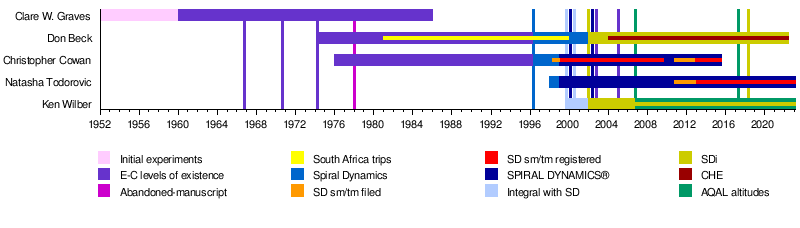
Integral Interoperability https://hyp.is/5Ig4TqZiEe2xzg9RdpJaxA/airtable.com/shrWUrSVrO0NqElhC/tblRQnbKZ9Tphs1n2/viwKDaPxYBE0SMWY3/recmzTvjzZ1ComCtU
https://bafybeib5dcc5enmqk5lafb6wstvqu2p4gn42pezxof2eqqhgm6hspzapne.ipfs.w3s.link/Integral%20Interoperability.pdf
Spiral Dynamics (SD) is a model of the evolutionary development of individuals, organizations, and societies.
Visualize ComplexIdeas Programmatically
from : https://hyp.is/DRTJWKVzEe2dvNvzPR7YpA/www.youtube.com/watch?v=H5GETOP7ivs
Motion Canvas is now Open Source! 38,951 views 4 Feb 2023 aarthificial aarthificial 100K subscribers
Global Co Lab Network

For me, it had worked (electron-main node.js process to browser) with a webrtc-star server.https://github.com/reseau-constellation/ipa/blob/main/src/sfip/config%C3%89lectron.tsI do wish they hadn't archived it before the alternative was actually shipped...but I suppose it will continue to work in the meantime, even if it's archived.
webrtc star node
Simple, transparent pricing plans