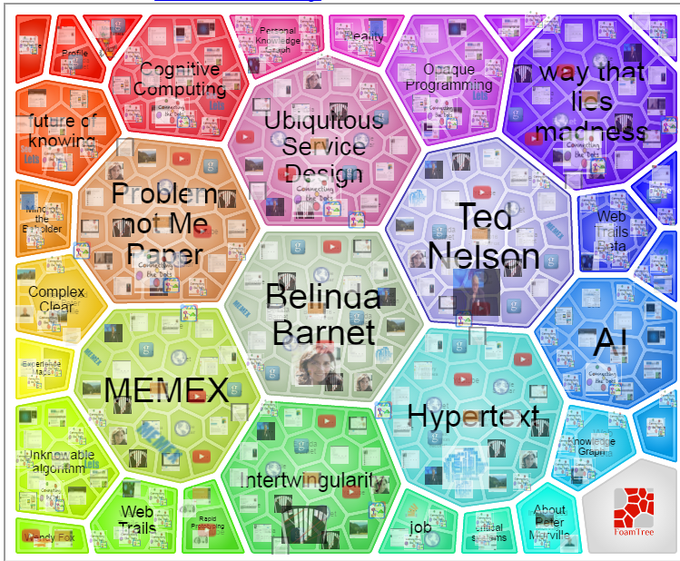
We're building these tools on Hylo, a coordination platform that we steward in partnership with Holo, the makers of Holochain.
Holo
We're building these tools on Hylo, a coordination platform that we steward in partnership with Holo, the makers of Holochain.
Holo
The relation of clues to that which they indicate is a logical relation similar to that which apremise has to the inferences drawn from it, but with the important difference that tacit inferences drawnfrom clues are not explicit. They are informal, tacit.
Clue is a fundamental concept in @TrailMarks
No wonder.
"Tacit inferences draw from clues ae not explicit"
I like the word "illation" I learned from Descartes in my first year Essay in my first year studying History and Philosophy of Science and Physics at Leeds.
The purpose of this paper is to explain the relation between body and mind as an instance of the relationbetween the subsidiary and the focal in tacit knowledge.
focal and subsidiary in Tacit Knowing
The Structure of ConsciousnessMichael Polanyi
The Master and his Emissary
ELIZA is a program operating within the MAC time-sharingsystem at MIT which makes certain kinds of natural languageconversation between man and computer possible. Input sen-tences are analyzed on the basis of decomposition rules whichare triggered by key words appearing in the input text.Responses are generated by reassembly rules associated withselected decomposition rules. The fundamental technical prob-lems with which ELIZA is concerned are: (1) the identification ofkey words, (2) the discovery of minimal context, (3) the choiceof appropriate transformations, (4) generation of responses inthe absence of key words, and (5) the provision of an editingcapability for ELIZA "scripts".
abstract
Eliza 0!Pygmalion fame
Pygmalion fame
After two or three interchanges with the machine, she turned to me and she said, “Would you mind leaving the room please?” Roman Mars: The secretary was so entranced by this chatbot that she didn’t want to stop exchanging messages.
enthralling
What is polypol? by top-mba-universities | Posted on August 24, 2021

all of the algorithms come to the data.
Oracle introduces lower cost options for Autonomous Database


Oracle introduces lower cost options for Autonomous Databasehttps://siliconangle.com › 2022/03/16https://siliconangle.com › 2022/03/16Mar 16, 2022 — In our converged database, the data sits in one place and all of the algorithms come to the data. It's very simple.”.
search: algorithms come to the data
we are not yet using the new governance capabilities that the Internetmade possible anyway
Flipping the existing paradigm of epistemology is needed to enable Flipping existing governance
institutional capacity
=
transition towards complexsociality
= complex sociality
“fitter”
caution - not in the evolutionary sense
Systems of organised complexity
=
organised complexity
=
protozoa
Cambrian Governance The Internet Transition

Search powered by Natural Language Processing
powered by : semantic model
engage with relevant content outside of your community to help grow it further
engage with : relevant content
Locate & engage with the right content

every feature to help companies
with developers - help them reach their growth goals - - through : a vibrant community
-p-800.webp)
crowd.dev@CrowdDotDevFollows youAn open-source suite of community and data tools built to unlock community-led growth for developer tools.

Experience TiddlyWiki Fluency: Creating a Reading List
TiddlyWiki - Jeremy Ruston
Notational intelligence
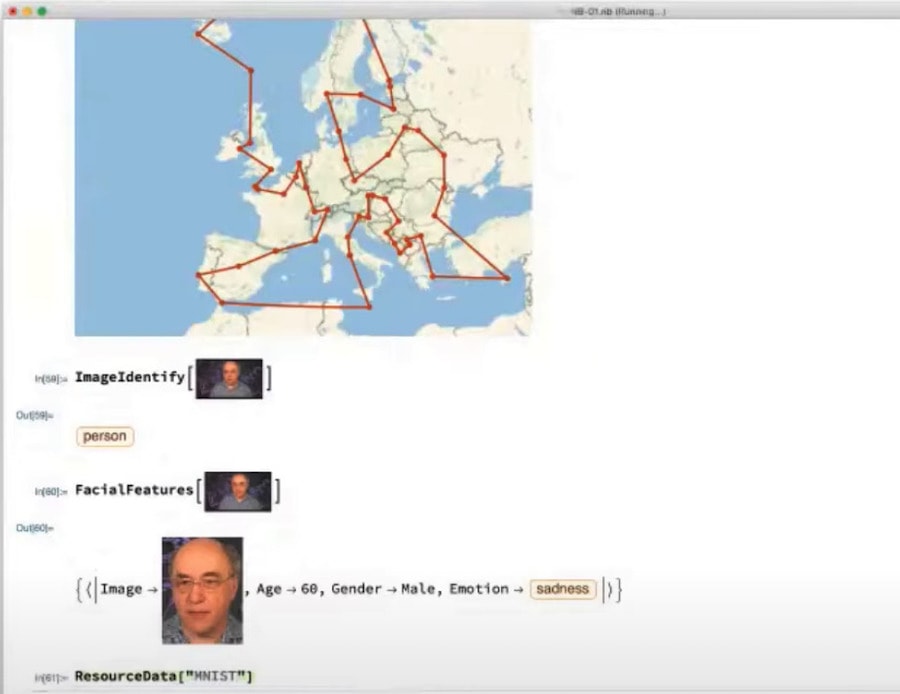
Wow - purpose = TrailMarks - give much of the power of Wolfram to the ordinary indyNetizen using just a browser and having access to Ambient Intentional Commons-based, peer-produced, Open FAIR HomeBrew software in the long tail and the ability for people to co-laborate without friction and full provenance of contribution co-creating Software through Conversation
found an alternative ecosystem — one that returns us to the earlier promise of the digital age as an era of empowerment and the democratization of knowledge.
found : an alternative ecosystem - return us - to the - earlier : promise of the digital age - = area of empowerment - = the democratization of knowledge
see : autonomy
the essence of autonomy and human agency
the = essence of : - autonomy & - human agency
technologies for web publishing that are based on plain text and putting forward their benefits.
web publishing - based in : plain text

abuse of notation
boris marinov
Innovation in notation and dynamic documents won’t arrive as a single big idea or a single product from a new startup.
But a process of bootstrapping mutual arising| of
can hopefully be gotten off the ground and into the yonder of blue sky of wonder
won’t be just bidirectional links or just spatial interfaces or just GPT-whatever.
agreed
but if we can go meta and imitate creation itself?
augmenting human intellect.
indeed
“Does this product finally get it right?”
First and foremost we need to get the IT right, at last!
There is that IT.
Wikced problems are wicked because the task is to exdplore and identify the problem
What does Information processing realy IS>
I think notation should be judged by its ability to contribute to and represent previously unthinkable, un-expressible thoughts.
absolutely and the key is in how do we grow/compose tacit understanding insights into comprehendable, comprehensive, cogent, coherent, consistent, complete, communicable articulation/elaboration
notes can take on different roles in this map of ideas – some notes are more “paths” that help us discover other notes; some notes are more “districts” that act as topic-level containers, and some notes are “landmarks” that go deep into specific concepts
HyperMaps of Intent/Meaning You Name IT
construct documents that feel like “spaces” that we read by “navigating” it.
Spaces
read by navigating it
created woven threads/Trails
Complex ideas often present themselves as densely connected networks of smaller ideas.
Complex Ideas ARE Associative Complexes
How can we improve the way we work with written language to be more interactive and dynamic?
KEY QUESTION
domain-specific notations
Go Meta with a Universal Intentional Notation to articulate and operationalize any domain to bootstrap effective concepts and processes morphic conversational interaction and Morphic Permanent HyperMedia Experiences in home-grown autonomous interpersonal hypermedia with FAIR principles extended to embody FAIRNSS - findable - Accessible - InterOperable, InterPlanetary, InterPersonal, Interpretable - Resusable - Networks of - Social - Software
One path I’m beginning to investigate is notation for working with complex networks of ideas.
TrailMarks spans MindPlexes with clues
First-class support for rich media in notation.
go the other way round
rely on Plain Text Intentional Mark in notation in HyperMedia Context with the ability to create extends morph HyperMedia
and the notation would self-describing and interpretable
Evolution is a meta-learning algorithm that discovers its own heuristics and continually improves the rate at which it learns.
Symmathesy
Intelligence as run-time adaptation
Wow
computable notation
effective notations
Thought Vectors in (eventually effective) Concept space
I believe inventing better notations can contribute far more than automated tools to our effective intelligence in understanding ourselves, the world, and our place in it.
Indeed! notations to think with and produce home grown software as a Conversation That is what [@TrailMarks[(https://twitter.com/TrailMarks_ is about
research question : - is it possible to - integrate :all these open source tools -together - to create : a viable ecosystem of tools - for : citizens- to use - as a planning tool at TPF?
interested in - applying : open source tools - to - = TPF - = Bend the Curve game.
Highlights
highlight : - State of the art of = open source software - for = urban planning. - open source tools - augment = urban analytical processes.
categorised - according to - = planning process phases, - = application domains, and - = use cases. - list of : 54 = peripheral tools - supports = urban planning
WinstonYap
=
Abstract
z
Education has long been ignored by contemporary philosophers. That is a myopic view that must change
agreed
Provider of a SaaS-based bookmarking tool

Backing visionaries
=
marking off contractions
?

deployed decentralized systems that offer commonly usedservices
= decentralized systems - offering : common services - = Mastodon - micro blogging - = PeerTube - video sharing
do how : topics - vs - objects - use ' = ' topic marker for things you know will have to be elaborated in a compolex plex - use ':' for objects that have clearly definable sturcure in terms of nested objects or property literals, or effective concepts, that would need to haver computational counterparts
These technologie
= tehcnologies - rely on - open-source - community led = software implementations - cf = commons based, peer produced
to decentralize = web functionality - name lookup - hosting - certification
no = individual administrative entity - could hamper - overall = operation, or - design decisions
This encompassesan array of technologies
encompass - array of : technologies - strive to provide - greater control - for : users
“money legos”
DeFi
This type of standardization is crucial to composability
standardization - crucial to = composability
leverage the work of others to create new applications
within the Ethereum ecosystem
need Composability cross eco systems
Because composability allows anyone in a network
Composability is Innovation Linda Xie
is innovation
coordination mechanisms are forms of stigmergy
coordintation mechanisms - as = stygmergy - indirect communication between autonomous agents
compared - with = IndyHub - communications initiated by people - as autonomous actors - as in = actor model - via messaging
- as in the = Actor Model
asynchronous coordination becomes essential for drivingeffective collective action
feature = IndyHub, Dream Space - conversations that are continuous without being synchronous
StigFlow
source : https://commonsensemaking.notion.site/Common-Sense-makers-Projects-74d5c571fab54854a300ec9bc4761139
from : https://commonsensemaking.notion.site/StigFlow-ba08c08cef724a84a277e90d11ee634a

re-imagined to fit in with CS[m] principles and protocols.
re-imagine siloed platform with principles and protocols

it’s currently being re-imagined to fit in with CS[m] principles and protocols.
CS[m] principles
StigFlow is an automation tool like Zapier, but for collective sensemaking. StigFlow brings your communities’ reactions to life and bridges them across apps, by enabling you to configure a variety of flows which are triggered by reactions
= StigFlow - automation tool like Zapier = but for collective sensemaking - configure a variety of flows triggered by reactions
HyperBlogging on the PeopleCentered Decentralized Web
HyperBlogging on the People Centred InterPersonal IndyNet
HyperBlog tacitly conflated two separate concerns:
What makes HyperBlog Hyper is that the blog posts a two-way hyperlinked to high resolutions addressable contents in contexts contiguous with the participants own knowledge work as MindPlexes
new features : - deep integration with hypothesis - packaged Hypothesis PDF viewer into a composable indyweb native app via Fission. Using Drive for partial deploy while in development
It is now possible to share annotated pdfs
database
Open, Commons-based peer produced
constellations for Autonomous |WebNative Interpersonal Trust Networks of Permanent co-creative HyperMedia (Work)Spaces where Players and Makers and communities co-create the network and the means of weaving and contributing to the network
HyperBlog
IndyHub

ownership
not quite unless you own you mail server
but at least it is based on an open protocol not a platform
We do want full custody and control over our own(ed\) data that should also be available offline
The myth of technology is
The myth of technology - is - the myth that the software issues are technical; - whereas what matters is - communicating to the mind and heart of the user, - and that is not a technical issue at all.
do how : annotations & TrailMarks - instead of tags - compose Clues
compose : Clue - Clue consist of two parts a Clue Term and - an Outline - (possibly nested) ordered list of items - where items can be text images html fragment or nested clues
The embedding of markup
one way ticket to hell
To me the World Wide Web is an unfortunate presence
= World Wide Web - deal with it Inland Revenue Service - unfortunate presence - all-right for shop windows
reduce people’s computer misery and quadruple the usability of computer documents.
quadruple usability of computer documents
documents go virtual all documents are meaningfully intertwingled materialized search results and virtual print runs
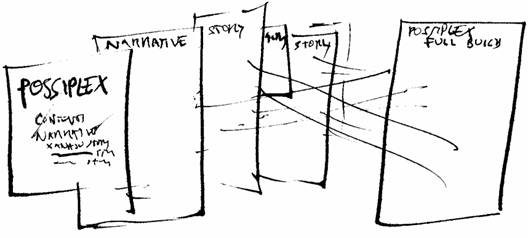
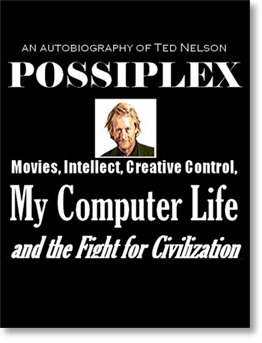
Possiplex
someday vindicate me (what a pisser!
someday vindicate you for sure with IndyWeb and Opidox
just collections of design decisions somebody made without asking you
technology - is
why one dares follow the inner urgings of a project, going where its nature wants to go.
follow inner urgings
strangely and accidentally right about a remarkable variety of things.
right about things
raving, ignorant, unconscious, delusional dreamer
= delusional dreamer
the true generalization of documents
requires : - documents to go virtual - in a network that is the Document
Excerpts from POSSIPLEX.
A cellular theory of communities
from : https://hyp.is/A3_QBp_CEe2nBa9MrnjCVQ/thesephist.com/posts/tools/
do how : manual capture : from link - highlight link you wish to follow - copy hypothesis annotation links - click on link to follow - add to page notes: 'from : < hypothesys annotation link > automate : from links - just highlight link that you wish to follow -
do how : annotations & TrailMarks
from : https://hyp.is/A3_QBp_CEe2nBa9MrnjCVQ/thesephist.com/posts/tools/
Your posts are on your blog.
ditto for = IndyBlog
Self-promotion is encouraged. You have material that you are writing or building and you want a community to see it. This whole site facilitates that.
compare = IndieWeb - with - IndyWeb - beyond self-promotion - zero friction progressive Engagement with readers - with a view to building trustfull connections, collaboration
compare = IndieWeb Blogs, Subs - with - IndyBlog, Hyperblog
Indieweb.xyz is a syndication service—meaning you can notify us when you've posted on your blog and we'll link back to you. The whole thing is organized like Reddit into subs, which are topic-based (usually) collections of links.

compare = IndieWeb - with - IndyWeb
compare = IndieWeb Blogs, Subs - with - IndyBlog, Hyperblog
Welcome to Indieweb.xyz! A syndication service organized by topic.
for = IndyWeb
compare = IndieWeb - with - IndyWeb
compare = IndieWeb Blogs, Subs - with - IndyBlog, Hyperblog
Blogs of Indieweb.xyz This is a directory of the blogs that have posted here. I'm hoping to build a good directory of Indieweb blogs by topic. If you want to be listed, simply send a Webmention!
compare = IndieWeb - with - IndyWeb
compare = IndieWeb Blogs, Subs - with - IndyBlog, Hyperblog
How to Post on Indieweb.xyz
= HyperBlog
weave the autnonomous people centered interpersonal indy net of open mutual learning commons
on the =indyweb
HyperBlog integrates deeply with hypothesis
deep integration with hypothesis
annotating search results for annotations
Example of annotating annotation search results
test : annotating search results for annotations
in = HyperBlog
Metablog The web's only search engine of blog posts
contrast it with = HyperBlog - search engine for IndyBlog - search open interoperable social annotation tools like hypothes.is and getmemex - search blogs published on the indyweb
from : https://chat.collectivesensecommons.org/agora/channels/ux-of-knowledge/sde6y4a4ibri3mkf1x13bjeo7r
High focus on sharing and collaboration
High focus on sharing and collaboration
finds software, tools and interactive data the same way one “Google” for information today
software and interactive data = FAIR Software
meme media implementations, which allow users to fully participate in the process of building the next generation of the Web.
meme media implementation
In the Borderland between Being a User or a Developer
user developer
Universal User
web-based knowledge media architecture, available through an Internet browser, that allows us, not only to publish compound documents with or without embedded services and tools into a world-wide shared repository like the Web
Surety brings ruin[8]
this is no longer appears on the current WikiPedia page
it was there 2 years ago
"Know thyself"
Xenophon
what you're actually reading as words on the page was the attempt of someone to crystallize into 00:17:02 written language a direct spiritual experience that they had. The only way to get to the core of what they're trying to tell you without getting caught up in a fundamentalist literalist trap is to actually regain the experience they had, they're trying to communicate through the words. That means the words have to be dissolved into a direct inner spiritual experience. And so it's a type of meditative reading.
= meditative reading
Notion (productivity software)

take existing programs and adapt or build on top of them
yes
Linda Xie heralded the capability of composability
quote : as one of the most powerful aspects of crypto: “Because composability allows anyone in a network to take existing programs and adapt or build on top of them, it unlocks completely new use cases that don’t exist in our world.”
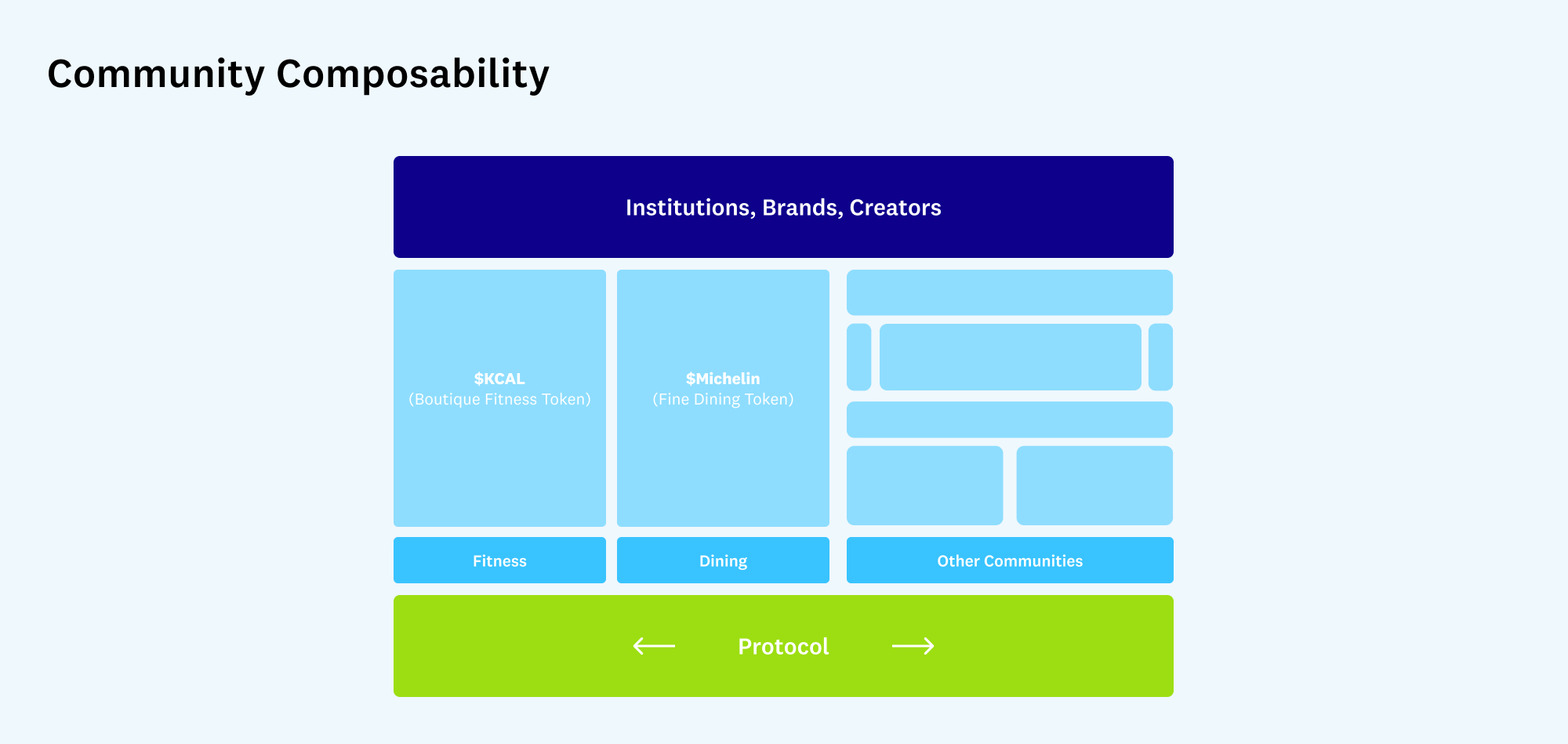
Can ‘Community Composability’ Help Web2 Users Make the Jump to Web3?
Community Composability
consumer crypto
early iinings
composability
write once use anywhere?
quote : -"the ability to mix and match software components like lego bricks … every software component only needs to be written once, and can thereafter simply be reused.”!
Building Edge Apps with Webnative SDK
= Fission Codes

socially native platform where you can see what your friends and the pros are investing in and replicate or join their strategies
socially native platform
I thought we moved on to protocols not platforms and beyond to commons-based, peer produced constellations powered by Web 3 protocols and convergence stack?
from : https://hyp.is/0iEUsrxPEey37fMEryZ5nw/thesephist.com/posts/programming-environment/
So the question is whether it's possible to contrive a system (a term I'll use to loosely refer to something involving a language, an environment, and a set of practices) built around the core value that zero-cost setup is important—even if the BDFL and key players only maintain that stance up to the point where the ecosystem has reached a similar place as contemporary
contrive a system
It's the programming environment, not the programming language
Self-made tools with Linus Lee
How the Curse of Lisp can be Flipped to Blessing and help us Flip the broken Paradigm regain the future and the paradigms lost
My name is Linus.
Frontend: Embeddable, Torus-based editor
embeddable
Torus is an event-driven model-view UI framework for the web, focused on being tiny, efficient, and free of dependencies.
event-driven model-view UI framework
Productivity suite written from scratch in Ink on the backend and Torus on the web
with backend
Ink is a minimal programming language inspired by modern JavaScript and Go, with functional style.

constellation of home-grown productivity tools I now rely on for my day-to-daywork and learning.
constellation of
for work and learning
= IndyWeb commons-based peer-production of home-grown overweb, webnative, permanent, attributed constellations of tools for interpersonal collaborative shareable workflows
and software as conversation in the long tail for interpersonal use
software tools,tools that last, and tools that are fragile
tools that last - vs - fragile
from : https://hyp.is/W796dJ_BEe2sHHPu4yT0Sw/thesephist.com/posts/tools/
from : google search
Build tools around workflows, not workflows around tools

Build tools around workflows, not workflows around toolshttps://thesephist.com › posts › toolshttps://thesephist.com › posts › toolsAug 4, 2020 — I want to share why I build my own tools and how I think we should think ... Good tools fit perfectly around our workflows, bad tools don't.My tools, today · Workflows > tools · Tools that grow with your...
the workflow that people need or that you yourself need um and then put together a tool chain around that
toolchain to create tinkerable homegrown workflows
talking to users about specific workflows and that is where the money is like that is where the real user value is
specific workflows that's where the money is
JotSpot the Programmable Wiki
had that to allow people to create their constellations and workflows to satisfy their need and share it in the long tail
StartUp focus on carving out nieches and silos that anre encapsulating and conmpelling enough to attract feture users
built a freaking programming language into a canvas
built a programming language into the canvas
SmallTalk was a programing language with morhipc vanvas based self-representation!
c.f. Lively Kernel of old
what you're trying to accomplish is a workflow um features can support that workflow but you should start with the workflow
Better still create the meta-constellations that for having conversations around desirable worksflows and capabilities with the goal of commons-based peer-production of software as a conversation
and bootstrap a new Paradigm the flips the existing ones
allowing people to do it for themselves together weaving the long tail of software as they go about creating their own(ed) workflows
that are easy to do compelling to share and use!
as opposed to what we normally do which we look at a set of features that a tool has and then we're 01:14:16 like comparing features of like well this one has this ability and this one has this ability features are not what you want
as opposed to comparing sets of feature
understand 01:14:02 the workflow that people need or that you yourself need um and then put together a tool chain around that
Linus Lee has a post called build Tools around workflows
= Tools around workflows - by : Linus Lee
multimedia
= for : multimedia - one of the things that makes these things great is that - you can put just about add anything into them um - I'm sure Steve has seen more random stuff dropped into spatial canvases using TL draw than most of us have because - he's trying to build this toolkit that works in a lot of different cases the general purpose case - as opposed to - there's a very clear workflow here - that's awesome and we don't have a lot of other spaces where we can relate different kinds of media PDFs text
having more than one view
or representation of a spatial canvas
and lastly multimedia
Auto organized force-directed graphs
organize ; my space - some that could be Auto organized - force-directed graphs different things like that - where I could basically have the computer try to - organize my space - **clean my room for me - without destroying my my personal Arrangement - where I personally put things and - people are just starting to kind of play around with some of those ideas um - comment : played around with these ides for many years
come up with a user interface Paradigm or a uh or some other technological breakthrough that'll kind 00:47:09 of allow us to extend the medium to handle that workflow
for - essence of = TrailMarks
come up against the limits of the medium of the spreadsheet and you realize oh I need a database or oh I need you know some other medium to kind of capture things 00:46:43 in there and I'm kind of curious about uh those the edges of the medium when it comes to spatial canvases when are we actually like running up against uh like this is sort of a fundamental limit
beyond the limits of the medium excel
work like a visual Wiki where you could click on on these elements and that's and link to for example documentation or stuff like that so that's possible now
= visual wiki
Tools for Thought Rocks: December 2022 - Jakob from LogSeq, Jess Martin

figure out how to use tools like this to think better to to work better with other 00:00:38 people and to basically become a part of their workflow in their life
Map your research rabbit holes.

TFT history
Readwise itself has become a "switching station", a Zapier, if you will, for highlights and quotes among many different tools.
StigFlow
= StigFlow
asynchronous coordination
= asynchronous coordotnation - needed = for collective action
1 watching now Started streaming 27 minutes ago Graph TRansformation Theory and Applications (GReTA) international online seminar series 1 watching now • Started streaming 27 minutes ago • Graph TRansformation Theory and Applications (GReTA) international online seminar series Speaker: Steffen Zschaler (Department of Informatics, King's College London, UK) Abstract: Domain-specific modelling languages (DSMLs) are “little” languages that are developed for a particular domain of interest and allow capturing descriptions of problems and systems in terminology close to that domain. So-called executable DSMLs (xDSMLs) come with a high-level specification of their semantics, often as an operational semantics, so that models expressed in the xDSML can be executed directly. Graph transformations are one mechanism that can be used to capture such semantics. A challenge with xDSMLs is that a new such language needs to be developed for every new domain, making the approach potentially costly. If we were able to better reuse existing xDSMLs, we could bring the cost of language development down. One area where this is particularly interesting is in the specification and analysis of non-functional properties of systems (eg, performance properties). In this talk, I will show how such properties can be modularised into their own xDSML and how these language modules can be woven into a given base xDSML via the amalgamation of graph transformation systems. I will give an overview of the concepts and some interesting properties, and will then show GTSMorpher, a tool implementing these ideas in the Eclipse ecosystem.
greta
GReTA seminar #39: "Composing Executable Domain-Specific Modelling Languages" 2 watching now Started streaming 25 minutes ago Graph TRansformation Theory and Applications (GReTA) international online seminar series GReTA Semina
Ulrich Schmitt
meme cloud PKM

In Need of Personal Knowledge Management Systems
possiplex
Nelson, T. (2011). Possiplex: Movies, Intellect, Creative Control, My Computer Life and the Fight forCivilization. Bookstore Edition
possipolex
Possiplex, p258
= Possiplex
Back to the Roots – Conservatism Revindicated
knowledge-work interoperability between the quadrant domains
knowledge-work interoperability
across time and space

= IndyHub - need constellations for that supports interoperabily all conceivable combination of time and space aspects
make all communication and storage affordances interchangeable
communication - synchronous - asynchronous
storage - local first - off line first - private personal first - open commons based globally discoverable - online + private - online + permissioned
- synchronous communication
Interoperability in a Group's Knowledge Workshop
Group Knowledge Workshop
tie these functional domains together with a flexible free-flow of information and linkages.
free flow of information and linkages
easy to achieve if applications come to their user instead of people flocking to applications
have found better and better software packages to support the kinds of tasks shown in Figure 1:
better and better siloed packages
= Flip That make all "packages" work for the creator or contributions
with universal means of sharing and collaboration
= Application Mindset where the data is tied to the Application not the individual who creates them
Interoperability Across Knowledge Domains
adopting a people-centered network
interoperability across knowledge domains is guaranteed as the very means used to work in any domain is created a universal born interoperable hisghresulution addressable human-focused presentation and morphic means self-directed
= Paradigm Flipped
stop focusing on the desired outcome and seek interoperability there
create the system for producing outcomes that have desirable properties like interoperability commensurability extensibility, provenance, permanence etc achieved by the way contributions are constructed
= 'Tain't what you do but the way that you do IT, that's what gets result
online "knowledge workshop,"
= online "Knowledge Workshop" = Autonomous Permanent Hypermedia Knowledge Work Space on the = IndyWeb
= IndySpaces = Indy Work Spaces that are born interpersonal collaborative!

= Open HyperDocument System becomes
= Open Virtual HyperDocument System where documents become virtual Plexes retrieved by search or request to individuals who created them
trend toward our doing more and more of our personal and cooperative knowledge-work online.
doing both CSPW and CSCW on line
Knowledge-Domain Interoperability and an Open Hyperdocument System
= Computer Supported Personal Work (CSPW) = Computer Supported Collaborative Work (CSCW)
decent(ralization) reject the very idea of "fully" Absolute Time and global consensus
Absolute time and global consensu
bad ideas
There’s a long tail for software

There’s a long tail for software
idea = long tail of software
organic longtail networks and conversations anchored in global networks
second order annotation
picking salient points in searches in one's own annotations
Not only organic but self-organizing and autopoietic networks
annotating the annotations

in a web 2 sense platform really denotes ownership ownership of the content ownership of the users
web 2 platforms - denote : ownership of - content - users
what else are people building
tools to to recognize um and 00:16:52 formalize the the membership and ownership of your community but ultimately you know it comes down to the people that you want involved and how you want to incentivize them
= DAO frameworks - formalize the membership and ownership of your community
crowdfunding by nfts
mirror xeowdfunding by NFTs
https://hyp.is/soahKpymEe2b8rM-ITZAoQ/github.com/AmanRaj1608/DeBlog
!- search : writing as usual publishing like never before
reflect - do how : - example of = command writing - using the '!- ' work mark that is interpreted on save of textual content and the content produced as result of the invoked workflow is spliced in after the work mark as a clue or the invoked workflow may consult the writer about available non default choices if any applicable
new idea = work mark - for = TrailMarks innovative feature = work mark for dynamic in context workflow steps

squads are more like nature right they're cellular um and i think i think that's a that's an interesting thing is like you can build a squad and then that squad can like amalgamate with other squads
squads nature like MALGAMATE WITHOTHERS
fair distribution of community ownership
of : - influence - collaboration - sustainable networks
draw and and then share the logos of the project you're working on or of the project you're working with
.png)
community ownership is the most powerful feature of web3 and it's what differentiates web3 from the previous iterations of the internet
= community ownership - differentiates web 3 from previous iterations of the internet
ownership and participation
= - key feature of web 3

My seed phrase restored a different account!
secret recovery
MetaMask does not keep your SRP: you are the custodian of your wallet.
ur
User Guide: Secret Recovery Phrase, password, and private keys
secret recover
=
Non-custodial wallets eliminate this possibility by requiring that users hold private keys, meaning no one else can access your crypto wallet.
no one else can access your key
Crypto wallets 101

from : https://hyp.is/xS7k9pykEe2PD-PJjK2EfA/docdrop.org/video/2Sx01hbKkzI/
Writing as usual. Publishing like never before.