This idea has been an overarching theme in western society for the last half century but the roots of this problem goes back further than that. Since the industrial revolution, Americans have developed the reputation as the most wasteful people and rightfully so. Berger refers to the early days of frontier settlement in North America where there was flagrant misuse of natural resources. It is easy to think of examples of this but one that stands out above the rest was the extermination of the American Buffalo in the Great Plains. Ranchers and hunters were just killing these animals and leaving the corpses out in the fields. Other examples of this is the different mining practices that were used throughout North America. This includes surface mining which is a very intrusive process that leaves the entire area barren and destroyed. In many areas, "because of [surface] mining, the environment has been very bad, and destroyed the balance of the ecology, the stability of the water level and the water quality around the mine for long term." Fortunately, there has been a much stronger movement through sustainable practices within the new generation. Earth Day was created in 1970 to bring awareness to the environment and conservation efforts. In Vancouver, there is a yearly march and celebration led by high school students to help raise awareness of issues facing our planet like climate change and pollution. One student says "without this Earth, without the stuff it provides for us, and if we don't do something about it, it's going to be too late in the future."
"Vancouver youth help raise awareness about climate change." Xinhua News Agency, April 27, 2015. Global Reference on the Environment, Energy, and Natural Resources (accessed May 8, 2017).
Yi, Pan, Liu Yang, Yang Min, WangLinyan, Yang Shuangchun, and Zhang Jinhui. "The environmental impact assessments of oil shale in in-situ mining and surface mining." International Journal of Applied Environmental Sciences 7, no. 4 (2012): 403+. Global Reference on the Environment, Energy, and Natural Resources (accessed May 8, 2017).
 (Image: "Gold and enamel mourning ring with hair of the deceased under glass, c. 1855." from The Victor Mourning Blog)





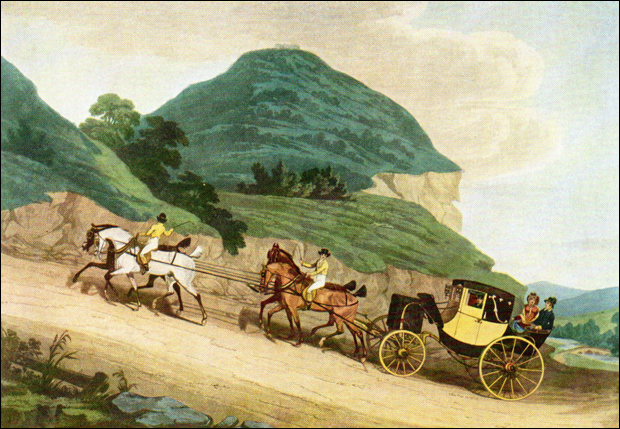

 . For the lawyers that "drove about" in these carriages, Austen is suggesting the connection of carriages relating lawyers to wealth and fashion.
 An example of an early 19th century cottage, this one being the birthplace of author Thomas Hardy