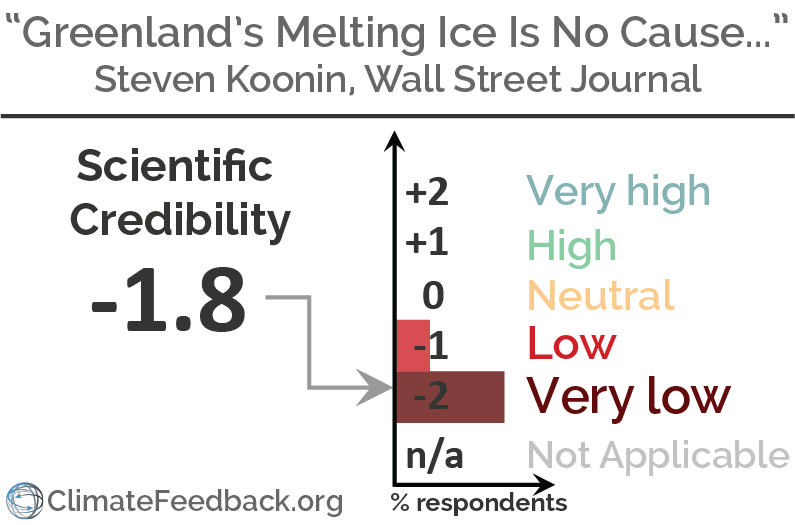
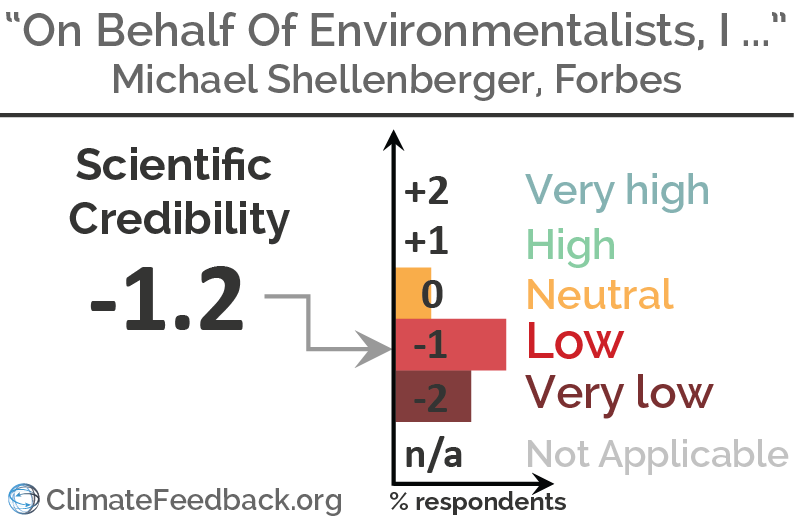
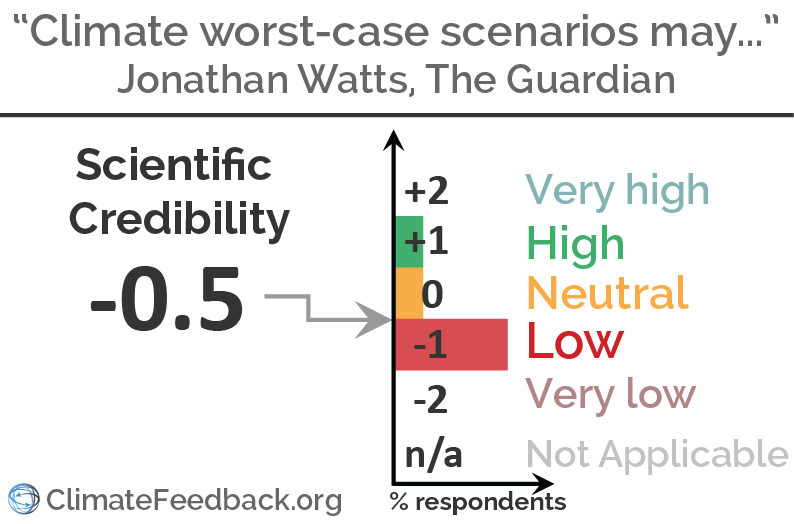
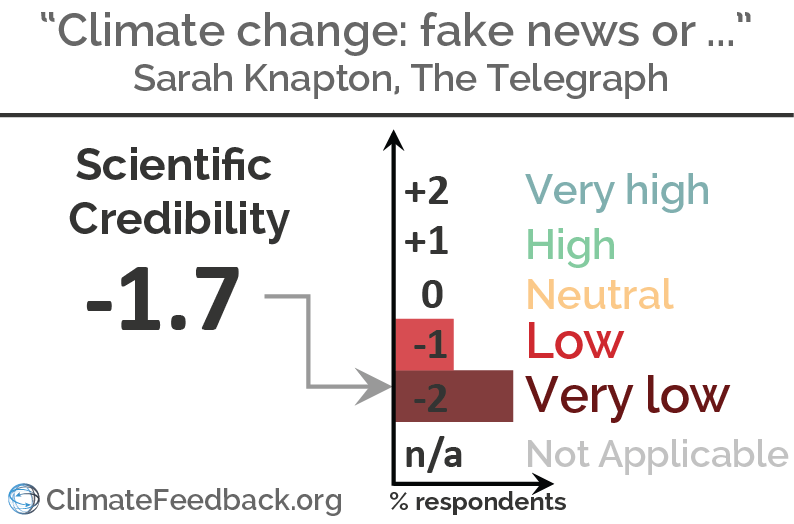
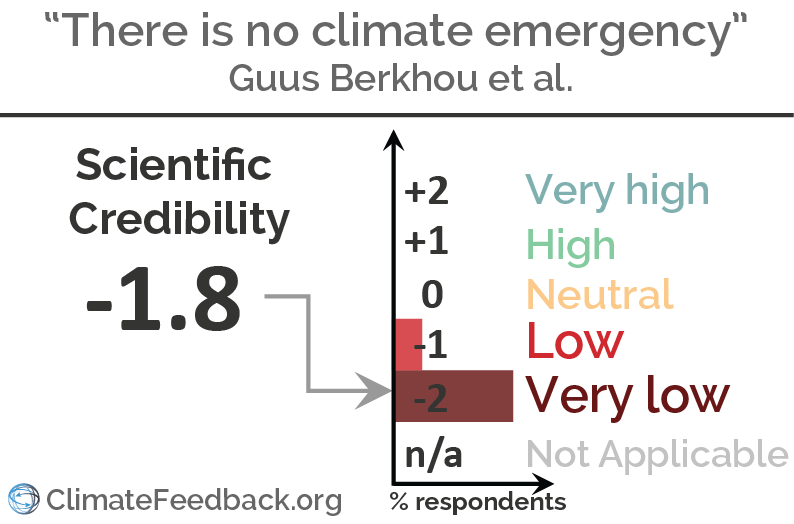
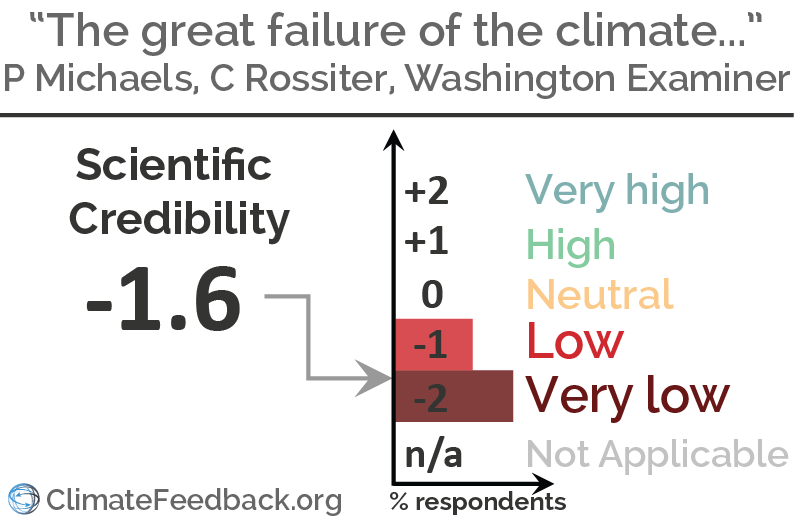
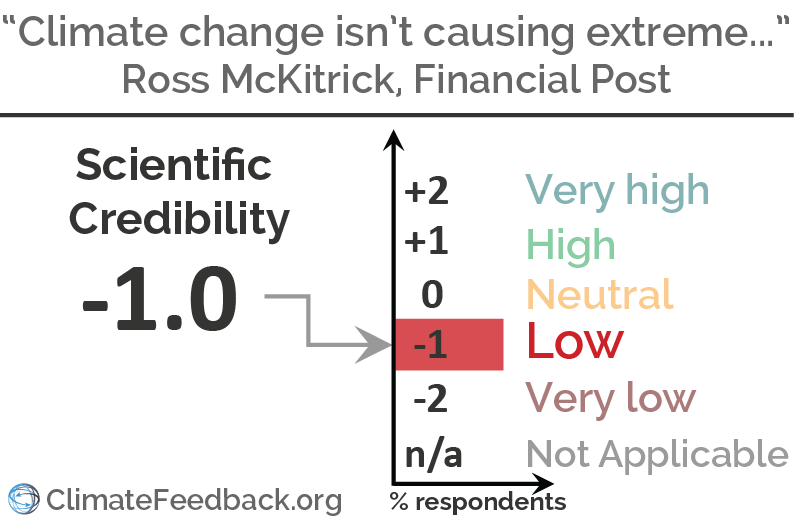
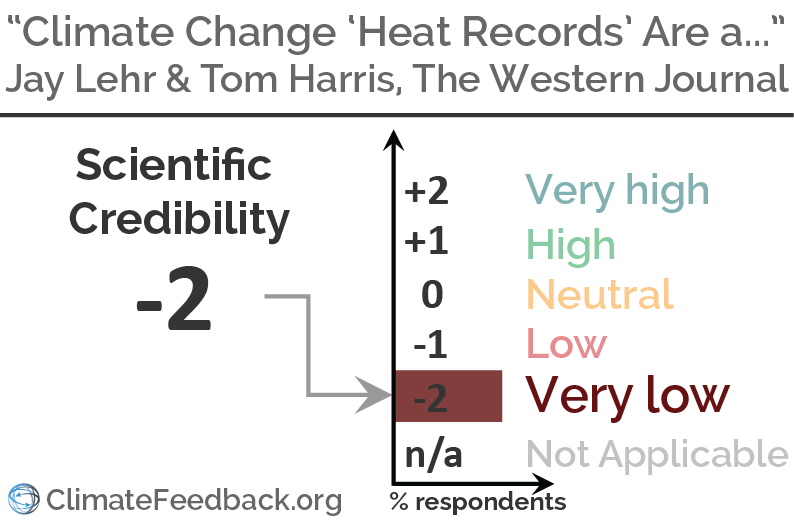
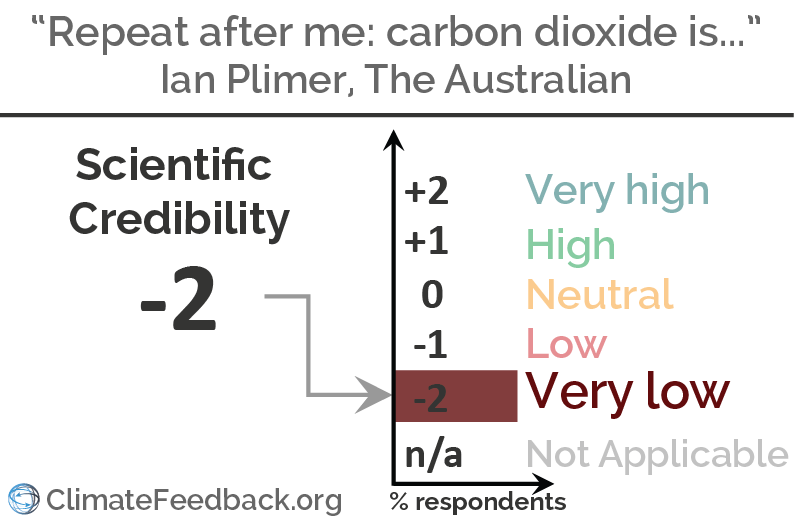
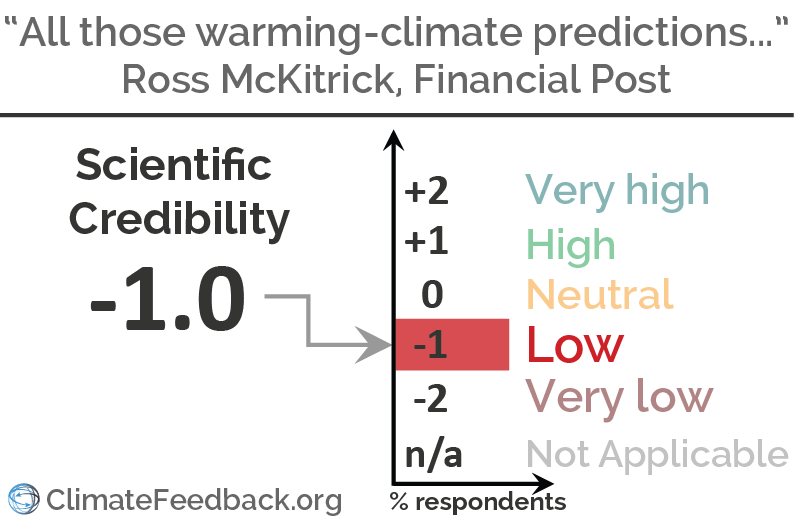
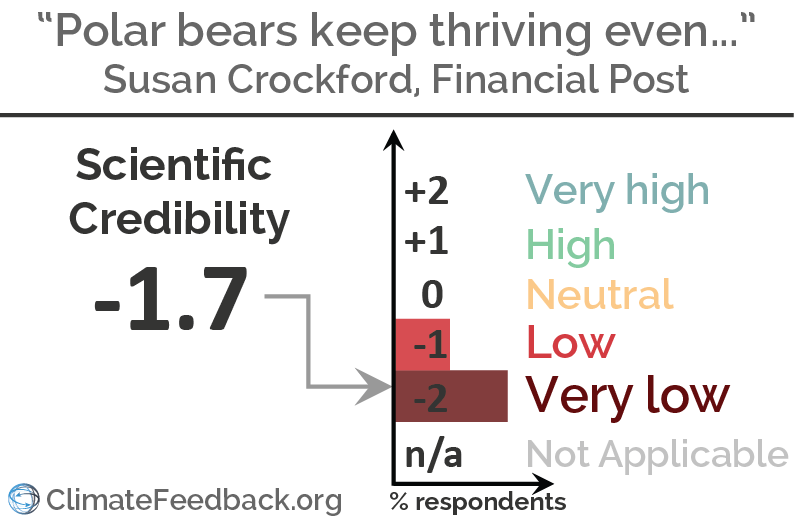
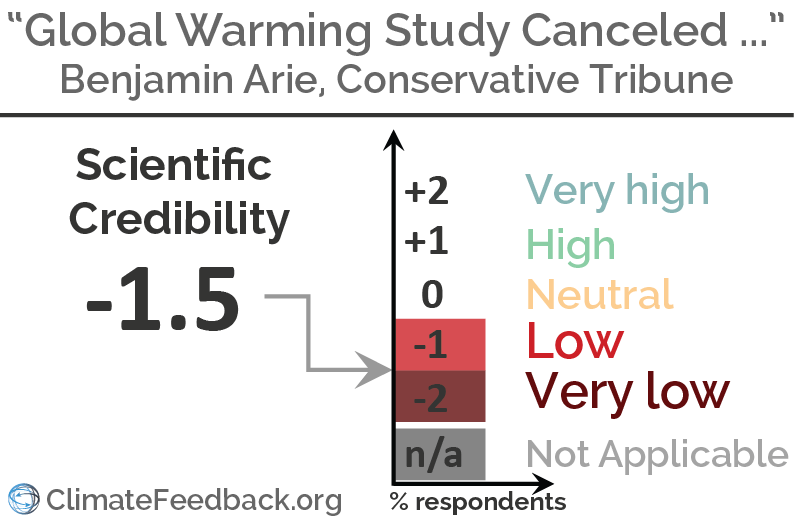
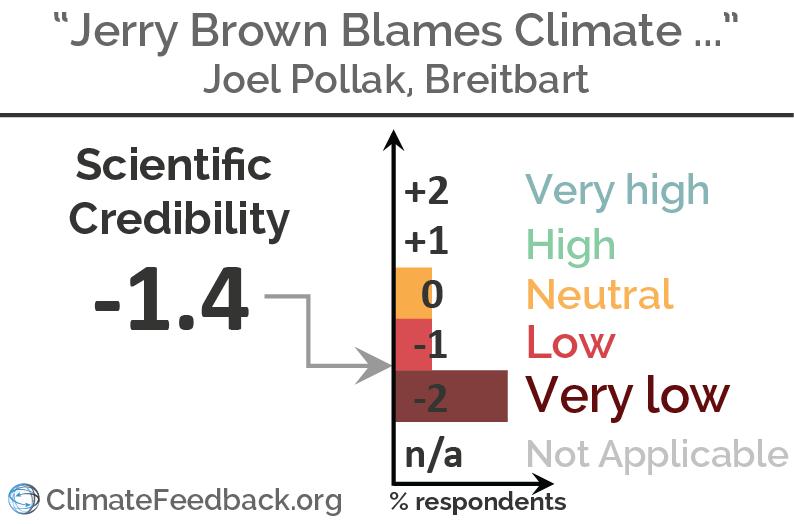
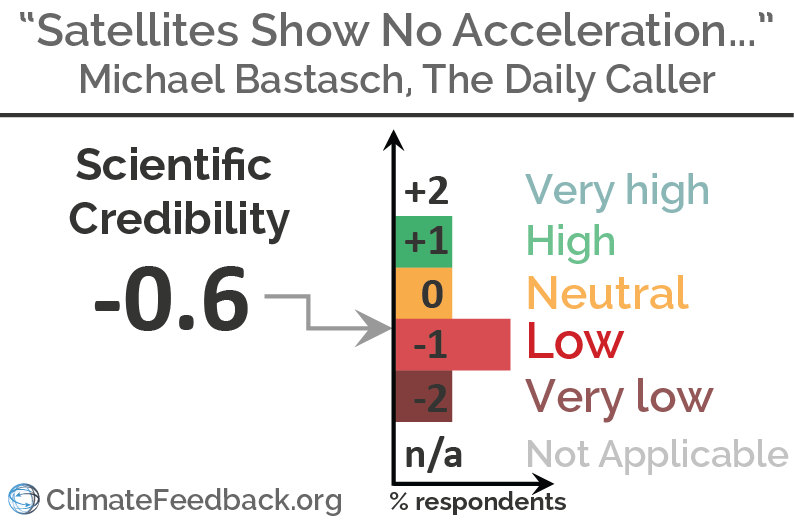
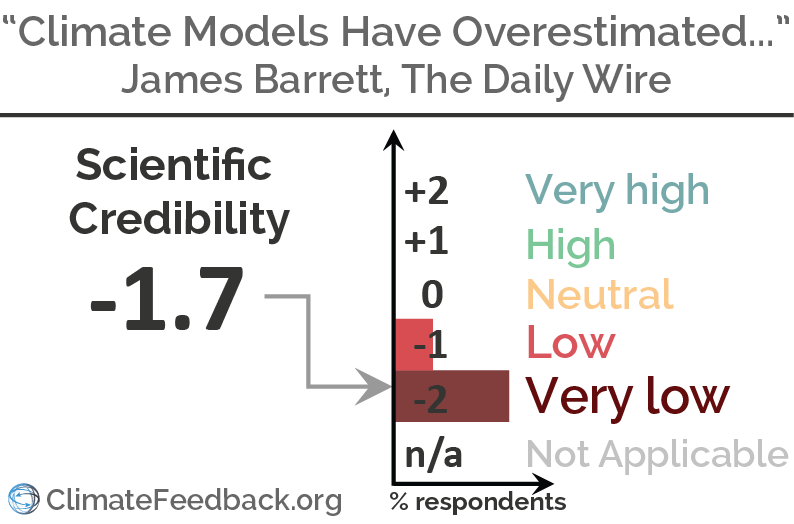
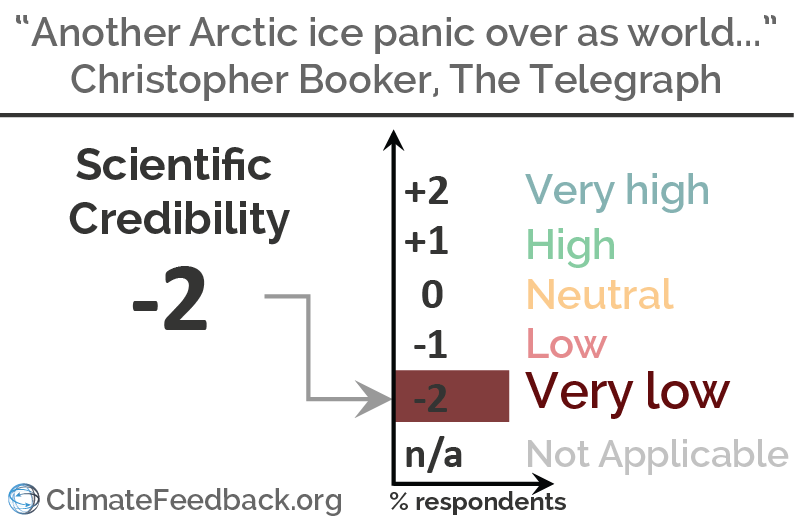
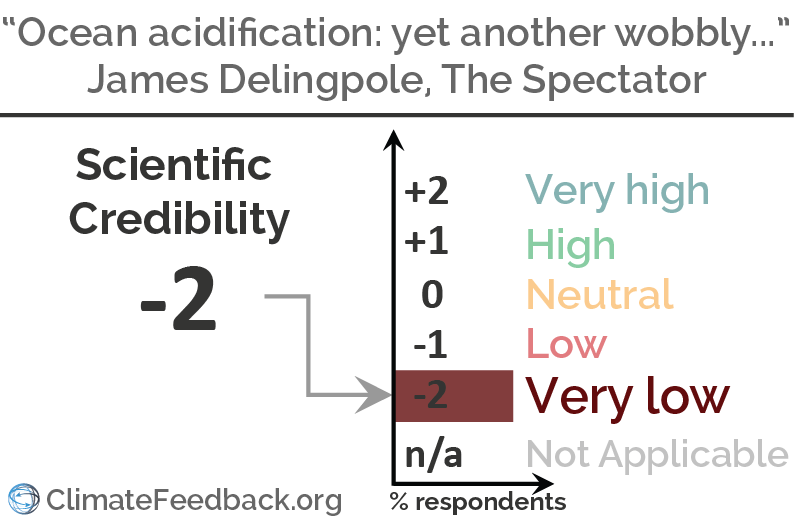
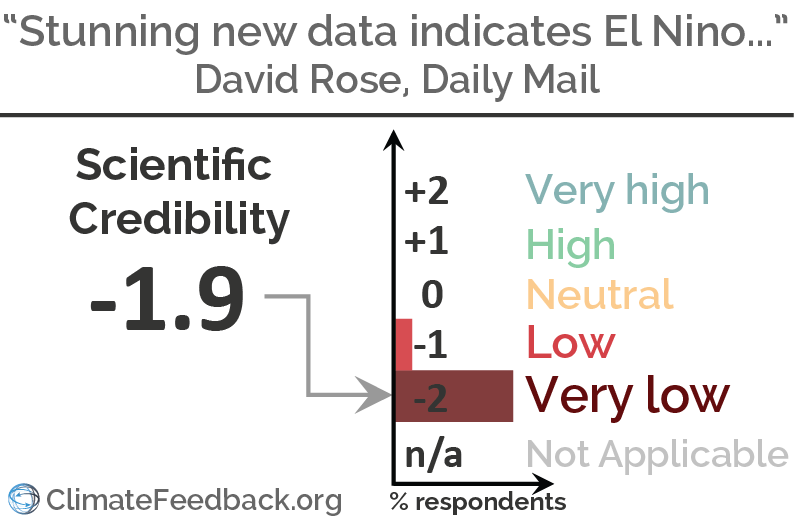
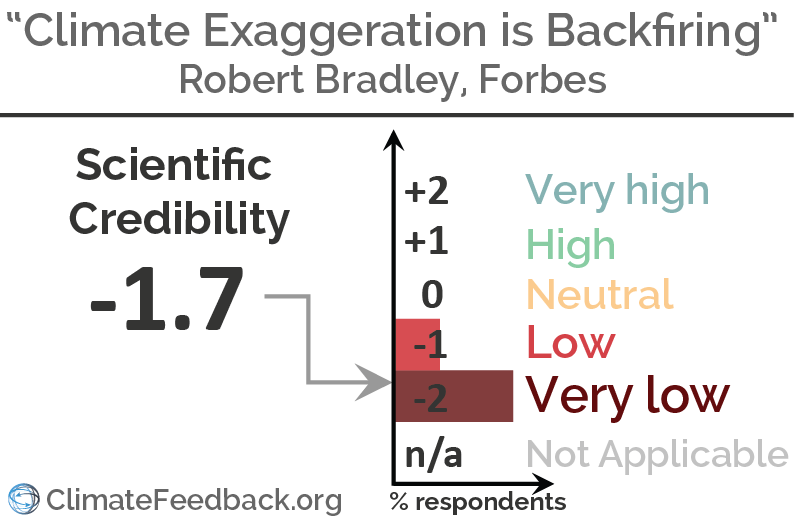
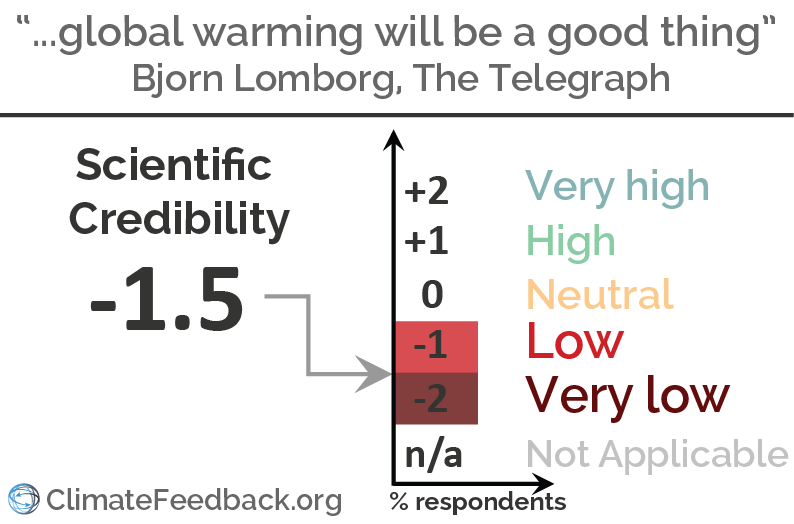
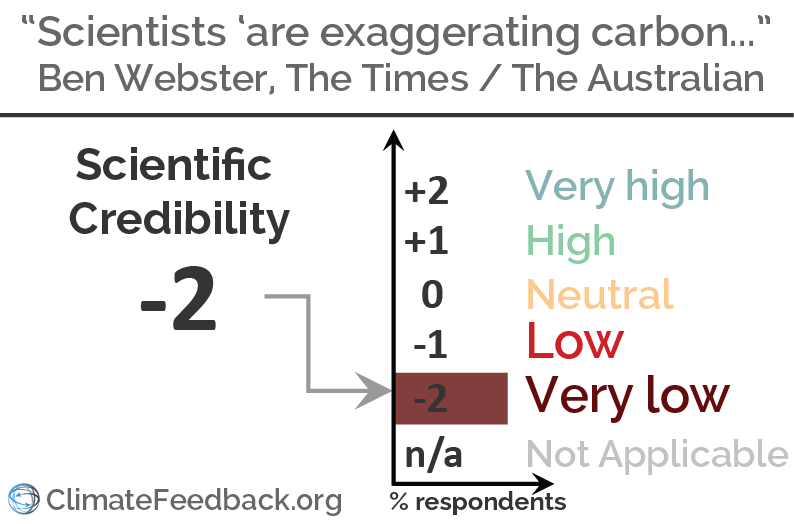
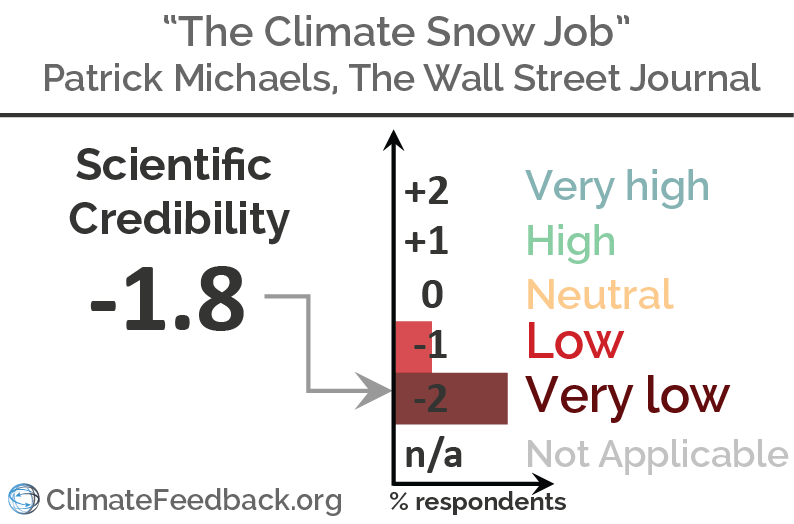
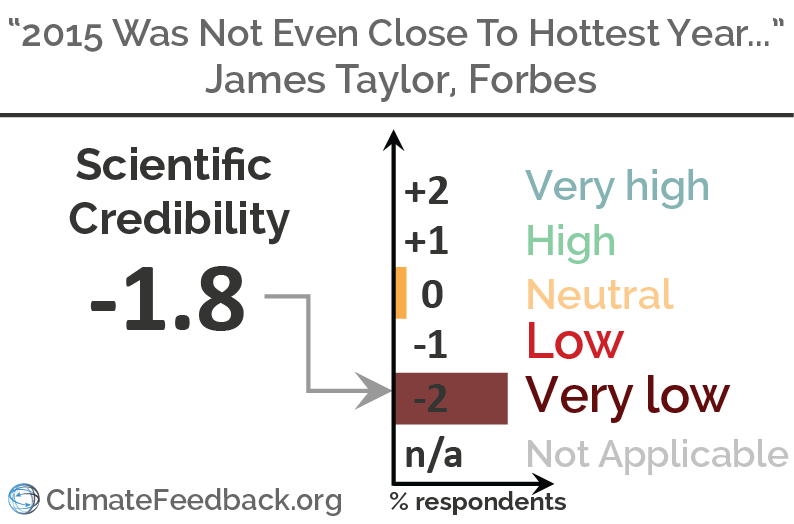
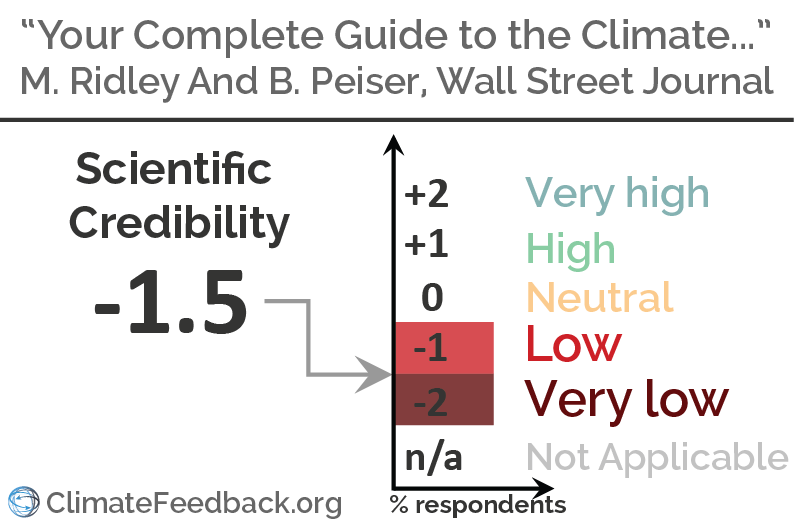
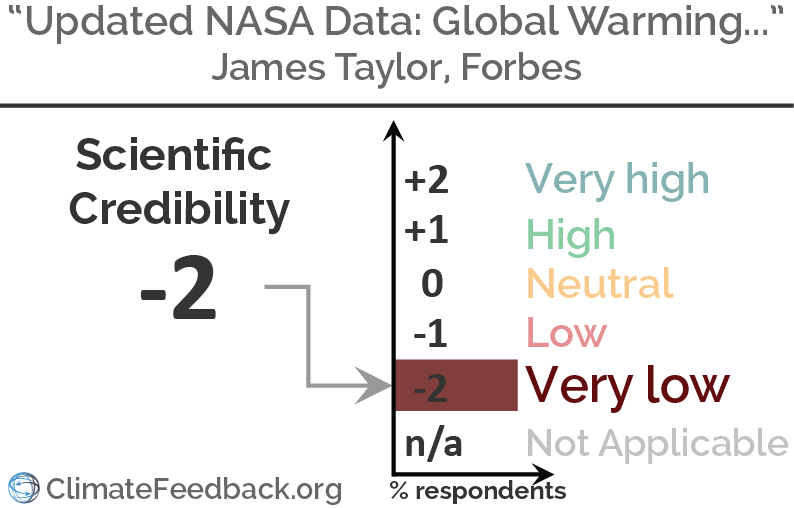
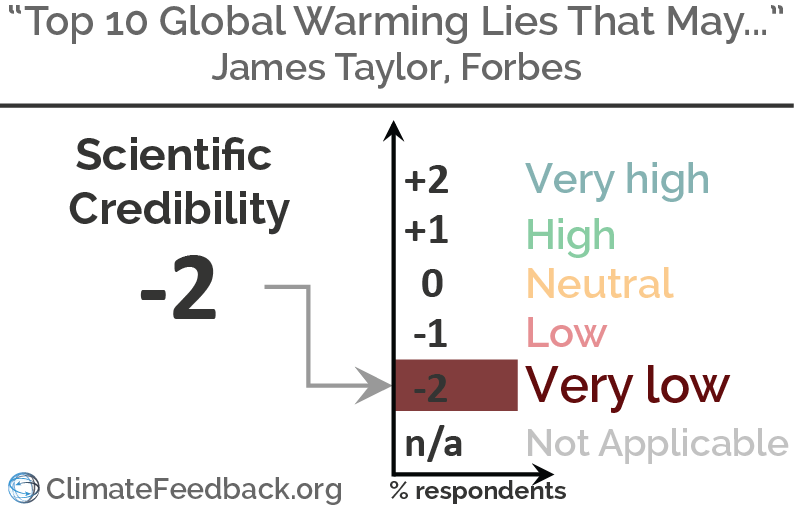
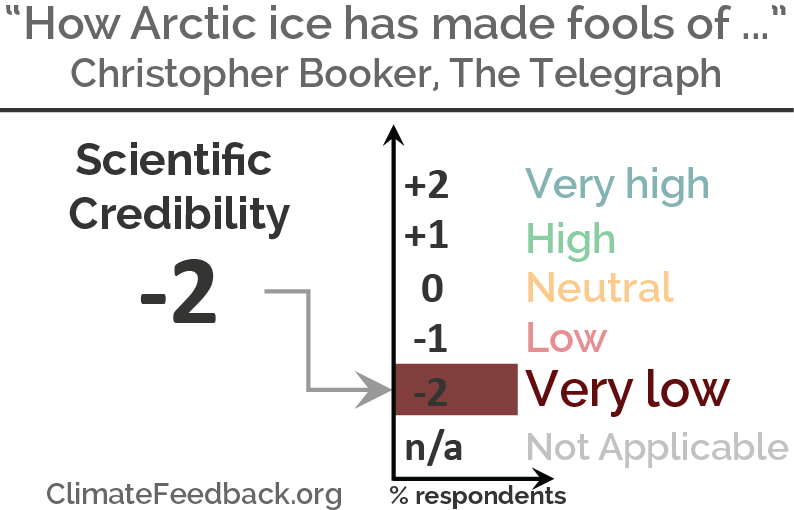
Overall scientific credibility: 'very low' to 'low', according to 7 climate scientists who evaluated this article.

Find more details in the annotations below and on ClimateFeedback.org
This evaluation features contributions by MIT Prof. Kerry Emanuel (see annotations below) and by Wesleyan University Prof. Gary Yohe (see his comments on the article)
karmour:
The article contains numerous scientific errors, does not provide references for some of its key claims, and ignores much of the published literature on the subjects discussed. It appears that many details have been cherry-picked or misconstrued in service of making a political point.
anonymous reviewer:
The author tries to rebut the narrative "that the world’s climate is changing from bad to worse". In doing so, he erects a straw-man, cherry-picks studies and misrepresents current climate science.
Furthermore, the logic that since things are not 'worst-than-we-thought', we shouldn't take action and do the things we would do if things were simply 'bad', is lost on me…
emvincent:
The article is imprecise, for instance, about who the “doomsayers” and the “alarmists” are: since the core of the argumentation is about them, a definition of who they are and what they argue exactly cannot be avoided. It is also vague in its conclusion: “we need balance”, here again what exactly is meant by balance should be made clearer.
jgdwyer:
Tries and fails to make a convincing case for why humans need to worry about climate change less than they currently do.
bmv:
Although this author appears to have read parts of the IPCC report and carefully selected the facts which support his narrative, he presents information in a very misleading way, and some of his statements (e.g. "despite endless successions of climate summits, carbon emissions continue to rise") do not support his thesis that action on climate change is alarmist and unnecessary. His conclusion that "climate change is not worse than we thought. Some indicators are worse, but some are better" suggests a false equivalency between the indicators that are "worse" and those that are "better".
drchavas:
The author on multiple occasions presents blatantly inaccurate information and otherwise uses selective information to argue his point, which is highly misleading.