dis-connected from narrative understanding
431 Matching Annotations
- Apr 2026
-
psycnet.apa.org psycnet.apa.org
-
-
unique capacity tofacilitate emotional expression through nonverbal channels, particu-larly through imagery.
-
affect the amygdala,prefrontal cortex, hypothalamus, and hippocampus, producingdifficulties in memory, language, and affect regulation
-
Intimate partner violence (IPV) is a systematic, controlling, andviolent behavior perpetrated by one intimate partner or family mem-ber (usually a man) against another or others (Robinson et al., 2021).It generally involves polyvictimization through physical, emotional,sexual, social, and financial abus
-
Moreover, artmaking enables survivors to cope with the over-whelming flooding of imagery, thus fostering a sense of psycholog-ical control and empowerment
Tags
Annotators
URL
-
- Feb 2026
-
example.com example.com
-
A highlight is the digital equivalent of swiping a yellow marker over a passage of text. Click the screencast to watch the creation of a highlight.
This introduction/ definition about highlighting does not give clear steps, it has the read watch a short clip on how to highlight text, but it never tells the reader how to actually do it. It assumes prior knowledge, for example that the reader must already know how to select the text they want highlighted, they also simplified the explanation the highlight isn't always yellow it can be different colors.
-
- Jan 2026
-
thebookshelfbeforeme.wordpress.com thebookshelfbeforeme.wordpress.com
-
standing
Q: standing
A: 1) Based on this page:<br /> “standing” means being upright on its feet in one place (not sitting or lying down). Here it describes the tabby cat upright on the corner of Privet Drive.
2) General knowledge (not from this page):<br /> “standing” can also mean having a particular status or reputation (e.g., “in good standing”), but that is not the meaning in this passage.
1)基于本页内容:<br /> “standing” 的意思是“站着、直立地待在原地”(不是坐着或躺着)。这里用来描述那只虎斑猫直立地站在女贞路的街角。
2)常识补充(非本页内容):<br /> “standing” 也可以表示“地位/声望/名誉”(例如 “in good standing”),但这不是本段文字里的用法。
-
-
cghuisunshine.github.io cghuisunshine.github.io
-
incomplete dominance
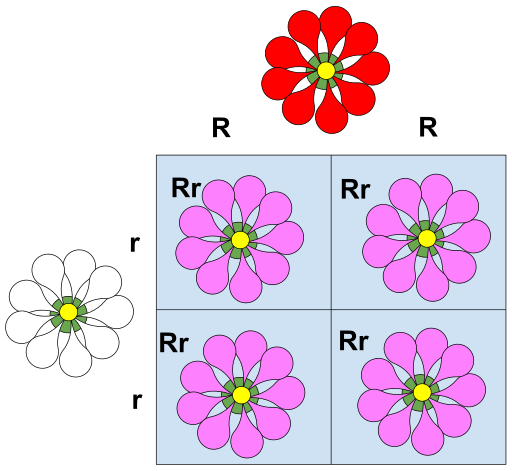
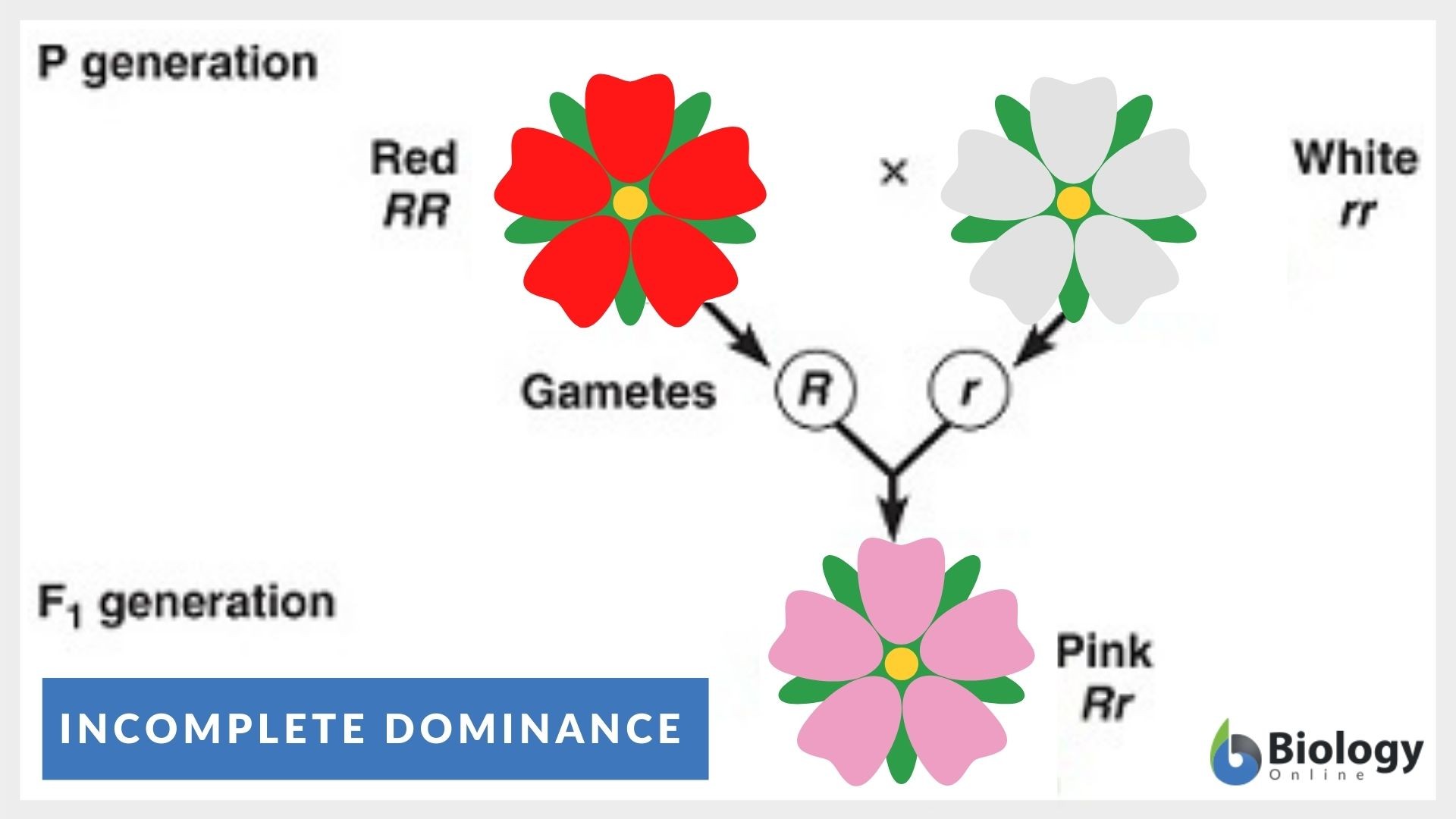
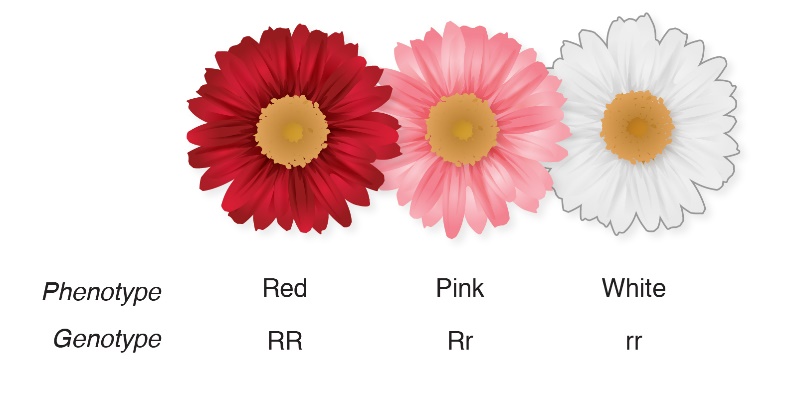
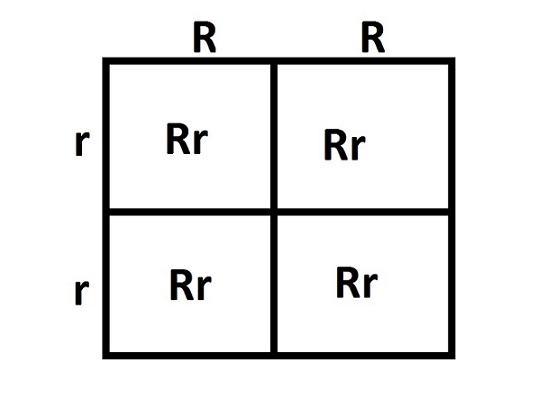
English — incomplete dominance (thorough explanation)
1) What incomplete dominance means (core idea)
Incomplete dominance is an inheritance pattern in which neither allele is completely dominant, so the heterozygous phenotype is an intermediate (blended) form of the two homozygous phenotypes.
Incomplete dominance = blending of traits in heterozygotes
2) How incomplete dominance works
- Two different alleles affect the trait
- In a heterozygous individual, both alleles partially influence the outcome
- The result looks like a mix, not one trait hiding the other
3) Classic example (Science 10 favorite): flower color
Let:
- R = red flowers
- W = white flowers
Cross: RR × WW
Offspring:
- RW → pink flowers
📌 Pink is not a new allele; it’s the intermediate phenotype.
4) Incomplete dominance in Punnett squares
Parents: RW × RW
Possible offspring:
- RR → red
- RW → pink
- RW → pink
- WW → white
Phenotype ratio: 1 red : 2 pink : 1 white
📌 Notice: phenotype ratio = genotype ratio in incomplete dominance.
5) Incomplete dominance vs other patterns (very important)
| Pattern | Heterozygous result | Example | | ------------------------ | ------------------------- | ------------------ | | Dominant–recessive | Dominant trait only | Brown eyes | | Incomplete dominance | Blended trait | Red × white → pink | | Codominance | Both traits fully visible | AB blood type |
6) Why incomplete dominance matters
Incomplete dominance:
- Explains traits that don’t follow simple dominance
- Increases visible variation in populations
- Is common in plants, animals, and humans (for some traits)
One-sentence exam summary
Incomplete dominance occurs when heterozygous individuals show an intermediate, blended phenotype.
中文 — incomplete dominance(不完全显性) 详细解释
1) 什么是不完全显性(核心概念)
不完全显性是指: 两个等位基因中没有一个完全显性,杂合体表现为中间型性状。
不完全显性 = 性状混合表现
2) 不完全显性的表现特点
- 显性不能完全压制另一等位基因
- 杂合体表现为中间状态
- 性状不是“要么这个,要么那个”
3) 经典例子(考试常考)
花的颜色:
- 红花(RR)
- 白花(WW)
杂交后:
- RW → 粉红色花
📌 粉红不是新基因,而是红和白的中间表现。
4) 潘尼特方格中的不完全显性
父母:RW × RW
后代比例:
- 1 红(RR)
- 2 粉(RW)
- 1 白(WW)
👉 表现型比例 = 基因型比例
5) 不完全显性 vs 共显性(重点区分)
| 遗传方式 | 表现结果 | | ----- | ---------- | | 不完全显性 | 中间型(混合) | | 共显性 | 两种性状同时清楚出现 |
一句话考试版总结
不完全显性指杂合体表现为两种性状的中间型。
如果你愿意,我可以把 dominant / recessive / incomplete dominance / codominance 整理成 Science 10 中英对照对比表、潘尼特方格练习或互动闪卡,非常适合系统复习与教学。
不完全显性(incomplete dominance) EN: A condition in which neither allele for a gene completely conceals the presence of the other, resulting in an intermediate expression of a trait. Example: In four o’clock plants, red flowers crossed with white flowers produce pink offspring, an intermediate phenotype. 中文:两种等位基因互不完全掩盖对方,从而产生介于双亲之间的中间型表现。 例子:紫茉莉红花与白花杂交产生粉红花,就是不完全显性的例子。
-
traits
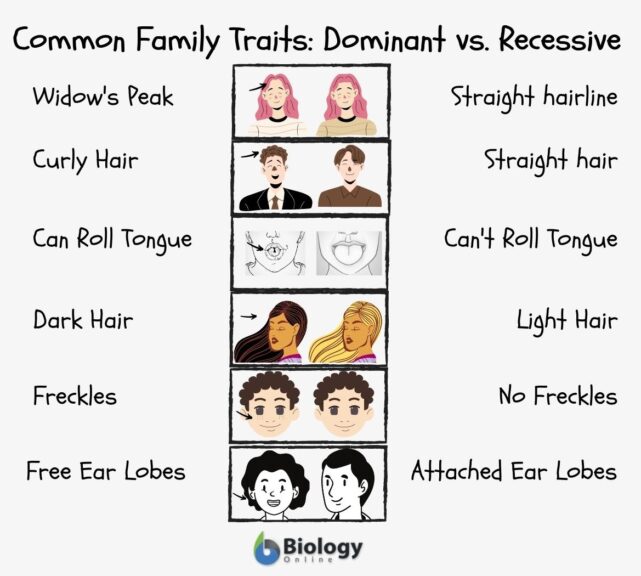
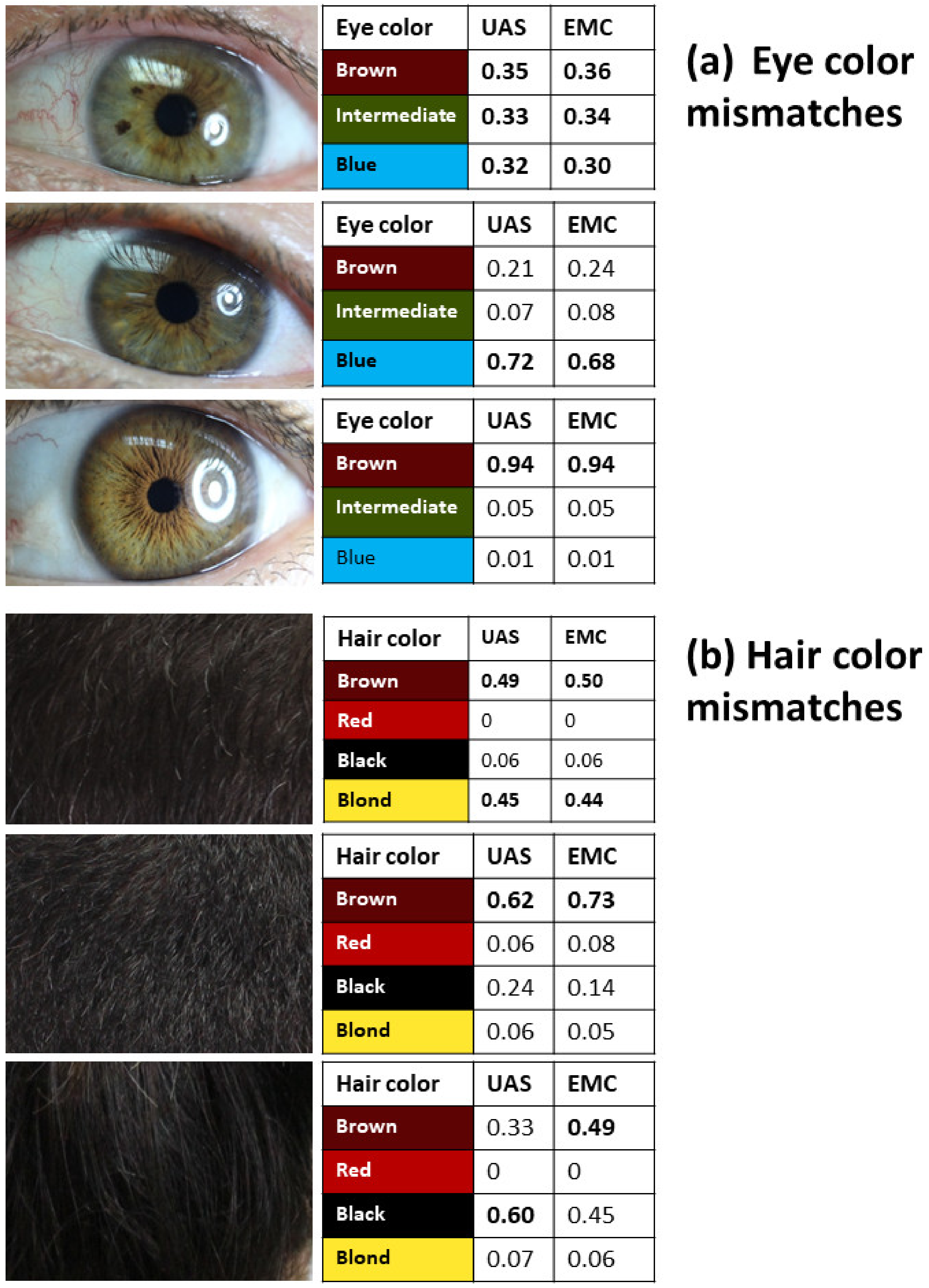
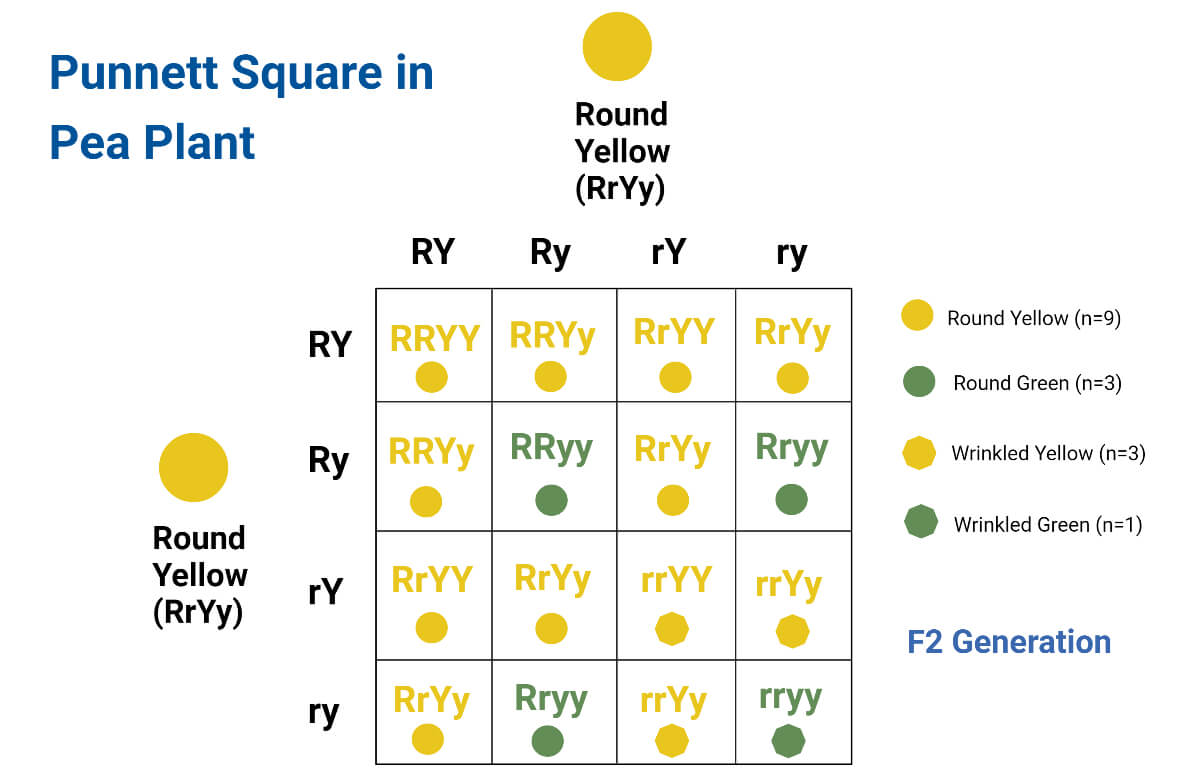
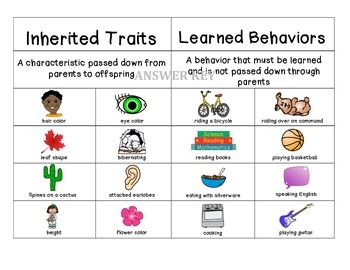
English — traits (thorough explanation)
1) What traits are (core idea)
Traits are characteristics or features of an organism. They describe how an organism looks, behaves, or functions.
Trait = a characteristic of a living thing
Traits can be:
- Inherited (passed down from parents)
- Influenced by the environment
- Or a combination of both
2) Types of traits
A) Inherited (genetic) traits
These traits are controlled by genes and passed from parents to offspring.
Examples:
- Eye color
- Hair color and texture
- Blood type
- Natural height potential
📌 These traits are present from birth.
B) Acquired (environmental) traits
These traits develop due to life experiences or environment.
Examples:
- Suntan
- Muscle strength from exercise
- Scars
- Language spoken
📌 These traits are not inherited genetically.
C) Traits influenced by both genes and environment
Many traits result from both heredity and environment.
Examples:
- Height (genes + nutrition)
- Intelligence (genes + education)
- Athletic ability (genes + training)
3) Traits in genetics (Science 10 focus)
In genetics, traits are:
- Controlled by genes
- Each gene may have different alleles
- Alleles can be dominant or recessive
📌 Example:
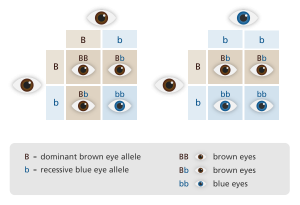
- Brown eyes (dominant)
- Blue eyes (recessive)
Punnett squares are used to predict traits in offspring.
4) Genotype vs phenotype (important distinction)
| Term | Meaning | Example | | --------- | ------------------- | ---------- | | Genotype | Genetic makeup | Bb | | Phenotype | Physical expression | Brown eyes |
📌 Traits are what you see (phenotype), based on genes (genotype).
5) Why traits matter
Traits:
- Explain similarities and differences between organisms
- Help scientists study inheritance
- Are the basis of natural selection and evolution
One-sentence exam summary
Traits are characteristics of organisms that can be inherited, acquired, or influenced by both genes and environment.
中文 — traits(性状 / 特征) 详细解释
1) 什么是性状(核心概念)
性状(traits)是指生物表现出来的特征或特点。
性状 = 生物的特征
2) 性状的类型
① 遗传性状
由基因决定,从父母传给子女。
例子:
- 眼睛颜色
- 头发颜色
- 血型
② 获得性状
由环境或经历造成。
例子:
- 晒黑
- 肌肉增强
- 疤痕
③ 遗传 + 环境共同影响
- 身高
- 学习能力
- 运动能力
3) 遗传学中的性状(考试重点)
- 性状由基因控制
- 基因有不同等位基因
- 等位基因有显性和隐性
4) 基因型 vs 表现型
| 概念 | 含义 | | --- | ---- | | 基因型 | 基因组合 | | 表现型 | 外在性状 |
一句话考试版总结
性状是生物的特征,由遗传和环境共同决定。
如果你需要,我可以把 traits / inherited traits / acquired traits / Punnett squares 做成 Science 10 中英对照闪卡或课堂练习题,直接用于教学或复习。
性状(trait) EN: An inherited characteristic, such as eye colour or hair colour. Example: Traits like seed colour in pea plants or the ability to taste bitterness are controlled by genes. 中文:一种可遗传的特征,如眼睛颜色、头发颜色等。 例子:豌豆的种子颜色、是否能尝出苦味,都是由基因控制的性状。
-
alleles



English — alleles (thorough explanation)
1) What alleles are (core idea)
Alleles are different versions of the same gene. They control variations of a trait, such as eye color or flower color.
Allele = one version of a gene
Each gene can have two or more alleles, but an individual organism usually carries two alleles per gene (one from each parent).
2) Where alleles are found
- Genes are located on chromosomes
- Alleles sit at the same position (locus) on homologous chromosomes
- One allele comes from the mother
- One allele comes from the father
📌 This is why offspring show traits from both parents.
3) Example of alleles (simple)
Trait: Seed color
- Y = yellow
- y = green
Possible allele combinations:
- YY
- Yy
- yy
These combinations affect the trait that appears.
4) Dominant vs recessive alleles (Science 10 focus)
Dominant allele
- Shown with a capital letter (A)
- Expressed if at least one copy is present
Recessive allele
- Shown with a lowercase letter (a)
- Expressed only if two copies are present
📌 Example:
- Aa → dominant trait shows
- aa → recessive trait shows
5) Alleles, genotype, and phenotype (key relationship)
| Term | Meaning | Example | | --------- | ------------------ | ---------- | | Allele | Version of a gene | A or a | | Genotype | Allele combination | Aa | | Phenotype | Physical trait | Brown eyes |
Alleles determine the genotype, which determines the phenotype.
6) Alleles in Punnett squares
Punnett squares:
- Show how alleles from parents combine
- Predict possible offspring genotypes
- Estimate trait probabilities
📌 Example: Parents: Aa × Aa
- Possible offspring: AA, Aa, Aa, aa
7) Why alleles are important
Alleles:
- Explain variation within a species
- Help predict inheritance patterns
- Are the basis of genetics and evolution
- Allow populations to adapt over time
One-sentence exam summary
Alleles are different versions of the same gene that determine variations in traits.
中文 — alleles(等位基因) 详细解释
1) 什么是等位基因(核心概念)
等位基因(alleles)是指同一基因的不同版本,决定同一性状的不同表现。
等位基因 = 同一基因的不同形式
2) 等位基因在哪里
- 基因位于染色体上
- 等位基因位于同源染色体的相同位置
- 一个来自母亲,一个来自父亲
3) 等位基因举例
性状:豌豆高度
- T = 高
- t = 矮
组合可能是:
- TT
- Tt
- tt
4) 显性与隐性等位基因(必考)
- 显性等位基因:只要有一个就会表现
- 隐性等位基因:必须两个都有才表现
📌 Tt → 显性性状 📌 tt → 隐性性状
5) 等位基因与性状的关系
- 等位基因 → 基因型
- 基因型 → 表现型
一句话考试版总结
等位基因是控制同一性状的不同基因形式。
如果你愿意,我可以把 alleles → genotype → phenotype → Punnett squares 整理成 Science 10 中英对照闪卡或互动练习,直接用于复习或教学。
等位基因(allele) EN: Different versions of the same gene that may produce different forms of a trait. Example: For pea flower colour, one allele codes for purple and another for white. 中文:位于同源染色体相同位置、控制同一性状的基因的不同形式。 例子:例如花色基因可以有紫花等位基因和白花等位基因。
-
- Dec 2025
-
dadaismee.github.io dadaismee.github.io
-
хайлайты
Как в обзорах иностранныъ спортивных матчей - лучшие моменты!
-
- Feb 2025
-
sites.google.com sites.google.com
-
Lost to myself
In line 6 of the song, the persona continuous to speak about their own failures and the sense of loss. ”Lost to myself”, this suggests that the speaker has something they want to achieve but they failed themselves. However in line 6 the speaker then says “but I'll just start again”. These two phases used in line 6 contradict themselves creating an oxymoron. The persona has lost and failed but they want to start again and keep going. This contrast, creates a sense of perseverance and an ‘never give up attitude’ from the persona.
-
-
forum.obsidian.md forum.obsidian.md
-
n experiment So today, as a somewhat limited experiment, I played around with my Hypothes.is atom feed 49 (https://hypothes.is/stream.atom?user=chrisaldrich 39, because you know you want to subscribe to this 33) and piped it into IFTTT 22. Each post creates a new document in a OneDrive file which I can convert to a markdown .md file that can be picked up by my Obsidian client. While I can’t easily get the tags the way I’d like (because they’re not included in the feed) and the formatting is incredibly close, but not quite there, the result is actually quite nice. Since I can “drop” all my new notes into a particular folder, I can easily process them all at a later date/time if necessary. In fact, I find that the fact that I might want to revisit all my notes to do quick tweaks or adding links or additional thoughts provides the added benefit of a first round of spaced repetition for the notes I took. Some notes may end up being deleted or reshuffled, but one thing is clear: I’ve never been able to so simply highlight, annotate, and take notes on documents online and get them into my notebook so quickly. And when I want to do something with them, there they are, already sitting in my notebook for manipulation, cross-linking, spaced repetition, and review. So if the developers of any of these platforms are paying attention, I (and I’m sure others) really can’t wait for plugin integrations using the full power of the Hypothes.is API that allow us to all leverage Hypothes.is’ user interface to make our workflows seamlessly simple.
-
- Aug 2023
-
highlightpoetry.com highlightpoetry.com
- Feb 2023
-
forum.obsidian.md forum.obsidian.md
-
Realistically, I view this as the same problem students who “highlight everything” have. It’s not a problem with the nature of highlighters — it’s a problem of metacognition.
-
- Dec 2022
-
hypothes.is hypothes.is
-
hca.gilead.org.il hca.gilead.org.il
- Nov 2022
-
p10ns11y.github.io p10ns11y.github.io
-
github.com github.com
-
bvaughn.github.io bvaughn.github.io
-
twitter.com twitter.com
-
www.w3.org www.w3.org
Tags
Annotators
URL
-
-
microsoftedge.github.io microsoftedge.github.io
-
www.azabani.com www.azabani.com
-
```html
<style> ::selection { background: #00FF00; } ::highlight(foo) { background: #FF00FF; } </style> <script> getSelection().removeAllRanges(); getSelection().selectAllChildren(document.body); const style = getComputedStyle(document.body, "::highlight(foo)"); console.log(style.backgroundColor); </script> <body>Hello, world!</body>```
-
- May 2022
-
code.briarproject.org code.briarproject.org
-
The security of the data (authentication, confidentiality, integrity and forward secrecy) is handled by the transport security protocol, BTP. The same protocol is used for all transports. BTP is an obfuscated protocol: to anyone except the intended sender and recipient, all data is indistinguishable from random. So BTP's first job is to let the recipient know who sent the data, so the recipient can use the right key to authenticate and decrypt it.
crypto protocol
-
-
www.investopedia.com www.investopedia.comDebt1
-
is something, usually money, borrowed by one party from another. Debt is used by many corporations and individuals to make large purchases that they could not afford under normal circumstances
Tags
Annotators
URL
-
- Jan 2022
-
stream.massey.ac.nz stream.massey.ac.nz
-
Orientation Week: In conclusion
On the next page, I'm just going to highlight, not annotate
Tags
Annotators
URL
-
- Dec 2021
-
www.npmjs.com www.npmjs.com
- Feb 2021
-
educationinnovation.pressbooks.com educationinnovation.pressbooks.com
-
and that designers be viewed as sojourners who engage in this unique task of exploration through maintenance and innovative learning
Highlight: Putting it all together in conclusion. Telling of the journey that instrucitonal designers are on and tying back to the two types learning; innovative and maintenance.
Great way to end the Chapter!
-
A part of one’s learning journey, then, is learning that comes by way of critical self-reflection.
Highlight: Question your own authority or self-governance through self-reflection what a great thought. Many of us never question oursleves or own motivations and this is needed as part of the design journey.
-
That is, designers should be willing to question accepted disciplinary practices in an effort to innovate what is needed in a given situation; their personal innovative learning and practical wisdom will, at least at times, overturn textbook formalisms; and they should be willing to violate principles in an effort to create what is needed, within contextual constraints.
This is often frowned upon in so many professional arenas.
-
-
educationinnovation.pressbooks.com educationinnovation.pressbooks.com
-
Are designers also wasting the time of the critics?
Wow what a way to end the chapter. Are instcutional Designers wasting their time decorating their instruction or filling them with jargon that they miss the point of educating the learners.
This is a wonderful story about something that anyone could be familiar with and understand how instrucitonal design can go at times. Lending to the attractiveness and lacking on the informing side.
-
Skinner’s reinforcement theory was used to create carefully constructed self-instructional materials
I always wondered about the beginning of Instuctional Design, and it is nice to understand that Skinnerian psychology had a part in forming the foundation of Instuctional Design We know today.
-
Formative evaluation
I never realized how important continued formative evaluation was until I entered a classroom. It is so important to continue to evaluate through out a process rather than waiting until the end.
-
-
highlightpoetry.com highlightpoetry.com
-
Highlight PoetryFinding poetry in other people’s webpages
I sort of wish that I could do separate tidbits like this in hypothes.is.
Tags
Annotators
URL
-
- Sep 2020
-
www.ncbi.nlm.nih.gov www.ncbi.nlm.nih.gov
-
viscosity range
To test Highlight color!!
Tags
Annotators
URL
-
- Jul 2020
-
infoinspired.com infoinspired.com
-
Custom Google Sheets Formula to Highlight Max Value in a Row
Highlight min/man in google sheets
-
- May 2020
-
share.getliner.com share.getliner.com
-
Welcome, continue to LINER
Destul de simpatică aplicația, doar că varianta FREE e destul de limitată
Tags
Annotators
URL
-
- Dec 2019
-
frankensteinvariorum.github.io frankensteinvariorum.github.io
-
Paradise Lost
PLACEHOLDER -- box-highlight
couldn't find any extra-textual marks on this page pertaining to Paradise Lost.
-
Coleridge's Antient Mariner.
In the Thomas Copy, the allusion to Coleridge, "but I shall kill no albatross" is not attributed in text, but rather added by hand as a citation at the bottom of the page: "x Coleridge's Ancient Mariner x"
-
This letter ought to be re-written
In the Thomas copy, a note at the bottom of the page stipulates: "This letter ought to be re-written". The first three paragraphs and the final paragraph were to be substantively rewritten in the 1831 edition.
-
If there were ever to be another edition of this book, I should re-write these two first chapters. The incidents are tame and ill-arranged—the language sometimes childish.—They are unworthy of the rest of the w booknarration.
In the Thomas Copy, Mary's marginal note outlines her dissatisfaction with the opening chapters of the 1818 edition. Indeed, these chapters would be heavily augmented and revised for the 1831, presumably in accordance with Shelley's observations here.
-
impossible:
In the Thomas copy beneath the line "This manuscript will doubtless afford you the greatest <u>pleasure</u>," is written a the single word: "impossible." We cannot tell if this was Mary's comment or was put in by another reader.
-
you said your family was not sientific.
In the Thomas Copy, at the bottom of this page, an unknown hand states: "You said your family was not scientific." If this notation is in Mary's hand, she may be speaking to her character Victor, noting a discrepancy in his account of their familiarity with the sciences.
-
bad
In the Thomas copy this passage, deleted in 1831, is tagged by Shelley in the margins as "bad".
-
- Aug 2019
-
ontario.coop ontario.coop
-
With co-ops, not-for-profit status is less closely tied to corporate form than for typical not-for-profit corporations
-
-
docdrop.org docdrop.org
-
no fee
Tags
Annotators
URL
-
-
nissenbaum.tech.cornell.edu nissenbaum.tech.cornell.edu
-
The remainingsections of the paper will argue that a plausible causal connection can be drawnin two directions: first, that virtue leads people to participate in commons-basedpeer projects, and second, that participation may give rise to virtue. Based uponthese observations, we conclude the paper with some prescriptions for publicpolicy and design.
-
-
docdrop.org docdrop.org
-
be very available
-
To give it a proper try, you need to set free at least an entire team
-
encourage our remote workers to adopt a healthy lifestyle
-
a list of equipment that’s been picked for ergonomic comfort
-
you’ll need to get the ergonomic basics right
-
“Have I done a good day’s work?”
-
culture of reasonable expectations
-
occasionally wander out into the real world
-
human interaction does not have to come from either coworkers or others in your industry.
-
find a co-working facility and share desks with others in your situation
-
-
docdrop.org docdrop.org
-
there’s no such thing as a one-hour meeting. If you’re in a room with five people for an hour, it’s a five-hour meeting.
-
Forcing everyone into the office every day is an organizational SPoF.
-
But here’s the thing: if you’re going to give it a shot, give it a real shot. Try it for at least three months
-
it’s clear who in the company is pulling their weight and who isn’t.
-
When you can’t see someone all day long, the only thing you have to evaluate is the work.
-
a weekly discussion thread with the subject “What have you been working on?” Everyone chimes in with a few lines about what they’ve done over the past week and what’s intended for the next week. It’s not a precise, rigorous estimation process, and it doesn’t attempt to deal with coordination.
-
everyone needs to feel that they’re in the loop
-
a quality waste of time with your coworkers
-
a single, permanent chat room where everyone hangs out all day to shoot the breeze, post funny pictures, and generally goof around.
-
record a screencast and narrate the experience
-
Just let the tape roll and it’ll be more than “good enough.”
-
It’s about collaborating on the work itself, not about reading facial expressions (although that too has a time and place).
-
Use a shared screen to collaborate on everything
-
Much of the magic that people ascribe to sitting together in a room is really just this: being able to see and interact with the same stuff.
-
in most cases we think it’s more of a challenge than it’s worth
-
If there’s just no getting around the time-zone issue
-
need a good four hours of overlap to avoid collaboration delays and feel like a team
-
- Jun 2019
-
www.thebalancesmb.com www.thebalancesmb.com
-
collect GST/HST on the supply that made your revenue go over $30,000;
-
-
-
$50,000 or less in any single calendar quarter and in the last four consecutive calendar quarters
-
- Feb 2019
-
reallifemag.com reallifemag.com
-
tech companies are not so much unilaterally controlling consumers as confusing them about what is under their control.
-
data scientists found that measuring people’s expressed preferences was a dead end because these were too variable
-
easier to change the entire infrastructure in which people’s preferences lived, and then, rather than assume people are capable of forming and expressing their tastes independently, you could treat captured behavioral data as revealed preferences
-
Flow works by disguising its compulsory mechanism in the details of its content, which is nothing more than bait from the system’s perspective.
-
both want the particular units of content and are indifferent to them. We are both active agents and passive objects.
-
Coercion and persuasion, then, can’t be cleanly distinguished.
-
When platforms today deploy recommendation algorithms, their purpose is to produce flow.
-
“persuasive technology” that can condition prey “to play the role scripted for it in its design.”
-
what’s being sold is surrender
-
that users want to consume flow, not particular items of content
-
- Dec 2018
-
www.samkinsley.com www.samkinsley.com
-
Do not forget that automation will generalize and make employment less necessary. Look at the self-checkouts in supermarkets, automated tolls, but also the software robots that do housekeeping at Wikipedia. I argue that this is a good thing. On one condition: that it enhances the ability of people to develop their social skills, their knowledge, their work in the strict sense of the term, rather than solely their job.
-
- Jul 2018
-
storyengine.io storyengine.io
-
We’ve made an annual thing out of doing it every year over the Super Bowl. We have an event called Break the Super Bowl, where kids are looking at Super Bowl ads and then remixing them. Then we throw them back up online, if they’re fair use, in real time. We get a bunch of kids together for the Super Bowl and it looks like a regular Super party. We’ve got pizza, and Doritos, and wings, and soda, and all the junk food. But then they’re all working in teams on laptops, and they’re remixing the actual ads from the Super Bowl that go up that night. We have the game playing on a larger screen so that it has a fun party atmosphere, but they’re actually doing something.
This feels like a great example for anecdote / color / something creative in the final report.
A "Hive highlight reel" of activities / lesson plans / creative jams. "20 things to do w. your kid on a rainy day." etc.
Tags
Annotators
URL
-
- Feb 2018
-
csclassics.com csclassics.com
-
This allows at least 500components per linear inch or a quarter million per squareinch.
This is about 388 transistors per mm2. Intel now gets 100,000,000
-
65 000
FYI. AMD 32 core now EPYC has about 19 billion transistors
-
-
csclassics.com csclassics.comUntitled1
-
Two problems now arise.
These problems are largely one consequence of limited computational power
-
- Jan 2018
-
-
The self-described “creature of the suburbs” helped remake this city, in some ways, for his own maximum personal comfort.
-
trust-us self-assurance in their own technocratic moral sense
-
main thing Doctoroff admits the administration didn’t quite get right was figuring out how to keep New York from becoming too expensive for many of the people who already lived in it.
-
Doctoroff has little use for “nostalgia,” practically an epithet in the book,
-
Success is when “more customers want to come and stay. And the ultimate measure is population growth.”
-
“You have to treat citizens and businesses like customers,”
-
- Dec 2017
-
-
Will Sidewalk Labs share its feasibility studies for the proposal with the public, including methodology and data?
-
- Oct 2017
-
nissenbaum.tech.cornell.edu nissenbaum.tech.cornell.edu
-
Commons-based peer-production relations regularly exhibit three structuralattributes.
-
- Sep 2017
-
-
Yet when you “criticize in private” for behavior that occurred in a team meeting or affects the team, you undermine team members’ accountability to each other. You send the message that team members are accountable only to you, not to the team. You also send the entire team the message that they don’t need to hold each other accountable — you’ll do it for them. In short, you shift accountability from the team to you.
Tags
Annotators
URL
-
- Apr 2017
-
longreads.com longreads.com
-
Readers need to be trained to understand that, when it comes to bureaucratic sources, ugliness in prose is usually not entirely aesthetic, but usually is covering up something far more egregious than style.
-
While the bureaucratic voice works to present governments and corporations as placid, apologetic, and unmovable, it also works to make their victims as active and vital as possible.
-
But the figures responsible for establishing procedure are nowhere to be found. Whenever possible, bureaucratic style will shift responsibility to immutable rules and directives that appear spontaneously from the ether.
-
Who told them? The sentence does not make this clear, even though it is this unnamed actor, presumably a supervisor, who set this entire chain of events in motion. Deliberately pushed back as far off the stage as possible, there is no one here to responsibly hold accountable for subsequent events.
-
as users become more creative in crafting language to reflect new kinds of expression, bureaucrats get more creative in using that expression to hide the levers of power
-
-
wikimania2017.wikimedia.org wikimania2017.wikimedia.org
-
Is "neutral point of view" an adequate criterion when stories from different perspectives are to be told? Is "citation needed" when it is oral history or folklore? Shall artifacts abandoned on the scenes of natural disasters or human conflicts be photoed and put into the Wikimedia Commons? How do we attribute these artifacts?
-
- Mar 2017
-
open.canada.ca open.canada.ca
-
Recommendations and best practices for future consultations
-
Outcomes
Similarly, what outcomes can reasonably be expected with a scaled up version of a consultation using pol.is?
-
These activities were conducted in two main phases: an idea generation phase and a consultation on the draft Plan
-
Engaging Canadians and the world: Canadians have the information they need to meaningfully interact with and participate in their democracy. They have the opportunity to make their voices heard on government policy and programs from the start. Canada demonstrates leadership by championing open government principles and initiatives around the world.
-
-
www.theatlantic.com www.theatlantic.com
-
“There’s a habit of mind that the masters have,” Gottman explained in an interview, “which is this: they are scanning social environment for things they can appreciate and say thank you for. They are building this culture of respect and appreciation very purposefully. Disasters are scanning the social environment for partners’ mistakes.”
-
- Feb 2017
-
docdrop.org docdrop.org
-
maximise the quality of interaction and contributions, based on the task at hand and the target participant group
-
grow the skills of the team
-
ongoing development of the digital tools
-
create and manage projects
-
financial and human resources
-
without the requisite support, there is the risk of failing to deliver on promises and ambitions, as a result alienating citizens who have contributed
-
higher investment in mass communications and PR may also be required
-
work closely with civil society groups to help reach audiences not accustomed to using the internet
-
local or experiential knowledge
-
specific knowledge, expertise or information
-
- Jan 2017
-
www.zeit.de www.zeit.de
-
Es ist also kein Wunder, dass sich Menschen ihre Arbeit als Identitätsbezug erwählen. Denn für andere Tätigkeiten haben sie keine Zeit mehr. Eignet sich der Beruf jedoch nicht als identitätsstiftend, sind Frustration und Unzufriedenheit häufig eine Folge.
-
- Mar 2016
-
matrix.org matrix.org
-
We are called Matrix because we provide a structure in which all communication can be matrixed together.
Tags
Annotators
URL
-
- Oct 2015
-
www.transmography.net www.transmography.net
-
Then he walks away.
-
At this point I’m starting to get offended.
-
-
www.transmography.net www.transmography.net
-
This isn’t Paris,
-
You have that Hemingway thing going on
-
-
www.tldp.org www.tldp.org
-
a parameter
-
the ioctl number
-
the file descriptor of the appropriate device file
-
The ioctl function is called with three parameters
-
Every device can have its own ioctl commands, which can be read ioctl's (to send information from a process to the kernel), write ioctl's (to return information to a process), [1] both or neither
-
The answer in Unix is to use a special function called ioctl
Tags
Annotators
URL
-
-
www.tldp.org www.tldp.org
-
To create a new char device named `coffee' with major/minor number 12 and 2, simply do mknod /dev/coffee c 12 2
-
When the system was installed, all of those device files were created by the mknod command.
-
character devices are allowed to use as many or as few bytes as they like
-
block devices can only accept input and return output in blocks
-
This is important in the case of storage devices, where it's faster to read or write sectors which are close to each other,
-
block devices have a buffer
-
Devices are divided into two types: character devices and block devices
-
hey have unique minor numbers because the driver sees them as being different pieces of hardware.
-
The minor number is used by the driver to distinguish between the various hardware it controls.
-
The major number tells you which driver is used to access the hardware. Each driver is assigned a unique major number; all device files with the same major number are controlled by the same driver. All the above major numbers are 3, because they're all controlled by the same driver.
-
The first number is called the device's major number. The second number is the minor number.
-
3, 1
-
each piece of hardware is represented by a file located in /dev
-
One class of module is the device driver, which provides functionality for hardware like a TV card or a serial port
-
There are things called microkernels which have modules which get their own codespace.
-
the above discussion is true for any operating system which uses a monolithic kernel
-
it shares the kernel's codespace rather than having its own
-
Since a module is code which can be dynamically inserted and removed in the kernel
Tags
Annotators
URL
-
-
www.tldp.org www.tldp.org
-
your init and cleanup functions must be defined before calling the macros,
-
you can rename the init and cleanup functions of your modules; they no longer have to be called init_module() and cleanup_module() respectively. This is done with the module_init() and module_exit() macros
Tags
Annotators
URL
-
-
www.tldp.org www.tldp.org
-
When the novelty wears off, remove your module from the kernel by using rmmod hello-1
-
simple Makefile
-
insert your freshly-compiled module it into the kernel with insmod ./hello-1.ko
-
they contain an additional .modinfo section that where additional information about the module is kept
-
kernel modules now have a .ko extension
-
there is a new way of doing
-
redundant settings accumulated in sublevel Makefiles
-
kbuild
Tags
Annotators
URL
-
- Jul 2015
-
api.rubyonrails.org api.rubyonrails.org
-
If they want JavaScript, then it is an Ajax request and we render the JavaScript template associated with this action.
-
“if the client wants HTML in response to this action, just respond as we would have before, but if the client wants XML, return them the list of people in XML format.” (Rails determines the desired response format from the HTTP Accept header submitted by the client.)
-
-
guides.rubyonrails.org guides.rubyonrails.org
-
You then have a corresponding app/views/users/create.js.erb
-
format.js
-
Notice the format.js in the respond_to block; that allows the controller to respond to your Ajax request.
-
Because the form's remote option is set to true, the request will be posted to the UsersController as an Ajax request, looking for JavaScript.
-
Ajax isn't just client-side, you also need to do some work on the server side to support it. Often, people like their Ajax requests to return JSON rather than HTML.
-
We call this 'unobtrusive' JavaScript because we're no longer mixing our JavaScript into our HTML. We've properly separated our concerns, making future change easy
-
-
api.rubyonrails.org api.rubyonrails.org
-
would provide the @buyer object to the partial, available under the local variable account and is equivalent to:
-
:object option can be used to pass an object to the partial.
-
This would first render “advertiser/_account.html.erb” with @buyer passed in as the local variable account,
-
<%= render partial: "account", locals: { account: @buyer } %>
-
If you're not going to be using any of the options like collections or layouts, you can also use the short-hand defaults of render to render partials. Examples:
-
There's also a convenience method for rendering sub templates within the current controller that depends on a single object (we call this kind of sub templates for partials). It relies on the fact that partials should follow the naming convention of being prefixed with an underscore
-
-
guides.rubyonrails.org guides.rubyonrails.org
-
However, Rails has a 'seeds' feature that should be used for seeding a database with initial data. It's a really simple feature: just fill up db/seeds.rb with some Ruby code, and run rake db:seed:
-
The Active Record way claims that intelligence belongs in your models, not in the database.
-
If you are using features like this, then you should set the schema format to :sql.
-
There is however a trade-off: db/schema.rb cannot express database specific items such as triggers, or stored procedures. While in a migration you can execute custom SQL statements, the schema dumper cannot reconstitute those statements from the database
-
Because this is database-independent, it could be loaded into any database that Active Record supports
-
:ruby
-
:sql or :ruby.
-
There are two ways to dump the schema.
-
the information is nicely summed up in the schema file.
-
Schema files are also useful if you want a quick look at what attributes an Active Record object has.
-
Migrations, mighty as they may be, are not the authoritative source for your database schema. That role falls to either db/schema.rb or an SQL file which Active Record generates by examining the database. They are not designed to be edited, they just represent the current state of the database.
-
Instead, you should write a new migration that performs the changes you require
-
In general, editing existing migrations is not a good idea.
-
Occasionally you will make a mistake when writing a migration. If you have already run the migration then you cannot just edit the migration and run the migration again: Rails thinks it has already run the migration and so will do nothing when you run rake db:migrate. You must rollback the migration (for example with rake db:rollback), edit your migration and then run rake db:migrate to run the corrected version.
-
rake db:drop
-
db:reset task will drop the database and set it up again
-
create the database, load the schema and initialize it with the seed data.
-
rake db:setup
-
If you specify a target version, Active Record will run the required migrations (change, up, down) until it has reached the specified version
-
runs the change or up method for all the migrations that have not yet been run
-
rake db:migrate.
-
You can also use the old style of migration using up and down methods
-