Q. I would like a copy of my data from a breach, can you please send it to me? A. No, I cannot Q. I have a breach I would like to give you in exchange for “your” breach, can you please send it to me? A. No, I cannot Q. I’m a security researcher who wants to do some analysis on the breach, can you please send it to me? A. No, I cannot Q. I’m making a searchable database of breaches; can you please send it to me? A. No, I cannot Q. I have another reason for wanting the data not already covered above, can you please send it to me? A. No, I cannot
9,639 Matching Annotations
- Apr 2020
-
www.troyhunt.com www.troyhunt.com
-
-
github.com github.com
-
The aim of this list is to document all Markdown syntax variations (rather than implementations).
-
-
psyarxiv.com psyarxiv.com
-
Vijayaraghavan, P., & SINGHAL, D. (2020, April 13). A Descriptive Study of Indian General Public’s Psychological responses during COVID-19 Pandemic Lockdown Period in India. https://doi.org/10.31234/osf.io/jeksn
-
-
psyarxiv.com psyarxiv.com
-
Sætrevik, B. (2020, April 13). Realistic expectations and pro-social behavioural intentions to the early phase of the COVID-19 pandemic in the Norwegian population. https://doi.org/10.31234/osf.io/uptyq
-
-
en.wikipedia.org en.wikipedia.org
-
The tyranny of the majority (or tyranny of the masses) is an inherent weakness to majority rule in which the majority of an electorate pursues exclusively its own interests at the expense of those in the minority. This results in oppression of minority groups comparable to that of a tyrant or despot
-
-
en.wikipedia.org en.wikipedia.org
-
Direct democracy was not what the framers of the United States Constitution envisioned for the nation. They saw a danger in tyranny of the majority. As a result, they advocated a representative democracy in the form of a constitutional republic over a direct democracy. For example, James Madison, in Federalist No. 10, advocates a constitutional republic over direct democracy precisely to protect the individual from the will of the majority
-
Those who hold and those who are without property have ever formed distinct interests in society. Those who are creditors, and those who are debtors, fall under a like discrimination. A landed interest, a manufacturing interest, a mercantile interest, a moneyed interest, with many lesser interests, grow up of necessity in civilized nations, and divide them into different classes, actuated by different sentiments and views. The regulation of these various and interfering interests forms the principal task of modern legislation, and involves the spirit of party and faction in the necessary and ordinary operations of the government.
-
-
github.com github.com
-
The gem provides a command line utility for checking passwords.
-
-
sciencebusiness.net sciencebusiness.net
-
University of Amsterdam scientists launch website that seeks ideal COVID-19 exit strategy. (2020 April 21) Science|Business. https://sciencebusiness.net/network-updates/university-amsterdam-scientists-launch-website-seeks-ideal-covid-19-exit-strategy
-
-
www.nationalreview.com www.nationalreview.com
-
Verbruggen, R. (2020 March 24). Another COVID Cost-Benefit Analysis. National Review. https://www.nationalreview.com/corner/another-covid-cost-benefit-analysis/
-
-
psyarxiv.com psyarxiv.com
-
Zettler, I., Schild, C., Lilleholt, L., & Böhm, R. (2020). Individual differences in accepting personal restrictions to fight the COVID-19 pandemic: Results from a Danish adult sample [Preprint]. PsyArXiv. https://doi.org/10.31234/osf.io/pkm2a
-
-
disneytermsofuse.com disneytermsofuse.com
-
-
-
But recent events have made me question the prudence of releasing this information, even for research purposes. The arrest and aggressive prosecution of Barrett Brown had a marked chilling effect on both journalists and security researchers.
-
At Brown’s sentencing, Judge Lindsay was quoted as saying “What took place is not going to chill any 1st Amendment expression by Journalists.” But he was so wrong. Brown’s arrest and prosecution had a substantial chilling effect on journalism. Some journalists have simply stopped reporting on hacks from fear of retribution and others who still do are forced to employ extraordinary measures to protect themselves from prosecution.
-
Having said all that, I think this is completely absurd that I have to write an entire article justifying the release of this data out of fear of prosecution or legal harassment. I had wanted to write an article about the data itself but I will have to do that later because I had to write this lame thing trying to convince the FBI not to raid me.
-
I could have released this data anonymously like everyone else does but why should I have to? I clearly have no criminal intent here. It is beyond all reason that any researcher, student, or journalist have to be afraid of law enforcement agencies that are supposed to be protecting us instead of trying to find ways to use the laws against us.
-
As serious leaks become more common, surely we can expect tougher laws. But these laws are also making it difficult for those of us who wish to improve security by studying actual data. For years we have fought increasingly restrictive laws but the government’s argument has always been that it would only affect criminals.
-
This principle equally applies to the laws of our country; we should never violate basic rights even if the consequences aren’t immediately evident.
Tags
- digital rights
- journalism: chilling effect
- absurd
- fear of prosecution/legal harassment
- researcher rights
- freedom
- security research
- good intentions
- legitimate activities/uses made illegal due to laws intended only to forbid illegitimate activities
- journalist rights
- freedom of speech
- a government for the people?
- unfortunate policies/laws
- basic rights
- legitimate uses of a feature blocked due to abuse of the same feature
- chilling effect
- laws/law enforcement agencies are supposed to be protecting us
- don't turn innocent people into criminals (through bad laws)
- intent to commit/facilitate a crime
- collateral damage/impact
- erosion of rights
Annotators
URL
-
-
github.com github.com
-
github.com github.com
-
Prefer over this: https://github.com/michaelbanfield/devise-pwned_password
-
-
-
Google figures that since it has a big (encrypted) database of all your passwords, it might as well compare them against a 4-billion-strong public list of compromised usernames and passwords that have been exposed in innumerable security breaches over the years. Any time Google hits a match, it notifies you that a specific set of credentials is public and unsafe and that you should probably change the password.
-
-
www.engadget.com www.engadget.com
-
www.csoonline.com www.csoonline.com
-
If you force people to frequently change their passwords, they will use bad passwords.
-
Stop forcing users to change their passwords every 30, 60, or 90 days, and stop forcing users to include a mixture of uppercase, lowercase, and special charactersForcing users to change their passwords should only happen if there is reason to believe an organization has been breached, or if a new third-party data breach affects employees or users.
-
-
en.wikipedia.org en.wikipedia.org
-
The terms open and standard have a wide range of meanings associated with their usage.
-
-
forums.tomsguide.com forums.tomsguide.com
-
And most important: No proprietary encryption software can be fully trusted
-
If you are concerned about privacy and looking for a bullet-proof solution then the only way to go is open-source software. For example, there was another incident with a proprietary file "encrypter" for Android/iOS which used the simplest possible "encryption" on earth: XORing of data that is as easy to crack a monkey could do that. Would not happen to an open-source software. If you're worried about the mobile app not being as reliable (backdoors etc.) as the desktop app: compile it yourself from sources. https/github.com/MiniKeePass/MiniKeePass You can also compile the desktop version yourself. Honestly, I doubt most people, including you and me, will bother.
-
-
keepass.info keepass.info
-
Open Source prevents backdoors. You can have a look at its source code and compile it yourself.
-
-
keepass.info keepass.info
-
The data is stored in log files to ensure the functionality of the website. In addition, the data serves us to optimize the website and to ensure the security of our information technology systems. An evaluation of the data for marketing purposes does not take place in this context. The legal basis for the temporary storage of the data and the log files is Art. 6 para. 1 lit. f GDPR. Our legitimate interests lie in the above-mentioned purposes.
-
The temporary storage of the IP address by the system is necessary to enable the website to be delivered to the user's computer. For this the IP address of the user must remain stored for the duration of the session.
-
The legal basis for the processing of personal data using cookies is Art. 6 para. 1 lit. f GDPR. Our legitimate interests lie in the above-mentioned purposes.
-
-
twitter.com twitter.com
-
Anything Pwned Passwords related is free because I want maximum adoption and the cost is borne by @cloudflare. Anything related to querying email addresses requires a key to be purchased because I want to limit abuse and it costs me directly to run.
-
-
github.com github.com
-
Devise-Two-Factor only worries about the backend, leaving the details of the integration up to you. This means that you're responsible for building the UI that drives the gem. While there is an example Rails application included in the gem, it is important to remember that this gem is intentionally very open-ended, and you should build a user experience which fits your individual application.
-
-
www.techrepublic.com www.techrepublic.com
-
In mainstream press, the word "hacker" is often used to refer to a malicious security cracker. There is a classic definition of the term "hacker", arising from its first documented uses related to information technologies at MIT, that is at odds with the way the term is usually used by journalists. The inheritors of the technical tradition of the word "hacker" as it was used at MIT sometimes take offense at the sloppy use of the term by journalists and others who are influenced by journalistic inaccuracy.
-
there's no reasonable way to communicate effectively with the less technically minded without acquiescing to the nontechnical misuse of the term "hacker"
-
terms like "malicious security cracker" are sufficiently evocative and clear that their use actually helps make communication more effective than the common journalistic misuse of "hacker".
Tags
- clarity
- misconception
- "hacker" vs. "cracker"
- tips
- precision of terms/words
- language: misuse of word
- hoping/trying to convince others that your view/opinion/way is right by consistently sticking to it despite many being ignorant/mistaken/unaware/holding different opinion
- popular misconceptions
- communicating with less technical people
- communication
- alternative to mainstream way
- acquiescing/giving in
- precision
Annotators
URL
-
-
english.stackexchange.com english.stackexchange.com
-
Now, if we think of the tasks that we perform throughout the day as consuming separate "bands" of time, then the term makes perfect sense. Being "out of bandwidth" would indicate that you do not have enough unallocated "bands of time" in your day to complete the task. Using the term bandwidth to describe time maps more closely (in my opinion) to the original definition, than the current definition describing data capacity does.
-
I may be living in a bubble, but my impression is that don't understand that figurative use of bandwidth are way out of the loop.
-
-
web.archive.org web.archive.org
-
www.troyhunt.com www.troyhunt.com
-
Another approach I toyed with (very transiently) was blocking entire countries from accessing the API. I was always really hesitant to do this, but when 90% of the API traffic was suddenly coming from a country in West Africa, for example, that was a pretty quick win.
-
-
www.cnet.com www.cnet.com
-
Well, as a home user, I also belong to an investment club with 10 members. I also have a medium size family who I like to send photo's to, and my son is on a soccer team. all those have greater than 5 people on the list. sooooooooo..... once again, the people with valid use of the internet have to 'deal' with those that abuse it.
-
-
stackoverflow.com stackoverflow.com
-
I had never considered it that in nearly a decade of using GNU find! Thank you for that! It will definitely change the way I think about -prune from now on.
-
I think this structure is much easier and correlates to the right approach
-
-
slack-files.com slack-files.com
-
that “it is quite clear thatNietzsche wrote [this work] not as a dialectician.”3
Integrates key words and phrases.
-
-
queue.acm.org queue.acm.org
-
The point is that users should be in control of their data, which means they need an easy way of accessing it. Providing an API or the ability to download 5,000 photos one at a time doesn't exactly make it easy for your average user to move data in or out of a product.
-
It's typically a lot easier for software engineers to pull data out of a service that they use than it is for regular users. If APIs are available, we engineers can cobble together a program to pull our data out. Without APIs, we can even whip up a screen scraper to get a copy of the data. Unfortunately, for most users this is not an option, and they're often left wondering if they can get their data out at all.
-
-
support.1password.com support.1password.com
-
1Password wasn’t built in a vacuum. It was developed on top of open standards that anyone with the right skills can investigate, implement, and improve. Open tools are trusted, proven, and constantly getting better. Here’s how 1Password respects the principles behind the open tools on which it relies:
I found it ironic that this proprietary software that I have avoided using because it is proprietary software is touting the importance of open tools.
-
-
accessmedicine.mhmedical.com accessmedicine.mhmedical.com
-
Steroids used after the first 3 to 4 days after injury do not affect wound healing as severely as when they are used in the immediate postoperative period.
-
The major effect of steroids is to inhibit the inflammatory phase of wound healing (angiogenesis, neutrophil and macrophage migration, and fibroblast proliferation) and the release of lysosomal enzymes
-
Large doses or chronic usage of glucocorticoids reduce collagen synthesis and wound strength
-
HBOT was found to improve graft survival, complete healing of grafts, and lessen infection in patients with a graft
-
Chronic wounds have a decreased oxygen supply, and for a long time lack of oxygen was recognized as a potential cause of delayed healing.
-
Oxygen is required for almost all steps of wound healing and is also an important factor in the body’s defense against bacterial infection
-
In addition to its role in healing, oxygen plays an essential role in the production of reactive oxygen species such as superoxide that are angiogenesis stimulators and are bacteriostatic
-
At present, only platelet-derived growth factor BB (PDGF-BB) is currently approved by the FDA for treatment of diabetic foot ulcers. Application of recombinant human PDGF-BB in a gel suspension to these wounds increases the incidence of total healing and decreases healing time.
-
Bioengineered skin substitutes have evolved from keratinocyte monolayers to dermal equivalents to split-thickness products with a pseudo-epidermis, and most recently, to products containing both epidermal and dermal components that resemble the three-dimensional structure and function of normal skin (see Table 9-11). Indicated for use with standard compression therapy in the treatment of venous insufficiency ulcers and for the treatment of neuropathic diabetic foot ulcers, these bilayered skin equivalents also are being used in a variety of wound care settings.
Tags
- treatment of neuropathic diabetic foot ulcers
- What decreases the effect of steroids on wound healing
- complete healing of grafts
- graft survival improvement
- When does a patient can start steroids after injury
- Effect of chronic usage of glucocorticoids on wound
- treatment of diabetic foot ulcers
- inflammatory phase of wound healing Components
- treatment of venous insufficiency ulcers
- Chronic wounds potential cause of delayed healing.
- lessening infection in patients with a graft
- Major effect of steroids on wound healing process
- role of O2 for wound healing
Annotators
URL
-
-
www.gutenberg.org www.gutenberg.org
-
except the one wigged gentleman who looked at the ceiling
This only emphasizes the fact that literally everybody was looking at him
-
Now that he had no work to hold, he laid the knuckles of the right hand in the hollow of the left, and then the knuckles of the left hand in the hollow of the right, and then passed a hand across his bearded chin, and so on in regular changes, without a moment's intermission. The task of recalling him from the vagrancy into which he always sank when he had spoken, was like recalling some very weak person from a swoon, or endeavouring, in the hope of some disclosure, to stay the spirit of a fast-dying man. “Did you ask me for my name?” “Assuredly I did.” “One Hundred and Five, North Tower.” “Is that all?” “One Hundred and Five, North Tower.”
Maybe the shoemaker had forgotten his name from prison?
-
he women who had left on a door-step the little pot of hot ashes
does this symbolize something?
-
rags
rags is a reoccuring image
-
-
www.accountingtools.com www.accountingtools.com
-
Chart of accounts numbering involves setting up the structure of the accounts to be used, as well as assigning specific codes to the different general ledger accounts. The numbering system used is critical to the ways in which financial information is stored and manipulated. The first type of numbering to determine for a chart of accounts involves their structure. This is the layout of an account number, and involves the following components:Division code - This is typically a two-digit code that identifies a specific company division within a multi-division company. It is not used by a single-entity company. The code can be expanded to three digits if there are more than 99 subsidiaries.Department code - This is usually a two-digit code that identifies a specific department within a company, such as the accounting, engineering, or production departments.Account code - This is usually a three digit code that describes the account itself, such as fixed assets, revenue, or supplies expense.For example, a multi-division company with several departments in each company would probably use chart of accounts numbering in this manner: xx-xx-xxxAs another example, a single-division company with multiple departments could dispense with the first two digits, and instead uses the following numbering scheme: xx-xxxAs a final example, a smaller business with no departments at all could just use the three digit code assigned to its accounts, which is: xxxOnce the coding structure is set, the numbering of accounts can take place. This is the three-digit coding referred to previously. A company can use any numbering system that it wants; there is no mandated approach. However, a common coding scheme is as follows:Assets - Account codes 100-199Liabilities - 200-299Equity accounts - 300-399Revenues - 400-499Expenses - 500-599 As a complete example of the preceding outline of numbering, a parent company assigns the "03" designator to one of its subsidiaries, the "07" designator to the engineering department, and "550" to the travel and entertainment expense. This results in the following chart of accounts number:03-07-550
-
-
www.theatlantic.com www.theatlantic.com
-
This is a great time to individualize instruction and have students work at different paces. You don’t want 100-120 papers coming at you all at one time. Spread it out, and it will keep you from getting short-tempered with your students.
As the educational system operates today, many teachers easily put in 60 hours of work per week. But when you teach remotely, it sounds like work becomes much more manageable.
Do I want to become a teacher? If I can teach like this I do—and no, not because it seems easier but because it seems easier AND more effective.
-
For my more advanced students, they need to learn research skills: how to locate, evaluate, and use information. Online learning offers great opportunities for that, including with what’s going on in the news right now.
...how to function independently in the world too.
-
Then there is the option of getting students to talk to each other online on discussion boards and videoconferences. Some students adapt to it quickly and like it. Some don’t, because it feels impersonal. You have to be patient with that and give them some time and space to adjust.
Introverts v extroverts. Oil and water. They've always differed, always will. Maybe this virtual, personalized learning movement will finally allow introverts to stop feeling so defeated in the presence of extroverts who live so much more loudly than they do. Finally, they'll be able to live peacefully in their own mind, undisturbed by the stress of feelings like you need to be more extroverted to fit in.
Btw: I'm not encouraging each party to distance themselves from each other all the time. What I am saying is that when value is trying to be distributed, distribute it however it'll best be received. Then, later, once teaching time is over, they can socialize in traditional ways... IF that's what they want to do.
-
Rizga: How have you been translating this online?Moore: It depends on the student. Some students work very well asynchronously. They are very comfortable working alone on a draft; I make color-coded comments in a word document or their PDF, and then I send it back. Some students need me to explain things to them in person before I send them the comments; we’ll do a video or audio chat. Others need even more interaction: I’ll hook them up to a videoconference, and we’ll go through all the comments together. Some students I need to refer to a grammar-brushup program or a YouTube video on how to do some of the mechanical stuff like uploading papers online.
Sounds like Mrs. Moore deserves a raise! This woman knows what's up! She represents the future while living in a community that (probably) latches on to tradition.
Any of you big city school systems reading this? If you are, hire her. You can probably pay her less than what your other teachers are earning and still give her a bump in pay compared to what she's earning in Mississippi.
-
The other big issue is that many of the teachers don’t have the skills to teach online.
Sorry, but this begs the question...
Should teachers who don't have the skills to teach online be teaching at all? If they can't, they're either not qualified for the job or they're unwilling to put in the effort required to learn.
-
We are in the midst of the most sweeping education experiment in history. The coronavirus pandemic has forced the majority of the U.S.’s 3.6 million educators to find ways to teach without what most of them consider the core part of their craft—the daily face-to-face interactions that help them elicit a child’s burning desire to investigate something; detect confusion or a lack of engagement; and find the right approach, based on a student’s body language and participation in the classroom, to help students work through their challenges.
There's a reason education fails so often: teachers teach students as if they all have identical interests and learning styles.
There's no such thing as a one-size-fits all solution to any problem. Everyone knows that. Even dumb people do. Yet there are our educators, the people we're supposed to depend on to set the table for our lives, to show us what's important, what we she commit to memory for the rest of our life or else that life's gonna die having led a dumb life, because you didn't do what you were told to do way back when: understand everything the teacher told you to understand, yeah, even if you didn't give a fuck about what's coming out of her mouth. Learn that shit anyway.
Oh, and learn it how I say you should learn it too. Sit in that seat, lock your eyes on me, and take notes at a speed that's equal to or faster than the rate of my speech... just like all the students around you are (trying) to do... because everyone learns new information in the same way... right?
-
Then, you have to think about accessibility issues. How will my vision-impaired and deaf students access it? Have I put everything in print? Do I have to put in some audio? There are whole series of checks you have to do for different access issues.
Sure, new problems will surface. But so will solutions. And hopefully, in the end, there will be fewer problems using the new approach than the old.
-
-
github.com github.com
-
There are a couple of similar packages for anyone who does not want to completely accept standard:
-
-
github.com github.com
-
The result, all too often, is that we decide (often unconsciously) that the sweeping change just isn't worth it, and leave the undesirable pattern untouched for future versions of ourselves and others to grumble about, while the pattern grows more and more endemic to the code base.
-
-
accessmedicine.mhmedical.com accessmedicine.mhmedical.com
-
Patients at risk for an esophageal injury should undergo bedside esophagoscopy or soluble contrast esophagography followed by barium examination to look for extravasation of contrast
-
Widening of the mediastinum on initial anteroposterior chest radiograph, caused by a hematoma around an injured vessel that is contained by the mediastinal pleura, suggests an injury of the great vessels.
-
Because complete typing and cross-matching takes up to 45 minutes, patients requiring emergent transfusions are given type O-negative RBCs.
Emergent patients are given O blood group
-
In either scenario, a massive hemothorax is an indication for operative intervention, but tube thoracostomy is critical to facilitate lung reexpansion, which may improve oxygenation and cardiac performance as well as tamponade venous bleeding.
improving oxygenation cardiac performance tamponade venous bleeding
-
Although it may be estimated on chest radiograph, tube thoracostomy is the only reliable means to quantify the amount of hemothorax.
-
Tangential wounds of the internal jugular vein should be repaired by lateral venorrhaphy, but extensive wounds are efficiently addressed by ligation. However, it is not advisable to ligate both jugular veins due to potential intracranial hypertension.
for tangential inj of int jugular vein lateral vonorrhaphy is used and for extensive damages, ligation, but not bilaterally to preventing IC HTN.
-
The typical clinical course of an epidural hematoma is an initial loss of consciousness, a lucid interval, and recurrent loss of consciousness with an ipsilateral fixed and dilated pupil. While decompression of subdural hematomas may be delayed, epidural hematomas require evacuation within 70 minutes.
-
The partial pressure of carbon dioxide (PCO2) should be maintained in a normal range (35–40 mmHg), but for temporary management of acute intracranial hypertension, inducing cerebral vasoconstriction by hyperventilation to a PCO2 of <30 mmHg is occasionally warranted.
-
The final stages of this sequence are caused by blood accumulation that forces the temporal lobe medially, with resultant compression of the third cranial nerve and eventually the brain stem.
-
The goal of resuscitation and management in patients with head injuries is to avoid hypotension (SBP of <100 mmHg) and hypoxia (partial pressure of arterial oxygen of <60 or arterial oxygen saturation of <90%).
Tags
- decompression of subdural hematomas
- ipsilateral fixed and dilated pupil
- compression of the the brain stem.
- goal of resuscitation and management in patients with head injuries
- lucid interval
- Tangential wounds of the internal jugular vein
- Schwartz's Principles of Surgery, 11e
- facilitating lung reexpansion after massive hemothorax
- penetrating thoracic trauma - risk of esophageal injury
- typical clinical course of an epidural hematoma
- loss of consciousness
- PCO2 maintainance
- blood accumulation that forces the temporal lobe medially
- widening of mediastinum - hematoma aound vessel
- PCO2 maintenance for temporary management of acute intracranial hypertension
- recurrent loss of consciousness
- amount of hemothorax determination
- patients with head injuries
- compression of the third cranial nerve
- epidural hematomas evacuation
Annotators
URL
-
-
-
from inhibitor to activator
-
-
accessmedicine.mhmedical.com accessmedicine.mhmedical.com
-
Indications for operative treatment of thoracic injuries Initial tube thoracostomy drainage of >1000 mL (penetrating injury) or >1500 mL (blunt injury) Ongoing tube thoracostomy drainage of >200 mL/h for 3 consecutive hours in noncoagulopathic patients Caked hemothorax despite placement of two chest tubes Great vessel injury (endovascular techniques may be used in selected patients) Pericardial tamponade Cardiac herniation Massive air leak from the chest tube with inadequate ventilation Tracheal or main stem bronchial injury diagnosed by endoscopy or imaging Open pneumothorax Esophageal perforation Air embolism
1000ml drainage (penetrating), >1500mlm (blunt) from tube. >200mL/h for 3h nonstop drainage in noncoagulopathic px. caked hemothorax after two chest tubes.great vessels inj. pericardial tamp. hernia of heart. inadequate ventilation with massive air leak.main stem or tracheal damage (imaginf or endoscopy). open pneumothorax. perforation of esophagus. air embolism
-
-
www.csdl.tamu.edu www.csdl.tamu.edu
-
Isthere any way of using these annotations (cryptic jottings,emphasis symbols, underlining and highlighting) in theDocuverse?
For example, I think one could sum the highlight in each specific section. If many people highlighted a passage, then the highlight color is higher. That way one would be able to discover passages that many people found important/interesting. Although, it may also bias others to do the same. As usual.
-
-
-
Google's move to release location data highlights concerns around privacy. According to Mark Skilton, director of the Artificial Intelligence Innovation Network at Warwick Business School in the UK, Google's decision to use public data "raises a key conflict between the need for mass surveillance to effectively combat the spread of coronavirus and the issues of confidentiality, privacy, and consent concerning any data obtained."
-
-
support.google.com support.google.com
-
For instance, if an IP address is sent with an ad request (which will be the case with almost any ad request as a consequence of internet protocols), that transmission will not breach any prohibition on sending PII to Google.
-
Google interprets PII to exclude, for example: pseudonymous cookie IDs pseudonymous advertising IDs IP addresses
-
data excluded from Google's interpretation of PII may still be considered personal data under the GDPR
-
-
www.freshworks.com www.freshworks.com
-
No more struggling to stay on top of every little thing your team is saying, for fear of missing out.
-
- Mar 2020
-
piwik.pro piwik.pro
-
See a full history of user consents and data requests. Use the records to prove your compliance in case of an audit by data protection authorities.
Tags
Annotators
URL
-
-
piwik.pro piwik.pro
-
Some error occured while registering your request.
-
-
www.cmswire.com www.cmswire.com
-
legitimate interest triggers when “processing is necessary for the purposes of the legitimate interests pursued by the controller or by a third party, except where such interests are overridden by the interests or fundamental rights and freedoms of the data subject
-
of the six lawful, GDPR-compliant ways companies can get the green light to process individual personal data, consent is the “least preferable.” According to guidelines in Article 29 Working Party from the European Commission, "a controller must always take time to consider whether consent is the appropriate lawful ground for the envisaged processing or whether another ground should be chosen instead."
-
“It is unfortunate that a lot of companies are blindly asking for consent when they don’t need it because they have either historically obtained the consent to contact a user,” said digital policy consultant Kristina Podnar. “Or better yet, the company has a lawful basis for contact. Lawful basis is always preferable to consent, so I am uncertain why companies are blindly dismissing that path in favor of consent.”
-
-
www.cmswire.com www.cmswire.com
-
That outcome, in fact, is why the General Data Protection Regulation has been introduced. GDPR is being billed by the EU as the biggest shake-up of data privacy regulations since the birth of the web, saying it sets new standards in the wake of the recent Facebook data harvesting scandal.
-
-
www.cmswire.com www.cmswire.com
-
A Portuguese hospital was fined because of inadequate account management practices, such as having five times the number of active accounts than required and giving doctors blanket access to all patient files, irrespective of the doctor's specialty.
-
-
-
These records should include a userid, timestamp, consent proof, record of the consenting action, and the legal documents available to the user at the time of consent, among other things.
-
-
matomo.org matomo.org
-
when you choose Matomo Cloud, we acknowledge in our Terms that you own all rights, titles, and interest to your users’ data. We obtain no rights from you to your users data. This means we can’t on-sell it to third parties, we can’t claim ownership of it, you can export your data anytime
Technically impossible for them to sell your data if the data doesn't pass through them at all.
-
the privacy of your users is respected
-
The relationship is between the website owner (you) and the visitor, with no external sources looking in
-
-
matomo.org matomo.org
-
With Matomo, the philosophy around data ownership is simple, you own your data, no one else.
-
-
www.itgovernance.eu www.itgovernance.eu
-
To become compliant, organisations will need to either stop collecting the offending cookies or find a lawful ground to collect and process that data
-
-
www.iubenda.com www.iubenda.com
-
This difference is due to the fact that the Cookie Solution automatically excludes from the counting, the pageviews generated by bots.
It seems that Google Analytics could/would exclude those as well.
-
-
clearcode.cc clearcode.cc
-
Legitimate interest. When there is a genuine reason for processing personal data without consent. Interpretations of this legal ground may vary, but a good example would be risk assessment or checking children’s age, such as in an online liquor store.
-
-
www.linkedin.com www.linkedin.com
-
I discuss the flaws of this in regards to spreadsheets in Spreadsheets Are Sabotaging Your Business. In brief, when people inevitably started using the more complex formulas available, they unknowingly broke the fundamental design concept of paper spreadsheets: that humans can understand what’s happening between the cells.
-
-
github.com github.com
-
Don't be discouraged when you get feedback about a method that isn't all sunshine and roses. Facets has been around long enough now that it needs to maintain a certain degree of quality control, and that means serious discernment about what goes into the library. That includes having in depth discussions the merits of methods, even about the best name for a method --even if the functionality has been accepted the name may not.
about: merits
-
-
www.privacypolicies.com www.privacypolicies.com
-
Second, you cannot simply add the cookie language to your existing Terms and Conditions because you need to gain consent specifically for the use of cookies. This means, if you already have users who have agreed to your T&Cs, after adding the cookie language you will need to prompt them to review and agree to the new T&Cs.
Tags
Annotators
URL
-
-
www.google.com www.google.com
-
If your agreement with Google incorporates this policy, or you otherwise use a Google product that incorporates this policy, you must ensure that certain disclosures are given to, and consents obtained from, end users in the European Economic Area along with the UK. If you fail to comply with this policy, we may limit or suspend your use of the Google product and/or terminate your agreement.
-
You must clearly identify each party that may collect, receive, or use end users’ personal data as a consequence of your use of a Google product. You must also provide end users with prominent and easily accessible information about that party’s use of end users’ personal data.
-
-
sites.google.com sites.google.com
-
Emerging Theories of Learning and the Role of Technology
This article discusses the social changes introduced by new technologies and how educational environments are trying to prepare students to enter a technologically advanced workforce through integration of technology with curriculum. The author challenges traditional theories of learning by discussing how cognition is situated in the digital, 21st-century learner, and that technology integration should focus on the importance of community within learning environments. Although the article challenges the traditional ideas of technology integration, it fails to provide actionable ways in which educators could infuse technology into their own curriculum. Rating: 6/10
-
-
files.eric.ed.gov files.eric.ed.gov
-
Theories and Frameworks for Online Education: Seeking an Integrated Model
This article, written by Anthony G. Picciano of City University of New York Graduate Center and Hunter College, seeks to create a theoretical framework by which to posit online education according to learning theories and their specific application. Beginning with a brief outline of the primary learning theories, the author then tries to position each theory within the online learning environment and the practical implications that follow before suggesting an integrated model that combines features of each theory. One of the primary benefits of this article is the way in which the authors show how the theories of learning might be mutated for individual, educational environmental needs. Rating: 7/10
-
-
epress.library.okstate.edu epress.library.okstate.edu
-
Research in Educational Technology
This textbook, published by the Oklahoma State University Library ePress, contains a chapter which summarizes the main views of knowledge in educational technology research, including postpositivism, constructivism, advocacy, and pragmatism, as well as each view's research traditions. The chapter suggests an approach to evaluating research articles through the lenses of a consistent learning theory coupled, methodologies that support that learning theory, and the conclusions that are drawn by the researchers supported through their methodologies. This chapter would help educators evaluate how and why they might include technology into their course curriculum. Rating: 7/10
-
-
bugs.ruby-lang.org bugs.ruby-lang.org
-
Is there a reason not to do caused-by stack trace printing? Or has it just not been implemented by anyone yet?
-
-
github.com github.com
-
Q. Why does Rubinius not support frozen and tainted? A. Rubinius has better features; frozen and tainted are considered harmful. To elaborate... Both frozen and tainted depend on strewing checks throughout the source code. As a classic weak-link system, only one of those checks needs to be misplaced for the guarantees offered by either to fail. Since the number of checks is high, and as new code is written new checks need to be considered, the features inherently constitute unbounded complexity and unbounded risk.
-
-
www.i-scoop.eu www.i-scoop.eu
-
some examples of legitimate interest (although their main aim is to emphasize what rights, freedoms and so on override legitimate interest)
-
-
-
An example of reliance on legitimate interests includes a computer store, using only the contact information provided by a customer in the context of a sale, serving that customer with direct regular mail marketing of similar product offerings — accompanied by an easy-to-select choice of online opt-out.
-
-
econsultancy.com econsultancy.com
-
This is no different where legitimate interests applies – see the examples below from the DPN. It should also be made clear that individuals have the right to object to processing of personal data on these grounds.
-
Individuals can object to data processing for legitimate interests (Article 21 of the GDPR) with the controller getting the opportunity to defend themselves, whereas where the controller uses consent, individuals have the right to withdraw that consent and the ‘right to erasure’. The DPN observes that this may be a factor in whether companies rely on legitimate interests.
.
-
-
www.adrianjock.com www.adrianjock.com
-
prove that your interpretation of EU laws (“My Privacy Policy covers everything, explicit consent isn’t required, I don’t have to give my visitors any kind of control because they can block cookies before visiting my site,” etc) is right
-
-
www.thenation.com www.thenation.com
-
Dictators and tyrants routinely begin their reigns and sustain their power with the deliberate and calculated destruction of art
Art terrifies tyrants! Here's one tiny small example, but there are unfortunately hundreds of thousands examples of this.
-
-
www.davideocompany.com www.davideocompany.com
-
Many people see tracking cookies as an invasion of privacy since they allow a site to build up profiles on users without their consent.
-
-
-
Advertisements are often injected with malware.
-
-
support.google.com support.google.com
-
You can also turn off personalization for your browser by installing the Interest-Based Ads Opt Out extension.
-
Google is one of many ad networks that personalizes ads based on your activity online. Go to AdChoices to control ads from other ad networks.
-
Uncheck the box next to "Also use your activity & information from Google services to personalize ads on websites and apps that partner with Google to show ads."
-
-
-
How do you leverage browser cache when Google’s very own Analytics.js has it’s expiry time set to 2 hours? How do you minimize DNS requests when Google advices you to copy their tracking code, linking to an externally hosted Javascript file?If that isn’t bad enough already, Google’s advice is to avoid hosting the JavaScript file locally. And why? To ensure you get access to new features and product updates.
-
Why should I host analytics.js locally?The Complete Analytics Optimization Suite for WordPress gives you the best of both worlds. After activation it automagically downloads the latest version of analytics.js from Google’s servers, places the necessary tracking code in your WordPress theme’s header and keeps the local Javascript file up-to-date using an adjusted version of Matthew Horne’s update analytics script and wp_cron(). This way you can minimize DNS requests, leverage browser cache, track your visitors and still follow Google’s recommendation to use the latest features and product updates.
-
-
-
Over 100,000 organizations rely on monday.com
-
-
www.nature.com www.nature.com
-
The Power of Spheres
This "article" is in fact an advertorial, i.e. paid for content. It looks like a scientific article but is not peer reviewed. And it does not include declarations of conflict of interest even though the first author is a founder of a company that develop therapies based on the technology advertised in this feature.
-
-
www.termsfeed.com www.termsfeed.com
-
a complete snapshot of the user's browser window at that moment in time will be captured, pixel by pixel.
Is this even technically possible?
If it were:
- how are they not disclosing this better, since it seems like a privacy concern since there could be any amount of private data in that form, that would what, get sent to Google??
- wouldn't that be a lot of pixels (a lot of data to upload), which would take a lot of time to upload, especially at high screen resolutions?
-
-
ico.org.uk ico.org.uk
-
However, we recognise there are some differing opinions as well as practical considerations around the use of partial cookie walls and we will be seeking further submissions and opinions on this point from interested parties.
-
While we recognise that analytics can provide you with useful information, they are not part of the functionality that the user requests when they use your online service – for example, if you didn’t have analytics running, the user could still be able to access your service. This is why analytics cookies aren’t strictly necessary and so require consent.
-
-
wptest.means.us.com wptest.means.us.com
-
On visiting a site with a “cookie consent” notice, I don’t feel empowered just irritated.
-
-
techcrunch.com techcrunch.com
-
it really doesn’t take much clicking around the regional Internet to find a gaslighting cookie notice that pops up with a mocking message saying by using this website you’re consenting to your data being processed how the site sees fit — with just a single ‘Ok’ button to affirm your lack of say in the matter.
-
-
www-sop.inria.fr www-sop.inria.fr
-
Out of 508 manually analysed websites that provide a way to opt out, we detected 39 websites where the banner stores a positive consent, even if the user explicitly refuses consent via the cookie banner.
-
-
techcrunch.com techcrunch.com
-
We are not sensible, free thinking decision making people. As an individual I imagine that you will say "Yes I am". That's the beauty of the entire system. Consciously individuals believe that they are in control and make their own choices and yet I have met and experienced very few who have full autonomy
-
multiple scandals have highlighted some very shady practices being enabled by consent-less data-mining — making both the risks and the erosion of users’ rights clear
-
saying they give people all the controls they need to manage and control access to their information. But controls with dishonest instructions on how to use them aren’t really controls at all. And opt outs that don’t exist smell rather more like a lock in.
-
Facebook does not even offer an absolute opt out of targeted advertising on its platform. The ‘choice’ it gives users is to agree to its targeted advertising or to delete their account and leave the service entirely. Which isn’t really a choice when balanced against the power of Facebook’s platform and the network effect it exploits to keep people using its service.
-
Earlier this year it began asking Europeans for consent to processing their selfies for facial recognition purposes — a highly controversial technology that regulatory intervention in the region had previously blocked. Yet now, as a consequence of Facebook’s confidence in crafting manipulative consent flows, it’s essentially figured out a way to circumvent EU citizens’ fundamental rights — by socially engineering Europeans to override their own best interests.
-
Because humans hate being bored or confused and there are countless ways to make decisions look off-puttingly boring or complex — be it presenting reams of impenetrable legalese in tiny greyscale lettering so no-one will bother reading
Tags
- data privacy
- false sense of choice
- forced choice
- voluntarily giving up one's rights
- data-mining
- manipulation
- making it easy to do the wrong thing
- sacrificing personal data/privacy in order to gain some benefit
- terms of service/policy documents that people never read
- consentless
- dark pattern
- erosion of rights
- trickery
- forced consent
Annotators
URL
-
-
www.drupal.org www.drupal.orgCAPTCHA1
Tags
Annotators
URL
-
-
sunsama.com sunsama.comSunsama1
-
Trusted by the world's most innovative businesses.
-
-
-
It's also a good way to make sure my personal thoughts don't get exposed to a more wider audience.
-
-
www.humanpresence.io www.humanpresence.io
-
a few brands we’ve secured
-
-
www.iubenda.com www.iubenda.com
-
Though not always legally required, terms & conditions (also called ToS – terms of service, terms of use, or EULA – end user license agreement) are pragmatically required. It governs the contractual relationship between you and your users and sets the way in which your product, service or content may be used, in a legally binding way. It is therefore essential for protecting your content from a copyright perspective as well as protecting you from potential liabilities. They typically contain copyright clauses, disclaimers and terms of sale, allow you to set governing law, list mandatory consumer protection clauses, and more.
-
-
-
For instance, a strict interpretation of the law would require publishers to get opt-in consent by individual vendor, rather than an 'Accept All' pop-up prompt. The approach that publishers and ad tech vendor are taking is that a mass opt-in button - with an option to dive deeper and toggle consent by vendor - follows the "spirit of the law". This stance is increasingly coming under fire, though, especially as seen by a new study by researchers at UCL, MIT, and Aarhus University.
-
-
www.statefarm.com www.statefarm.com
-
When you upgrade or improve your home, you may increase your home's estimated replacement cost. Your State Farm agent will then help you adjust your policy to meet your home insurance coverage needs.
explanations of parameters for decision
-
-
dmv.ny.gov dmv.ny.gov
-
Alert: New office locations are now accepting reservations for license and permit transactions at the Adam Clayton Powell Jr. State Office Building in Harlem, Empire State College in Selden, and Shirley A. Chisholm State Office Building in Brooklyn.
General information types of products Location of service
-
-
www.wikihow.com www.wikihow.com
-
Get phrasebooks to start studying basic terminology. Phrasebooks are lists of expressions made for travelers to foreign countries. These lists give you an example of the sentence structure a language uses and what kind of words are useful. Find a phrasebook in the language you wish to learn and treat it as a foundation you can build upon as you learn more.
-
There is no use learning the word for “aardvark” in Swahili if you are never likely to use it. Think of words you use all the time and get familiar with them first.[2] X Research source For example, if you’re an exchange student in Russia, you might need to introduce yourself, ask for directions, and order food. While you might need to know the Swahili word for “aardvark” someday, you can learn it at a later date when the time comes.
-
-
www.idropnews.com www.idropnews.com
-
accuses Apple of seeking to “exclude competition … under the guise of security” by locking down the iPhone and iPad.
-
-
www.osano.com www.osano.com
-
"I have read and agree to the terms and conditions” may well be the most common lie in the history of civilization. How many times do you scroll and click accept without a second thought? You’re not alone. Not only they go unread, but they also include a self-updating clause requiring you to go back and review those documents for changes. You’re agreeing to any changes, and their consequences, indefinitely.
-
-
-
that permission must be freely obtained. Ergo, a free choice must be offered.So, in other words, a “data for access” cookie wall isn’t going to cut it. (Or, as the DPA puts it: “Permission is not ‘free’ if someone has no real or free choice. Or if the person cannot refuse giving permission without adverse consequences.”)
-
-
www.vox.com www.vox.com
-
On the other hand, asking them to check a box when they have very little idea what they’re agreeing to — and not giving them any other viable options — doesn’t seem to be an ideal solution.
-
And, frankly, we’re abetting this behavior. Most users just click or tap “okay” to clear the pop-up and get where they’re going. They rarely opt to learn more about what they’re agreeing to. Research shows that the vast majority of internet users don’t read terms of service or privacy policies — so they’re probably not reading cookie policies, either. They’re many pages long, and they’re not written in language that’s simple enough for the average person to understand.
-
Most companies are throwing cookie alerts at you because they figure it’s better to be safe than sorry When the GDPR came into effect, companies all over the globe — not just in Europe — scrambled to comply and started to enact privacy changes for all of their users everywhere. That included the cookie pop-ups. “Everybody just decided to be better safe than sorry and throw up a banner — with everybody acknowledging it doesn’t accomplish a whole lot,” said Joseph Jerome, former policy counsel for the Privacy & Data Project at the Center for Democracy & Technology, a privacy-focused nonprofit.
-
But in the end, they’re not doing much: Most of us just tediously click “yes” and move on.
-
The site invites you to read its “cookie policy,” (which, let’s be honest, you’re not going to do), and it may tell you the tracking is to “enhance” your experience — even though it feels like it’s doing the opposite.
-
-
-
There have been rumblings, for example, that Germany’s hate speech law goes too far in clamping down on free speech. MacKinnon said there is “real concern among human rights groups that this is going to lead to over-censorship” and put too much power in the decision of private employees about what to leave up and what to take down. “When in doubt, you censor it, whether or not it’s really actually illegal.
-
While Americans tend to prioritize individual liberty, Europeans are more inclined to value the role of the state. Americans are generally more tolerant of offensive speech than Europeans. That has translated to a greater impetus to regulate tech in Europe.
-
-
github.com github.com
-
Unless you specifically need the open source tool, most website owners will be better served by the hosted version
-
-
searchengineland.com searchengineland.com
-
Yes, it’s been deprecated. Why? Because too few people were using it to make it worth the time, money, and energy to maintain. In truth, although I sometimes disagree with the operator changes, I happen to agree with this one. Maintaining ALL of the synonyms takes real time and costs us real money. Supporting this operator also increases the complexity of the code base. By dropping support for it we can free up a bunch of resources that can be used for other, more globally powerful changes.
-
-
-
Don’t buy China’s story: The coronavirus may have leaked from a lab
Overall scientific credibility: 'very low', according to scientists who analyzed this article.
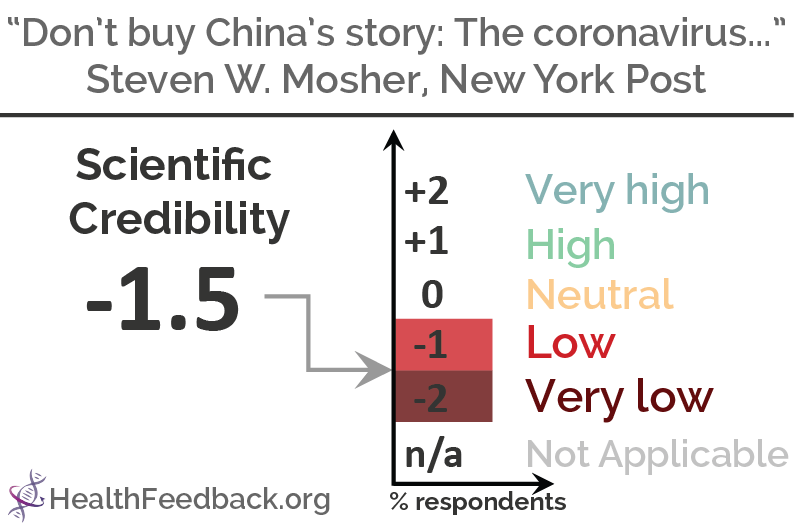
Find more details in Health Feedback's analysis
-
- Feb 2020
-
monoskop.org monoskop.org
-
"On Some Ideological Questions under Debate in World Communist Movement." introduces the reader to the inner-party differences in undivided communist party of India.
-
-
plato.stanford.edu plato.stanford.edu
-
A Theory of Justice
A Theory of Justice is a 1971 work of political philosophy and ethics by the philosopher John Rawls, in which the author addresses the problem of distributive justice (the socially just distribution of goods in a society). The theory uses an updated form of Kantian philosophy and a variant form of conventional social contract theory. Rawls's theory of justice is fully a political theory of justice as opposed to other forms of justice discussed in other disciplines and contexts.
The resultant theory was challenged and refined several times in the decades following its original publication in 1971. A significant reappraisal was published in the 1985 essay "Justice as Fairness", and a subsequent book under the same title, within which Rawls further developed his two central principles for his discussion of justice. Together, they dictate that society should be structured so that the greatest possible amount of liberty is given to its members, limited only by the notion that the liberty of any one member shall not infringe upon that of any other member. Secondly, inequalities – either social or economic – are only to be allowed if the worst off will be better off than they might be under an equal distribution. Finally, if there is such a beneficial inequality, this inequality should not make it harder for those without resources to occupy positions of power – for instance, public office.[1]
First published in 1971, A Theory of Justice was revised in 1975, while translated editions were being released in the 1990s it was further revised in 1999. In 2001, Rawls published a follow-up study titled Justice as Fairness: A Restatement.
-
-
about.gitlab.com about.gitlab.com
-
If you plan to be out of the office for more than 48 hours, update your GitLab.com status with your out of office dates by clicking on your profile picture and selecting "Edit Status." For Example: 'OOO Back on 2018-06-28.' Don't forget to change it back upon your return, and be aware that this information is publicly accessible.
-
-
www.core-econ.org www.core-econ.org
-
In 1968, Garrett Hardin, a biologist, published an article about social dilemmas in the journal Science, called ‘The Tragedy of the Commons’.
-
-
github.com github.com
-
Ack - Better than grep. Without Ack, Ag would not exist. ack.vim Exuberant Ctags - Faster than Ag, but it builds an index beforehand. Good for really big codebases. Git-grep - As fast as Ag but only works on git repos. ripgrep Sack - A utility that wraps Ack and Ag. It removes a lot of repetition from searching and opening matching files.
-
-
loadimpact.com loadimpact.com
-
We commit to build the load testing tool with the best developer experience, k6, and developing it in the open with the community, read our document on stewardship of the OSS k6 project. We believe this is key and the necessary foundation to build great developer tooling.
-
we believe that developer tools should be open source to allow for a community to form and drive the project forward through discussions and contributions. Hence why we built k6, the load testing tool we’ve always wanted ourselves!
-
It is also good practice to make sure that your load testing is functionally correct. Both the performance and functional goals can be codified using thresholds and checks (like asserts).
-
We check in our code at the entry point of a pipeline, version control (Git and Github in our case), and then it’s taken through a series of steps aimed at assuring quality and lowering risk of releases. Automation helps us keep these steps out of our way while maintaining control through fast feedback loops (context-switching is our enemy). If any step of the pipeline breaks (or fails) we want to be alerted in our communication channel of choice (in our case Slack), and it needs to happen as quickly as possible while we’re in the right context.
-
-
k6.io k6.io
-
To never block or remove features from k6 in order to make them exclusive to Load Impact’s SaaS productStrive not to delay introduction of new features in the k6 OSS tool, if the feature was planned to appear both there and in Load Impact’s SaaS productTo never introduce into the k6 OSS tool any artificial limits designed to promote conversion to Load Impact’s SaaS productTo work with the community, participating in and prioritize building the functionality the k6 community wants, making it the prefered tool for load testing
-
With k6, our goal has always been to create the best load testing tool for the modern working developer and that we do this in collaboration with the k6 community. Our revenue will not come from k6 directly, but from premium value creating offers based on k6. These offers will be made available at https://loadimpact.com. Load Impact premium offers will have focus on providing further simplicity, productivity and ease to use functionality.
-
We believe the key to Load Impact’s long-term success as a Company is to foster an active community of users around k6 as an open source project. To achieve this long-term goal, it is vital that we do not withhold new features from k6 based on whether or not they compete with our SaaS offering.
-
-
github.com github.com
-
Similar projects Here is a list of other projects found in the same design space.
-
-
github.com github.com
-
via3.hypothes.is via3.hypothes.is
-
etec.ctlt.ubc.ca etec.ctlt.ubc.ca
-
The Kemp Model of Instructional Design

-
-
www.lifescied.org www.lifescied.org
-
TABLE 1. Practices to maximize student learning from educational videos
Table 1. resource for planning/making effective videos
-
Finally, the utility of video lessons can be maximized by matching modality to content. By using both the audio/verbal channel and the visual/pictorial channel to convey new infor-mation, and by fitting the particular type of information to the most appropriate channel, instructors can enhance the germane cognitive load of a learning experience.
matching modality to content. So if you want to talk about history, or a book, or just some reflection, it makes less sense to do it over video, but if you want to talk about art history maybe you want to have a video component or be primarily video
-
Weeding, or the elimination of interesting but extraneous information that does not contribute to the learning goal, can provide further benefits. For example, music, complex back-grounds, or extra features within an animation require the learner to judge whether he or she should be paying attention to them, which increases extraneous load and can reduce learn-ing.
Weeding + definition, removing flash and bells and whistles that might cause the student to be distracted
-
The benefits of signaling are complemented by segmenting, or the chunking of information in a video lesson. Segmenting allows learners to engage with small pieces of new information and gives them control over the flow of new information.
Segmenting or chunking
-
Signaling, which is also known as cueing (deKoning et al., 2009), is the use of on-screen text or symbols to highlight important information. For example, signaling may be provided by the appearance of two or three key words (Mayer and John-son, 2008; Ibrahim et al., 2012), a change in color or contrast (deKoning et al., 2009), or a symbol that draws attention to a region of a screen (e.g., an arrow; deKoning et al., 2009).
Signaling definition + examples
-
-
accessmedicine.mhmedical.com accessmedicine.mhmedical.com
-
DCs are key initiators both of innate immune responses via cytokine production and of adaptive immune responses via presentation of antigen to T lymphocytes.
-
-
www.nytimes.com www.nytimes.com
-
It can be easier to apply for farm subsidies than it is to get SNAP benefits, said Joel Berg, a former official with the Department of Agriculture, the agency that administers both programs.
-
-
educatorinnovator.org educatorinnovator.org
-
Over the two weeks, I realized that listening is a cornerstone of pedagogical justice.
An approach to education influenced by the Italian Resistance Movement in WWI, the Reggio Emilia Approach, identifies listening as a pedagogy and Carlina Rinaldi articulates it well. Here are some quotes from collaborative work from [Reggio Children and Harvard's Project Zero] x
-
- Jan 2020
-
www.statista.com www.statista.com
-
Fourth-party logistics (4PL) market size from 2018 to 2027
-
-
marxdown.github.io marxdown.github.io
-
the phenomenal form
In Fowkes, the 'form of appearance' or the Erscheinungsform.
Exchange value is the 'form of appearance' of something contained in it, yet distinguishable from it--this 'third thing' will turn out to be 'socially necessary labor time'.
Book Two of Hegel's Science of Logic, the Doctrine of Essence, begins with a chapter on 'Der Schein,' which appears in A.V. Miller's translation as "Illusory Being" (Hegel, Science of Logic, trans. by A.V. Miller, pp. 393-408).
Here, Hegel describes "schein" as "reflected immediacy, that is immediacy which is only by means of its negation and which when contrasted with its mediation is nothing but the empty determination of the immediacy of negated determinate being," (p. 396).
Hegel goes on to remark that "Schein" is "the phenomenon [Phänomen] of skepticism, and the Appearance [Erscheinung] of idealism," (p. 396).
In describing exchange value as the 'Erscheinungsform' of 'something contained in it, yet distinguishable from it'--which will be labor--Marx is clearly flirting with the terminology surrounding "Illusory Being" in the Science of Logic, which suggests labor as the 'thing-in-itself' of the exchange value. Exchange-value is the reflected immediacy that conceals the congealed labor that it is its essence.
The passage as a whole is suggestive of how exchange value will wend its way through Marx's demonstration, unfolding from itself determinations of itself.
Before presenting a long, difficult quotation from Hegel, I think the most straightforward way to present this reference to Hegel is to say present the argument as follows:
In Kantian idealism, we find that the 'thing-in-itself' cannot become an object of knowledge; consciousness only ever has immediate access to the form of appearance, the 'sensible form' of a 'thing-in-itself' which never presents itself to consciousness. In referring to the value form as the 'form of appearance' of something else which does not appear, Marx is saying that just as idealism subordinates the objectivity of the world to its appearance for consciousness, exchange-value represents immediately an essence that it suppresses, and implicitly, denies the possibility of knowledge of this essence.
Hegel writes, "Skepticism did not permit itself to say 'It is'; modern idealism did not permit itself to regard knowledge as a knowing of the thing-in-itself; the illusory being of skepticism was supposed to lack any foundation of being, and in idealism the thing-in-itself was not supposed to enter into knowledge. But at the same time, skepticism admitted a multitude of determinations of its illusory being, or rather its illusory being had for content the entire manifold wealth of the world. In idealism, too, Appearance [Erscheinung] embraces within itself the range of these manifold determinateness. This illusory being and this Appearance are immediately thus manifoldly determined. This content, therefore, may well have no being, no thing or thing-in-itself at its base; it remains on its own account as it is; the content has only been transferred from being into an illusory being, so that the latter has within itself those manifold determinateness, which are immediate, simply affirmative, and mutually related as others. Illusory being is, therefore, itself immediately determinate. It can have this or that content; whatever content it has, illusory being does not posit this itself but has it immediately. The various forms of idealism, Leibnizian, Kantian, Fichtean, and others, have not advanced beyond being as determinateness, have not advanced beyond this immediacy, any more than skepticism did. Skepticism permits the content of its illusory being to be given to it; whatever content it is supposed to have, for skepticism it is immediate. The monad of Leibniz evolves its ideas and representations out of itself; but it is not the power that generates and binds them together, rather do they arise in the monad like bubbles; they are indifferent and immediate over against one another and the same in relation to the monad itself. Similarly, the Kantian Appearance [Erscheinung] is a given content of perception; it presupposes affections, determinations of the subject, which are immediately relatively to themselves and to the subject. It may well be that the infinite obstacle of Fichte's idealism has no underlying thing-in-itself, so that it becomes purely a determinateness in the ego; but for the ego, this determinateness which it appropriates and whose externality it sublates is at the same time immediate, a limitation of the ego, which it can transcend but which has in it an element of indifference, so that although the limitation is in the ego, it contains an immediate non-being of the ego." (p. 396-397).
In Lenin's notebooks on Hegel's Science of Logic, these sections provoke a considerable degree of excitement. Lenin's 'Conspectus of Hegel's Science of Logic' can be accessed via Marxists.org here:
https://www.marxists.org/archive/lenin/works/1914/cons-logic/ch02.htm
-
no difference
The nature of the wants that commodities satisfy makes no difference. This is perhaps somewhat surprising to readers, given the extent to which everyday critiques of capitalist society often center around the role that consumerism plays and the subjective effects that this produces, namely, the way that consumer society creates all sorts of desires (as well as the obverse--many will defend capitalism on the grounds that it is able to satisfy our inordinate appetite for novelty by producing an enormous proliferation of desirable commodities). Yet, for Marx, the nature of these desires "makes no difference."
It is worth pointing out that the critique of the appetites that consumer society spawns is by no means new (a rather early moment in the history of consumer society). We find it already on display in Book II of Plato's Republic. In looking to shift the terrain of the analysis of justice from the individualistic, social contractualist theory of justice elaborated by Glaucon, Socrates founds a 'city' based on the idea that no one is self-sufficient, that human beings have much need of one another, and that the various crafts--farming, weaving cloth, etc.--fare best when each person specializes in that craft to which they are most suited by nature. After sketching out a kind of idyllic, pastoral community based on the principle of working together to satisfy our natural appetites, Socrates aristocratic companion Glaucon objects, describing this city as a 'city fit for pigs'. At this point, Socrates conjures what he calls the 'luxurious city', at which point a whole host of social ills are unleashed in order to satisfy Glaucon's desire for the luxuries to which he is accustomed. Currency and trade are introduced, along with a more complex division of labor (and wage labor!), and quite quickly, war. On the basis of the principle of 'one person, one craft', Socrates argues that making war is itself a craft that requires specialization (and thus a professional army).
For Plato, this represents the beginning of class society, as the profession military becomes a class distinct from the class of producers and merchants.
Plato thus anticipates a version of a view that becomes one of the key theses of the Marxist theory of the state, namely, the idea that the state exists only in societies that have become "entangled in an insoluble contradiction within itself" and which are "cleft into irreconcilable antagonisms which it is powerless to dispel," (Engels, The Origin of the Family, Private Property, and the State). The state emerges as "a power apparently standing above society...whose purpose is to moderate the conflict and keep it within the bounds of 'order'" Engels writes, "this power arising out of society, but placing itself above it, and increasingly separating itself from it, is the state." Lenin cites this passage in the first pages of State and Revolution in order to critique the 'bourgeois' view that the state exists in order to reconcile class interests. In Lenin's reading of Marx, the state exists as "an organ of classs domination, an organ of oppression of one class by another," a view articulated in The Communist Manifesto, (cf. V.I. Lenin, State and Revolution in V.I.Lenin: Collected Works, Vol. 25, pp. 385-497).
Marx cites this same passage from Republic in a long footnote to his discussion of the Division of Labor and Manufacture on pp. 487-488, which also happens to be the sole place in Capital where Marx cites Plato.
The fact that Marx here expresses indifference to the particular appetites that commodities satisfy is thus intriguing and ambiguous. Given that this question both clearly animates Plato's discussion of the origin of class society in Republic and, additionally serves as an alternative to the social contractarian view of justice that descends from Glaucon through Hobbes and the 18th century 'Robinsonades', this seemingly technical point also touches upon questions concerning Marx's engagement with both classical and modern political theory.
If for Plato, the unruly appetites represent the seed of which class-divided society is the fruit, Marx's dismissal of the question of the nature of the appetites that are satisfied by commodities points to exchange-value and the social forms that it unleashes as being key dimensions of the particular form that class-antagonism takes in capitalist society.
-
presents
In Ben Fowkes translation in the Penguin edition, we find "The wealth of societies…appears as."
In the German edition, Marx uses the verb erscheint ('scheint' shares an etymological link to the English word, shine.)
On p. 127, Marx uses the Hegelian expression, Erscheinungsform (form of appearance). In this edition, it is rendered "the phenomenal form."
Marx uses this term to describe the way that, in order for exchange-values to present an equivalence between two distinct use-values (i.e. x corn, y silk) they must possess some common element of identical magnitude. As exchange-values, commodities "cannot be anything other than the mode of expression, the 'form of appearance' [Erscheinungsform], of a content distinguishable from it," (Karl Marx. Capital, Vol. I, p. 127)
-
prevails
In the original German, 'prevails' is rendered "herrscht." Herrscht shares a common root with the ordinary German word Herr (Mister, or, more evocatively, Master). 'Lordship' (as, in the chapter of Hegel's Phenomenology of Spirit, on 'Lordship and Bondage' is rendered Herrschaft.)
My own reading of Capital tends to center upon the question of domination in capitalist societies, and throughout chapter 1 (in particular, in The Fetishism of Commodities and the Secret Thereof) Marx is especially attuned to the distinguishing how the forms of domination that are prevalent in capitalist societies are distinct from the relations of "personal dependence" that characterize pre-capitalist modes of production.
It seems prudent, therefore, to take note of the way that the seemingly innocuous notion of 'prevalence' is, for Marx, in his original formulation, already evocative of the language of mastery, domination, perhaps even something like 'hegemony'.
Furthermore, the capitalist mode of production prevails--it predominates. Yet, as Louis Althusser observes in his discussion of the concept of the 'mode of production' in On the Reproduction of Capitalism, every concrete social formation can be classified according to the mode of production that is dominant (that prevails--herrscht). In order to dominate, something must implicitly be dominated, or subordinate. "In every social formation," Althusser writes, "there exists more than one mode of production: at least two and often many more." Althusser cites Lenin, who in his analysis of the late 19th c. Russian social formation, observes that four modes of production can be distinguished (Louis Althusser, On the Reproduction of Capitalism, Verso 2014, p. 19.)
In our analysis of social formations, the concrete specificity of each can be articulated by carefully examining the multiplicity of modes of production that coincide within it, and examine the way in which capitalism tends to dominate a multiplicity of subordinate modes of production that, on the one hand, survive from past modes of production but which may also, on the other, be emerging in the present (i.e. communism). Thus even if capitalism tends towards the formation of a contiguous world-system dominated by its particular imperatives, this does not mean that this process is homogenous or unfolds in the same way in each instance.
For some commentators, capitalism is defined by the prevalence of wage labor and the specific dynamics that obtain therefrom. Yet this has often led to confusion over, whether, in analyzing the North American social formation prior to 1865, in which slavery coexists with wage-labor, the mode of production based on slave-labor is pre-capitalist. Yet as we find here in ch. 1, what determines the commodity as a commodity is not that it is the product of wage labor, rather that it is produced for exchange. As Marx writes on p. 131, "He who satisfies his own need with the product of his own labor admittedly creates use-values, but not commodities. Insofar as the slave-system in North America produced commodities (cotton, tobacco, etc.) for exchange on the world market, the fact that these commodities were produced under direct conditions of domination does not have any bearing on whether or not we identify this system of production as 'capitalist'. Wage-labor is therefore not likely the determinative factor; the determinative factor is the production of commodities for exchange. It is only insofar as commodities confront one another as exchange-values that the various modes of useful labor appear as expressions of a homogenous common substance, labor in the abstract
It is in this sense that we can observe one of the ways that the capitalist mode of production prevails over other modes of production, as it subordinates these modes of production to production for exchange, and thus the law of value, regardless of whether wage-labor represents the dominant form of this relation. Moreover, it provides a clue to how we can examine, for example, the persistence of unwaged work within the family, which has important consequences for Social Reproduction Theory.
Nonetheless, we can say that insofar as commodities confront each other on the market in a scene of exchange that they implicitly contain some 'third thing' which enables us to compare them as bearers of a magnitude of value. This 'third thing', as Marx's demonstration shows, is 'socially necessary labour time', which anticipates the way that wage-labor will become a dominant feature of capitalist society.
Tags
- Schein
- Form of Appearance
- Slavery
- Class Society
- Domination
- State
- Origin of the Family
- Class struggle
- Appetites
- Engels
- Social Reproduction Theory
- Erscheinungsform
- Lenin's Philosophical Notebooks
- Phenomenology of Spirit
- Erschein
- State and Revolution
- Hegel
- On the Reproduction of Capitalism
- Science of Logic
- Consumerism
- Wage Labor
- Louis Althusser
- Lenin
- State Theory
- Plato
- CMRG-CMU
Annotators
URL
-
-
www.educationworld.com www.educationworld.com
-
Most copyright experts recommend this rule of thumb -- when in doubt, assume a work is copyrighted and ask permission to use it.
expert advice.
-