When you separate your content repository “body” from its presentation layer “head,” it becomes a headless CMS. What truly makes a headless CMS better than a traditional CMS is its content-first approach with full APIs to access and display content in any way desired.
10,000 Matching Annotations
- May 2021
-
agilitycms.com agilitycms.com
-
-
gcs.instructure.com gcs.instructure.com
-
The cry I bring down from the hillsbelongs to a girl still burninginside my head.
this memory is burned in his mind meaning it is there forever
-
The cry I bring down from the hillsbelongs to a girl still burninginside my head.
He has PTSD, he is remembering to sounds of th explosiosns and people dying
-
belongs to a girl still burninginside my head.
he probably experienced a traumatic event during the Vietnam war that is related to this burning girl that he is talking about
-
The cry I bring down from the hillsbelongs to a girl still burninginside my head.
he is heavily thinking about this girl
-
to a girl still burninginside my head.
The cause of this sadness if due to a girl that he has lost.
-
The cry I bring down from the hillsbelongs to a girl still burninginside my head.
could he possibly be having war flasbacks?
-
belongs to a girl still burninginside my head.
a girl stuck in the speakers thoughts
-
-
poets.org poets.org
-
The cry I bring down from the hillsbelongs to a girl still burninginside my head.
The author remembers the accident of the burning girl.
-
The cry I bring down from the hillsbelongs to a girl still burninginside my head
that a piece of land is burning
-
The cry I bring down from the hillsbelongs to a girl still burninginside my head. At daybreak
The screams are due to a burning image in the authors head.
-
inside my head. At daybreak
He can picture her still crying from the pain he put her threw.
-
inside my head.
he is recalling the event, which happened years ago
-
belongs to a girl still burninginside my head
Maybe he saw a girl crying when he was in the war and its been repeating in his mind.
-
belongs to a girl still burninginside my head.
Memorys of a girl hes known in the past
-
The cry I bring down from the hillsbelongs to a girl still burninginside my head
Possible remembering a memory of a girl he once loved or cared about.
-
inside my head. At daybreak
The feelings for this girl are always inside his head throughout the whole day.
-
The cry I bring down from the hillsbelongs to a girl still burninginside my head.
the person i used to be still makes them self known in my head
-
The cry I bring down from the hillsbelongs to a girl still burninginside my head.
sounds like he is sad over a girl
-
The cry I bring down from the hillsbelongs to a girl still burninginside my head.
he has a bad memory is his head
-
The cry I bring down from the hillsbelongs to a girl still burninginside my head. At daybreak
Right away he is talking about a girl. So the rest of the poem should tell me who and what this girl means to him.
-
-
www.medrxiv.org www.medrxiv.org
-
SciScore for 10.1101/2021.05.14.21257059: (What is this?)
Please note, not all rigor criteria are appropriate for all manuscripts.
Table 1: Rigor
<table><tr><td style="min-width:100px;margin-right:1em; border-right:1px solid lightgray; border-bottom:1px solid lightgray">Ethics</td><td style="min-width:100px;border-bottom:1px solid lightgray">Consent: Written informed consent was obtained from all participants before study entry.</td></tr><tr><td style="min-width:100px;margin-right:1em; border-right:1px solid lightgray; border-bottom:1px solid lightgray">Sex as a biological variable</td><td style="min-width:100px;border-bottom:1px solid lightgray">All women in reproductive age not using a permanent contraceptive method were asked to perform a urine pregnancy test (CERTUM diagnostics, Kabla diagnosticos, Mexico).</td></tr><tr><td style="min-width:100px;margin-right:1em; border-right:1px solid lightgray; border-bottom:1px solid lightgray">Randomization</td><td style="min-width:100px;border-bottom:1px solid lightgray">Trial design: This was a double-blind, randomized, head to head placebo-controlled clinical trial, held at the National Institute of Respiratory Diseases (INER) of Mexico, a public national referral center for respiratory diseases and a main teaching center and research facility for respiratory diseases.</td></tr><tr><td style="min-width:100px;margin-right:1em; border-right:1px solid lightgray; border-bottom:1px solid lightgray">Blinding</td><td style="min-width:100px;border-bottom:1px solid lightgray">Recruiters, trial team and the evaluators of follow up condition were blinded to group assignment.</td></tr><tr><td style="min-width:100px;margin-right:1em; border-right:1px solid lightgray; border-bottom:1px solid lightgray">Power Analysis</td><td style="min-width:100px;border-bottom:1px solid lightgray">Sample size: Th sample size calculation was estimated according the primary objective of the study, the time to a symptomatic SARS-CoV2 infection, assuming a 20% rate of infection in control group, as reported from Italy in February3, vs a 10% in the experimental group (10% reduction).</td></tr></table>Table 2: Resources
<table><tr><th style="min-width:100px;text-align:center; padding-top:4px;" colspan="2">Antibodies</th></tr><tr><td style="min-width:100px;text=align:center">Sentences</td><td style="min-width:100px;text-align:center">Resources</td></tr><tr><td style="min-width:100px;vertical-align:top;border-bottom:1px solid lightgray">Assay results were interpreted as follows: cutoff index, <1.0 for samples that were nonreactive/negative for anti-SARS-CoV-2 antibodies; cutoff index, ≥1.0 for samples that were reactive/positive for anti-SARS-CoV-2 antibodies.</td><td style="min-width:100px;border-bottom:1px solid lightgray"><div style="margin-bottom:8px"><div>anti-SARS-CoV-2</div><div>suggested: None</div></div></td></tr></table>Results from OddPub: We did not detect open data. We also did not detect open code. Researchers are encouraged to share open data when possible (see Nature blog).
Results from LimitationRecognizer: An explicit section about the limitations of the techniques employed in this study was not found. We encourage authors to address study limitations.Results from TrialIdentifier: We found the following clinical trial numbers in your paper:<br><table><td style="min-width:95px; border-right:1px solid lightgray; border-bottom:1px solid lightgray">Identifier</td><td style="min-width:95px; border-right:1px solid lightgray; border-bottom:1px solid lightgray">Status</td><td style="min-width:95px; border-right:1px solid lightgray; border-bottom:1px solid lightgray">Title</td></tr><tr><td style="min-width:95px; border-right:1px solid lightgray; border-bottom:1px solid lightgray">NCT04318015</td><td style="min-width:95px; border-right:1px solid lightgray; border-bottom:1px solid lightgray">Recruiting</td><td style="min-width:95px; border-right:1px solid lightgray; border-bottom:1px solid lightgray">Hydroxychloroquine Chemoprophylaxis in Healthcare Personnel …</td></tr></table>
Results from Barzooka: We did not find any issues relating to the usage of bar graphs.
Results from JetFighter: We did not find any issues relating to colormaps.
Results from rtransparent:- Thank you for including a conflict of interest statement. Authors are encouraged to include this statement when submitting to a journal.
- Thank you for including a funding statement. Authors are encouraged to include this statement when submitting to a journal.
- No protocol registration statement was detected.
Results from scite Reference Check: We found no unreliable references.
<footer>About SciScore
SciScore is an automated tool that is designed to assist expert reviewers by finding and presenting formulaic information scattered throughout a paper in a standard, easy to digest format. SciScore checks for the presence and correctness of RRIDs (research resource identifiers), and for rigor criteria such as sex and investigator blinding. For details on the theoretical underpinning of rigor criteria and the tools shown here, including references cited, please follow this link.
</footer>
-
-
venturebeat.com venturebeat.com
-
Google’s chairman and head of hiring, Laszlo Bock, has given a few insights in the New York Times on how he sorts through a multitude of bright applicants.
fact
-
-
Local file Local file
-
his skull, not like any other skull.Two eyes or holes
She says the skull she was looking for is unlike any other in the mass grave she was looking through. The eyes are described as holes, which creates a picture in my head of deep black holes as eyes in a decrepit skull.
-
-
journals.plos.org journals.plos.org
-
The foremost consideration with respect to teaching of the Australian Aboriginal memory technique is the cultural safety aspect and respect for the peoples who developed this approach. In our program, the teaching of this program was administered by an experienced Australian Aboriginal Educator, who was able to integrate the method into our teaching program, while simultaneously preventing several breaches of cultural etiquette and terminology which could easily have compromised the material had it been delivered by a non-Australian Aboriginal educator (TY), however well-intentioned. The need for a deep knowledge and understanding of the appropriate context for teaching and delivery of this material is probably the main factor which would preclude more widespread adoption of this technique.
I really appreciate the respect given to indigenous knowledge here.
The researchers could have gone much further in depth in describing it and the aspects of what they mean by cultural "safety". They've done a disservice here by downplaying widespread adoption. Why not? Why couldn't we accord the proper respect of traditions to actively help make these techniques more widespread? Shouldn't we be willing to do the actual work to accord respect and passing on of these knowledges?
Given my reading in the area, there seems to be an inordinate amount of (Western) "mysticism" attributed to these techniques (here and in the broader anthropology literature) rather than approaching them head-on from a more indigenous perspective. Naturally the difficult part is being trusted enough by tribal elders to be taught these methods to be able to pass them on. (Link this idea to Tim Ingold's first chapter of Anthropology: Why It Matters.)
All this being said, the general methods known from the West, could still be modified to facilitate in widespread adoption of those techniques we do know. Further work and refinement of them could continue apace while still maintaining the proper respect of other cultures and methods, which should be the modern culture default.
If nothing else, the West could at least roll back the educational reforms which erased their own heritage to regain those pieces. The West showing a bit of respect for itself certainly wouldn't be out of line either.
-
-
www.poetryfoundation.org www.poetryfoundation.org
-
with a wild, headlong motion
His head could have a lot of movement since he was in the air fast and is falling fast.
-
with a wild, headlong motion
The power forward is falling head first.
-
and swiveling back to see an orange blur floating perfectly through the net.
He see's the ball which seems to be blurry maybe because he hurt his head and could be having blurry vision, go through the net perfectly like it was supposed to.
-
with a wild, headlong motion for the game he loved like a country
Could have moved his head in a way he wouldn't hurt it while falling
-
in the wrong direction, trying to catch sight
He may be trying to give a tip that you should always keep your head straight and look at the bright side of things.
-
in slow motion, almost exactly like a coach’s drawing on the blackboard,
the play is quick it is not like you can stop time like sonic, the flash, and quicksilver. So you have the follow the play in your head.
-
of a high, gliding dribble and a man letting the play develop in front of him
A player let the play of the game work out in his head. If the coach wants to call a pass, 3-pointer, or a defensive play. You can memorize multiple plays all at once.
-
-
repository.essex.ac.uk repository.essex.ac.uk
-
. This betrayal changes Chiron and his attitude towards the world around him—he keeps his head up, challenging Kevin and gets up after every punch
i didn't think about this but perhaps this is why instead of the 3rd act being called chiron it's called black because he forces himself to become something like that bc of betrayal and not wanting to be hurt like that again
-
Chiron sits with his head down, looking unusually uneasy and quiet, before he asks Juan: “What’s a faggot?” Even though it is never explicitly stated, the audience is aware of the fact that Chiron has been called that particular slur many times, which prompted him to ask the question. As Juan responds that “a faggot is a word used to make gay people feel bad” Chiron asks again, “Am I a faggot?” The boy’s innocence and vulnerability only highlight his confusion and hurt at being bullied for a concept that he does not understand. What adds to the damage is that Chiron is persecuted by his own community, within which he should be able to find refuge and not oppression. This is one among many scenes in which Jenkins addresses the complexity of developing and supporting intersectional identities.
important quote but also the way that juan doesnt pass judgement, he tells him that you can be gay but dont let nobody call you no fag
-
-
www.bartleby.com www.bartleby.com
-
Scratched his head and kept on thinking;
I don't think he's thinking about the past here. I think he's thinking about reasons for why he can't do things or why he feels disconnected.
-
-
www.bartleby.com www.bartleby.com
-
Went home and put a bullet through his head.
I might be a bad person but this last line made me laugh because it's such a radical left turn. The poem is talking up Corey on almost every line until "one calm summer night" he decides to end it. If you cut out the last two lines it would be a completely different poem.
-
-
tropicalmarine2nded.pressbooks.com tropicalmarine2nded.pressbooks.com
-
. The A. percula has around 30 to 38 pored scales covering its body. The dorsal fins of this fish has 9 to 10 spines.
can make this into a big list. "the head, around 30 to 38 pored scales covering its body, and its dorsal fins have 9 to 10 spines. I think you should also include a diagram with labels if you can find one--or make one yourself (not sure how you'd credit it correctly).
-
-
www.tableau.com www.tableau.com
-
What’s incredible here is just how comprehensive the study is and how seriously it slices and dices every aspect of selfies. We can find trends in everything from head tilt or pose trends by city to smile frequency by age group and gender.
The data visualization examples in this article seem to primarily depict quantitative data. This makes me wonder how I can translate my qualitative data into categories that can be measured and depicted visually. For example, when I identify themes or common words and phrases that come up in my observations and notes, I could create a word cloud showing their frequency.
-
-
poets.org poets.org
-
I can't see my own arms and legsor know if this is a trap or blessing,
She cant see her legs in her memory of being in the fire. She doesn't know how to feel about this trauma she went through. When the speaker is reminiscing she is not sure if shes trapped in her head or if its a blessing she cant remember looking back.
-
-
www.biorxiv.org www.biorxiv.org
-
Reviewer #2 (Public Review):
The manuscript by Diao et al. is an important extension of their eLife paper of 2017. Their development of new tools that allow them to follow Ca2+ transients in single muscle fibers over the whole animal through the behavioral sequence and also to independently monitor the Ca2+ transients in the endplates of the motor neurons that innervate these muscles. Their goal is to break down the movements that control the ecdysis sequence into elemental "syllables" and then to defined the role of these syllables in constructing progressively complex behavioral programs and as targets of neuropeptide modulation.
A crucial behavior that occurs during P1 in higher flies is the movement of the gas bubble but this event is largely ignored in the paper. Prior to pupal ecdysis, gas is expelled into the posterior puparial space and then actively translocated, via muscular contractions of the body wall, to the anterior end of the puparium during the latter portion of P1 (shown nicely in the author's 2017 Video). A detailed study by C.G. Chadfield & J.C.Sparrow (1985. Dev. Genetics 5: 103) of pupal ecdysis in Drosophila emphasized the importance of this translocation for head eversion. When they simply removed the operculum at the start of bubble movement, then the gas bubble could not push the animal backwards in the puparial case and head eversion could not occur. However, they saw normal pupation and head eversion if the removed operculum was immediately replaced and sealed down with petroleum jelly.
During translocation, the bubble moves in a fragmented fashion between the pupal cuticle and the puparium. Ignoring this movement leads to statements like on line 378 "Because pupal ecdysis is independent of environmental factors and executed in the absence of competing physiological needs, it is likely that its variability is intrinsic to the ecdysis network." For the pupating animal, its "environment" is the inside of the puparial case and the moving bubble is an unpredictable variable in this environment. The trajectory and route of bubble movement is not fixed, and it is likely that variation in sensory feed-back from the gas movement explains the motor variability and reduced stereotypy during P1. The role for proprioception during this phase is likely to inform the CNS of the progression of the bubble fragments. The author's finding that the blockage of proprioceptors suppresses the behavior progression could mean that this sensory information is needed to signal that an anterior space has been produced, and without this signal, the behavior does not progress to its next phase. This should be addressed in the text if not experimentally.
Another aspect of the background that is missing is considering earlier studies on the ontogeny of behaviors leading up to ecdysis/hatching. Notable are studies of the progressive construction of the flight motor program during metamorphosis in moths (Kammer & Rheuben 1976 J. Exp. Biol. 65:65.) and a similar feature of assembly of motor programs prior to hatching in Drosophila (Crisp et al., 2008 Development 135:3707). In the moth studies, complex motor programs were gradually assembled during ontogeny with motor neurons firing but without muscle contraction (as the authors see in prepupae during P0 - Fig 2C). A lack of excitation-contraction coupling in the moth prevents muscle movement through most of development. This suppression of contraction is essential because prior to production of adult cuticle, muscle contraction would rip the developing animal apart. The same requirement to suppress muscle contraction would be seen in fly prepupa until sufficient pupal cuticle has been secreted to prevent rupture from actual muscle contractions! This should be addressed in the text.
Besides not being explicit about how the syllables combine to build the eight basic movements, it is not clear how these basic movements then combine to support the major behaviors of each phase. This is seen in P1, where we see that swing and brace movements can co-occur (e.g., Fig 3D) but is a swing on one side always associated with a brace on the other? What are their phase relationships? Does their temporal association remain stable as the bouts progress? Another example is in Phase 3. There appear to be 5 basic behaviors associated with bouts in Phase 3. The example in Fig 1H shows double peak bouts in phase 3, and the bulk Ca data show a preponderance of double peaks. The different shapes suggest that there are different movements during the two peaks. Their discussion of P3 movements (around line 273), though, does not address this feature of the double peaks. The example in Fig 7A suggests that some movements, like the PostSwing occur at half the frequency of other movements such as the PostCon and AntComp. Is this the basis of the double peaks and how is that reflected in the movements that are finally produced? This should be addressed in the text.
One approach that I did not find useful was dividing the analysis into compartments - anterior versus posterior and dorsal-lateral-ventral. This may provide a way of generating some statistical analysis, but it did not illuminate anything about the behavior. The line between anterior and posterior segments seems to be arbitrary. Of course, it is important to know if there is directionality of movement [waves going anteriorly versus posteriorly], but beyond that, I am not sure what it adds. [Indeed, it made Fig 7 very confusing!] Also, I could not see a rationale for considering separate dorsal-lateral-ventral compartments. This should be addressed in the text.
-
-
inst-fs-iad-prod.inscloudgate.net inst-fs-iad-prod.inscloudgate.net
-
MRS HALE: Mrs Peters, look at this one. Here, this is the oneshe was working on, and look at the sewing! All the rest of it has been so nice and even.And look at this! It's all over the place! Why, it looks as if she didn't know what she wasabout
not in the best head space
-
-
doctorow.medium.com doctorow.medium.com
-
That’s how blogging is complimentary to other forms of more serious work: when you’ve done enough of it, you can get entire essays, speeches, stories, novels, spontaneously appearing in a state of near-completeness, ready to be written.
I remember hearing a story that Mozart wrote music "like a cow pees" (in one giant and immediate flood and then done) and this thought of large works of writing, etc. springing, as if fully formed from the head of Zeus, makes me wonder if there was a similar process Mozart used for music. How did he see it internally/mentally? Or had he simply played it so much or played with it to do this?
I've heard other writers mention similar things.
-
-
twitter.com twitter.com
-
Brains On! (2021, May 3). What does 95% effective mean for a vaccine? We head to a stadium to learn! Warning: There are seagulls overhead! (Big thanks to @mariasundaram for help with this video!) Learn more about the #vaccines find family-friendly #coronavirus explainers at https://t.co/Zo9nORLEdI https://t.co/erPYnoKuZC [Tweet]. @Brains_On. https://twitter.com/Brains_On/status/1389293681669152769
-
What does 95% effective mean for a vaccine? We head to a stadium to learn! Warning: There are seagulls overhead! (Big thanks to @mariasundaram for help with this video!) Learn more about the #vaccines find family-friendly #coronavirus explainers at http://BrainsOn.org/Coronavirus
-
-
gcs.instructure.com gcs.instructure.com
-
I ain't the type of brother made for you to start testin'
THIS MEANS IF YOU F AROUND YOU GET YO HEAD BLOWN OFF, SO DON'T TRY TO FKING TEST ME
-
eah yeah, aiyyo black it's time (word?)(Word, it's time negro?)Yeah, it's time man (aight negro, begin)Straight out the friggin dungeons of rapWhere fake negroes don't make it backI don't know how to start this stuff, yo Rappers, I monkey flip 'em with the funky rhythmI be kicking, musician, inflictin' compositionOf pain, I'm like Scarface smelling amphetaminesHolding an M-16, see with the pen I'm extreme, nowBullet holes left in my peepholes, I'm suited up in street clothesHand me a nine and I'll defeat foesY'all know my steelo with or without the airplayI keep some E&J, sitting bent up in the stairwayOr either on the corner betting Grants with the cee-lo champsLaughing at baseheads trying to sell some broken ampsG-packs get off quick, forever negroes talk stuffReminiscing about the last time the Task Force flippedNegroes be running through the block shootin'Time to start the revolution, catch a body, head for HoustonOnce they caught us off-guard, the Mac-10 was in the grass andI ran like a cheetah with thoughts of an assassinPick the Mac up, told brothers, "Back up, " the Mac spitLead was hitting negroes, one ran, I made him backflipHeard a few chicks scream, my arm shook, couldn't lookGave another squeeze, heard it click, "yo, my stuff is stuck"Try to cock it, it wouldn't shoot, now I'm in dangerFinally pulled it back and saw 3 bullets caught up in the chamberSo now I'm jetting to the building lobbyAnd it was full of children probably couldn't see as high as I be(So what you saying?) It's like the game ain't the sameGot younger negroes pulling the triggers, bringing fame to their nameAnd claim some corners, crews without guns are gonersIn broad daylight, stickup kids: they run up on us4-5's and gauges, Macs, in factSame negroes will catch a back-to-back, snatching your slacks in blackThere was a snitch on the block getting negroes knockedSo hold your stash 'til the drug price dropI know this crackhead who said she's got to do drugs it's all she's gotAnd if it's good, she'll bring you customers in measuring potsBut yo, you gotta slide on a vacation, inside informationKeeps large negroes erasin' and their wives basin'It drops deep as it does in my breathI never sleep, cause sleep is the cousin of deathBeyond the walls of intelligence, life is definedI think of crime when I'm in a New York state of mind New York state of mindNew York state of mindNew York state of mindNew York state of mindNew York state of mind Be having dreams that I'm a gangsta; drinking Moets, holding TecsMaking sure the cash came correct, then I steppedInvestments in stocks, sewing up the blocks to sell drugsWinning gunfights with mega-copsBut just a negro walking with his finger on the triggerMake enough figures until my pockets get biggerI ain't the type of brother made for you to start testin'Give me a Smith & Wesson, I have negroes undressin'Thinking of cash flow, religion and shelterWhenever frustrated, I'm a hijack DeltaIn the P.J.'s, my blend tape plays, bullets are straysYoung girls are grazed, each block is like a mazeFull of black rats trapped, plus the Island is packedFrom what I hear in all the stories when my peoples come back, blackI'm living where the nights is jet-blackThe fiends fight to get drugs I just max, I dream I can sit backAnd lamp like Capone, with drug scripts sewnOr the legal luxury life, rings flooded with stones, homesI got so many rhymes I don't think I'm too saneLife is parallel to Hell but I must maintainAnd be prosperous, though we live dangerous, cops could justArrest me, blaming us, we're held like hostagesIt's only right that I was born to use micsAnd the stuff that I write is even tougher than lifeI'm taking rappers to a new plateau, through rap slowMy rhymin' is a vitamin held without a capsuleThe smooth criminal on beat breaksNever put me in your box if your stuff eats tapesThe city never sleeps, full of villains and creepsThat's where I learned to do my hustle had to scuffle with freaksI'm an addict for sneakers, 20s of beliefs and broads with beepersIn the streets I can greet ya, about cigars I teach yaInhale deep like the words of my breathI never sleep, cause sleep is the cousin of deathI lay puzzle as I backtrack to earlier timesNothing's equivalent to the New York state of mind New York state of mindNew York state of mindNew York state of mindNew York state of mindNew York state of mind Nasty NasNasty NasNasty Nas.
From the begining i feel like its a sort of survival place, the writer talks about streets and how its like- from the word streets i feel its talks about the difficulty of surviving the especially for those referred as negroes.
-
-
gutenberg.net.au gutenberg.net.au
-
He thought of the telescreen with its never-sleeping ear. They could spy upon you night and day, but if you kept your head you could still outwit them.
-
I hated the sight of you,' he said. 'I wanted to rape you and then murder you afterwards. Two weeks ago I thought seriously of smashing your head in with a cobblestone. If you really want to know, I imagined that you had something to do with the Thought Police.'
What a declaration!
-
her hand felt for his and gave it a fleeting squeeze. It could not have been ten seconds, and yet it seemed a long time that their hands were clasped together. He had time to learn every detail of her hand. He explored the long fingers, the shapely nails, the work-hardened palm with its row of callouses, the smooth flesh under the wrist. Merely from feeling it he would have known it by sight. In the same instant it occurred to him that he did not know what colour the girl's eyes were. They were probably brown, but people with dark hair sometimes had blue eyes. To turn his head and look at her would have been inconceivable folly. With hands locked together, invisible among the press of bodies, they stared steadily in front of them, and instead of the eyes of the girl, the eyes of the aged prisoner gazed mournfully at Winston out of nests of hair.
-
-
gcs.instructure.com gcs.instructure.com
-
Saw you there and I thought
as soon as she saw him, she has so many things running through head about him just by the first glanced.
-
Saw you there and I thought
This is a person who caught her eye, she found them. She is in the dominant role, that is probably why she is saying all this. I believe we are in her head, that she is not saying all this, but this is what matters.
-
Saw you there and I thought
When she saw him for the first time, thoughts immediately popped into her head about him.
-
Saw you there and I thought
This to me is saying she was looking at the person and all these thoughts came to her head about them being together.
-
-
jhiblog.org jhiblog.org
-
“He who hasn’t lost anything in his head can’t find anything in there either,” Lichtenberg joyfully declared (a few days after praising the word ‘nonsense’ over weightier notions such as ‘chaos’ or ‘eternity’).
-
Lichtenberg’s quips: “Oh how many ideas aren’t hovering dispersed in my head! Quite a few pairs among those could provoke the greatest discovery if only they came together. But isolated from one another they lie, just like the sulphur from the city of Goslar lies isolated from East Indian nitre and from Oaksfield coal dust when jointly they could produce gunpowder!”
Lichtenberg teasing around the idea of combinatorial creativity.
-
“If only I had channels in my head,” Lichtenberg had fantasized, “so as to promote domestic trade between the stockpiles of my thought! But alas, there they lie by the hundreds without being of use to one another.”
A fascinating quote in the history of the commonplace book on it's way to becoming the Memex.
-
-
naber945532222.wordpress.com naber945532222.wordpress.com
-
Yellow caution tape contrasts against every other jet black chair. Even in a space that seems so removed from the outside world, it can’t escape Covid. I’m reminded of just how deeply Covid has transformed so many aspects of my life, and all the traditional elements of the fun “college experience” that I’ve missed out on. And yet, I’m standing inside a college library as I have these very thoughts, serving as a sobering reminder that perhaps society’s priorities regarding the “college experience” have become warped. “What’s wrong with having a little fun sometimes?” I demand, in my head, to no one. I look down at the carpet, whose green and beige pattern reminds me of vomit, which for some reason, seems like an appropriate answer. I look up at the high ceilings and find myself wondering how loud the echo would be if I yelled. I take that as a sign that it’s probably time to return to my work.
I added more vivid details to this paragraph as before the details did not further the main idea of my essay. Before, I just described what I was seeing around me, without responding to it. I tried making the stimuli more meaningful as I linked the yellow caution tape to Covid-19 and how it changed my college experience, ironically as I write in a college library. The yellow tape stimulated ideas about what I was missing out on, in terms of the college experience, which I later address in the essay. By mentioning this, my final paragraph is more effective as it is linked to more paragraphs in the essay.
-
-
gcs.instructure.com gcs.instructure.com
-
Don't shoot the messenger, I'm just friends with the
The expression "don't shoot the messenger" means to not be upset with the person that's relaying information, but to be upset with the person that said the information in the first place, so in this line, he's saying that people shouldn't be upset with him for saying what the voices in his head (which could be powered by his fears), people should be upset with the voices themselves.
-
My OCD's conking me in the head
The OCD he faces is bothering him, which must mean that he's aware that something is out of line or should be corrected.
-
Fame made me a balloon 'cause my ego inflated
He let the fame and acknowledgement get to his head, which caused him to acquire a bigger ego (which is one of the reasons why some people hate Eminem).
-
And you think I'm crazy, yeah, you think I'm crazy
The person who is trying to save her from her fears and the voices in her head (her mental problems) thinks that she's crazy, maybe because she is refusing the help that she needs. She says the words "you think I'm crazy" twice to possibly emphasize that she is seen as deranged for being okay with these fears and mental struggles. .
-
You're trying to save me, stop holding your breath
Someone in her life believes that she is able to be rescued from her fears and the voices in her head, but she doesn't want them to waste their time and energy doing so.
-
Get along with the voices inside of my head
She's learning to accept the voices in her head, whether the voices are spontaneous or are telling her bad things that she doesn't want to hear.
-
-
www.youtube.com www.youtube.com
-
World Economic Forum: Global Trade Outlook (Live)
- Hypothesis.is Link https://hyp.is/W0tH_rL1EeuUcV8cMTIaww/www.youtube.com/watch?v=zHfgt4lpdt4
- 05/36
- They turn oif the "live chat" so I decided to go over the World Economic Forums Head.
Feel free to discuss with Hypothesis.is
Tags
Annotators
URL
-
-
www.colbyrussell.com www.colbyrussell.com
-
_parseDefinition
Revisiting this some months later while thinking about programming in general, I realize that that what I want from a nextgen magic development environment are are live comments.
Take this
_parseDefinitionmethod, for example, and now compare it to theRSCAssembler'sgetRRmethod. The latter has a comment (with an interesting diagram), and the former does not. Suppose even that there were a comment for the_parseDefinitionmethod—it might contain a snippet that's meant to be sample input to help visualize what the method is doing—there would still be the matter of needing to simulate the program in your head. Really, what I want is to be able to write out a snippet and then while reading the code here, anyone can mouse over each statement in the method definition and see what effect it has—say a caret moves along, pointing at the scanner "tip", and visually chunking the tokens.One should also be able to dynamically modify that snippet—let's say they wanted to "link" the live, scrubbable execution to a particular point in Fig. 1 (the fixT entry instead of fixP, for example)—in this case that snippet should "take over" the live comment, so we can concretely visualize execution of it instead. We should go further than that, even, and not even require the reader know which part of Fig. 1 is actually handled by this section of the code. We should be able to dynamically discover, based on the Ctrl+Space activation, that
_parseDefinitionis used to handle the fixP, fixD, and fixT lines, and then then reader can point to them (like the difference between a command-line interface where you have to know what you're allowed to do and how to say it, compared to a graphical interface that visually communicates the program's affordances).The closest I've seen to this are the Moonchild editor :https://harc.github.io/moonchild/ and REPLugger :https://github.com/Glench/REPLugger.
-
-
gcs.instructure.com gcs.instructure.com
-
Watch it go round and round each time
She could be replaying the way the relationship goes in her head over and over.
-
-
www.ibiblio.org www.ibiblio.org
-
The cry I bring down from the hills belongs to a girl still burning inside my head. At daybreak
Is the pain he has experienced.
-
The cry I bring down from the hills belongs to a girl still burning inside my head. At daybreak
that he probably saw a girl calling for help
-
The cry I bring down from the hills belongs to a girl still burning inside my head. At daybreak she burns like a piece of paper. She burns like foxfire in a thigh-shaped valley. A skirt of flames dances around her at dusk.
This explains the pains of the poet, he also explains where his tears were coming from.he also explains what he picture's the girl to be like this could be related to seeing one's loved one suffer
-
-
ucl-eu-west-2-moodle-sitedata.s3.eu-west-2.amazonaws.com ucl-eu-west-2-moodle-sitedata.s3.eu-west-2.amazonaws.com
-
As a kid I understood that people were different colors, but in my head whiteand black and brown were like types of chocolate
he was a young boy, he had no perception of race but the adults around upheld the standards of race. they treated him better because he was part white, the narrator realized this but was confused as a kid to why he was getting treated better and why he was called white.
-
There wasblood coming out of my cousin’s head. We were all crying.
A good introduction to pull in the reader.
-
“I believe your perception of race isflawed, Grandfather.”
this emphasizes on the way we were raised as kids. Even though we could have had different perceptions than our elders or adults, we didn't question it because in our head, they were the mature ones.
-
-
gcs.instructure.com gcs.instructure.com
-
Midnight, you come and pick me up, no headlights
she is offended that he picks her up with no head lights this shows that he doesn't care that much about her because he doesn't bother to turn on the headlights.
-
-
www.poetryfoundation.org www.poetryfoundation.org
-
Does it stink like rotten meat?
this puts a image in the readers head of something nasty, hoping we wont forget about our dreams?
-
-
www.biorxiv.org www.biorxiv.org
-
Reviewer #2 (Public Review):
In this manuscript, the authors use in vivo calcium imaging of many individual neurons to investigate how dopamine regulates striatal dynamics. They aim to determine whether manipulations of dopamine signaling, on acute and chronic timescales, change the rate of activity in individual neurons, but also how the number of neurons activated (the size of the ensemble) may also change. This is a very important question, which is challenging to address with traditional methods in mouse models. Single-unit electrophysiology, especially in mice, yields modest numbers of neurons (typically <<50) during any one recording. In addition, acute electrophysiology tends to be biased: higher firing rates make it much easier to detect single units. In relatively quiet brain regions, including the striatum, these factors make it very hard to compare the total number of neurons recruited during a specific behavior across conditions.
One of the major strengths of this manuscript is that the authors make use of a strength of their method (the ability to capture activity across hundreds of neurons), rather than trying to use it merely as a surrogate for a traditional method (by measuring the rate of activity). Another strength is the alignment of neural activity to specific behavior (locomotion), and attempts to control for changes in overall behavior with each of their dopamine signaling manipulations.
Weaknesses, which the authors to some degree acknowledge, include the fact that calcium imaging is not equivalent to action potential firing; changes in the activation across a population may represent a change in the firing rate or pattern. For example, a doubling of the number of neurons that are "active" during a behavior may represent a shift of completely silent neurons to firing above a certain threshold rate, and/or a shift to burst firing mode, without a change in overall rate. Another weakness, partly driven by the head-fixed/treadmill configuration, is the laser focus on locomotion (starts, stops, velocity), though the dorsolateral striatum is likely to regulate other behaviors (grooming, licking, rearing, etc). Finally, again related to their methods, the findings are observational, shedding minimal light on the mechanisms (direct effects on SPN cell bodies? Indirect effects via local GABAergic signaling, dopamine terminals, or glutamatergic inputs?) by which dopamine signaling manipulations lead to changes in SPN ensemble activity.
Despite these weaknesses, I suspect this manuscript, together with other recent studies, will change how other basal ganglia physiologists think about neural activity. Much as the field has emphasized dynamics and synchrony as potential ways neural activity regulates behavior, hard data regarding the spatiotemporal activation of neurons is relatively new. It is also likely to be thought-provoking for investigators working on Parkinson's Disease, as it suggests more cellular/mechanistic lines of research are needed to explain the massive changes in dSPN ensemble size seen in healthy vs 6-OHDA-treated and L-DOPA treated mice.
-
Reviewer #1 (Public Review):
This study investigates roles of DA modulation in projection neuron ensembles in DA-intact mice and Parkinson's disease mouse model using two-photon calcium imaging of direct and indirect SPNs (dSPNs and iSPNs) simultaneously in head-fixed mice locomoting on a freely rotating or motorized circular treadmill. The study begins with careful validation efforts related to their particular imaging conditions and reporter usage. Major findings are: 1) In DA-intact mice, they found that reducing DA receptor signaling by administration of D1/2R antagonists increased iSPN ensemble size (fraction of imaged iSPN active during locomotion) and decreased dSPNs ensemble size, resulting in an imbalance of striatal outputs in favor of indirect pathway. Consistently, elevating DA receptor signaling by D1/2R agonists yielded a dose-dependent imbalance in favor of direct pathway. Interestingly, at one intermediate dose of D1/2R gonists, iSPN ensemble size remained unchanged while dSPN ensemble size increased, whereas at higher doses, both iSPN and dSPN ensemble sizes shrunk. They also showed that reward-induced and nomifensine-induced DA increase recapitulated the low and high dose effects of DA on SPNs, respectively. 2) In dopamine-depleted Parkinson's disease mouse model, the authors found that 6-hydroxydopamine (6-OHDA) treatment reduced dSPNs ensemble size acutely (within 24h) and chronically (after 30 days) and increased iSPNs ensemble size acutely. However, the active iSPN ensembles returned to pre-lesion levels within one week. Overall, ablation of SNc DA neurons biased the striatum output toward indirect pathway. Lastly, they evaluated the influence of L-DOPA on SPN ensembles in DA-depleted mice and found that l-DOPA increased the dSPNs ensembles by 10 fold and reduced the iSPN ensembles to below pre-ablation levels, resulting in strong bias toward direct pathway, a finding they suggest may relate to levodopa-induced dyskinesias. Together, this study introduces data to support the concept that SPN "ensemble size" may be relevant for long-standing pathway balance ideas concerning striatal circuitry in the control of normal movement and its demise in PD.
-
-
www.biorxiv.org www.biorxiv.org
-
Author Response:
Reviewer #2:
The manuscript "Adult Stem Cell-derived Complete Lung Organoid Models Emulate Lung Disease in COVID-19" by Das and colleagues introduces a new model system of airway epithelium derived from adult lung organoids (ALO) to be utilised for the study of COVID-19-related processes. In this manuscript two main novelties are claimed: the development of a new model system which represents both proximal as distal airway epithelium and a computationally acquired gene signature that identifies SARS-CoV-2-infected individuals. While interesting data are presented, the novelty claim is questionable and the data is not always convincing.
Strengths:
Multiple model systems have been developed for COVID-19. The lack of a complete ex vivo system is still hampering quick development of efficient therapies. The authors in this manuscript describe a new model system which allows for both proximal and distal airway infectious studies. While their claim is not completely novel, the method used can be used in other studies for the discovery of potential new therapies against COVID-19. Moreover, their computational analyses shows the promise of bioinformatics in discovering important features in COVID-19 diseased patients which might elucidate new therapeutic targets.
Weaknesses:
Although the paper does have strengths in principle, the weaknesses of the paper are that these strengths are not directly demonstrated and their model system is not completely novel. That is, insufficient analyses are performed to fully support the key claims in the manuscript by the data presented. In particular:
The characterisation of the adult lung organoids and their monolayers is insufficient and sometimes incorrect. Their claims are based on contradicting data which includes cell composition in the culture system. Therefore, the claim of a novel model system seems invalid and rushed. Moreover, the characterisation of a new gene signature is based on this model system which has been infected with SARS-CoV-2. The infection however is hard to interpret and therefore claims are hard to validate.
First of all, we thank the reviewer for a very thoughtful and in-depth review that inspired us to do additional analyses to address the criticisms that we believe are not just fair and justified, but also constructive. Coming from a thought leader in the field, they also squarely point at essential areas where we needed to make improvements with additional analyses. For that, we are grateful.
There appears to be three major critiques:
(i) NOVELTY: The reviewer questions whether the model itself is novel, and asked how this is any different from the previously published manuscript (Lamers et al., in EMBO J (2021)40:e105912) describing lung organoids with mixed cellularity, also claimed as complete with proximal and distal components that was publicly released after ours was submitted to eLife.
(ii) INCOMPLETE: The reviewer noted that the model system was not fully characterized to have reached that potential and the impact of culture systems on cell composition and such details were incompletely analyzed (hence, rushed and incomplete).
(iii) CLARITY ON GENE SIGNATURE: Characterization of organoids with new gene signature was added to interpret.
Overview of how we tackled these three points head on:
(i) NOVELTY: As for what is novel in our model (i.e., ALO), and how does it compare to the model described by Lamers et al., in EMBO J, 2021, we provide metrics for which is closer to the human disease when infected with SARS-CoV-2. Figure 6H was added.
(ii) INCOMPLETE: We agree about the ‘rushed’ aspect. We were working amidst a pandemic to race to the finish line. But during the revision we could add much more characterization data, which we hope mitigates the concerns raised by this reviewer. Three new figures (Figure 2- Figure Supplement 3-4-5) and some IF panels in main Figure 3 were added.
(iii) GENE SIGNATURE: As for the characterization of the SARS-CoV-2 infected ALO-derived monolayers using a new gene signature, we apologize that we might not have written with sufficient clarity as to what was the source of the signature. In the revised version of the manuscript, we have now explicitly stated in the edited Figure panel 6A that the signature (166-gene viral pandemic signature, a.k.a. ViP) was derived from human clinical samples, after a comprehensive analysis of > 45,000 datasets. This paper has been accepted in eBioMedicine in April 2021, and the preprint is available in BioRxiv 2020-PMID: 32995790.
Reviewer #3:
The authors have developed a new culture method to expand adult lung cells in vitro as 3-D organoids. This culture system is different from previous organoid cultures which include either bronchiolar, or alveolar, lineages. Rather, the authors attempted to preserve both lineages over long-term passaging. The 3-D cultured organoids can be dissociated and re-plated as 2D monolayers, which can be either cultured immersed in medium or in air-liquid interface (ALI) conditions, exhibiting a different bias towards alveolar and airway lung cell types respectively. The 2D monolayer cultures can be infected by COVID-19 virus and showed a progressive increase in virus load, which was distinct from iPSC- derived alveolar type 2 (AT2) cell and bronchiolar epithelial cell culture control infections. Through bioinformatics analysis, the authors were able to show that their monolayer cultures acquired similar immune response features to an in vivo COVID infection dataset, indicating that this culture system may be suitable for modeling COVID infection in vitro. It is particularly interesting that the bioinformatics analyses suggested that this adult human lung organoid system, with both airway and alveolar phenotypes, showed greater resemblance to the transcriptional immune response of severely COVID-infected lungs than either cultured cell type alone. This aspect of the manuscript strongly suggests that the authors' approach of developing a mixed lung organoid model is an extremely good one.
However, the data presented in figures 2 and 3 cast serious doubts over the long-term reproducibility of the organoid system. That individual organoids contain both airway and alveolar lineages has not yet been convincingly demonstrated (Fig 2). In addition, bulk RNAseq experiments illustrate that the overall cell composition of the cultures drifts significantly during long-term passaging (Fig 3). Due to this variability, the organoids' ability to act as a suitable model for viral infections that would be amenable to drug screening approaches is also questionable.
We thank the reviewer for the generally positive nature of the comments. The reviewer made some key and thoughtful suggestions on how to improve the manuscript; we greatly appreciate the effort and time that went into making them. Besdes the encouraging comments and the suggestions, the reviewer also raised some criticisms that are along the same lines as those that were raised also by Reviewers 1 and 2. We have tried our best to address these criticisms and agree that mitigating these are essential for widespread acceptance of the model by others.
-
-
www.gutenberg.org www.gutenberg.org
-
She was joyous now, and had a rose-bloom in her cheeks, and was one of the prettiest creatures, and seemed one of the happiest, that the world could show. But the lady stole noiselessly behind her and threw the veil over her head. As the slight, ethereal texture sank inevitably down over her figure, the poor girl strove to raise it, and met her dear friend's eyes with one glance of mortal terror, and deep, deep reproach. It could not change her purpose.
Another foreshadowing, but with Zenobia coming out on top instead. The first part of this reminds me of Priscilla first making an appearance and being shy. Then, she started to blossom into someone that everyone loved. Everyone lit up when she came around. There was no denying that she had contributed to the happiness in Blithedale. However, Zenobia sort of threw this in her face when she told this story with the veil being thrown over the girl's head. It's also interesting that she then places the cloth on Priscilla's head, as if to replicate the story.
-
Grasping at the veil, he flung it upward, and caught a glimpse of a pale, lovely face beneath; just one momentary glimpse, and then the apparition vanished, and the silvery veil fluttered slowly down and lay upon the floor. Theodore was alone. Our legend leaves him there. His retribution was, to pine forever and ever for another sight of that dim, mournful face,—which might have been his life-long household fireside joy,—to desire, and waste life in a feverish quest, and never meet it more.
There is a Hispanic story which is very similar to this one. A man, named Carlos, meets a woman walking by a cemetery. He instantly has an infatuation, and wants to go on a date with her. She tells him to meet her at the same time the following night and she will think about it. Carlos returns the next evening. They spend a lot of time together that evening, and she tells Carlos she will send him a letter with a new place to meet the following night. The next day, Carlos finds the letter in his mailbox (he never gave her his address but he doesn't think of this) and shows his cousin the letter. The cousin is in shock, because the signature reads, Rosa Gonzale, who is a woman who died in a car accident the year prior. Carlos ignores his cousin's warnings, and goes to meet Rosa.
"That night as Carlos hurried to the cemetery Diego followed, certain that his cousin was in over his head. Carlos bounded over to Rosa. “At last, we go out!” he cried to her. “But first, my love, show me your face!”
At his words, Rosa pulled aside the veil. Back at the gate, Diego gave a gasp of shock, for she had the desiccated face of a skeleton. He was frozen to the spot by the power of the evil specter, unable to warn Carlos. Looking down, Carlos only saw the glamour the ghost was projecting. As the skeleton’s withered arms trapped him, the veil on his eyes was lifted and he realized in one heart-stopping moment the abomination he was kissing. The ground opened up, and with a laugh of triumph, the specter pulled him down and down into her tomb. The earth closed over Carlos and Rosa.
Diego, freed from the ghost’s spell, ran into the cemetery, shouting his cousin’s name in terror. But it was too late. Carlos was dead—locked for all time in Rosa’s arms."
Rosa took off her veil and instantly Carlos was under her spell and taken into the grave with her. While Zenobia's story does not quite follow the exactly storyline, it is very similar. The Veiled Lady cursed Theodore with the inability to be happy for the remainder of his life. He could have had a beautiful bride, but did not trust her. Carlos was eager to meet his bride, but it resulted in his death.
-
-
-
Greg
31:40 — Analog collections are managed at the collection or box or folder level. Digitizing an item in a folder almost mandates item-level metadata.
55:49 — Turn the formal digitization model on its head...put as much out there as possible in whatever low quality you can do, and then see what rises to the top.
-
-
inst-fs-iad-prod.inscloudgate.net inst-fs-iad-prod.inscloudgate.net
-
y Dobbins, who was a big man, carried extra rations; he was especially fond of canned peaches in heavy syrup over pound cake. Dave Jensen, who practiced field hygiene, carried a toothbrush, dental floss, and several hotel-sized bars of soap he’d stolen on R&R in Sydney, Australia. Ted Lavender, who was scared, carried tranquilizers until he was shot in the head outside the village of Than Khe in mid-April.
The author's use of diction gives the readers a better understanding about who the people in the war actually were.
-
-
frogurncitadel.wordpress.com frogurncitadel.wordpress.com
-
Choose one section of the piece to practice, which is short enough that you can memorize it in a few tries.
I think this is applicable to any sort of learning. By breaking it down into something that we can easily condense you
- Maintain the motivation to keep working through it and it's short enough that you're able to quickly get the rush of having completed something.
- By condensing some concepts into an overarching concept (or maybe still concepts) you don't have to hold so many things in your head when using the concept elsewhere.
-
-
-
could
Not sure about the slip into the conditional if it's a recommendation. In my head I have it as: "It is recommended that: 1. The Network [should] take... 7. The Network facilitate..." The "could" I find awkward and a good deal weaker.
-
-
gcs.instructure.com gcs.instructure.com
-
Time to start the revolution, catch a body, head for Houston
Nas is thinking back to about a violent insurrection of sorts to gang related
-
Time to start the revolution, catch a body, head for Houston
Could be referring to gang activity and he started a war before running off
-
Time to start the revolution, catch a body, head for Houston
Basically saying that hes about to start a war in the streets by killing somebody
-
Time to start the revolution, catch a body, head for Houston
Trying to start a movement to fix these systemic issues
-
Time to start the revolution, catch a body, head for Houston
Represents gang violence, that he is exposed to.
-
Time to start the revolution, catch a body, head for Houston
the term catch a body has many different meanings. For this example its about killing someone
-
Of pain, I'm like Scarface smelling amphetamines
Scarface let the fame and things that came with the fame get to his head, so is Nas saying that the pain gets to his head?
-
Of pain, I'm like Scarface smelling amphetamines
scarface was this young man who became something crazy and the money got to his head the power got to his head the girls go to his head and Scarface ended up dying
-
-
gcs.instructure.com gcs.instructure.com
-
Staring at the sunset, babe
This goes along with the last line. She is putting a picture in your head of her standing staring at a sunset, with a nice dress on. She doesn't want the relationship to be viewed as "oh, why did we do that" but instead "yeah we did that, and we have some good memories out of it."
-
-
gcs.instructure.com gcs.instructure.com
-
Time to start the revolution, catch a body, head for HoustonOnce they caught us off-guard,
There's constant conflict.
-
-
teaching.lfhanley.net teaching.lfhanley.net
-
my head weighed down with dreams—
Following with this line after declaring it a useless task makes it seem like she was taught to give up on her independence as a woman. To keep sewing makes her inferior to the woman she wants to be..
-
-
docdrop.org docdrop.org
-
THEY FOUND HIS BODY, ONLY MURDERERS' HIS HEAD WAS UNDERWA
Who exactly is after Mohsen and the uncle?
-
-
docdrop.org docdrop.org
-
CONT BE Tad! ms LIKE THIS WITH ALL bap! i's For youl"! REVOLUTIONS, THES i JUST A TRLANSI- TIONAL PERIOD... IT'S MOHSEN, ve lA FS BATHT LR. My MOTHER W465 RH TO BEWEWE IT Was MURDER... WHEN THEY FOUND HIS BODY, ONLY MURDERERS' HIS HEAD W
This part where the mother is murdered in the bathroom is scary, because it shows that no one is safe
-
-
studio.edx.org studio.edx.org
-
Or lay a Prima, mad,
or to make the head dancer man by her amazing dancing
-
-
content.myemma.com content.myemma.com
-
Embedded CSS: This style is becoming more popular with the rise of mobile and responsive emails. Embedded CSS codes are determined in one place of an email, generally in the <head> section as a <style>. Some email servers still strip the information out of this section, which can cause display problems.
-
-
docdrop.org docdrop.org
-
FIRST | WEAT TO LEMNGIRED, THEA To AADSEO WN, WHERE | GME MAE A STUDENT, | HAVE A DOCTORATE IM AKARXISAA-LEMINIS MA AAD YOU, WHAT ip YOU BO IM THE US.4.27 MAT ? VOU MDW 2ROUT THAT 1 READ THE COMM, ey BOCA VER SIDA Cam MA 1]2@ 3 La ER 0 AURORE LD HAD TW CHILDREN, Twn GIRLS. LOH... HEAD GORATCHED GUT * SHE WS ARY WIFE, WE Aue DVORCED, OK, BUT SAY FG HER, _ T'S. HEARTS THEY HAT HAVE. THEY DON'T AMAA HOR TQ LOW
emotionally distress
-
-
docs.google.com docs.google.com
-
The latter were extremely well known about Harlem, and they were feared and respected. It was known that if upset, they would break open your head and think nothing of it.
It looks like they are well known big time in the area.
-
-
newrepublic.com newrepublic.com
-
Autofiction is at the cutting edge of literary innovation; autobiographical fiction is as old as time.
I really like this differentiation between what autofiction is versus autobiographical fiction. What may see like a small difference actually makes a difference in the way it is assessed by critics, as stated by the author. Other than the reasons stated, I'm curious about what these kinds of differentiations mean for authors when they are decided what to write. I feel that it might be kind of difficult in your head to imagine if this idea you are having is "new" or "traditional."
-
-
cuny907.sharepoint.com cuny907.sharepoint.com
-
Everybodylifts me, grips me, and chops off my head,bites my bare body, violates me.
It sounds like a fish. They are lifted out of the water, gripped hard so not to slip away, its head is chopped off, and it is eaten once the scales are removed.
-
-
gcs.instructure.com gcs.instructure.com
-
You're the King, baby, I'm your Queen
In a relationship, a woman looks forward to being treated like a queen. The man ,being the king, would have to be a leader of the family and head of the house.
-
-
docs.google.com docs.google.com
-
Visitors came again, and there was bitter talk about white people: how could my father bash himself in the head, then get down across the streetcar tracks to be run over?
This makes me really mad and sad. There's tears my eyes. I don't know why. It's really hard to read and not feel something there.
-
We raised rabbits, but sold them to whites. My father had taken a rabbit from the rabbit pen. He had pulled off the rabbit's head. He was so strong, he needed no knife to behead chickens or rabbits. With one twist of his big black hands he simply twisted off the head and threw the bleeding-necked thing back at my mother's feet.
why was the woman the punching bag? Why did they not eat what they sold to the whites?
-
-
www.theguardian.com www.theguardian.com
-
When my mind is at its quietest – for example, drinking coffee early in the morning, before the four-year-old wakes up – things are liable to feel different. In such moments of relaxed concentration, it seems clear to me that my intentions and choices, like all my other thoughts and emotions, arise unbidden in my awareness. There’s no sense in which it feels like I’m their author. Why do I put down my coffee mug and head to the shower at the exact moment I do so? Because the intention to do so pops up, caused, no doubt, by all sorts of activity in my brain – but activity that lies outside my understanding, let alone my command. And it’s exactly the same when it comes to those weightier decisions that seem to express something profound about the kind of person I am: whether to attend the funeral of a certain relative, say, or which of two incompatible career opportunities to pursue. I can spend hours or even days engaged in what I tell myself is “reaching a decision” about those, when what I’m really doing, if I’m honest, is just vacillating between options – until at some unpredictable moment, or when an external deadline forces the issue, the decision to commit to one path or another simply arises.
Someone else is steering your life. What this snippet says is that there is no you. Just experience
-
-
www.theguardian.com www.theguardian.com
-
Today, as we head into the Anthropocene, we are in the dying days of an era of ice that has lasted for 3m years, as we transition into an era of fire, a Pyrocene that may persist for tens of thousands of years
-
-
www.scientificamerican.com www.scientificamerican.com
-
the Association for Computing Machinery, of which I am president, has issued a new code of ethics for computing professionals. And it’s why ACM is taking other steps to help technologists engage with ethical questions.
This went over my head, as other professions have code of ethics but never wondered in the computer science world what or if there were a code of ethics. As this is important to the field. Taking a look at other professions such as teaching where there is no code of ethics, teachers are punished for trying to help students outside of school. By having a code of ethics we might be able to look at situations and figure how to approach situations without having to go through a self moral dilemma.
-
-
blog.duolingo.com blog.duolingo.com
-
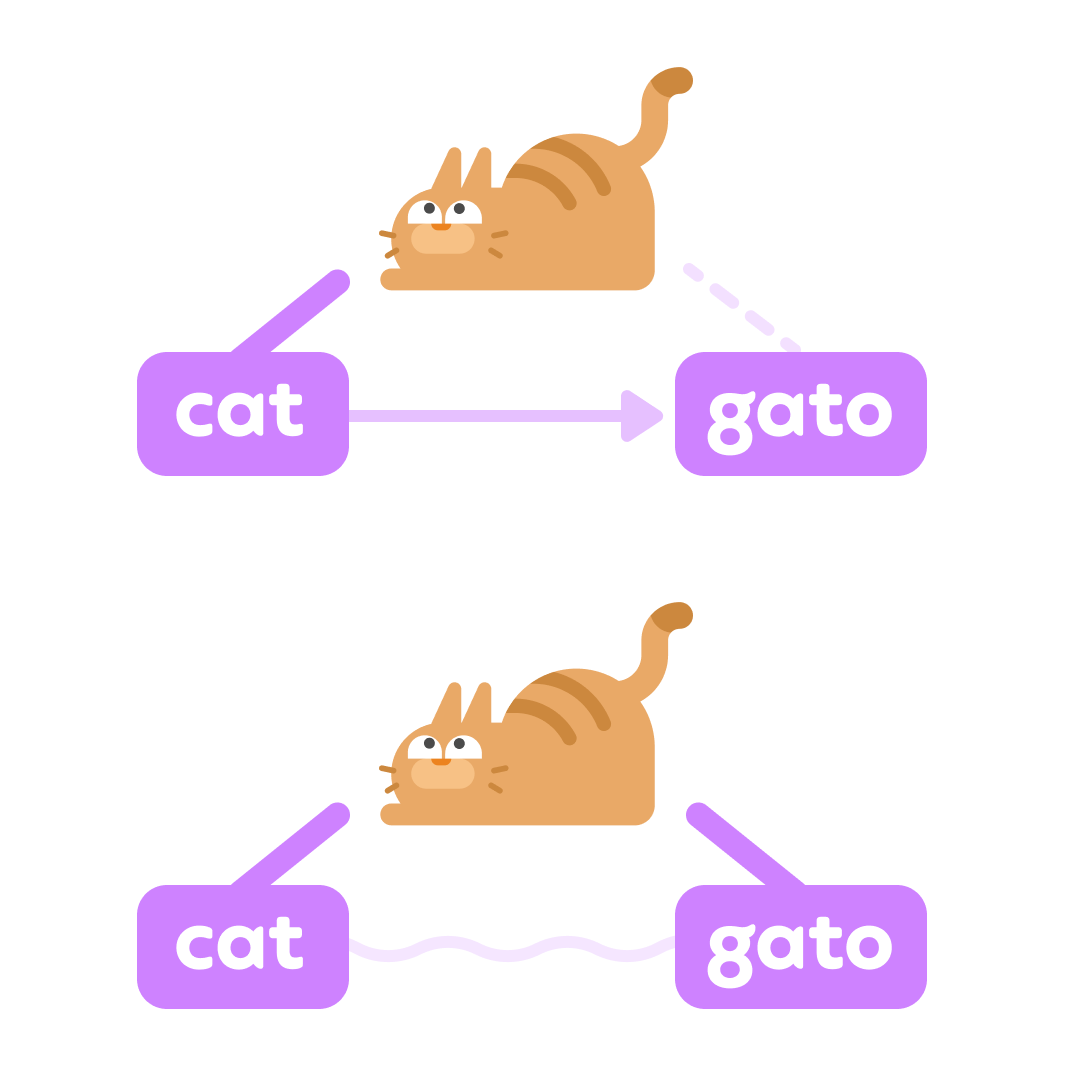
When you learn a new language, your brain first links a new form (like "gato" in Spanish) with its translation ("cat") in your already-developed language system--not with the meaning itself. That's why it can feel like you're translating every single bit in your head, because your brain is processing your new language through your own language. This is part of why using a new language can feel slow and clunky.
The first sentence seems to makes an assumption that, that's just the way it is - to translate.
-
-
frankdenneman.nl frankdenneman.nl
-
The
Power saving from downgrading QPI bandwidth can provide extra head room for core scaling, but increase data access latency by cpus
-
-
review.firstround.com review.firstround.com
-
“It's a delicate balance between showing right away that you can make a difference, and also being a sponge and soaking up as much information as possible and that you're hungry to learn from everyone. When you're juggling this tradeoff in your head, I'd err on the side of showing in the first week or two that you can make a tangible impact because startups thrive on speed,” says David Mok, Director of Content and Partnerships for Labelbox.
“If you work with your manager on strong goals, this should be baked into your onboarding — but startups also usually don't have a lot of structure yet. Actively seek out a few pockets where you can make an impact. Hint: it's usually found in the places of the business that are not fun or sexy. Examples could be spending some extra time to QA a feature, writing multiple versions of marketing copy to see what looks best, or creating a sensitivity analysis or quick spreadsheet model for a business decision.”
-
- Apr 2021
-
www.americanyawp.com www.americanyawp.com
-
The Water from the Spring, Upon my head I bring,
Carrying bucket of water on her head
-
-
outline.com outline.com
-
We are making the positive case for public ownership
I'm passionate about the cause. As a British-Brazilian person, I am seeing the dismantling of public services on both sides of the Atlantic Ocean. In 2015, before the coup in Brazil, I was working for The Guardian and spoke to the head of communications at the Brazilian Ministry of Health. The NHS, he said, was and had been the blueprint for Brazil's public health system. Even though the country has just a fraction of the resources - I've lived first hand what it means for everyone to have access to free healthcare and higher education.
-
-
review.firstround.com review.firstround.com
-
When lessons are learned the hard way, it’s a good time for introspection and team-wide reflection to fully capture what went wrong. “I talk a lot about this actually in my book — obviously a lot engineering-minded folks are accustomed to this notion of the ‘five whys’ of blameless post-mortems. If the site has an outage, you don't blame the person who wrote the bug and deployed it to prod. Instead you ask the question, ‘How do we let a single mistake by a single human being actually take down our website?’” he says. “And instead of blaming that person for being a human being, you blame the system and you get to the true root cause. The root cause may be the lack of testing. You might ask, ‘Why don't we have testing?’ Well, we don't educate developers on how to write good testing. Or maybe we don't have a good investment in infrastructure to do testing. And when you get to the true root cause, then you can make systemic change,” he says. “When we had that Uber situation, for example, we did a blameless post-mortem and got to the true root cause.” Lawson’s seen plenty of companies leave post-mortems behind when every piece falls into place — but he’s a big believer in flexing these same muscles, even when things go well. “Usually post-mortems is the word you use to describe analyzing the things that don't go well, but we do post-mortems when things go well, too,” he says. “That is the way in which you continually build this muscle of analyzing the outcome and asking what all of the inputs were that led you there and try to do your best in the moment when everything's fresh in your head to learn and to capture knowledge,” he says.
-
-
freddiedeboer.substack.com freddiedeboer.substack.com
-
I feel like the author is basically arguing that Atheism victory was no victory and just a false victory. Secularity became a assumption and not some intellectual victory. Religion thrown on the side.
Obviously this is true to some extent however, religion has been fighting a war with science for hundreds of years and has clearly intellectually lost. The vast majority of religions do make empirical scientific claims
- dualism of some kind
- life after death
- claims of the age of the earth
- man being made at once.
- claims on how the earth or universe was founded
- archeological and anthropological claims
- claim of demons and exorcisms
(1) there is no central model that is the contrary to physicalism. There is no dualistic science or soul science. There is however psychology, neuroscience and cognitive science. (2) if physicalism is true that minds depend on bodies and when bodies die the mind dies then their is no life after death (3) geology finds the earth is much older then most religions claim (4) biology and paleo-anthropology finds a gradual evolution of man, not intelligent design (5) cosmology and astronomy does not find the belief common in most religions that the earth is the center of the universe (it's a tiny blip) or that it's flat (Vedas argues this) (6) we haven't found a great solomonic kindgom or other major claims of religions (7) exorcisms have little evidence (can be explained as communal reinforcement & self-deception) nor demons as the source of diseases.
I have head the claim before (I think some post-modern philosopher wrote about it) that Atheism came about due to theologians throwing God further and further back. Descarte & Locke both christian fundamentalist put our body of knowledge on a firm rational and empirical basis. Kant had to throw God into the noumenon, from their Atheism came easily with the likes of Feurbach arguing it is projection of human ideals
Im not sure I believe both stories but this is kinda a inverse of that.
-
-
mrsnetherysclass.weebly.com mrsnetherysclass.weebly.comAmy Tan2
-
finding the queen of hearts in a deck of cards,trying to stand on my head without using my hands
Perhaps the mother is trying to find a talent she has
-
trying to stand on my head without using my hands,
Some of these tests seemed unnecessary, but I get that the mother was just trying to expose any hidden talents.
-
-
www.thehindu.com www.thehindu.com
-
- India has made a fresh proposal at the World Trade Organisation (WTO) for the establishing the mechanism of true vaccine internationalism.
- (WTO) is under pressure to consider the India’s proposal of Trade-Related Aspects of Intellectual Property Rights (TRIPS) waiver on Covid-19 vaccines.
- General Agreement On Tariffs And Trade (GATT)
- Nigerian economist Ngozi Okonjo Iweala has been appointed as the head the World Trade Organization.
- India and 17 countries face U.S. Anti-Dumping Tax
-
-
www.collegiatetimes.com www.collegiatetimes.com
-
, the team received immediate backlash. Head coach John Sung extended his apology for the team’s actions
in order for us as a society to move forward and progress, it first comes with stopping the usage of a word that in it's infancy had such a negative connotation, idk why we still use it today.
-
Head coach John Sung extended his apology for the team’s actions
I am glad he apologized
-
-
theangrygm.com theangrygm.com
-
One of the main characters in DS9 was a member of an alien species called the trill. And the trill are two-part life forms. They’re two separate organisms. A humanoid host and a slug-like organism called a symbiont that’s surgically shoved into the host’s abdomen and grows into its central nervous system. Each is its own thing. The host and the symbiont have different personalities, minds, memories, the whole thing. And the trill’s personality and mannerisms become a unique blend of the two different entities. Eventually, the host dies. It’s got a normal humanoid lifespan. But the symbiont can survive and get implanted in some other host with all its previous memories intact. And the new trill’s personality and mannerisms become a synthesis of the new host’s personality and the symbiont’s personality based on all its lifetimes of experiences and memories. And that’s how role-playing works. Role-playing isn’t pretending to be someone else because you just can’t ever do that. Like it or not — and lots of people resist this basic truth — you can’t take the you out of role-playing. Whatever character you play, you’re still the slug in the character’s stomach. All of your own personal experiences, beliefs, perceptions, attitudes, ideas, and priorities come along for the ride. In the end, it is still your brain making whatever decision the character makes. And your brain’s decisions are the result of its wiring. And your brain’s wiring is a result of your genetics and biology and how your brain’s wiring has developed in response to your experiences. Nature and nurture. That old yarn. You literally cannot think like anyone other than you for the same reason you can’t bend your knees backward. It’s a hardware problem. Besides, to think like another person would require you to hold an infinite set of memories, experiences, beliefs, priorities, natures, and so on in your head. Perfectly. Because all of that s$&% figures into every decision you make, no matter how simple. And, guess what? You can’t do that. Role-playing’s thus not really about pretending to be someone else. It’s about making the choices you would make in a given situation if you were a certain character. Role-playing is saying, “okay, so, this dragon is descending on the town. What would I do in this situation if I was a bada$& barbarian dude from the hill tribes in some fantasy world?” The question’s not “what would Angrar do?” It’s “what would I do if I were Angrar?” It’s a subtle distinction, but super important. The character you play is always “you, but…”
a great explanation of how to role play a character
Tags
Annotators
URL
-
-
www.history.com www.history.com
-
she started flying lessons with female flight instructor Neta Snook. To help pay for those lessons, Earhart worked as a filing clerk at the Los Angeles Telephone Company. Later that year, she purchased her first airplane, a secondhand Kinner Airster. She nicknamed the yellow airplane “the Canary.”Earhart passed her flight test in December 1921, earning a National Aeronautics Association license. Two days later, she participated in her first flight exhibition at the Sierra Airdrome in Pasadena, California.Earhart’s Aviation Records Earhart set a number of aviation records in her short career. Her first record came in 1922 when she became the first woman to fly solo above 14,000 feet.In 1932, Earhart became the first woman (and second person after Charles Lindbergh) to fly solo across the Atlantic Ocean. She left Newfoundland, Canada, on May 20 in a red Lockheed Vega 5B and arrived a day later, landing in a cow field near Londonderry, Northern Ireland.Upon returning to the United States, Congress awarded her the Distinguished Flying Cross—a military decoration awarded for “heroism or extraordinary achievement while participating in an aerial flight.” She was the first woman to receive the honor.Later that year, Earhart made the first solo, nonstop flight across the United States by a woman. She started in Los Angeles and landed 19 hours later in Newark, New Jersey. She also became the first person to fly solo from Hawaii to the United States mainland in 1935.The Ninety-Nines Earhart consistently worked to promote opportunities for women in aviation.In 1929, after placing third in the All-Women’s Air Derby—the first transcontinental air race for women—Earhart helped to form the Ninety-Nines, an international organization for the advancement of female pilots.She became the first president of the organization of licensed pilots, which still exists today and represents women flyers from 44 countries.1937 Flight Around the World On June 1, 1937, Amelia Earhart took off from Oakland, California, on an eastbound flight around the world. It was her second attempt to become the first pilot ever to circumnavigate the globe.She flew a twin-engine Lockheed 10E Electra and was accompanied on the flight by navigator Fred Noonan. They flew to Miami, then down to South America, across the Atlantic to Africa, then east to India and Southeast Asia.The pair reached Lae, New Guinea, on June 29. When they reached Lae, they already had flown 22,000 miles. They had 7,000 more miles to go before reaching Oakland.What Happened to Amelia Earhart? Earhart and Noonan departed Lae for tiny Howland Island—their next refueling stop—on July 2. It was the last time Earhart was seen alive. She and Noonan lost radio contact with the U.S. Coast Guard cutter Itasca, anchored off the coast of Howland Island, and disappeared en route.President Franklin D. Roosevelt authorized a massive two-week search for the pair, but they were never found. On July 19, 1937, Earhart and Noonan were declared lost at sea.Scholars and aviation enthusiasts have proposed many theories about what happened to Amelia Earhart. The official position from the U.S. government is that Earhart and Noonan crashed into the Pacific Ocean, but there are numerous theories regarding their disappearance.Crash and Sink Theory According to the crash and sink theory, Earhart’s plane ran out of gas while she searched for Howland Island, and she crashed into the open ocean somewhere in the vicinity of the island.Several expeditions over the past 15 years have attempted to locate the plane’s wreckage on the sea floor near Howland. High-tech sonar and deep-sea robots have failed to yield clues about the Electra’s crash site.Gardner Island Hypothesis The International Group for Historic Aircraft Recovery (TIGHAR) postulates that Earhart and Noonan veered off-course from Howland Island and landed instead some 350 miles to the Southwest on Gardner Island, now called Nikumaroro, in the Republic of Kiribati. The island was uninhabited at the time.A week after Earhart’s disappeared, Navy planes flew over the island. They noted recent signs of habitation but found no evidence of an airplane.TIGHAR believes that Earhart—and perhaps Noonan—may have survived for days or even weeks on the island as castaways before dying there. Since 1988, several TIGHAR expeditions to the island have turned up artifacts and anecdotal evidence in support of this hypothesis.Some of the artifacts include a piece of Plexiglas that may have come from the Electra’s window, a woman’s shoe dating back to the 1930s, improvised tools, a woman’s cosmetics jar from the 1930s and bones that appeared to be part of a human finger.In June 2017, a TIGHAR-led expedition arrived on Nikumaroro with four forensically trained bone-sniffing border collies to search the island for any skeletal remains of Earhart or Noonan. The search turned up no bones or DNA.In August 2019, Robert Ballard, the ocean explorer known for locating the wreck of the Titanic, led a team to search for Earhart's plane in the waters around Nikumaroro. They saw no signs of the Electra.Other Theories About Earhart’s Disappearance There are numerous conspiracy theories about Earhart’s disappearance. One theory posits that Earhart and Noonan were captured and executed by the Japanese.Another theory claims that the pair served as spies for the Roosevelt administration and assumed new identities upon returning to the United States.READ MORE: Tantalizing Theories About the Earhart DisappearanceSourcesThe Life of Amelia Earhart: Purdue Libraries.Amelia Earhart: Missing for 80 Years But Not Forgotten: Smithsonian National Air and Space Museum.Model, Static, Lockheed Electra, Amelia Earhart: Smithsonian National Air and Space Museum.Exclusive: Bone-Sniffing Dogs to Hunt for Amelia Earhart’s Remains: National Geographic.Where Is Amelia Earhart? Three Theories but No Smoking Gun: National Geographic.The Earhart Project: The International Group for Historic Aircraft Recovery (TIGHAR).Citation InformationArticle TitleAmelia Earhart AuthorHistory.com EditorsWebsite NameHISTORYURLhttps://www.history.com/topics/exploration/amelia-earhartAccess DateApril 29, 2021PublisherA&E Television NetworksLast UpdatedMarch 16, 2021Original Published DateNovember 9, 2009By History.com EditorsFACT CHECK: We strive for accuracy and fairness. But if you see something that doesn't look right, click here to contact us!VIDEOSAmelia Earhart on Women in FlightWhat Happened to Amelia Earhart?Lindbergh Honored for New York-Paris FlightHoward Hughes' Spruce Goose Takes FlightSubscribe for fascinating stories connecting the past to the present.SIGN UPRELATED CONTENTTantalizing Theories About the Earhart DisappearanceTheory #1: Earhart ran out of fuel, crashed and perished in the Pacific Ocean. This is one of the most generally accepted versions of the famous aviator’s disappearance. Many experts believe Amelia Earhart and navigator Fred Noonan got slightly off course en route to a refueling ...read moreWhat Happened to Amelia Earhart?On the morning of July 2, 1937, Amelia Earhart and her navigator, Fred Noonan, took off from Lae, New Guinea, on one of the last legs in their historic attempt to circumnavigate the globe. Their next destination was Howland Island in the central Pacific Ocean, some 2,500 miles ...read moreCharles LindberghCharles Lindbergh was an American aviator who rose to international fame in 1927 after becoming the first person to fly solo and nonstop across the Atlantic Ocean in his monoplane, Spirit of St. Louis. Five years later, Lindbergh’s toddler son was kidnapped and murdered in what ...read moreVietnam WarThe Vietnam War was a long, costly and divisive conflict that pitted the communist government of North Vietnam against South Vietnam and its principal ally, the United States. The conflict was intensified by the ongoing Cold War between the United States and the Soviet Union. ...read moreHitler’s Teeth Reveal Nazi Dictator’s Cause of DeathIn a new study, French scientists analyzed fragments of Adolf Hitler’s teeth to prove that he died in 1945, after taking cyanide and shooting himself in the head. The research, published in the European Journal of Internal Medicine in May 2018, seeks to end conspiracy theories ...read moreGreat Depression HistoryThe Great Depression was the worst economic downturn in the history of the industrialized world, lasting from 1929 to 1939. It began after the stock market crash of October 1929, which sent Wall Street into a panic and wiped out millions of investors. Over the next several ...read moreGeorge WashingtonGeorge Washington (1732-99) was commander in chief of the Continental Army during the American Revolutionary War (1775-83) and served two terms as the first U.S. president, from 1789 to 1797. The son of a prosperous planter, Washington was raised in colonial Virginia. As a young ...read moreHarriet TubmanHarriet Tubman was an escaped enslaved woman who became a “conductor” on the Underground Railroad, leading enslaved people to freedom before the Civil War, all while carrying a bounty on her head. But she was also a nurse, a Union spy and a women’s suffrage supporter. Tubman is ...read moreRosa ParksRosa Parks (1913—2005) helped initiate the civil rights movement in the United States when she refused to give up her seat to a white man on a Montgomery, Alabama bus in 1955. Her actions inspired the leaders of the local Black community to organize the Montgomery Bus Boycott. ...read moreLoading…See MoreAd ChoicesAdvertiseClosed CaptioningCopyright PolicyCorporate InformationEmployment OpportunitiesFAQ/Contact UsPrivacy NoticeTerms of UseTV Parental GuidelinesRSS FeedsAccessibility Support© 2021 A&E Television Networks, LLC. All Rights Reserved.
A possible central idea could be it takes many practice and hard work before you become successful because se had flying lessons, and to be able to have lessons, she had to work at a telephone company called Los Angeles Telephone Company.
-
-
-
“Too many non-Anglophones, especially the Asians and the French, are too concerned about not ‘losing face’ — and nod approvingly while not getting the message at all,” he says.
I do think if someone is nodding their head in agreement and they really don't understand what is being said, it might be their fault for not speaking up and making it known they dont understand what was said.
-
-
learn-us-east-1-prod-fleet01-xythos.content.blackboardcdn.com learn-us-east-1-prod-fleet01-xythos.content.blackboardcdn.com
-
But the Comtesse shook her head, still incredulously. To her it seemed preposterous that these young men and their great leader, all of them rich, probably wellborn, and young, should for no other motive than sport, run the terrible risks, which she knew they were constantly doing
I agree, why would someone risk their life just for sport?
-
-
moodle.smith.edu moodle.smith.edu
-
When used with a possessive adjective by a woman--”my nigger”--it became a term of endearment for her husband or boyfriend. But it could be more than just a term applied to a man.In their mouths it became the pure essence of manhood--a disembodied force that channeled their past history of struggleand present survival against the odds into a victorious statement of being: “Yeah, that old foreman found out quick enough--you don’t mess with a nigger.”In the plural, it became a description of some group within the community that had overstepped the bounds of decency as my family defined it.Parents who neglected their children, a drunken couple who fought in public, people who simply refused to look for work, those with excessively dirty mouths or unkempt households were all “trifling niggers.”This particular circle could forgive hard times, unemployment, the occasional bout of depression--they had gone through all of that themselves--but the unforgivable sin was a lack of self-respect.A woman could never be a “nigger” in the singular, with its connotations of confirming worth.The noun girlwas its closest equivalent in that sense, but only when used in direct address and regardless of the gender doing the addressing.Girlwas a token of respect for a woman. The one-syllable word was drawn out to sound like three in recognition of the extra ounce of wit, nerve, or daring that the woman had shown in the situation under discussion."G-i-r-l, stop.You mean you said that to his face?”But if the word was used in a third-person reference or shortened so that it almost snapped out of the mouth, it always involved some element of communal disapproval.And age became an important factor in these exchanges.It was only between individuals of the same generation, or from any older person to a younger (but never the other way around), that girl would be considered a compliment.I don’t agree with the argument that use of the word niggerat this social stratum of the black community was an internalization of racism.The dynamics were the exact opposite: the people in my grandmother’s living room took a word that whites used to signify worthlessness or degradation and rendered it impotent.Gathering there together, they transformed niggerto signify the varied andcomplex human beings they knew themselves to be.If the word was to disappear totally from the mouths of even the most liberal of white society, no one in that room was naive enough to believe it would disappear from white minds.Meeting the word head-on, they proved it had absolutely nothing to do with the way they were determined to live their lives.
The author hadn't acknowledge the word until it was used in a way that disrespected her or used in a negative manner, which to me shows how far in between it is to see the word being used in a negative manner now, becasue usually people use it in a positive connotation. Such as today's rappers.
-
-
www.lesswrong.com www.lesswrong.com
-
People go funny in the head when talking about politics. The evolutionary reasons for this are so obvious as to be worth belaboring: In the ancestral environment, politics was a matter of life and death. And sex, and wealth, and allies, and reputation . . .
oh wow, this is a prime example of folk evolutionary reasoning
-
-
-
byencouragingsubsequentmeme-makerstoincludetheirownengagingcross-culturalreferences,addingdimensionstoalreadyhumorouscontributionsforthosewhoareintheknow
I always wondered how a meme becomes famous and how it just works in a way that other people can play off of it and recreate it over and over to expose and market the purpose even more. Is it a by chance natural type of thing. Or whoever created it knew that it was going to hit the nail right on the head.
-
-
teaching.lfhanley.net teaching.lfhanley.net
-
My hands grown tired, my head weighed down with dreams—
Starting off by stating that sewing is a useless task, combined with the weighed down dreams, seems like negative reinforcement set upon the speaker by others, with the words "it seems," it can be suggested that the uselessness of the task isn't her own opinion.
-
my head weighed down with dreams—
Here, she's talking about dreams that she cannot achieve because of her race and gender. But I like this line because it does a good job at portraying the mind while doing menial tasks over and over again. Without going into too much detail, I've recently had a job that was very repetitive with little to no social interaction. While it was fine at first, I was soon left alone with my thoughts while I did my tasks without thinking. Soon enough, bad, personal thoughts entered my brain and it was impossible to escape them. I couldn't listen to music or podcasts to stimulate my brain so I had to endure it. It wasn't a good feeling and I think many people can relate to being trapped in your head while doing the the same boring tasks over and over.
-
The panoply of war
This being the first part of the line following "my head weighed down with dreams" makes me wonder if this is a dream to the speaker, if this is that weight, in the sense of an ambition.
-
my head weighed down with dreams—
During the time frame, after enslavement ended, a lot of Black women could only get jobs as seamstresses whether that's what they wanted to do or not.
-
-
bookdown.org bookdown.org
-
One of the guests at the inn had lost his wallet. Still, Tori shook his head: no, it couldn’t be so.
Tori slowly realizes that his mother stole a wallet from that customer and tried to buy the opium with it.
-
-
www.fastcompany.com www.fastcompany.com
-
Malala became a global symbol of strength and resistance when, at 15, she miraculously survived being shot in the head by the Taliban.
I think this shows how strong Malala is, and despite having such a risk she's still risking it, so she can stand up for her beliefs. (which many girls may not do due to them having a whole life ahead)
-
Malala became a global symbol of strength and resistance when, at 15, she miraculously survived being shot in the head by the Taliban.
This shows that if Malala can get shot in the head and she recovered then, she can do anything.
-
-
pemberley.com pemberley.com
-
“Oh! dear, there are a great many people like me, I dare say, only a great deal better. Good morning to you.” “But I say, Miss Morland, I shall come and pay my respects at Fullerton before it is long, if not disagreeable.” “Pray do. My father and mother will be very glad to see you.” “And I hope — I hope, Miss Morland, you will not be sorry to see me.” “Oh! dear, not at all. There are very few people I am sorry to see. Company is always cheerful.” “That is just my way of thinking. Give me but a little cheerful company, let me only have the company of the people I love, let me only be where I like and with whom I like, and the devil take the rest, say I. And I am heartily glad to hear you say the same. But I have a notion, Miss Morland, you and I think pretty much alike upon most matters.” “Perhaps we may; but it is more than I ever thought of. And as to most matters, to say the truth, there are not many that I know my own mind about.” “By Jove, no more do I. It is not my way to bother my brains with what does not concern me. My notion of things is simple enough. Let me only have the girl I like, say I, with a comfortable house over my head, and what care I for all the rest? Fortune is nothing. I am sure of a good income of my own; and if she had not a penny, why, so much the better.” “Very true. I think like you there. If there is a good fortune on one side, there can be no occasion for any on the other. No matter which has it, so that there is enough. I hate the idea of one great fortune looking out for another. And to marry for money I think the wickedest thing in existence. Good day. We shall be very glad to see you at Fullerton, whenever it is convenient.” And away she went. It was not in the power of all his gallantry to detain her longer. With such news to communicate, and such a visit to prepare for, her departure was not to be delayed by anything in his nature to urge; and she hurried away, leaving him to the undivided consciousness of his own happy address, and her explicit encouragement. The agitation which she had herself experienced on first learning her brother’s engagement made her expect to raise no inconsiderable emotion in Mr. and Mrs. Allen, by the communication of the wonderful event. How great was her disappointment! The important affair, which many words of preparation ushered in, had been foreseen by them both ever since her brother’s arrival; and all that they felt on the occasion was comprehended in a wish for the young people’s happiness, with a remark, on the gentleman’s side, in favour of Isabella’s beauty, and on the lady’s, of her great good luck. It was to Catherine the most surprising insensibility. The disclosure, however, of the great secret of James’s going to Fullerton the day before, did raise some emotion in Mrs. Allen. She could not listen to that with perfect calmness, but repeatedly regretted the necessity of its concealment, wished she could have known his intention, wished she could have seen him before he went, as she should certainly have troubled him with her best regards to his father and mother, and her kind complimen
she thinks he wants to marry her. But this could be harmless flirting? she worries about intention
-
-
extension.oregonstate.edu extension.oregonstate.edu
-
Chlorophyll, the pigment that makes leaves green, is found in the chloroplasts. It is responsible for trapping light energy from the sun. Often chloroplasts are arranged perpendicular to incoming sun rays so they can absorb maximum sunlight.
This expository text uses many different vocabulary strategies. I loved how the vocabulary is bolded in each section. This signals unfamiliar words to students. One strategy that students could use to further their comprehension of their new vocabulary words is through technology. After reading the text, students could look at videos that explain the meaning of each word in ways that they can see. Real world learning! Chlorophyll would be a good word to research further because it is a hard concept to visualize in your head. It would make more of an impact on students if they were able to see it.
-
-
www.parentmap.com www.parentmap.com
-
Garfield’s head counselor, Ken Courtney, advises students to pick an area of personal interest, such as the outdoors, for which they might enjoy volunteering, or to choose a possible future career interest, such as medicine or working with children. Serving in that area is a way to explore it and gain experience and skills that might help secure a job in the future, he says.
i think its super important to volunteer for something that you actually care about and want to help out with, otherwise if you don't like what you are volunteering about, then you wont put a lot of love into it
-
-
www.washingtonpost.com www.washingtonpost.com
-
"I felt the city of Hiroshima had disappeared all of a sudden," said Akihiro Takahashi, a 14-year-old at the time in line for school, whose testimony was recorded by researchers in the late 1980s. "Then I looked at myself and found my clothes had turned into rags due to the heat. I was probably burned at the back of the head, on my back, on both arms and both legs. My skin was peeling and hanging like this."
Why did America do this to all these people? This is hurts a lot and the people suffered a lot so I think America shouldn't have done what it did.
-
I was probably burned at the back of the head, on my back, on both arms and both legs. My skin was peeling and hanging like this."
How did survivors live like this with all their skin peeling off? Did many die after this event or were their skin healed? Either way this was a horrible time for the Japanese.
-
So many had, in an instant, lost those dearest to them. Eiko Taoka, then 21-years-old, was carrying her 1-year-old infant son in her arms aboard a streetcar. He didn't survive the day. "I think fragments of glass had pierced his head," she recounts. "His face was a mess because of the blood flowing from his head. But he looked at my face and smiled. His smile has remained glued in my memory."
Central idea: When you punish a country, don't punish it's innocent people.
-
"Then I looked at myself and found my clothes had turned into rags due to the heat. I was probably burned at the back of the head, on my back, on both arms and both legs. My skin was peeling and hanging like this."
That's painful, why did America do this?
-
So many had, in an instant, lost those dearest to them. Eiko Taoka, then 21-years-old, was carrying her 1-year-old infant son in her arms aboard a streetcar. He didn't survive the day. "I think fragments of glass had pierced his head," she recounts. "His face was a mess because of the blood flowing from his head. But he looked at my face and smiled. His smile has remained glued in my memory."
CENTERAL IDEAS: War is brutal. Which ever side had started this war has certainly been holding a big grudge against the other side, to be killing innocent people.
-
-
docdrop.org docdrop.org
-
Being able to successfully understand,navigate, modify, and design systems will become more and more inextric-ably linked with how we learn, work, play, and live as engaged worldcitizens.Sys
When I was completing the survey, I had a hard time wrapping my head around the concept of systems with video games, game design and gaming literacy. I liked this whole paragraph on systems and it helped to shed light on a concept I was struggling with.
-
-
pressbooks.pub pressbooks.pub
-
The head of the family usually eats alone;
The head of the family gets their own table and eats alone which shows respect but I would feel lonely if I was eating alone I would rather enjoy my food with company.
-
The head of the family usually eats alone; his wives and slaves have also their separate tables.
This demonstrates that the husband is superior so he gets to eat by himself. I wonder if they liked being alone while eating. I would not want to eat alone even if I was superior. It is similar to the manual "Of Domesticall Duties" where it mentions that the husband is the head of the family and is superior while the wife is the heart and is still considered high, but not as high as the husband. It follows the same lines here as the husband gets to eat alone because of his superiority and the wife has to eat with the slaves as they are considered inferior.
-
-
docs.google.com docs.google.com
-
But look, if I suck it in just a wee bit more, push that bellybutton up against the back; can you see what will surely come to pass if you but rid yourself of this extra flesh?
really helps you create an image in your head, very detailed
-
-
newtfire.org newtfire.org
-
Practical man, He said, Train your head, Your heart, and your hand. Your fate is here And not afar, So let down your bucket Where you are.
This is restating the first lines and Hughes did this to emphasize the point being made here. Langston Hughes was in agreement with Washington's philosophy that the work must be put in to attain the dream they so longed for.
-
He said, Train your head, Your heart, and your hand. Your fate is here And not afar, So let down your bucket Where you are.
He is restating previous lines of the next to bring notice to them and show how important they are.
-
Practical man, He said, Train your head, Your heart, and your hand. Your fate is here And not afar, So let down your bucket Where you are.
By emphasizing this line at the begging i end shows us that Hughes wants us to recognize the fact that Washington views aren't all that bad.
-
To help yourself And your fellow man, Train your head, Your heart, and your hand.
We get to see how Hughes agrees with Booker in the sense that by accepting your fate will not only help you as a person, but overall lead to the black community success in the long run.
-
Practical man, He said, Train your head, Your heart, and your hand. Your fate is here And not afar, So let down your bucket Where you are.
The repetition of this line in the beginning and now the end means the author wants you to pay attention to it. Putting it here after the last quote means a lot. It shows that Washington deep down has the same goals as DuBois for example. He wants the perfect picture too, he just wants to make sure they are doing it the right way.
-
To help yourself And your fellow man, Train your head, Your heart, and your hand.
He believes that is strategy will not only help the individual, he believes it will help the entire black community by proving their worth.
-
-
docs.google.com docs.google.com
-
Any combination of a 250-pound Mexican and LSD-25 is a potentially terminal menace for anything it can reach—but when the alleged Mexican is in fact a profoundly angry Chicano lawyer with no fear at all of anything that walks on less than three legs and a de facto suicidal conviction that he will die at the age of thirty-three—just like Jesus Christ—you have a serious piece of work on your hands. Specially if the bastard is already thirty-three and a half years old with a head full of Sandoz acid, a loaded .357 Magnum in his belt, a hatchet-wielding Chicano bodyguard on his elbow at all times, and a disconcerting habit of projectile-vomiting geysers of pure red blood off the front porch every thirty or forty minutes, or whenever his malignant ulcer can’t handle any more raw tequila.
Detailed characteristics, these were helpful to providing an image of what Oscar may look like and how he acts
-
-
pressbooks.howardcc.edu pressbooks.howardcc.edu
-
Girls were still going through FGM, still leaving school, still getting married to men older than their fathers and still having children when they’re teenagers. I did not want to see any more girls go through that. That’s when I knew what I needed to do to give back to my community.
I still can’t wrap my head around the fact that they would do genital manipulation on young girls and force them to marry a stranger man that is old enough to be their father. I never knew there were places that still followed this “standard” norm, It was very heartbreaking to hear. All these young girls have so much potential and providing education will allow these womens to live a better life and not depend on anyone.
-
-
www.medrxiv.org www.medrxiv.org
-
SciScore for 10.1101/2021.04.13.21255427: (What is this?)
Please note, not all rigor criteria are appropriate for all manuscripts.
Table 1: Rigor
<table><tr><td style="min-width:100px;margin-right:1em; border-right:1px solid lightgray; border-bottom:1px solid lightgray">Ethics</td><td style="min-width:100px;border-bottom:1px solid lightgray">not detected.</td></tr><tr><td style="min-width:100px;margin-right:1em; border-right:1px solid lightgray; border-bottom:1px solid lightgray">Sex as a biological variable</td><td style="min-width:100px;border-bottom:1px solid lightgray">not detected.</td></tr><tr><td style="min-width:100px;margin-right:1em; border-right:1px solid lightgray; border-bottom:1px solid lightgray">Randomization</td><td style="min-width:100px;border-bottom:1px solid lightgray">At the ACH and the LTCF, for both random and controlled sampling, dedicated COVID-19 units were used as ‘positive control wards’, and wards which had zero COVID-19 patients identified were uses as ‘negative control wards’.</td></tr><tr><td style="min-width:100px;margin-right:1em; border-right:1px solid lightgray; border-bottom:1px solid lightgray">Blinding</td><td style="min-width:100px;border-bottom:1px solid lightgray">not detected.</td></tr><tr><td style="min-width:100px;margin-right:1em; border-right:1px solid lightgray; border-bottom:1px solid lightgray">Power Analysis</td><td style="min-width:100px;border-bottom:1px solid lightgray">not detected.</td></tr></table>Table 2: Resources
No key resources detected.
Results from OddPub: We did not detect open data. We also did not detect open code. Researchers are encouraged to share open data when possible (see Nature blog).
Results from LimitationRecognizer: We detected the following sentences addressing limitations in the study:Our study has several limitations. First, safety concerns and the lack of a BSL-3 level resources precluded the use of viral cultures to determine viability of virus, but nucleic acid of target pathogens can be consequential [19]. Furthermore, lack of culture-based assessments is not unique to our study [4-9]. Second, sponge sticks may be better at capturing pathogens from larger environmental surfaces such as floors and tray tables. These collection devices were unavailable and could not be used in automated PCR reaction tubes. Third, the commercial remediation service and EVS were not compared under identical conditions, but our main objective was not a direct head-to-head comparison of EVS vs contracted remediation service. Despite these limitations, this report is relevant to nursing homes and hospitals as the findings can assist in allocation of scarce cleaning and disinfection resources for maximum impact. Furthermore, studies of the survivability of the virus on fomites have been criticized as lacking real-life generalizability [22, 23]. Data in this report were obtained from a ‘typical’ general hospital and nursing home, representative of the type of settings (i.e. general/community/non-university-based hospitals) where much of health care is delivered. Studies for these settings may be underrepresented in research because most are carried out in large university-based hospitals. In summary, surface contamination with SARS-CoV-2 RNA significantly differed based on typ...
Results from TrialIdentifier: No clinical trial numbers were referenced.
Results from Barzooka: We did not find any issues relating to the usage of bar graphs.
Results from JetFighter: We did not find any issues relating to colormaps.
Results from rtransparent:- Thank you for including a conflict of interest statement. Authors are encouraged to include this statement when submitting to a journal.
- Thank you for including a funding statement. Authors are encouraged to include this statement when submitting to a journal.
- No protocol registration statement was detected.
<footer>About SciScore
SciScore is an automated tool that is designed to assist expert reviewers by finding and presenting formulaic information scattered throughout a paper in a standard, easy to digest format. SciScore checks for the presence and correctness of RRIDs (research resource identifiers), and for rigor criteria such as sex and investigator blinding. For details on the theoretical underpinning of rigor criteria and the tools shown here, including references cited, please follow this link.
</footer>
-
-
steintimeline.netlify.app steintimeline.netlify.app
-
Tying the packaging of the microcomputer and videodisc products together should create even greater benefits at retail, including enhanced scope, variety, and retail presence. We can protect our own hardware business by giving the Atari versions a six-month head start in the marketplace.
without evaluating the viability of these marketing ideas, it's important to see that we were grounded in the commercial world.
-
-
condor.depaul.edu condor.depaul.edu
-
He reacts with his head instead of his heart.
"head vs. heart", implying reason over emotion. Think of how scary monsters in movies become less scary when we have a name for them. Without a name, we can only rely on the "heart" sensory impression (terror, uncanniness), but if we have a name for it, we can put it in a category.
example of the uncanny.
-
-
blog.learnlets.com blog.learnlets.com
-
Before we get there, however, there’s one other issue to address: how much has to go in the head, and how much can be in the world?
Reminds me of Maria Anderson's new ESIL learning objective scale.
-
-
inst-fs-iad-prod.inscloudgate.net inst-fs-iad-prod.inscloudgate.net
-
But I must not think about that. This paper looks to me as if it knew whata vicious influence it had!There is a recurrent spot where the pattern lolls like a broken neck and two bulbous eyes stare at you upside down.I get positively angry with the impertinence of it and the everlastingness. Up and down and sideways they crawl, and those absurd, unblinking eyes are everywhere. There is one place where two breaths didn't match, and the eyes go all up and down the line, one a little higher than the other
Not only does the writer talk about writing as a form of expression, but the writer excessively describes the wallpaper in her room, how they crawl, and jump off the paper. Lots of personification. What is the importance of the personification? Does this show her creativity in her head, and he has no way to express her ideas, which is making her unwell? Is there a deeper meaning to this personification and relation to "paper"?
-
-
www.mechanicalbasis.org www.mechanicalbasis.org
-
In my frustration with my head bobbling and sinking downward, I one day spontaneously pulled up on my head, forcing it higher and centering it away from my shoulders. I immediately noticed that I began to breathe normally. When I let go of my head, it sank back down, and my breathing became difficult again. I repeated this maneuver, several times, to make sure the effect on my breathing was actually happening. Sure enough, my breathing responded the same way each time.
Interesting
-
-
docdrop.org docdrop.org
-
ody eventually followed slowly in the direction of the head.
This paragraph does a good job of emphasizing the unfortunate situation he is in, painting a descriptive picture on what he has to do as a "horrible vermin" to get out of bed
-
Before it strikes quarter past seven I'll definitely have to have got properly out of bed. And by then somebody will have come round from work to ask what's happened to me as well, as they open up at work before seven o'clock.” And so he set himself to the task of swinging the entire length of his body out of the bed all at the same time. If he succeeded in falling out of bed in this way and kept his head raised as he did so he could probably avoid injuring it. His back seemed to be quite hard, and probably nothing would happen to it falling onto the carpet. His main concern was for the loud noise he was bo
Continues to struggle with the idea of getting out of bed to go work, but rationalizes it finally in his head and has a plan
-
-
-
“On the space station right now, they are growing vegetables, lettuce in particular,” says Carie Lemack, the head of DreamUp, which provides space-based education and research opportunities for students. “We’re seeing the space salad — that’s remarkable.”
Does this mean that we are now capable of surviving in space in a long period of time?
-
-
www.biorxiv.org www.biorxiv.org
-
Reviewer #2 (Public Review):
In this study, Huang and colleagues recorded local field potentials from the lateral habenula in patients with psychiatric disorders who recently underwent surgery for deep brain stimulation (DBS). The authors combined these invasive measurements with non-invasive whole-head MEG recordings to study functional connectivity between the habenula and cortical areas. Since the lateral habenula is believed to be involved in the processing of emotions, and negative emotions in particular, the authors investigated whether brain activity in this region is related to emotional valence. They presented pictures inducing negative and positive emotions to the patients and found that theta and alpha activity in the habenula and frontal cortex increases when patients experience negative emotions. Functional connectivity between the habenula and the cortex was likewise increased in this band. The authors conclude that theta/alpha oscillations in the habenula-cortex network are involved in the processing of negative emotions in humans.
Because DBS of the habenula is a new treatment tested in this cohort in the framework of a clinical trial, these are the first data of its kind. Accordingly, they are of high interest to the field. Although the study mostly confirms findings from animal studies rather than bringing up completely new aspects of emotion processing, it certainly closes a knowledge gap.
In terms of community impact, I see the strengths of this paper in basic science rather than the clinical field. The authors demonstrate the involvement of theta oscillations in the habenula-prefrontal cortex network in emotion processing in the human brain. The potential of theta oscillations to serve as a marker in closed-loop DBS, as put forward by the authors, appears less relevant to me at this stage, given that the clinical effects and side-effects of habenula DBS are not known yet.
Detailed comments:
The group-average MEG power spectrum (Fig. 4B) suggests that negative emotions lead to a sustained theta power increase and a similar effect, though possibly masked by a visual ERP, can be seen in the habenula (Fig. 3C). Yet the statistics identify brief elevations of habenula theta power at around 3s (which is very late), a brief elevation of prefrontal power a time 0 or even before (Fig. 4C) and a brief elevation of Habenula-MEG theta coherence around 1 s. It seems possible that this lack of consistency arises from a low signal-to-noise ratio. The data contain only 27 trails per condition on average and are contaminated by artifacts caused by the extension wires.
I doubt that the correlation between habenula power and habenula-MEG coherence (Fig. 6C) is informative of emotion processing. First, power and coherence in close-by time windows are likely to to be correlated irrespective of the task/stimuli. Second, if meaningful, one would expect the strongest correlation for the negative condition, as this is the only condition with an increase of theta coherence and a subsequent increase of theta power in the habenula. This, however, does not appear to be the case.
The authors included the factors valence and arousal in their linear model and found that only valence correlated with electrophysiological effects. I suspect that arousal and valence scores are highly correlated. When fed with informative yet highly correlated variables, the significance of individual input variables becomes difficult to assess in many statistical models. Hence, I am not convinced that valence matters but arousal not.
Page 8: "The time-varying coherence was calculated for each trial". This is confusing because coherence quantifies the stability of a phase difference over time, i.e. it is a temporal average, not defined for individual trials. It has also been used to describe the phase difference stability over trials rather than time, and I assume this is the method applied here. Typically, the greatest coherence values coincide with event-related power increases, which is why I am surprised to see maximum coherence at 1s rather than immediately post-stimulus.
-
-
inst-fs-iad-prod.inscloudgate.net inst-fs-iad-prod.inscloudgate.net
-
Shrugging, Kiowa pulled off his boots. He wanted to say more, just to lighten up his sleep, but instead he opened his New Testament and arranged it beneath his head as a pillow.
Kiowa uses the Bible as a source of protection, this is why he sleeps with it.
-
Shrugging, Kiowa pulled off his boots. He wanted to say more, just to lighten up his sleep, but instead he opened his New Testament and arranged it beneath his head as a pillow.
Kiowa sleeps with the Bible beneath his pillow hoping it could protect him from all evil and danger.
-
Besides, the letters were in his head. And even now, without photographs,
intangible
-
11TIM O’BRIEN2 The Things They Carriedsomeone would shake his head and say, No lie, I almost shit my pants, and someone else would laugh, which meant it was bad, yes, but the guy had obviously not shit his pants, it wasn’t that bad, and in any case nobody would ever do such a thing and then go ahead and talk about it. They would squint into the dense, oppressive sunlight. For a few moments, perhaps, they would fall silent, lighting a joint and tracking its passage from man to man, inhaling, holding in the humiliation. Scary stuff, one of them might say. But then someone else would grin or flick his eyebrows and say, Roger-dodger, almost cut me a new asshole, almost.There were numerous such poses. Some carried themselves with a sort of wistful resignation, others with pride or stiff soldierly discipline or good humor or macho zeal. They were afraid of dying but they were even more afraid to show it.They found jokes to tell.They used a hard vocabulary to contain the terrible softness. Greased they’d say. Offed, lit up, zapped while zipping. It wasn’t cruelty, just stage presence. They were actors. When someone died, it wasn’t quite dying, because in a curious way it seemed scripted, and because they had their lines mostly memorized, irony mixed with tragedy, and because they called it by other names, as if to encyst and destroy the reality of death itself. They kicked corpses. They cut off thumbs. They talked grunt lingo. They told stories about Ted Lavender’s supply of tranquilizers, how the poor guy didn’t feel a thing, how incredibly tranquil he was.There’s a moral here, said Mitchell Sanders.They were waiting for Lavender’s chopper, smoking the dead man’s dope.The moral’s pretty obvious, Sanders said, and winked. Stay away from drugs. No joke, they’ll ruin your day every time.Cute, said Henry Dobbins.Mind blower, get it? Talk about wiggy. Nothing left, just blood and brains.They made themselves laugh.There it is, they’d say. Over and over—there it is, my friend, there it is—as if the repetition itself were an act of poise, a balance between crazy and almost crazy, knowing without going, there it is, which meant be cool, let it ride, because Oh yeah, man, you can’t change what can’t be changed, there it is, there it absolutely and positively and fucking well is.They were tough.They carried all the emotional baggage of men who might die. Grief, terror, love, longing—these were intangibles, but the intangibles had their own mass and specific gravity, they had tangible weight. They carried shameful memories. They carried the common secret of cowardice barely re-strained, the instinct to run or freeze or hide, and in many respects this was the heaviest burden
The thought of knowing that you might die i would be terrified just like them.
-
hrugging, Kiowa pulled off his boots. He wanted to say more, just to lighten up his sleep, but instead he opened his New Testament and arranged it beneath his head as a pillow.
Kiowa feels like in terms of already losing someone important that now he must seek protection from the New Testament.
-
Shrugging, Kiowa pulled off his boots. He wanted to say more, just to lighten up his sleep, but instead he opened his New Testament and arranged it beneath his head as a pillow.
Kiowa feels that the bible is important to him; it represents hope in the situation, something to look up to.
-
Henry Dobbins, who was a big man, carried extra rations; he was especially fond of canned peaches in heavy syrup over pound cake. Dave Jensen, who practiced field hygiene, carried a toothbrush, dental floss, and several hotel-sized bars of soap he’d stolen on R&R in Sydney, Australia. Ted Lavender, who was scared, carried tranquilizers until he was shot in the head outside the village of Than Khe in mid-April.
The author explains tot the reader what the people the main character is around is like.
-
Henry Dobbins, who was a big man, carried extra rations; he was especially fond of canned peaches in heavy syrup over pound cake. Dave Jensen, who practiced field hygiene, carried a toothbrush, dental floss, and several hotel-sized bars of soap he’d stolen on R&R in Sydney, Australia. Ted Lavender, who was scared, carried tranquilizers until he was shot in the head outside the village of Than Khe in mid-April.
This is a very in depth take on the people in this squad, we see how each of them have their own necessities of items in which they take into war. This shows that each person has a depth to them, even Ted Lavender who was apparently deceased due to gunfire.
-
He would sometimes taste the envelope flaps, knowing her tongue had been there. More than anything, he wanted Martha to love him as he loved her, but the letters were mostly chatty, elusive on the matter of love.
Lt Cross' is head over heels for Martha and he wishes for her to feel the same. I don't think Martha knows that he likes her since they are communicating through letters to me it seems one sided because she is trying to make sure that he is safe and I don't think he writes back
-
-
encyclopedia.ushmm.org encyclopedia.ushmm.org
-
The members of the SS, the elite guard of the Nazi regime, were key players in the "Final Solution," the plan to murder the Jews of Europe. The head of the SS, Heinrich Himmler, and his subordinates, Reinhard Heydrich, Kurt Daluege, and others, established the SS and police state under Adolf Hitler and led the efforts to carry out the regime’s ideological agenda. Toward that end, the SS perpetrated countless acts of mass murder.
What was Hitler thinking when he killed the Jews. Why did he hate them?
-
-
docdrop.org docdrop.org
-
the whole name of this game is that we'd like the programming language to express the concepts that we have in our heads
the name of the game is to express the concepts in our head
-
-
www.biorxiv.org www.biorxiv.org
-
Author Response:
Reviewer #1:
The authors demonstrate in this study that it is possible to train mice to perform a challenging tactile discrimination task, in a highly controlled manner, in a fully automated setup in which the animals learn to head-fix voluntarily. A number of well described tricks are used to prolong the self-fixation time and thereby obtain enough training time to reach good performance when the decision perceptual decision is difficult. In addition the study establish that this experimental design allows targeted silencing of relatively deep brain areas through a clear skull preparation.
It has already been demonstrated that mice can perform voluntary head-fixation and can do behavioral tasks in this context. However, this is the first time this methodology is applied to first to a tactile task and second to a task that mice learn is thousands of trials. Another advantage of the present technique is that it is fully automated and allows training without virtually any human intervention.
The demonstration that optogenetic silencing can be performed in this context is nice but not very surprising as already done in other contexts. Nevertheless it is an interesting application of self head-fixation. The authors should make sure that a maximum of information is available relative to the efficiency of the silencing (fraction of cells silenced) and about its impact on the behavior (does it result or not in a complete impairment?).
We have improved presentation in various places of the paper to provide more information about the optogenetic manipulation. We added new analysis of the fraction of neurons affected by photostimulation (Figure 8E). We also analyzed the impact on behavioral performance relative to chance performance (Figure S4A and S6). We compared the effect size to prior studies (Figure S4) and we discuss the interpretation of effect size (Discussion, page 22).
In the power range tested in this study, photostimulation did not reduce performance to chance level (Figure S6). One limitation of the optogenetic workflow is the interpretation of behavioral deficit effect size. We examined this issue in ALM, a brain region from which we have the most extensive data. In previous studies, we have shown that bilateral photoinhibition of ALM results in chance level performance (Li et al 2016, Fig 2b; Gao et al, 2018, Extended Data Fig 6b). Here, mice performance was above chance during photoinhibition of ALM (Figure S4). This difference in effect size likely resulted from incomplete silencing of ALM. The photostimulus intensity used here was much less than those used in previous studies (0.3 vs. 11.9 mW/mm2). In addition, a single virus injection was not sufficient to cover the entire ALM. Thus a partial behavioral effect could be due to incomplete silencing of a brain region, or partial involvement of the brain region in the task. Given this limitation, we caution that the function of a brain region could only be fully deduced in more detailed analysis and together with neurophysiology. The workflow presented here can be used as a discovery platform to quickly identify regions of interest for more detailed neurophysiology analysis. We now better highlight these points in the Discussion.
Reviewer #2:
Hao and colleagues developed an automatic system for high-throughput behavioral and optogenetic experiments for mice in home cage settings. The system includes a voluntary head-fixation apparatus and integrated fiber-free optogenetic capabilities. The authors describe in detail the design of the system and the stages for successful automatic training. They perform proof-of-concept experiments to validate their system. The experiments are technically solid and I am convinced that their system will be of interest to some laboratories that perform similar experiments. Despite the large variety of similar automated systems out there, this one may prove to become a popular design.
The weak side of the work is that it is not particularly novel scientifically. The system is complex but there it is not an innovative technology. The body of the study has too many technical details as if it is a Methodological section of a regular manuscript. There are bits of interesting information scattered around the paper (like the insights about the strategy mice use, which stem from the regression analysis), but these are not developed into any coherent direction that answers outstanding questions. The potential advantages of this system compared to other systems is marginal. In my eyes, the fact that manual training is so similar to the automatic one is not only a positive point. Rather, it signifies that the differences are mainly quantitative (e.g. # of mice a lab can train per day, etc). Thus, even as a methods paper, the lack of qualitative difference between this and other methods weakens it as a potential substrate for novel findings.
The automated workflow presented here significantly boosts the yield and duration of training to rival and slightly surpass that of manual training for the first time (new Supplemental Table 1). We think this degree of automation is an important technical advance. We show that the workflow can significantly scale up the throughput of optogenetic experiments probing behaviors that require thousands of trials to learn. This enables efficient and systematic mapping of large subcortical structures that are previously difficult to achieve. We better highlight comparisons to previous methods in several key areas in the Supplemental Table 1. We have also strengthened the Discussion (page 20).
We highlight one line of inquiry enabled by our workflow, a systematic mapping of the cortico-basal- ganglia loops during perceptual decision-making. The striatum is topographically organized. Previous studies examined different subregions of the striatum in different perceptual decision behaviors, making comparisons across studies difficult. The striatum in the mouse brain is ~21.5 mm3 in size (Allen reference brain, (Wang, et al, Cell 2020)). Optogenetic experiments using optical fibers manipulate activity near the fiber tip (approximately 1 mm3). A systematic survey of different striatal domains’ involvement in specific behaviors is currently difficult. In our workflow, individual striatal subregions (~1 mm3, Figure 8) could be rapidly screened through parallel testing. At moderate throughput (15 mice / 2 months), a screen that tiles the entire striatum could be completed in under 12 months with little human effort. To illustrate its feasibility, we tested 3 subregions in the striatum previously implicated in different types of perceptual decision behaviors (Yartsev et al, eLife 2018; Sippy et al, Neuron 2015; Znamenskiy & Zador, Nature 2013), including an additional region in the posterior striatum that do not receive ALM and S1 inputs. The results revealed a hotspot in the dorsolateral striatum that biased tactile-guided decision-making (Figure 8). Our approach thus opens the door to rapid screening of the striatal domains during complex operant behaviors.
Moreover, by eliminating human intervention, automated training allows quantitative assaying of task learning (Figure 4). Home-cage testing also exposes behavioral signatures of motivation in self-initiated behavior (Figure 6). These observations suggest additional opportunities for inquires of goal-directed behaviors in the context of home-cage testing.
Reviewer #3:
In this study, Hao et al. developed an automatized operant box to perform decision-making tasks and optogenetic perturbations without requiring the experimenter's manipulation. For this aim, mice learn to head-fix and to perform a task by themselves. The optogenetic experiment using red-shifted opsins allows manipulation of circuits without the need of an implanted optical fiber. The automation of behavioral tasks in home cages (isolated rodents or in groups) is an intense area of research in neuroscience. The possibility of coupling home cage behavioral analysis with optogenetic manipulation and with complex tasks that require precise positioning of the animal for controlled stimulations (vibrating stimulation, visual …..) is thus of great interest and I commend the authors for their comprehensive dissection of the automated behavioral training setup. Some clarification, reporting of additional behavioral measures and refinement of analyses could improve the impact of this work.
1) The first part of the paper nicely describes the experimental procedure to automate such a complex task. The procedure is very well described, the important points (e.g. the possibility for the animal to disengage…) are properly highlighted, and the online site allows to download the plans and 3D descriptions of the tools and the procedures. The authors compare task learning in automated versus manual training and show that there are overall very few differences. Whisker trimming reduces performance, indicating that animal used information to make the choice. This part of the work is already impressive. Apart from that, the authors do not consider in their description what could be an essential aspect of experiments in a home-cage, i.e the control of the motivation to perform the task. Mice perform the task (here, engage in the head fixation to obtained reward) when they wish and thus, compared with the manual training, there is no explicit control of the animal motivation. This could have consequence on i) the inter-fixation intervals that become an element of the decision and ii) questioned whether the commitment to the task is always motivated by drinking, or whether there is also a commitment to explore, or to check… This could impact the success in the task (e.g. if the animal is not motivated by water, it can explore…). Adding data analyses (information about the daily water consumption, are the inter-fixation intervals correlated with the success or failure in the last trial …) and even short discussion or introduction of these aspects (see for example Timberlake et al, JEAB 1987 or Rowland et al 2008, Physiol behavior for distinction between close and open economies paradigm) could strengthened the behavioral description.
We thank the reviewer for these suggestions. We performed additional analyses to examine these issues which led us to include a new section of Results in the revised manuscript (page 13-14 and Figure 6).
We have added a new Figure 6 showing water consumption and body weight information in home-cage testing. At steady state, a mouse typically consumed ~1mL of water daily (~400 rewarded trials) while maintaining stable body weight. This amount of water consumption was similar to mice engaged in daily manual experiments (Guo et al, Plos ONE 2014). The number of head-fixations per day was correlated with body weight (Figure 6). Since body weight reflects prior water consumption, this indicates different levels of motivation due to thirst, which drives engagement in the task.
We also examined the inter-fixation-interval. Interestingly, the inter-fixation-interval after an error (which led to no reward) was significantly longer than following a correct trial (Figure 6E). This is inconsistent with error from exploration. Rather it likely reflects a loss of motivation after an error, perhaps due to the loss of an expected reward. We suspect that error trials violated the mice’s expectation of reward, and therefore discouraged the mice, leading to a loss in motivation. Consistent with this interpretation, we also found a significant increase in inter-fixation-intervals shortly after a sensorimotor contingency reversal (Figure 6F), coinciding with an increase in error rate due to the rule change.
Despite these changes in motivation to engage in the task, the choice behavior in the task was similar. In highly trained mice, task performance was stable despite the body weight change (Figure 6D). Logistic regression analysis of the choice behavior shows that mice maintained the same strategy in their choice behavior (Figure 6G).
2) In the second part of the work, the authors focus on the description of choice behavior. To characterize it, the authors used a logistic model to predict choices. They suggest that at the beginning of the task the animals biased their current choice by their last choice (parameter A1) and that once the task is learned they alternate according to the current stimulation (parameters S0). The model was a logistic function of the weighted sum of several behavioral and task variables and has 19 parameters (the ß parameters). If the animal only used these two informations, can a model that only takes into account A1 and S0 reproduce the data? If not, this certainly indicates that other informations (even distributed) are necessary; and also indicates individual strategies. Finally, analyses are made by considering trials as a discrete chain (trial n, n+1…). However, the self-head-fixed methodology causes the trials to be organized with more or less time between successive trials depending on motivation (see above). Again, do the authors note differences in performance according to the timing between trials? Could it be a variable in the model?
We thank the reviewer for these great suggestions. We tested a model that included only choice history A1, tactile stimulus S0, and a constant bias term (β0). This 3-parameter model performed as well as the full model in predicting choice. This indicates that other factors do not contribute significantly to the choice behavior. We have included this result in the revised Figure 4C.
We next examined whether inter-fixation-interval (i.e. the time elapsed between head-fixations and presumably the motivation to engage in the task) could impact mice’s choice behavior. There are multiple ways inter-fixation-interval could be incorporated into the logistic regression model. For example, it could be modeled as an explicit variable that biases left/right choice, or modulations on existing regressors (i.e. a gain variable that modulates the contribution of specific regressors). Each approach requires assumptions about how motivation affects the behavioral strategy of the mice. Instead, as a first order analysis, we examined whether the logistic regression model could predict choice equally well in trials following short vs. long inter-fixation-intervals. Our logic is that if mice adapted different strategies in different motivational states (reflected in short vs. long inter-fixation- intervals), the predictive power of the model would differ between these conditions. We fit the logistic regression model using trials in their natural sequential order (regardless of the inter-fixation-intervals). The model was then used to predict choice on independent trials. Trials were then sorted by the preceding inter-fixation-intervals. Prediction performance was calculated separately for trials following short vs. long inter-fixation-intervals. We did not find a significant difference in the model prediction performance. The result was similar in early and late stages of task learning (Figure 6G), even though mice used distinct strategies during these periods (Figure 4). These results suggest consistent strategies in the choice behavior. We have included this analysis in the new Figure 6.
3) The third part described optogenetic manipulations. It is clear that group sizes are small. Nevertheless, if the objective was to show that the method works, the results are convincing. Some experimental details and in particular the choice of the statistical procedure need clarification.
We have improved the presentation and clarified experimental details of the task, hypotheses for targeting specific brain regions, and statistical procedures.
-
Reviewer #3 (Public Review):
In this study, Hao et al. developed an automatized operant box to perform decision-making tasks and optogenetic perturbations without requiring the experimenter's manipulation. For this aim, mice learn to head-fix and to perform a task by themselves. The optogenetic experiment using red-shifted opsins allows manipulation of circuits without the need of an implanted optical fiber. The automation of behavioral tasks in home cages (isolated rodents or in groups) is an intense area of research in neuroscience. The possibility of coupling home cage behavioral analysis with optogenetic manipulation and with complex tasks that require precise positioning of the animal for controlled stimulations (vibrating stimulation, visual .....) is thus of great interest and I commend the authors for their comprehensive dissection of the automated behavioral training setup. Some clarification, reporting of additional behavioral measures and refinement of analyses could improve the impact of this work.
1) The first part of the paper nicely describes the experimental procedure to automate such a complex task. The procedure is very well described, the important points (e.g. the possibility for the animal to disengage...) are properly highlighted, and the online site allows to download the plans and 3D descriptions of the tools and the procedures. The authors compare task learning in automated versus manual training and show that there are overall very few differences. Whisker trimming reduces performance, indicating that animal used information to make the choice. This part of the work is already impressive. Apart from that, the authors do not consider in their description what could be an essential aspect of experiments in a home-cage, i.e the control of the motivation to perform the task. Mice perform the task (here, engage in the head fixation to obtained reward) when they wish and thus, compared with the manual training, there is no explicit control of the animal motivation. This could have consequence on i) the inter-fixation intervals that become an element of the decision and ii) questioned whether the commitment to the task is always motivated by drinking, or whether there is also a commitment to explore, or to check... This could impact the success in the task (e.g. if the animal is not motivated by water, it can explore...). Adding data analyses (information about the daily water consumption, are the inter-fixation intervals correlated with the success or failure in the last trial ...) and even short discussion or introduction of these aspects (see for example Timberlake et al, JEAB 1987 or Rowland et al 2008, Physiol behavior for distinction between close and open economies paradigm) could strengthened the behavioral description.
2) In the second part of the work, the authors focus on the description of choice behavior. To characterize it, the authors used a logistic model to predict choices. They suggest that at the beginning of the task the animals biased their current choice by their last choice (parameter A1) and that once the task is learned they alternate according to the current stimulation (parameters S0). The model was a logistic function of the weighted sum of several behavioral and task variables and has 19 parameters (the ß parameters). If the animal only used these two informations, can a model that only takes into account A1 and S0 reproduce the data? If not, this certainly indicates that other informations (even distributed) are necessary; and also indicates individual strategies. Finally, analyses are made by considering trials as a discrete chain (trial n, n+1...). However, the self-head-fixed methodology causes the trials to be organized with more or less time between successive trials depending on motivation (see above). Again, do the authors note differences in performance according to the timing between trials? Could it be a variable in the model?
3) The third part described optogenetic manipulations. It is clear that group sizes are small. Nevertheless, if the objective was to show that the method works, the results are convincing. Some experimental details and in particular the choice of the statistical procedure need clarification.
-
Reviewer #2 (Public Review):
Hao and colleagues developed an automatic system for high-throughput behavioral and optogenetic experiments for mice in home cage settings. The system includes a voluntary head-fixation apparatus and integrated fiber-free optogenetic capabilities. The authors describe in detail the design of the system and the stages for successful automatic training. They perform proof-of-concept experiments to validate their system. The experiments are technically solid and I am convinced that their system will be of interest to some laboratories that perform similar experiments. Despite the large variety of similar automated systems out there, this one may prove to become a popular design.
The weak side of the work is that it is not particularly novel scientifically. The system is complex but there it is not an innovative technology. The body of the study has too many technical details as if it is a Methodological section of a regular manuscript. There are bits of interesting information scattered around the paper (like the insights about the strategy mice use, which stem from the regression analysis), but these are not developed into any coherent direction that answers outstanding questions. The potential advantages of this system compared to other systems is marginal. In my eyes, the fact that manual training is so similar to the automatic one is not only a positive point. Rather, it signifies that the differences are mainly quantitative (e.g. # of mice a lab can train per day, etc). Thus, even as a methods paper, the lack of qualitative difference between this and other methods weakens it as a potential substrate for novel findings.
-
Reviewer #1 (Public Review):
The authors demonstrate in this study that it is possible to train mice to perform a challenging tactile discrimination task, in a highly controlled manner, in a fully automated setup in which the animals learn to head-fix voluntarily. A number of well described tricks are used to prolong the self-fixation time and thereby obtain enough training time to reach good performance when the decision perceptual decision is difficult. In addition the study establish that this experimental design allows targeted silencing of relatively deep brain areas through a clear skull preparation.
It has already been demonstrated that mice can perform voluntary head-fixation and can do behavioral tasks in this context. However, this is the first time this methodology is applied to first to a tactile task and second to a task that mice learn is thousands of trials. Another advantage of the present technique is that it is fully automated and allows training without virtually any human intervention.
The demonstration that optogenetic silencing can be performed in this context is nice but not very surprising as already done in other contexts. Nevertheless it is an interesting application of self head-fixation. The authors should make sure that a maximum of information is available relative to the efficiency of the silencing (fraction of cells silenced) and about its impact on the behavior (does it result or not in a complete impairment?).
-
Evaluation Summary:
This manuscript describes extensively a fully automated procedure to train mice to perform voluntary head-fixation, and a whisker-based tactile discrimantion task. In addition the authors demonstrate that with this procedure, light illumination of red-shifted opsins expressed in inhibitory neurons can be used to selectively silence targeted brain regions during the task in a non-invasive manner. Together, although volontary head-fixation training and automated behavior has been readily implemented in different contexts, this study elegantly delineates important steps to boost the acceptancy and duration of head-fixations and thereby train more complex tasks. The demonstration of transcranial optogenetics in this context also opens the possibility to perform precise brain inactivations during well-controlled sensory stimulations, in self-initiated behavior.
(This preprint has been reviewed by eLife. We include the public reviews from the reviewers here; the authors also receive private feedback with suggested changes to the manuscript. Reviewer #1 and Reviewer #3 agreed to share their names with the authors.)
-
-
www.biorxiv.org www.biorxiv.org
-
Reviewer #1 (Public Review):
In this ms, Voroslakos et al., describe a customizable and versatile microdrive and head cap system for silicon probe recordings in freely moving rodents (mice and rats). While there are similar designs elsewhere, the added value here is: a) a carefully designed solution to facilitate probe recovery, thus reducing experimental costs and favoring reproducibility; b) flexibility to accommodate several microdrives and additional instrumentation; c) open access design and documentation to favor customization and dissemination. Authors provide detailed description to faccilitate building the system.
Personally, I found this resource very useful to democratize multi-site recordings, not only for standard silicon probes, but also more novel integrated optoelectrodes and neuropixels. While there are other solutions, this design is quite simple and versatile. A potential caveat is whether it could be perceived as just an upgrade, given some similitudes with previous designs (e.g. Chung et al., Sci Rep 2017 doi: 10.1038/s41598-017-03340-5) and concepts (Headley et al., JNP doi: 10.1152/jn.00955.2014). However, the system presented in this paper provides added value and knowledge-based solutions to make silicon probe recordings more accessible.
-
Evaluation Summary:
The manuscript describes an improved methodology for performing electrophysiological experiments (involving recording of the activity of tens or hundreds of neurons in the brain simultaneously) in freely behaving mice and rats using silicon probes. By providing a versatile microdrive and head cap design for rodents, this paper may contribute to ease silicon probe chronic recording and recovery, thus reducing experimental costs and making the technique more accessible. The paper is expected to appeal to a broad range of systems neuroscientists who seek to understand how the brain commands movement and behavior.
(This preprint has been reviewed by eLife. We include the public reviews from the reviewers here; the authors also receive private feedback with suggested changes to the manuscript. Reviewer #1 and Reviewer #3 agreed to share their names with the authors.)
-
-
ctext.org ctext.org
-
city gate and the besiegers poured in. Lu Bu exerted himself to the utmost but could not stem the tide. At the head of some hundred horse, he dashed over to the Black Lock Gate and called out to Wang Yun, who was on the other side."The case is desperate now. Ride with me to a place of safety!"Wang Yun replied, "If I am gifted with the spirit of the state, I shall succeed in restoring the tranquillity which I desire. But if I have it not, then I offer my body as a sacrifice. I will not quail before dangers. Send my thanks to the noble supporters beyond the Pass for their efforts, and bid them remember their country!" 29 Jump to dictionary除暴兇呂... : 呂布再三相勸,王允只是不肯去。不一時,各門火燄竟天,呂布只得棄卻家小,引百餘騎飛奔出關,投袁術去了。李傕、郭汜縱兵大掠,太常卿种拂,太僕魯馗,大鴻臚周奐,城門校尉崔烈,越騎校尉王頎皆死於國難。賊兵圍繞內庭至急,侍臣請天子上宣平門止亂。李傕等望見黃蓋,約住軍士,口呼萬歲。獻帝倚樓問曰:「卿不候奏請,輒入長安,意欲何為?」李傕、郭汜仰面奏曰:「董太師乃陛下社稷之臣,無端被王允謀殺,臣等特來報讎,非敢造反。但見王允,臣便退兵。」 Lu Bu Kills Dong...: Lu Bu urged Wang Yun again and again, but Wang Yun would not leave. Soon flames started up all over the city, and Lu Bu had to leave, abandoning his family to their fate. He fled to seek refuge with Yuan Shu.
Although Dong Zhuo was not a righteous man. he still had many supporters and believers of him. Wang Yu decided to die through honor and fought for what he believed in
-
Li Su was silent as he helped push the carriage forward swiftly to the entrance.Suddenly Wang Yun shouted, "The rebel is here! Where are the executioners?"At this call sprang from both sides soldiers armed with halberds and spears who attacked Dong Zhuo. But the breastplate he usually wore protected him, and spears could not penetrate it.He sank down in the carriage, wounded in the arms, calling loudly for his son, "Where is Lu Bu?""Here, and with a decree to deal with a rebel!" said Lu Bu, as he appeared in front of his "father".Thereupon he thrust his trident halberd through the victim's throat. Then Li Su hacked off the head and held it up.Lu Bu, his left hand holding his halberd, thrust his right hand into his bosom whence he drew the decree, crying, "The decree was to slay the rebel Dong Zhuo —-no other!"The whole assembly shouted, "Wan shui! Live forever! O Emperor!"A sympathetic poet has written a few lines in pity:
After many attempts of assassinating Dong Zhuo, Lu Bu was the one to strike him down, which is unusual considering how many times he has saved Dong Zhuo from death. The city is now in a mess, as the rebels are running lose.
-
-
-
The game randomizes certain dialogs and key moments. This forces you to come up with a story in your mind and ascribe meaning to your journey and to the space. The filling in of narrative gaps is entirely in your mind. This process is not adjacent to play; it is an essential part of play itself.
An essential part of engagement with a game is the things that happen inside a player's head. The narrative gaps between dialog, objects and key moments that happen in a game get filled in with a player's imagination.
bis236
-
-
www.nasa.gov www.nasa.gov
-
If you have to land a spacecraft on Mars, it could be a pretty dangerous situation. NASA has learned that without gravity working on your body, your bones lose minerals, with density dropping at over 1% per month. By comparison, the rate of bone loss for elderly men and women on Earth is from 1% to 1.5% per year. Even after returning to Earth, your bone loss might not be corrected by rehabilitation, so you could be at greater risk of osteoporosis-related fractures later in life. If you don’t exercise and eat properly, you will lose muscle strength, endurance, and experience cardiovascular deconditioning since it does not take effort to float through space. The fluids in your body will shift upwards to your head, which could put pressure on your eyes causing vision problems. You’re apt to develop kidney stones due to dehydration and increased excretion of calcium from your bones. Medications react differently in your body in space. Nutrition, including eating enough, becomes important, otherwise you could compromise your health since nutrients are required for the function of every cell and system in your body.
If your body happens like that in mars than what about the moon?
-
-
newsletter.banklesshq.com newsletter.banklesshq.com
-
If the Bitcoin economy is running hot, Bitcoin forwards all of this revenue directly to the miners, instead of taking those economic excesses and saving them for later.
Those miners are rational actors. THEY are saving for a rainy day, not some central planners at a foundation. The uneducated economics here is head smacking.
-
Economies are frequently illustrated as engines. Economies are integrated systems which consume resources and produce economic output. Economic engines are evaluated on their power-output, measured in Gross Domestic Product.
I've heard that certain things can act "as an engine of growth" but not that economies are engines.
This is a vast oversimplification, too. An economy consists of many many processes and actors doing all sorts of things. They consume energy, but also create it, they consume resources, but also create them. They produce economic output, but also consume it.
Many things in an economy might look like inefficiencies but have hidden or immeasurable benefit. Off the top of my head, drugs, parties, celebrations, art, etc etc. All these things don't have a neat way of being measured.
-
-
www.biorxiv.org www.biorxiv.org
-
Author Response:
Reviewer #1 (Public Review):
The study by Diboun et al. aims to investigate methylation profiles in Paget's disease of bone patients. Many of the genes identified near areas of differentially methylated sites were known to be involved in osteoclast differentiation, viral infection and mechanical loading. These gene pathways are known to play a role in the pathogenesis of PDB. The strength of this study is that it is the first study to look at changes in methylation profiles in Paget's disease of bone patients. Additionally, the genes identified as having differentially methylated sites suggest that environmental factors such as host immune responses may be altered and play a role in the pathogenesis of PBD. The main weakness of this study is that the cells that were analyzed for changes in methylation sites were not osteoclasts the cells of interest in PBD. While many of the genes identified have been shown to play a role in regulation of the skeletal system, results should be interpreted with caution until they are validated in bone tissue.
We thank the reviewers and the editors for this thoughtful comment. Ebrahimi et al (EPIGENETICS; 2021, 16(1): 92–105) investigated correlation in methylation profiles between blood and bone tissue in 12 subjects using Illumina MethylationEPIC BeadChip array. Bone samples were taken from the exposed proximal femur after removal of the femoral head from osteoarthritis patients. After quality control, Ebrahimi et al focused the correlation analysis on 64,349 probes that fit their analysis criteria (to define the most highly correlated positions), of which 30,607 sites showed significant (FDR < 0.05) high correlation (r2 > 0.74) between bone and blood.
Additional filter was applied to these sites to include those with at least 80% similar methylation profile between bone and blood (n = 28,549) which were reported as supplementary table in their paper. We assessed if CpG sites annotated to genes identified from our DMS and DMR analyses (Table 2 and 3) showed high correlation between bone and blood as reported by Ebrahimi et al. Results showed that CpGs annotated to 8 out of the 14 genes from our DMS analysis were among the highly correlated sites between blood and bone (r2 > 0.74; FDR <0.05; Supplementary File 6). For DMRs, out of the 10 genes reported in our study (Table 3), 6 had at least one CpG with high correlation between blood and bone (Supplementary File 6). It is important to note that, in the study by Ebrahimi et al, only 64,349 CpG sites were tested for correlation, owing to the stringent criteria adopted by the authors to identify the list of highly concordant sites. Therefore, our DMS/DMR sites that did not feature in the list are not necessarily uncorrelated. Unfortunately, these sites cannot be investigated further since Ebrahimi et al did not make their entire dataset available in public domain. To address this point, A table has been added to the manuscript (Supplementary File 6) listing the sites with high correlation and the text has been modified to include and discuss these results.
Reviewer #2 (Public Review):
This unique study has shown that epigenetic (therefore, potentially environment-driven) factors contribute to the pathogenesis of Paget's Disease of Bone (PDB). Although PDB is not very rare condition, its early diagnosis is problematic. The bone tissue is not easily accessible, thus many cases are not diagnosed till later in life. Thus, having diagnostic markers measured in blood, normalized to cell type count, might be of use for possible diagnostic applications.
The PRISM trial's sample, comprising 232 cases and 260 controls from UK, was divided in two - discovery and replication sets - based on power calculations for EWAS. Meta-analysis of data from the discovery and replication sets revealed significant differences in DNA methylation. Among gene-body regions/loci, many associated with functions related to osteoclast differentiation, mechanical loading, immune function, etc. two loci were suggested as functional through expression quantitative trait methylation (eQTM) analysis. Further, there was some value in assessing the risk of developing PDB. The AUC of 82.5%, based on the 95 discriminatory sites from the "best subset" analysis, is promising for clinical applicability. If confirmed in independent samples and further studies, chromosomal loci found in this study may offer diagnostic markers for prediction of the disease.
We would like to draw the reviewer’s attention to the fact that the original cohort comprised of 232 PDB cases and 260 controls (that is 116 cases and 130 controls in each of the discovery and cross validation set). The abstract has been slightly modified to make the text clearer.
Reviewer #3 (Public Review):
Diboun et al used a case-control study design to identify DNA methylation sites and regions that differ between individuals with Paget's Disease of Bone (PDB) and controls. Cases were identified from an ongoing PDB clinical trial. Spouses of cases were used as controls. Candidate methylation sites were identified in a discovery set and then tested in a validation set to confirm association with PDB. Meta-analysis was used to combine effects from the discovery and validation sets. A machine learning approach was then used to prioritize candidates and build a prediction model capable of differentiating PDB cases from controls. The model was associated with high level of accuracy (AUC >0.90) in the discovery and validation sets.
A major strength of the study is the collection of a large population of individuals with a rare bone disease. Epigenetic features are appealing for building prediction models as they may represent interplay between genetics and environment. Using this approach, the authors built a prediction model with a high level of accuracy. The results advance our understanding of the etiology of PDB.
Overall, the primary conclusions are generally well supported. However, there are several aspects of the paper that will require additional clarification.
I commend the authors for using a split sample cross validation approach to maximize experimental rigor. However, this approach is distinct from a true external replication. Given that the 'training' and the 'test' sets come from the same overall population, we expect the 'replication' results to be optimistic relative to results from a true, external replication population. Given the absence of a suitable external replication population due the unique nature of the disease, this limitation is acceptable. However, I expect the authors to discuss the potential limitations of this approach in their discussion section and I encourage the authors to refer to the 'replication' set as a 'cross-validation' set to more appropriately convey their experimental approach to the broader scientific community.
We have referred to the replication set as “cross-validation” as suggested by the reviewer. However, the study subjects were recruited from over 27 medical centres across the United Kingdom (UK) representing most major cities. We have also added text to discuss this point.
The authors look for functional validation using the BIOS qTL database. This reference provides valuable information about functional role of methylation in gene expression in whole blood (eQTM). We know that eQTMs are tissue specific. Do the authors have any evidence whether the methylation plays a similar role in bone tissue?
We agree that eQTMs tend to be tissue specific and although we were able to gather some confidence about concordance in methylation levels between blood and bone tissue samples using the Ebrahimi study, it is rather difficult to speculate about the concordance in the effect on gene expression. We therefore raise this issue in the study limitation section of the paper.
The authors report the markers from their 'best set' for prediction have potential functional relevance. The potential clinical relevance, however, requires additional context. The data were obtained after onset of PDB. The potential for reverse causation cannot be overlooked. Do the authors have any evidence that the methylation markers precede clinical diagnosis? Appropriate temporality is an essential requisite for an effective clinical prediction model.
We agree with the reviewers that this is an issue with most EWAS studies. The observed methylation changes reported in the study may exist as a consequence of the disease. We therefore updated our discussion of study limitations to reflect the potential issue of reverse causation (page 11). We also discussed the design of future experiments when the predictive value of our best subset set could be properly validated with appropriate temporality. Specifically, how individuals with a genetic predisposition or/and family history of PDB could be measured routinely for changes in the methylation patterns of the best subset identified in this study in an attempt to draw possible associations with future disease onset.
-
-
ctext.org ctext.org
-
Cao Cao bade them heat some wine and offered a cup to Guan Yu as he went out."Pour it out," said Guan Yu. "I shall return in a little space."Guan Yu went with his weapon in his hand and vaulted into the saddle. Those in the tent heard the fierce roll of the drums and then a mighty sound as if skies were falling and earth rising, hills trembling and mountains tearing asunder. And they were sore afraid. And while they were listening with ears intent, lo! the gentle tinkle of horse bells, and Guan Yu returned, throwing at their feet the head of the slain leader, their enemy Hua Xiong.The wine was still warm!This doughty deed has been celebrated in verse:The power of the man stands first in all the world,At the gate of the camp was heard the rolling of the battle drums;Then Guan Yu set aside the wine cup till he should have displayed his valor,And the wine was still warm when Hua Xiong had been slain.
Guan Yu being confident in his skills as an archer and the warm wine being warm throughout the whole process depicted how Guan Yu was able to complete his task before the wine got cold. Cool moment for him.
-
-
docdrop.org docdrop.org
-
he turned it and rubbed it against the carpet.
Fell on his head as he did not want to do earlier
-
his he managed quite easily, and despite its breadth and its weight, the bulk of his body eventually followed slowly in the direction of the head.
He has a big head
-
-
chem.libretexts.org chem.libretexts.org
-
These interactions are side-to-side rather than the head-to-head interactions characteristic of σ orbitals.
Sobre npx e npy
-
-
bookdown.org bookdown.org
-
Day after day, alone or not, a frightened and lonely expression on her face, the older woman earnestly practiced saying “I don’t know, I don’t know” also shaking her head at the same time.
This is such a tragedy. She is deeply traumatized by the incident, has no choice but to repeat the same sentence everyday.
-
-
docdrop.org docdrop.org
-
on his armour-like back, and if he lifted his head a little he could see his brown belly, slightly domed and divided by arches into stiff sections. The bedding was hardly able to cover it and seemed ready to slide off any moment. His many legs, pitifully thin compared with the size of the rest of him, waved about helplessly as he looked.
Imagery that further describes him as a "verim". As well, negative words used like pitiful and helplessley to describe how bad situaiton is for him.
-
-
www.bookbrowse.com www.bookbrowse.com
-
When they first came for us with their bullets, we didn't stop moving even though the bullets moved twice as fast as the sound of our screams, and even when their heat and speed broke our skin, shattered our bones, skulls, pierced our hearts, we kept on, even when we saw the bullets send our bodies flailing through the air like flags, like the many flags and buildings that went up in place of everything we knew this land to be before
this sounds like a inspirational speech like it gives you a vivid picture almost like you can see it in your head
-
-
www.bookbrowse.com www.bookbrowse.com
-
It's called the Indian Head Test Pattern. If you left the TV on, you'd hear a tone at 440 hertz—the tone used to tune instruments—
the imagery in this is so vivid
-
-
www.bitchmedia.org www.bitchmedia.org
-
I also have hope. I’m optimistic because I know compassionate and quality reproductive healthcare exists. I’m comforted knowing there are people out there like my doctor, my family, my friends, and my teachers, who supported me unconditionally and without shame. I’m reassured when I think about how many women live with endometriosis and with other incarnations of female pain. And I feel powerful when I think of the collective strength of them—of us—and our power to change the narrative, unseat gendered stigmas, and legitimize female pain.
Overall I believe that this article's style was very beautiful and catered positively towards me personally. The usages of "we" and "us" following the author's personal stories really makes it feel like I was listening to a close friend of mine instead of reading and article.
-
As women, we
By using this type of language, I can really feel like I am connected to this author and the article on a much more personal level. Because of this "personal" quality that the author provides, this article makes a deeper impact on myself.
-
Female pain exists in a crossroad of stigma, disbelief, and misogyny. The same world that tells us to be female is to be weak and fragile expects us to understand that to be female is also to grind our teeth through pain. We are expected to buck up and shut up about our discomfort so we don’t embarrass the same people who have the audacity to tell us our bodies are embarrassing.
I enjoy the type of writing style that this author gives to us in this article. The sentences paint a picture rather than just give us factual and straightforward information. Using many adjectives and metaphors makes this article more beautiful to read. Of course, this style is not favorable for all audiences but it is a style that I enjoy.
-