Otherworks in the genre include Johann Petrus Titius,Manuductio ad excerpendum(Danzig, 1676); Just.Christoph. Udenius [Michael Kirsten],Excerpendi ratio nova(Nordhausen, 1684); VincentPlaccius,De arte excerpendi vom gelehrten Buchhalten liber singularis: Quo genera et praeceptaexcerpendi(Stockholm, 1689); Fridericus Sidelius,De studio excerpendi(Jena, 1713); and DanielGeorg Morhof,Polyhistor, literarius, philosophicus, et practicus: Cum accessionibus virorumclarissimorum loannis Frickii et Iohannis Molleri(Lu ̈beck, 1732), bk.1, tome 3, chap. 1.
1,710 Matching Annotations
- Nov 2021
-
docdrop.org docdrop.org
-
-
Spin-offs from Drexel include Kergerus,Methodus drexeliana succinctior(1658) and P. Philomusus[Johannis Jacobus Labhart],Industria excerpendi brevis, facilis, amoena(Konstanz, 1684).
-
A,as discussed in Helmut Zedelmaier, “Johann JakobMoser et l’organisation e ́rudite du savoir a` l’e ́poque moderne,” inLire, copier, e ́crire: LesBibliothe`ques manuscrites et leurs usages au XVIIIe sie`cle,ed. Elisabeth De ́cultot (Paris, 2003), p. 54.
references
-
Sacchini,Moyens de lire avec fruit,trans. Durey de Morsan (The Hague, 1786) andU ̈berdie Lektu ̈re, ihren Nutzen und die Vortheile sie geho ̈rig anzuwenden, nach dem Lateinischen des P.Sachini teutsch bearbeitet und mit einem Anhange begleitet von Herrmann Walchner(Karlsruhe,1832
references to look up
-
the most influential may be Jeremias Drexel’sAurifodina,orThe Mine of All Arts and Sciences, or the Habit of Excerpting(1638), in fourteen editions to 1695, followed by abridgments, imitations,and responses.
-
The longest running of theseis Francesco Sacchini,De ratione libros cum profectu legendi libellus(On Howto Read Books with Profit) first published in Latin in 1614 and as late as 1786in French and 1832 in German
Mortimer J. Adler, eat your heart out.
-
The early modern period offers yet another type of source for the firsttime: manuals of advice about how to take notes. More detailed than theprecepts of fifteenth-century humanist pedagogues like Guarino da Veronaare entire treatises on the subject produced in the Jesuit and the Germanacademic contexts of the seventeenth century.
The first manuals of advice about how to take notes began in the early modern period during the fifteenth century.
-
Fromthe sixteenth century we have printed school texts abundantly annotated inthe margins and on interleaved pages with commentary that was likely dic-tated in the classroom and copied over neatly after the fact in the printedbook (fig. 3).
-
Mary Poovey,A History of the Modern Fact: Problems of Knowledge in the Sciences ofWealth and Society(Chicago, 1998).
Most recently, the emergence of the fact has been attributed to methods of commercial recordkeeping (and double-entry bookkeeping in particular).
Reference to read/look into with respect to accounting and note taking.
-
Ciceroalready contrasted the short-lived memoranda of the merchant with the more carefully kept accountbook designed as a permanent record; see Cicero, “Pro Quinto Roscio comoedo oratio,”TheSpeeches,trans. John Henry Freese (Cambridge, Mass., 1930), 2.7, pp. 278–81.
-
Francesco Sacchini recommends two notebooks inDeratione libros cum profectu legendi libellus(Wu ̈rzburg, 1614), chap. 13, p. 91: “Not unlike attentivemerchants . . . [who] keep two books, one small, the other large: the first you would calladversariaor a daybook(ephemerides),the second an account book(calendarium)and ledger(codex).”
-
Y trancis pacon compared one of hisnotebooks to a merchant’s wastebooki see prian ̈ickersW introduction to trancis paconW yrancisuaconX edY ̈ickers SfixfordW ]ggdTW pY xli
Francis Bacon compared one of his notebooks to a merchant's wastebook.
-
was common among early modern authorsW and the notion of the merXchant as a model to imitate persisted through changes to new techniquesY
References to the merchant’s two notebooks as a model for student note taking was common among early modern authors, and the notion of the merchant as a model to imitate persisted through changes to new techniques.
-
ffost guides to research devote a few pages to methods of note takingW but they lag behind thenew technologiesi seeW for exampleW xacques parzun and venry tY uraffW The ́odern ResearcherS]gcei postonW ]gg‘TY
Might be interesting to look at this reference to see what she's referring to specifically.
It would be interesting to see how note taking is changing with even newer digital tools like Hypothes.is, Diigo, Twitter, Readwise, etc.
Perhaps the growth of digital gardens in public may be a place for study as well? Though one would need to be wary of the idea of performative note taking as these are often done specifically in public as opposed to private as is more common in the past.
-
fiet even today note taking generally remains an areaof tacit knowledgeW acquired by imitation rather than formal instructionWand about which there is little explicit discussionY
This is still too often the case in the general public as evinced by watching the Obsidian and Roam Research spaces.
-
́his historical interest is fueled not onlyby the rapid growth of the history of readingW of which the study of notetaking is an offshootW
Where exactly do we situate note taking? Certainly within the space of rhetoric, but also as Ann M. Blair suggests within the history of reading.
What else? manuscript studies, psychology, others?
-
i g u r e ]Y ́his manuscript by obraham firtelius S]c‘e–gfTW author of many geographical atlasesand dictionariesW is not a draft of any of his published works but a collection of notes underalphabetized geographical headingsY fin the right side of each page notes are entered on slips ofpaper glued into the notebook in alphabetical orderW following a common early modern methodof alphabetizationi the left side of the page is left blank for additional notes to add to thealphabetical entriesY ́he notebook already resembles the kind of work for which it gathersmaterial—the encyclopedic dictionaryY ”eproduction of an opening of firteliusW “ ́hesaurusgeographicusW” fllantinXfforetus ffuseum SontwerpT ff` ‘fcW from uilbert ́ournoyW “obrahamfirtelius et la poe ́sie politique de xacques van paerleW” in ”obert ̧Y yarrow et alYW tbrahamOrtelius Tdhej–dhlkUX cartographe et humaniste S ́urnhoutW ]ggfTW ppY ]da–dbi reproduction byvarvard ˆniversity ffedia `ervicesY
What is the date of this manuscript by Abraham Ortelius (1527-98)? It shows the pattern of gluing slips of paper into books.
-
wndeedW ffichel toucault reportedly expressed a desireto study copybooks of quotations because they seemed to him to be“work[s] on the self Y Y Y not imposed on the individual”i they promised togive quasiXpsychoanalytic insight into the thinking of the individual readerfree to choose what was worthy of attentionY5
One's personal notes can be considered a mental fingerprint of one's thoughts and desires.
-
acon favored the latter as “of far more profitW and use” Squotedin “tpW” pY ae‘TY
Francis Bacon preferred commonplaces (quotes under topical headings) to adversaria (summaries) as they were "of far more profit, and use".
Note that other references equate these two types of notes: https://en.wiktionary.org/wiki/adversaria
-
trancis pacon outlined the two principal methods ofnote taking in a letter of advice to tulke urevilleW who was seeking to hireone or more research assistants in qambridge around ]cggh “ve that shallout of his own ”eading gather [notes] for the use of anotherW must Sas wthinkT do it by spitomeW or obridgmentW or under veads and qommonfllacesY spitomes may also be of ‘ sortsh of any one ortW or part of ynowledgeout of many pooksi or of one pook by itselfY”
Quoted in Vernon F Snow “Ftrancis Bacon's Advice to Fulke Greville on Research Techniques," Huntington Library Quarterly 23, no.4 (1960): 370.
-
ot its deepestlevelW whatever the mediumW note taking involves variations on and comXbinations of a few basic maneuversW which w propose to identify as the fourSsh storingW sortingW summarizingW and selectin
Ann M. Blair categorizes four variations of note taking which she calls the four Ss:
- storing
- sorting
- summarizing
- selecting
(In a modern context, one might also expand this to a fifth and include sharing.)
-
ut personal notes can also be shared with othersWon a limited scale with family and friends and on a wider scale throughpublicationW notably in genres that compile useful reading notes for othersY
Written in 2004, this is on the cusp of the growth of blogging and obviously predates the general time frame of social media and the rise of social annotation. Personal notes can now be shared more widely and have much larger publics.
-
Blair, Ann. 2004. Note taking as an art of transmission. Critical Inquiry 31, no 1: 85-107. http://dx.doi.org/10.1086/427303
Citable link: http://nrs.harvard.edu/urn-3:HUL.InstRepos:3226475
Tags
- Jeremias Drexel
- codex
- imitation
- Francesco Sacchini
- Guarino da Verona
- daybooks
- Ann M. Blair
- processes
- double-entry accounting
- slips
- note taking
- daybook
- social annotation
- Roam Research
- Francis Bacon
- ledger
- calendarium
- Michel Foucault
- annotations
- topical headings
- waste books
- rhetoric
- social media
- Jacques Barzun
- open questions
- citation
- adversaria
- handbooks
- Obsidian
- manuscript studies
- ephemerides
- digital gardens
- pedagogy
- interleaved books
- gluing slips
- Mortimer J. Adler
- accounting
- commonplace books
- commonplaces
- Fulke Greville
- want to read
- epitome
- modeling behavior
- history of reading
- abridgment
- blogging
- mental fingerprints
- Cicero
Annotators
URL
-
-
en.wikipedia.org en.wikipedia.org
-
Antonin Sertillanges' book The Intellectual Life is published in 1918 in which he outlines in chapter 7 the broad strokes a version of the zettelkasten method, though writing in French he doesn't use the German name or give the method a specific name.[11] The book was published in French, Italian, and English in more than 50 editions over the span of 40 years. In it, Sertillanges recommends taking notes on slips of "strong paper of a uniform size" either self made with a paper cutter or by "special firms that will spare you the trouble, providing slips of every size and color as well as the necessary boxes and accessories." He also recommends a "certain number of tagged slips, guide-cards, so as to number each category visibly after having numbered each slip, in the corner or in the middle." He goes on to suggest creating a catalog or index of subjects with division and subdivisions and recommends the "very ingenious system", the decimal system, for organizing one's research. For the details of this refers the reader to Organization of intellectual work: practical recipes for use by students of all faculties and workers by Paul Chavigny [fr][12]. Sertillanges recommends against the previous patterns seen with commonplace books where one does note taking in books or on slips of paper which might be pasted into books as they don't "easily allow classification" or "readily lend themselves to use at the moment of writing."
[[Antonin Sertillanges]]' book ''The Intellectual Life'' is published in 1918 in which he outlines in chapter 7 the broad strokes a version of the zettelkasten method, though writing in French he doesn't use the German name or give the method a specific name.<ref>{{cite book |last1=Antonin |first1=Sertillanges |author-link1= Antonin_Sertillanges |title=The Intellectual Life: Its Sprit, Conditions, Methods |date=1960 |publisher=The Newman Press |location=Westminster, Maryland |translator-last1= Ryan |translator-first1= Mary |translator-link1= |pages=186-198 |edition=fifth printing |language=English}}</ref> The book was published in French, Italian, and English in more than 50 editions over the span of 40 years. In it, Sertillanges recommends taking notes on slips of "strong paper of a uniform size" either self made with a paper cutter or by "special firms that will spare you the trouble, providing slips of every size and color as well as the necessary boxes and accessories." He also recommends a "certain number of tagged slips, guide-cards, so as to number each category visibly after having numbered each slip, in the corner or in the middle." He goes on to suggest creating a catalog or index of subjects with division and subdivisions and recommends the "very ingenious system", the decimal system, for organizing one's research. For the details of this refers the reader to ''Organization of intellectual work: practical recipes for use by students of all faculties and workers'' by {{interlanguage link|Paul Chavigny|fr}}<ref>{{cite book |last1=Chavigny |first1=Paul |title=Organisation du travail intellectuel: recettes pratiques à l'usage des étudiants de toutes les facultés et de tous les travailleurs |date=1918 |publisher=Delagrave |language=French}}</ref>. Sertillanges recommends against the previous patterns seen with commonplace books where one does note taking in books or on slips of paper which might be pasted into books as they don't "easily allow classification" or "readily lend themselves to use at the moment of writing."
-
-
-
According to your catalog, if you have made one, in which every division or subdivision bears a serial letter or number, you can put your slips in order. When they are once arranged, you will find them again without any trouble at the moment of work.
So here we have in print (we may need to double check the original French from 1921) an indicator of a note taker recommending using serial numbers on slips before Niklas Luhmann's birth.
-
There is a very ingenious system, called the decimal system, applicable to every kind of research: I refer for its elucidation to a booklet that is interesting and very clear.t
Antonin Sertillanges recommends his reader to use a decimal system for organizing their slip box system based on that in L'Organisation du Travail intellectuel, by Dr. Paul Chavigny, Fellow of the Val de Grace, Delagrave, 1918.
-
- Oct 2021
-
-
How are notes to be classified? Famous men have adopted different systems. The best, in the long run, is the system that one has tried, tested by one’s own needs and intellectual habits, and established by long practice.
This is still solid advice today; advice I have dispensed to others without having seen it written before by others.
-
sometimes you de- yelop a whole passage, not with the intention of completing it, but because it comes of itself and because inspiration is like grace, which passes by and does not come back.
So very few modern sources describe annotation or note taking in these terms.
I find often in my annotations, the most recent one just above is such a one, where I start with a tiny kernel of an idea and then my brain begins warming up and I put down some additional thoughts. These can sometimes build and turn into multiple sentences or paragraphs, other times they sit and need further work. But either way, with some work they may turn into something altogether different than what the original author intended or discussed.
These are the things I want to keep, expand upon, and integrate into larger works or juxtapose with other broader ideas and themes in the things I am writing about.
Sadly, we're just not teaching students or writers these tidbits or habits anymore.
Sönke Ahrens mentions this idea in his book about Smart Notes. When one is asked to write an essay or a paper it is immensely difficult to have a perch on which to begin. But if one has been taking notes about their reading which is of direct interest to them and which can be highly personal, then it is incredibly easy to have a starting block against which to push to begin what can be either a short sprint or a terrific marathon.
This pattern can be seen by many bloggers who surf a bit of the web, read what others have written, and use those ideas and spaces as a place to write or create their own comments.
Certainly this can involve some work, but it's always nicer when the muses visit and the words begin to flow.
I've now written so much here in this annotation that this note here, is another example of this phenomenon.
With some hope, by moving this annotation into my commonplace book (or if you prefer the words notebook, blog, zettelkasten, digital garden, wiki, etc.) I will have it to reflect and expand upon later, but it'll also be a significant piece of text which I might move into a longer essay and edit a bit to make a piece of my own.
With luck, I may be able to remedy some of the modern note taking treatises and restore some of what we've lost from older traditions to reframe them in an more logical light for modern students.
I recall being lucky enough to work around teachers insisting I use note cards and references in my sixth grade classes, but it was never explained to me exactly what this exercise was meant to engender. It was as if they were providing the ingredients for a recipe, but had somehow managed to leave off the narrative about what to do with those ingredients, how things were supposed to be washed, handled, prepared, mixed, chopped, etc. I always felt that I was baking blind with no directions as to temperature or time. Fortunately my memory for reading on shorter time scales was better than my peers and it was only that which saved my dishes from ruin.
I've come to see note taking as beginning expanded conversations with the text on the page and the other texts in my notebooks. Annotations in the the margins slowly build to become something else of my own making.
We might compare this with the more recent movement of social annotation in the digital pedagogy space. This serves a related master, but seems a bit more tangent to it. The goal of social annotation seems to be to help engage students in their texts as a group. Reading for many of these students may be more foreign than it is to me and many other academics who make trade with it. Thus social annotation helps turn that reading into a conversation between peers and their text. By engaging with the text and each other, they get something more out of it than they might have if left to their own devices. The piece I feel is missing here is the modeling of the next several steps to the broader commonplacing tradition. Once a student has begun the path of allowing their ideas to have sex with the ideas they find on the page or with their colleagues, what do they do next? Are they being taught to revisit their notes and ideas? Sift them? Expand upon them. Place them in a storehouse of their best materials where they can later be used to write those longer essays, chapters, or books which may benefit them later?
How might we build these next pieces into these curricula of social annotation to continue building on these ideas and principles?
-
have only your own ob- jective before your eyes, without regard to that of the author which may be quite different.
When reading and taking notes, one should have a reason or purpose in mind and endeavor to stick to it. While you're absorbing what the writer has written, allow the unnecessary portions with respect to your goal flow through the sieve of your mind and only catch and annotate the portions which supplement your end goal. Keep and elaborate on these.
A few days after your reading and annotating, go back through your notes with a keen eye toward expanding on those important things to your goal or interests and set aside (or even discard) all the other less interesting pieces.
Naturally there are other pieces which may be important for remembering the shape of the things you read or facts which you've highlighted and want to remember or memorize. Save these things also in a separate space from the bigger ideas you're working on creating. They're useful, but of an entirely different nature than the ideas.
Two broad different types of notes:
- facts to remember
- ideas which can have sex with other ideas
-
Avoid caprice in everything. Just as reading is food, and memory a rich possession that becomes part of the personality, notes also are storehouses of nourishment and of personality. Reading, memory, notes should all complete us, should there- fore be like us, have something of our self, our r6le, our yocation; they should correspond to what we are aiming at and to the form of external activity by which we can and will realize it.
Solid advice for note taking.
This reasoning seems to be missing from writers like Ryan Holiday who just give the advice without the underlying reason why.
-
Some people have so many and such full notebooks that they are prevented by a sort of anticipatory discouragement from ever opening them. Their imaginary treasures have cost much time and trouble, and they yield no return; they are choked up by a vast number of worthless things; the useful ones might often with advantage have stayed in the tomes from which they were ex- tracted, a reference with a rapid summary taking the place of wearisome pages.
This seems to be a common complaint I see of people in the Zettelkasten space. They're constantly asking themselves "Why am I doing this? What good is it?"
-
Notes, which are a sort of external memory, a “paper memory” Montaigne called them, must bear a very small proportion to reading; but they can cover more ground than memory, they can supply for it, and so take the strain off it and help our work in a measure that is hard to assign.
Notes allow us to forget, but they're also a foothold for future memorization.
What is the source of Montaigne calling notes "paper memory"?
-
PREPARATION FOR WORK
This whole section looks the most interesting and promising to me: reading, memory, and notes!
I'll likely read these first and at best skim the rest depending on content.
-
-
www.squidnotes.com www.squidnotes.com
-
tw5.scholars.tiddlyspot.com tw5.scholars.tiddlyspot.com
-
http://tw5.scholars.tiddlyspot.com/
Some clever UI affordances in this version.
Tags
Annotators
URL
-
-
yishunlai.medium.com yishunlai.medium.com
-
The point of the system is this: Ideas do not do their best work independently of each other. They work best in tandem. So each index card (or Zettel or slipnote) should link to something else.
Ideas work best when linked to related ideas.
-
Weirdly, in the master of fine arts classes I’ve taught so far, there’s never been a single class on how to store and access your research.
The fact that there generally aren't courses in high school or college about how to better store and access one's research is a travesty. I feel like there are study skills classes, but they seem to be geared toward strategies and not implemented solutions.
-
- Sep 2021
-
tracydurnell.com tracydurnell.com
-
I think it’s valuable to add some initial thinking and reflection when I bookmark an article or finish reading a book, but haven’t yet figured out a process for revisiting recent notes to find connections and turn that into longer or more complex thought.
This is definitely the harder part of the practice, but daily, weekly, monthly, quarterly, and annual reviews can definitely help.
To start I primarily focused on 3-5 broader sub-topics of things I felt were most important to me and always did those first. This helps to begin aggregating things and making a bigger difference. The rest of my smaller "fleeting" notes I didn't worry so much about and left to either come back to later or just allow them to sit there.
I think Sonke Ahrens' book How to Take Smart Notes was fairly helpful in laying this out.
Incidentally the spaced repetition of review is also good for your memory of the things you find important.
-
-
gilest.org gilest.org
-
it came out, mechanically, just by doing the calculations. (By calculations, I mean: The steps of the notebook system- applying the introspection.)
Fundamental value(s) of considered note-making = introspection, intellectual synthesis, connection...
-
-
s3.us-central-1.wasabisys.com s3.us-central-1.wasabisys.com
-
I love this outline/syllabus for creating a commonplace book (as a potential replacement for a term paper).
I'd be curious to see those who are using Hypothes.is as a communal reading tool in coursework utilize this outline (or similar ones) in combination with their annotation practices.
Curating one's annotations and placing them into a commonplace book or zettelkasten would be a fantastic rhetorical exercise to extend the value of one's notes and ideas.
-
-
developer.mozilla.org developer.mozilla.org
-
systemcrafters.cc systemcrafters.cc
-
finiteeyes.net finiteeyes.net
-
Then, later, when I had finished reading the book, I went back and wrote notes on each of the Post-Its. (Since I put notes on nearly every page of the book, I needed some easy way to find the information I might want in the future.) Doing so required me to reread the passage I put the note on, and then to figure out what about it had caught my eye, then to come up with a few words to put on the note. This is generally how I annotate books I read, but in this case I was also, inadvertently, demonstrating a couple of the book’s principle ideas: most people learn and remember best when they can turn their knowledge into artifacts, give it some physical presence, and make their attention (and memory) loop through information recursively rather than trying to learn in a linear way.
Matthew Cheney has a slightly different method of annotating books. He marks the pages/sections, but then revisits them afterwards to add notes.
However one does this, a lot of the power is in actually revisiting one's notes and thoughts and doing two things, reviewing them, extending them, and saving them for later use and review.
-
-
www.youtube.com www.youtube.com
-
https://www.youtube.com/watch?v=jfXE6VCBo3k
This boils down to distilling one's notes down to something smaller.
Tags
Annotators
URL
-
-
www.ivoox.com www.ivoox.com
-
In this episode I discuss my experience with the niche and extremely powerful note-taking system known as the Zettelkasten.
The word "niche" here provides a window into how much of our cultural history we've really lost.
-
-
sketchnoteideabook.com sketchnoteideabook.com
-
-
https://fs.blog/2013/11/taking-notes-while-reading/
Interesting but not useful to me as it's too basic within my current system. I like that he encourages people to go back over their notes and cross link them.
-
-
-
https://fs.blog/2021/07/mathematicians-lament/
What if we taught art and music the way we do mathematics? All theory and drudgery without any excitement or exploration?
What textbooks out there take math from the perspective of exploration?
- Inventional geometry does
Certainly Gauss, Euler, and other "greats" explored mathematics this way? Why shouldn't we?
This same problem of teaching math is also one we ignore when it comes to things like note taking, commonplacing, and even memory, but even there we don't even delve into the theory at all.
How can we better reframe mathematics education?
I can see creating an analogy that equates math with art and music. Perhaps something like Arthur Eddington's quote:
Suppose that we were asked to arrange the following in two categories–
distance, mass, electric force, entropy, beauty, melody.
I think there are the strongest grounds for placing entropy alongside beauty and melody and not with the first three. —Sir Arthur Stanley Eddington, OM, FRS (1882-1944), a British astronomer, physicist, and mathematician in The Nature of the Physical World, 1927
-
-
fs.blog fs.blog
-
https://fs.blog/2021/08/remember-books/
A solid overview of how to read. Not as long or as in-depth as Mortimer J. Adler, but hits all of the high points in an absorbable manner.
Definitely worth re-reading...
-
Schedule time to read and review these notes.
This is an incredibly important part of the process for absorbing, creating links, and remembering one's notes. A sad pity that it's a single sentence in its own paragraph.
This should have been underlined.
-
There are endless ways of organizing your notes—by book, by author, by topic, by the time of reading. It doesn’t matter which system you use as long as you will be able to find the notes in the future.
Or by all of the above... Library card catalogues did all three, but most digital systems will effectuate all of them as well.
-
Another effective technique is to start your notetaking by writing a short summary of each chapter and transcribing any meaningful passages or phrases. If you are unsure how to simplify your thoughts, imagine that someone has tapped you on the shoulder and asked you to explain the chapter you just finished reading. They have never read this book and lack any idea of the subject matter. How would you explain it to them?
The so-called Richard Feynman technique, n'cest pas?
From whom did he crib it? Did he credit them, or was it just distilled into part of the culture?
This is also similar to the rubber duck method of debugging a program in some sense.
-
Most of us were taught as children to treat books as something sacred—no folding the page corners, and no writing in the margins, ever.
Most Medieval manuscripts specifically left wide columns of space to encourage readers to mark up their texts.
cross reference: Medieval notepads - Khan Academy
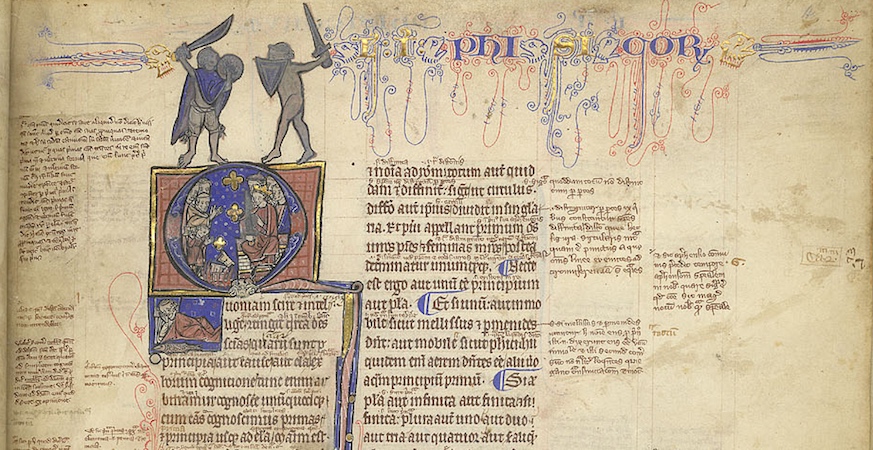 <small>Detail, London, British Library, Harley MS 3487 (13th century)—[source](http://www.bl.uk/catalogues/illuminatedmanuscripts/ILLUMIN.ASP?Size=mid&IllID=16790)</small>
 -
Adapt your notetaking system to suit your goals.
More solid advice. Seems basic because it is.
-
The best technique for notetaking is whichever one works for you and is easy to stick to. While there are hundreds of systems on the internet, you need to take one of them and adapt it until you have your own system.
Solid advice. Advice I've given before.
Pick a system, use it, refine it. Don't over-engineer it. You'll find that many parts of it you'll never reuse.
-
How does the book relate to topics you’re already familiar with?
Spark:
Some people think and endeavor to read a book once and take such great notes that they'll never have to read it again. They're fooling themselves if they think they can do this. The context of what's in the book compared to the context of what they already know is ever-changing. The new you that re-reads a book years or months later will notice new and different things. Make new and interesting connections. Much like Heraclitus's river, we ourselves are ever-changing, and our changing contexts will allow us to get different things from what we're reading on subsequent visits.
-
can help you retain more and make deeper connections.
Often forgotten in the reading and learning processes is creating connections between our new content and what we already know. This is some of the power behind the basic idea in zettelkasten of creating links between knowledge.
-
Before beginning this piece I'm reminded to note some advice given to me by Rick Kurtzman at Creative Artists Agency (CAA) on reading scripts: If you're not going to act on having read (a script), then why bother having read it in the first place?
He meant to make notes, write coverage, create writer lists for rewriting, producer lists for selling, director list for directing, casting lists. One should tell people about the (good) things one read. Make your reading produce something.
Tags
- zettelkasten
- memory
- Heraclitus
- Medieval texts
- productivity
- taxonomies
- organization
- Richard Feynman
- representation
- linking
- Feynman Technique
- entertainment industry
- Rick Kurtzman
- active reading
- connections
- review
- rubber duck debugging
- script coverage
- note taking
- producing
- card catalogs
- summarizing
- marginalia
- read
- reading practices
- Creative Artists Agency
- annotations
- reading
- margins
Annotators
URL
-
- Aug 2021
-
www.khanacademy.org www.khanacademy.org
-
-
in De discipline scholarum, a guidebook made in the 1230s for students and teachers at the University of Paris, it is explained how a student should bring such slips of parchment to class for taking notes. Interestingly, some of these slips have survived because they were pasted in a student’s textbook, like the one seen in the image above. These are truly the medieval equivalent of our “yellow sticky notes.” The practice of bringing scrap material into the classroom was a much broader medieval phenomenon, as is shown by the famous birch bark notes that survive from 13th-century Russia.
Students used offcuts (or scraps) of parchment for writing notes on in class.
-
The most common and sensible location for putting down thoughts, critique or notes was the margin of the medieval book. Consider this: you wouldn’t think so looking at a medieval page, but on average only half of it was filled with the actual text. A shocking fifty to sixty percent was designed to be margin. As inefficient as this may seem, the space came in handy for the reader. As the Middle Ages progressed it became more and more common to resort to the margin for note-taking.
-
Connecting a marginal remark to the relevant passage in the text was usually done with a duplicated symbol, called a signe de renvoi: one was placed in front of the marginal note, the other near the word or passage that the remark commented upon.
Evolution of footnotes
-
-
there are very few medieval scenes in which someone is reading but not writing—where books are present but pens are not. In part, this has to do with medieval study practices. Readers would usually have a pen nearby even when they were just reading. After all, remarks and critiques needed to be added to the margin at the spur of the moment. “Penless” images, while rare, often show a crowded desktop.
Images of Medieval reading practices generally pictured pens along with books. In the rare cases where pens were not included, the desks pictured were messy and thus covered up the pens involved.
-
-
www.khanacademy.org www.khanacademy.org
-
The De disciplina scholarum, a student guidebook from Paris, stipulated that wax tablets or tiny slips of parchment be taken into the classroom for note-taking. These notes were later added to the margins of students’ textbooks.
-
-
thesephist.com thesephist.com
-
Incremental note-taking
Mark note-taking
-
-
www.academia.edu www.academia.edu
-
Media and the Mind: Art, Science and Notebooks as Paper Machines, 1700-1830 (Chicago: University of Chicago Press, 2022), 550 pp + 60 figures.
I can't wait to read Media and the Mind: Art, Science and Notebooks as Paper Machines, 1700-1830 (Chicago: University of Chicago Press, 2022)!
I see some bits on annotation hiding in here that may be of interest to @RemiKalir and @anterobot.
If you need some additional eyeballs on it prior to publication, I'm happy to mark it up in exchange for the early look.
-
-
www.thrivinghenry.com www.thrivinghenry.com
-
<small><cite class='h-cite via'>ᔥ <span class='p-author h-card'>Aaron Davis</span> in 📑 How to remember more of what you read | Read Write Collect (<time class='dt-published'>08/20/2021 12:31:59</time>)</cite></small>
-
-
collect.readwriterespond.com collect.readwriterespond.com
-
https://collect.readwriterespond.com/how-to-remember-more-of-what-you-read/
Some useful looking links here. Thanks Aaron.
I've been digging deeper and deeper into some of the topics and sub-topics.
The biggest problem I've seen thus far is a lot of wanna-be experts and influencers (especially within the Roam Research space) touching on the very surface of problem. I've seen more interesting and serious people within the Obsidian community sharing their personal practices and finding pieces of that useful.
The second issue may be that different things work somewhat differently for different people, none of whom are using the same tools or even general systems. Not all of them have the same end goals either. Part of the key is finding something useful that works for you or modifying something slowly over time to get it to work for you.
At the end of the day your website holds the true answer: read, write, respond (along with the implied "repeat" at the end).
One of the best and most thorough prescriptions I've seen is Sönke Ahrens' book which he's written after several years of using and researching a few particular systems.
I've been finding some useful tidbits from my own experience and research into the history of note taking and commonplace book traditions. The memory portion intrigues me a lot as well as I've done quite a lot of research into historical methods of mnemonics and memory traditions. Naturally the ancient Greeks had most of this all down within the topic of rhetoric, but culturally we seem to have unbundled and lost a lot of our own traditions with changes in our educational system over time.
-
-
kimberlyhirsh.com kimberlyhirsh.com
-
https://kimberlyhirsh.com/2018/06/29/a-starttofinish-literature.html
Great overview of a literature review with some useful looking links to more specifics on note taking methods.
Most of the newer note taking tools like Roam Research, Obsidian, etc. were not available or out when she wrote this. I'm curious how these may have changed or modified her perspective versus some of the other catch-as-catch-can methods with pen/paper/index cards/digital apps?
-
-
kimberlyhirsh.com kimberlyhirsh.com
-
https://kimberlyhirsh.com/2019/04/01/dissertating-in-the.html
A description of some of Kimiberly Hirsh's workflow in keeping a public research notebook (or commonplace book).
I'd be curious to know what type of readership and response she's gotten from this work in the past. For some it'll bet it's possibly too niche for a lot of direct feedback, but some pieces may be more interesting than others.
Did it help her organize her thoughts and reuse the material later on?
-
-
www.youtube.com www.youtube.com
-
How To Do Sketchnoting (Even If You "Can't Draw"!)
a lesson with Emily Mills of the Sketchnote Academy
Types of Sketchnotes
- Lecture based
- Experience based
Skills for sketchnotes
- Listening
- looking for ideas, high level
- Writing
- Drawing
Pairing images and words together to be dynamic and memorable.
One doesn't need to be the greatest artist to do sketchnotes.
memorable >> masterpiece recognizable >> realistic big ideas >> nitty gritty
Basic drawing
Seven building blocks for drawing
- dot
- straight line
- crooked line
- curvy line
- circle
- triangle
- square
Rules
- The fewer elements, the easier
- Rearrange rotate, reorient shapes
People
- standard stick person
- A person
- oval person
- star person
Containers and connectors
Boxes are boring, so add frames or more interesting Use containers to separate information that is different from the rest or to highlight.
- boxes
- frames
- nails/thumbtacks
- star "pow" outline
- box with a shadow
Tell people where to read next
- Create a really clear header
- help people with connectors (dotted lines, arrows, numbering)
Start out small first as it's more intimidating to use bigger formats
Tools
- Sketchone marker (thin point ink, pigment or permanent and not water-based, otherwise bleedover in coloring)
- Tombow dual brush markers for color
- two grey tones, one lighter and one darker
- small handful of colors (red, blue, yellow, green)
How to Sketchnote
- Step 1: Header
- Step 2: Layout (top to bottom/left to right is usually more intuitive) Pre-plan this. Think about connectors.
- Step 3: Consistency
- headers, characters, size of writing,
- Step 4: Refine
- check spelling
- whiteout for mess ups (gellyroll white gel pen)
- ensure connectors are obvious
- Step 5: Guiding shapes (to help flow of information on page)
- stippling
- cloud outlines
- lines in the negative space (also creates contrast)
- Step 6: Coloring in
- greys first, dark then light
- highlighting connectors
- shadows on boxes, ribbons, connectors
- color should be more of a highlight than a background filler (it's not a coloring book)
Higher contrast notes are better
Resources
- 👉🏻 Find Emily (and her awesome resources!) at https://www.emilyamills.com
- 👉🏻 The Sketchnote Academy free course: https://www.sketchnoteacademy.com
- 👉🏻 The Art of Visual Note taking by Emily Mills
-
Anecdotal mention here of someone using sketchnotes or doodling as a mnemonic device.
Sketchnotes could be a means of implementing visual method of loci in one's note taking. Like creating a faux memory palace. Also somewhat similar, expecially in the case of the leaf doodle mentioned above, to the idea of drolleries, but in this case, they're not taking advantage of the memory's greater capacity of imagination to make things even more memorable for long term retention.
-
-
vi.to vi.to
-
Sketchnotes by Chad Moore and Chris Wilson
Sketchnotes are ideas not art.
Squiggle birds - take squiggles and give them beaks, eyes, and bird feet. (Idea apparently from Austin Kleon.)
How you might take notes if you'd never been told how to.
- There is no particular app or platform that is the "right" one.
Common elements:
- Headlines and sub headlines are common
- Elegant text / fancy text
- Icons
- containers - ways of holding information together
- this can be explicit or via white space
- flow of information (arrows)
- arrangements or layouts of how information is displayed
- top to bottom, circles, columns, stream of flow of ideas
- people
- emotions, perhaps using emoji-like faces
- shadows, highlights
Icons
Simple can be better. Complexity may make understanding more difficult.
Examples
A few they pulled off of the web
Sketchnote Selfie
Goal: Create an info rich portrait with character. Portrait, name, info, location, passions, hobbies, interests, social usernames, now section, etc.
-
-
mentalpivot.com mentalpivot.com
-
https://mentalpivot.com/more-solutions-for-taking-podcast-notes-a-survey-of-the-apps/
Nothing much better here, but interesting to see that a handful of apps at least support something.
-
-
mentalpivot.com mentalpivot.com
-
https://mentalpivot.com/solutions-for-taking-notes-when-listening-to-podcasts/
I definitely need a better way of doing this myself. Not a fan of paying $5/month for NoteCast. Airr is iOS only.
Sharing the link from the app with timecode seems the best, but it would be nice to have the transcription piece as well.
-
-
chromeunboxed.com chromeunboxed.com
-
www.connectedtext.com www.connectedtext.com
-
http://www.connectedtext.com/manfred.php
A nice essay about note taking in general, the author's long history using many methods including index cards and a variety of digital versions. Ultimately he settled on a private desktop wiki called ConnectedText.
He talks about Luhmann's zettelkasten and some of the pros/cons as well as things that can be left out when implemented in a digital version like ConnectedText.
He's reasonably connected to the tradition of note taking, though doesn't seem to be as steeped in the Renaissance traditions of commonplace books specifically.
-
A wiki allows one to build increasingly more complex relationships between what might appear to be at first unrelated bits and pieces of information. The motto that characterizes this approch is: "It's not the data, it's the relationship" and it certainly rings true for me in the context of note-taking.
-
-
web.archive.org web.archive.org
-
The first step in translating experience, either of other men's writing, or of your own life, into the intellectual sphere, is to give it form. Merely to name an item of experience often invites you to explain it; the mere taking of a note from a book is often a prod to reflection. At the same time, of course, the taking of a note is a great aid in comprehending what you are reading.
on the purpose of taking notes, annotating one's reading, or commonplacing
highlight is a quote from
C. Wright Mills' profound "Appendix: On Intellectual Craftsmanship," as found in his book on The Sociological Imagination.[16]
-
I should perhaps also note that I try, whenever possible, not to collect raw quotes or information simply copied from the Internet or from books, but to write excerpts or summaries in my own words on the basis of my reading. Luhmann called this "reformulating writing" and argued that such an approach is most important for one's own intellectual life. But this idea is not a new discovery Luhmann made. In fact, the idea that excerpts should be used to keep on's research goes back to at least the Renaissance when people first began to make extensive excerpts on paper.
This is also related to the ideas of invention as well as the analogy of the bee in relation to commonplaces. Link this to the bee analogy of Seneca the Younger and Macrobius in Saturnalia.
-
-
www.notesaboutnotes.com www.notesaboutnotes.com
-
Some thoughts about leaving space in new notebooks, especially for one's future self:
- contact information in front in case of loss
- space for a future table of contents to come
- space for page numbers and dates
- space in the back for house keeping, indices, etc.
-
-
www.notesaboutnotes.com www.notesaboutnotes.com
-
Commonplace Book
Just noticed that Mark Bernstein, the writer of Hypertext Gardens: Delightful Vistas, has page about commonplace books on his site, which he wrote with his note taking cum digital gardening tool Tinderbox.
-
-
Local file Local file
-
Müller-Wille and Scharf ‘Indexing Nature’, also points out that Linnaeus interleaved blanksheets into his texts so that he could take notes. Cooper points out that this had been a common practice in natural historysince at least the late seventeenth century (Cooper, Inventing the Indigenous, 74–5).
Apparently interleaving blank sheets into texts was a more common practice than I had known! I've seen it in the context of Jonathan Edwards (1703-1758) using the practice to take notes in his Bible, but not in others.
-
For example, his erasable writing tablet is referenced inW. Blunt, Linnaeus: The Compleat Naturalist(Princeton, NJ: Princeton University Press, 2001), 70.
What form did Carl Linnaeus' erasable writing tablet take?
-
First, what were the economies of attention thatguided his commonplacing techniques? Second, what type of impact did his note-taking skillshave upon the way that he arranged information in texts?
The two questions addressed in this article.
-
-
www.usatoday.com www.usatoday.com
-
http://usatoday30.usatoday.com/news/washington/2011-05-08-reagan-notes-book-brinkley_n.htm
An article indicating that President Ronald Reagan kept a commonplace book throughout his life. He maintained it on index cards, often with as many as 10 entries per card. The article doesn't seem to indicate that there was any particular organization, index, or taxonomy involved.
It's now housed at the Reagan Presidential Library in Simi Valley, CA.
-
-
books.google.com books.google.com
-
Google Ngram Viewer for "commonplace book",florilegium,memex,"note taking"
-
-
Local file Local file
-
" Havens' inclusive approach and argument for a broad definition of the commonplace book responds to previous scholarship whose scope has been restricted to documents that fit classical theories of the commonplace. In Havens' view, this exclusivity obscures much of the actual history and personal practices of compilers of commonplaces, particularly because it focuses on Renaissance humanist compilations that were made for print.
I take this more inclusive approach to note taking as well.
-
-
-
One might weU see a further example of this process in the incorporation into Alsted's Consiliarius académicas et schohsticus (1610) of a category of random, day-to-day observations and reading notes ("ephemerides" or "diaria").
Is this similar to the mixing of a daily journal page with note taking seen in systems like Roam Research and the way some use Obsidian?
-
- Jul 2021
-
delong.typepad.com delong.typepad.com
-
To be informed is to know simply that something is the case. To be enlightened is to know, in addition, what it is all about: why it is the case, what its connections are with other facts, in what respects it is the same, in what respects it is different, and so forth.
The distinctions between being informed and enlightened.
Learning might be defined as the pathway from being informed as a preliminary base on the way to full enlightenment. Pedagogy is the teacher's plan for how to take this path.
How would these definitions and distinctions fit into Bloom's taxonomy?
Note that properly annotating and taking notes into a commonplace book can be a serious (necessary?) step one might take on the way towards enlightenment.
-
the more active the reading the better.
How much more active can it be than also actively annotating and note taking?
-
-
www.highfivehq.com www.highfivehq.com
-
Highfive Notebook indexing method
A clever method for creating an index or tracking system in a bound notebook by creating an index and then marking the edge of the page for related pages.
Could also be used for tracking one's mood or other similar taxonomic items.
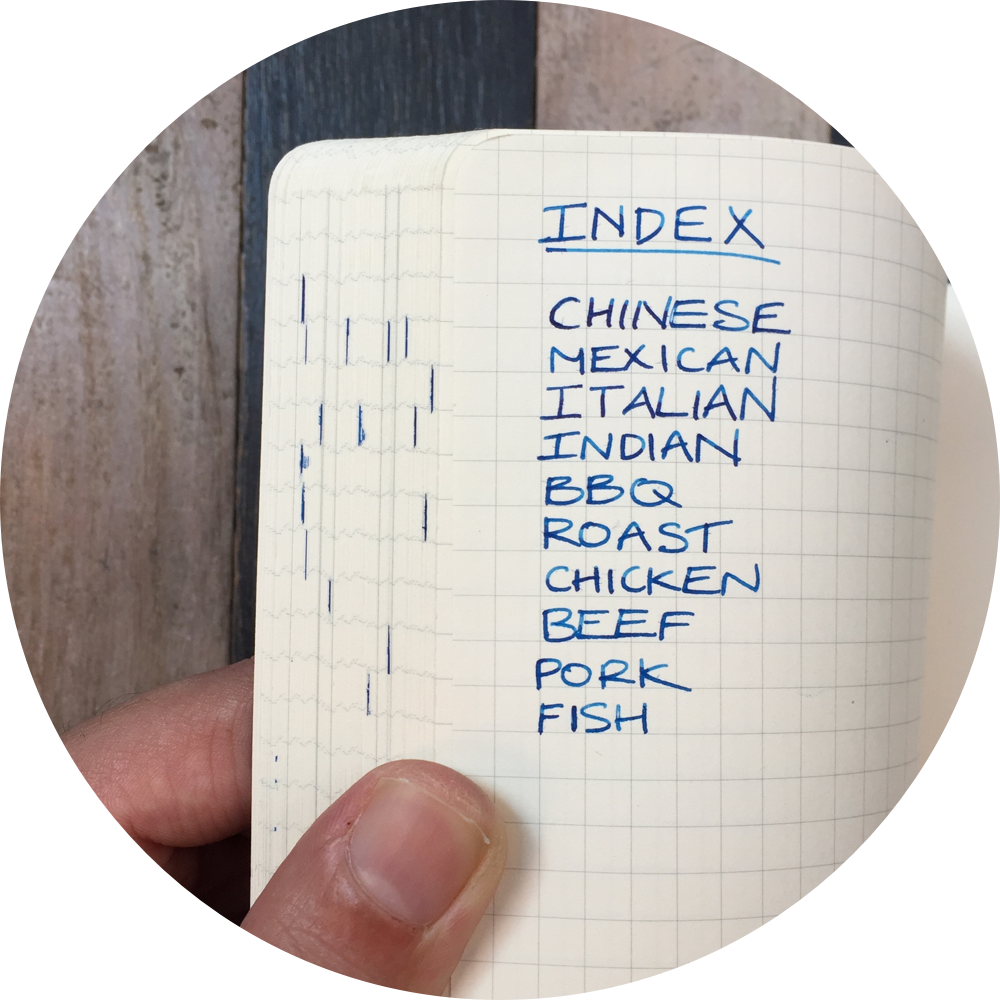
<small><cite class='h-cite via'>ᔥ <span class='p-author h-card'>u/mor-leidr </span> in Has anyone used this indexing system? Curious what you think : commonplacebook (<time class='dt-published'>07/30/2021 12:29:53</time>)</cite></small>
-
-
www.kristofferbalintona.me www.kristofferbalintona.me
-
forum.obsidian.md forum.obsidian.md
-
https://forum.obsidian.md/t/how-to-connect-obsidian-with-ebooks/11418
Workflow for connecting Obsidian to either Zotero or Calibre for note taking.
-
-
forum.obsidian.md forum.obsidian.md
-
https://forum.obsidian.md/t/epub-support/1403
Some interesting resources here, though none currently suit workflows I'm keen to support yet. There is a reference to FuturePress' epub.js which could be intriguing, though even here, I'm more likely to stick with Hypothes.is for annotating and note taking to keep context.
-
-
forum.obsidian.md forum.obsidian.md
-
https://forum.obsidian.md/t/workflow-reading-ebook-epub-mobi-azw-etc-in-obsidian/17977
This is a clever hack for getting ebooks from Calibre to be readable within Obsidian, potentially for cutting/pasting and taking notes directly.
I think I still prefer my other methods, but this might be fun to play around with since I have so much stored in Calibre.
-
-
www.reddit.com www.reddit.com
-
In the Western tradition, these memory traditions date back to ancient Greece and Rome and were broadly used until the late 1500s. Frances A. Yates outlines much of their use in The Art of Memory (Routledge, 1966). She also indicates that some of their decline in use stems from Protestant educational reformers like Peter Ramus who preferred outline and structural related methods. Some religious reformers didn't appreciate the visual mnemonic methods as they often encouraged gross, bloody, non-religious, and sexualized imagery.
Those interested in some of the more modern accounts of memory practice (as well as methods used by indigenous and oral cultures around the world) may profit from Lynne Kelly's recent text Memory Craft (Allen & Unwin, 2019).
Lots of note taking in the West was (and still is) done via commonplace book, an art that is reasonably well covered in Earle Havens' Commonplace Books: A History of Manuscripts and Printed Books from Antiquity to the Twentieth Century (Yale, 2001).
-
-
-
bzawilski.medium.com bzawilski.medium.com
-
https://bzawilski.medium.com/using-zettelkasten-and-obsidian-to-learn-more-effectively-333ac90d001a
Facile overview article that touches on the basics but looses sight of the longer flow of history.
Don't recommend.
-
the idea is to render very clear the connections between ideas with as little friction as possible.
The goal of note taking and tools for it is to make capturing ideas and creating connections between them as easy and friction free as possible. This allows note taking come closer to actual thinking with better long term retention.
-
-
-
https://dev.to/tmhall99/beyond-taking-notes-or-how-i-joined-the-roamcult-22k3
Lots of resources on the topic to start down a rabbit hole, but no clear outline or thesis of what is going on or why it's useful. At best a list of potentially useful links for getting started.
-
-
-
This is pretty slick and looks pretty in its published form. Great to see others are using clever set ups like this as posting interfaces.
I have a feeling that other TiddlyWiki users would love this sort of thing. While TW may not seem as au courant, it's still got some awesome equivalent functionality and great UI which is what most of the users in the note taking space really care about.
I do still wish that there was a micropub set up for Hypothes.is to make this sort of thing easier for the non-technical users.
-
-
deepstash.com deepstash.com
-
A note is only as useful as the context you place it in. A note’s true value unfolds in its network of connections and relationships to others.You don’t have to use your brain anymore to find separate ideas from different books related to each other. In a Zettelkasten, you don’t file notes in the context you found them but in the context in which you want to discover them.
Notes often require some context to give them value and more meaning, but when collecting them, placing them in contexts where they might be discovered in the future and connected to other ideas can give them additional value.
-
-
twitter.com twitter.com
-
Feature Idea: Chaos Monkey for PKM
This idea is a bit on the extreme side, but it does suggest that having a multi-card comparison view in a PKM system would be useful.
Drawing on Raymond Llull's combitorial memory system from the 12th century and a bit of Herman Ebbinghaus' spaced repetition (though this is also seen in earlier non-literate cultures), one could present two (or more) random atomic notes together as a way of juxtaposing disparate ideas from one's notes.
The spaced repetition of the cards would be helpful for one's long term memory of the ideas, but it could also have the secondary effect of nudging one to potentially find links or connections between the two ideas and help to spur creativity for the generation of new hybrid ideas or connection to other current ideas based on a person's changed context.
I've thought about this in the past (most likely while reading Frances Yates' Art of Memory), but don't think I've bothered to write it down (or it's hiding in untranscribed marginalia).
-
-
-
Best Bible Note-Taking System: Jonathan Edwards's Miscellanies
https://www.youtube.com/watch?v=fqq-4-LiFVs
Overview of Jonathan Edwards Miscellanies system along with a a few wide-margin bibles. Everhard apparently hasn't heard of the commonplace concept, though I do notice that someone mentions the zettelkasten system in the comments.
-
-
-
This reads like a content farm.... ugh. Re-encapsulates content without any real valuable context.
-
-
www.youtube.com www.youtube.com
-
While the programming part creates a lot of flexibility, the creation of this system seems awfully heavy and kludgy.
I wonder about the long term stability and data ownership, but it seems so heavy I'm already turned off.
-
-
www.youtube.com www.youtube.com
-
Most of this is material I've seen or heard in other forms in the past. It's relatively well reviewed and summarized here though, but it's incredibly dense to try to pull out, unpack and actually use if one were coming to it as a something new.
3 Productivity hacks
- Zen Meditation (Zen Mind, Beginners Mind by Shunryū Suzuki
- Research Process -- Annotations and notes, notecards
- Rigorous exercise routine -- plateau effect
The Zen meditation hack sounds much in the line of advice to often get away from what you're studing/researching and to let the ideas stew for a bit before coming back to them. It's the same principle as going for walks frequently heard from folks or being a flâneur. (cross reference Nassim Nicholas Taleb et al.) The other version of this that's similar are the diffuse modes of learning (compared with focused modes) described in learning theory. (Examples in work of Barbara Oakley and Terry Sejnowski in https://www.coursera.org/learn/learning-how-to-learn)
I've generally come to the idea that genius doesn't exist myself. Most of it distills down to use of tools like commonplace books.
Perhaps worth looking into some of the following to see what, if anything, is different than prior version of the commonplace book tradition:
The Ryan Holiday Notecard System @Intermittent Diversion - https://youtu.be/QoFZQOJ8aA0
Article On Notecard System [1] https://medium.com/thrive-global/the-notecard-system-the-key-for-remembering-organizing-and-using-everything-you-read-4f48a82371b1 [2] https://www.writingroutines.com/notecard-system-ryan-holiday/ [3] https://www.gallaudet.edu/tutorial-and-instructional-programs/english-center/the-process-and-type-of-writing/pre-writing-writing-and-revising/the-note-card-system/
-
-
web.archive.org web.archive.org
-
On the difference for writing for one's self and for others. Of course there's also the need to be able to re-decifer one's notes again in the future. It may be best to keep more detailed for your future self as if you're writing for the public.
I like the idea of distance in "communication space" which comes up in the comments. This is related to context collapse and shared contexts which are often too-important in our communication with regard to being understood in the far future.
<small><cite class='h-cite via'>ᔥ <span class='p-author h-card'>Matthias Melcher</span> in Commonplace Book | x28's new Blog (<time class='dt-published'>07/06/2021 11:13:34</time>)</cite></small>
-
-
condensr.de condensr.de
-
<small><cite class='h-cite via'>ᔥ <span class='p-author h-card'>Matthias Melcher</span> in About | x28's new Blog (<time class='dt-published'>07/06/2021 11:09:19</time>)</cite></small>
Tags
Annotators
URL
-
-
x28newblog.wordpress.com x28newblog.wordpress.com
-
Which makes them similar to “commonplace”: reusable in many places. But this connotation has led to a pejorative flavor of the German translation “Gemeinplatz” which means platitude. That’s why I prefer to call them ‘evergreen’ notes, although I am not sure if I am using this differentiation correctly.
I've only run across the German "Gemeinplatz" a few times with this translation attached. Sad to think that this negative connotation has apparently taken hold. Even in English the word commonplace can have a somewhat negative connotation as well meaning "everyday, ordinary, unexceptional" when the point of commonplacing notes is specifically because they are surprising or extraordinary by definition.
Your phrasing of "evergreen notes" seems close enough. I've seen some who might call the shorter notes you're making either "seedlings" or "budding" notes. Some may wait for bigger expansions of their ideas into 500-2000 word essays before they consider them "evergreen" notes. (Compare: https://maggieappleton.com/garden-history and https://notes.andymatuschak.org/Evergreen_notes). Of course this does vary quite a bit from person to person in my experience, so your phrasing certainly fits.
I've not seen it crop up in the digital gardens or zettelkasten circles specifically but the word "evergreen" is used in the journalism space) to describe a fully formed article that can be re-used wholesale on a recurring basis. Usually they're related to recurring festivals, holidays, or cyclical stories like "How to cook the perfect Turkey" which might get recycled a week before Thanksgiving every year.
-
Note that such careful treatment applies only to a certain kind of my notes. While many project-related notes go straight to simple folders of the operating system, the notes that don’t fit in one of the folders, deserve special attention. I don’t know yet where I might deploy them — possibly in multiple places.
I like that you've got such a fascinating system. It's very similar in form and substance to one that I use, but which relies on a wholly different technology stack: https://boffosocko.com/2020/08/29/a-note-taking-problem-and-a-proposed-solution/
-
One thing expected from the note-taking tools, makes me particularly skeptical: their collaborative/ public use. I think the lifecycle of notes cannot be continuous from capturing to communication, unless I forgo the possibility of cryptic, sloppy, abbreviated shorthand meant just for the “me later” that Magdalena Böttger depicted so aptly in 2005.
Some of the value of notes being done and readable in public means that one typically puts a bit more effort into them at the start. This can make them much more useful and valuable later on. It also means that they usually have more substance and context for use by others in collaboration or other reuses.
Short notes are often called fleeting notes which may or may not be processed into something more substantive. The ones that do become more substantive can more easily be reused in other future settings.
Sonke Ahrens' book How to Take Smart Notes is one of the better arguments for the why and how of note taking.
-
-
tracydurnell.com tracydurnell.com
-
Is it useful to the person writing to know that what’s written may be readable by others and that spurs deeper thought in reflection – or is that more blog-like than note-like?
I often find that doing the work in public ups the quality and effort I put into the thing because I know there's at least the off-hand chance that someone else might read it.
Generally this means a better contextualized product for myself when I come back to revisit it later, even if no one else saw it. Without it, sometimes my personal scribbles don't hold up when I revisit them, and I can't tell what I had originally intended because I didn't flesh out the idea enough.
-
-
flancia.org flancia.org
-
-
based on Notational Velocity and nvALT
Tags
Annotators
URL
-
-
brettterpstra.com brettterpstra.com
-
nvALT 2 is a fork of the original Notational Velocity with some additional features and interface modifications, including MultiMarkdown functionality. It has been developed by Elastic Threads (David Halter) and Brett Terpstra, and made available for free (donations accepted).
-
-
notational.net notational.net
-
Notational Velocity is an application that stores and retrieves notes.
-
- Jun 2021
-
dash.eloquent.works dash.eloquent.worksEloquent1
-
An interesting tool for taking notes from Jeremy Ho. Designed with Roam Research in mind.
<script async src="https://platform.twitter.com/widgets.js" charset="utf-8"></script>The Eloquent tool is available to install! Capture ideas in-context with:<br>• On-page highlighting<br>• Nested bullets<br>• /snippets<br>• [[braces]] and #tag syntax<br>Quick capture is a hotkey away. Bonus hotkey sends your highlights/links to @RoamResearch pic.twitter.com/vLLbPX4zwW
— Jeremy Ho (@jeremyqho) July 21, 2020I wish it could save data as a local text or markdown file so it would also be easier to use with Obsidian or other note taking tools. It's similar in nature to the Roam Highlighter extension.
Details at https://www.notion.so/Eloquent-Resource-Center-72f95c2a71d34c5181e4907edf7a96e1
Tags
Annotators
URL
-
-
stoa.anagora.org stoa.anagora.orgStoapad1
Tags
Annotators
URL
-
-
iannotate.org iannotate.org
-
Panel: The Future of Note Taking (FoNT) Speakers engaged in reimagining the technology and practices of digital note taking will discuss their work and engage each other and attendees in conversation. The panel will be moderated by Dan Whaley (Hypothesis) and feature speakers Ward Cunningham (FedWiki), Daniel Doyon (Readwise), Bastien Guerry (Org-mode), Eduardo Ivanec (Agora), Oliver Sauter (Memex), Conor White Sullivan (Roam), and Junyu Zhan (Logseq).
For this panel I think it might have been useful to have someone like Maggie Appleton participate for her perspective with respect to some of the history, design, and even anthropology of this space.
Anne-Laure Le Cunff might have been an interesting participant for her leadership and writing on use and UI as well as thinking about "why" note taking.
I'd also nominate Argentina Ortega Sáinz for her work on academic integrations of Zotero with tools like Obsidian.
Perhaps worth noting when revisiting this topic next year? cc: @dwhly @nateangell @hypothesis
-
-
logseq.com logseq.com
-
A privacy-first, open-source knowledge base
Logseq is a joyful, open-source outliner that works on top of local plain-text Markdown and Org-mode files. Use it to write, organize and share your thoughts, keep your to-do list, and build your own digital garden.
Note taking/annotation tool discussed on day two of I Annotate 2021.
Tags
Annotators
URL
-
-
readwise.io readwise.ioReadwise1
-
Note taking/annotation tool discussed on day two of I Annotate 2021.
Tags
Annotators
URL
-
-
www.loc.gov www.loc.gov
-
<small><cite class='h-cite via'>ᔥ <span class='p-author h-card'>I Annotate 2021</span> in I Annotate 2021 | Program (<time class='dt-published'>06/19/2021 16:10:21</time>)</cite></small>
Bookmarked on 2021-06-20 at 7:19 PM
-
-
databyss.org databyss.orgDatabyss1
-
Write and cite, research and re-search, and never get lost in Databyss. Welcome to your new word processor.
Ran across this in the closing party session of IAnno21.
Tags
Annotators
URL
-
-
runestone.colorado.edu runestone.colorado.edu
-
Activity
See 3 photos saved for visual representation
-
-
jack.micro.blog jack.micro.blog
-
Too many “Digital Gardens” end up as not much more than a record of someone dicking around with their note-taking workflow for a couple of months.
I've seen this pattern. I suspect some of the issue is having a clean, useful user interface for actually using the thing instead of spending time setting it up and tweaking it.
-
-
tchan.substack.com tchan.substack.com
-
Synopsis of two different methods for creating a Zettelkasten in Roam Research:
- page based method
- block reference method
Nothing earth shattering here, though one must wonder about import/export of notes into other potential useful systems.
Nothing dramatically new here.
-
- May 2021
-
innos.io innos.io
-
Innos seems like an interesting note taking app in the vein of Obsidian, but the lack of ability to own the raw data is a deal killer here for me.
-
-
www.zylstra.org www.zylstra.org
-
he is focusing on the tensions that what he read causes with other things he knows and has read. He’s not just lifting things out that chime with him, but the things that cause friction. Because in that friction lies the potential of learning.
Dissonance of juxtaposed ideas, and particularly those just at the edge of chaos, can be some of the most fruitful places for learning.
Attempting to resolve these frictions can generate new knowledge.
This is what commonplace books are meant to do. Record this knowledge, allow one to juxtapose, and to think and write into new spaces.
It's also important to look more closely at things that don't cause dissonance. Is it general wisdom that makes them true or seem true? Question the assumptions underneath them. Where do they come from? Why do they seem comfortable? How could one make them uncomfortable. Questioning assumptions can lead to new pathways.
An example of this is the questioning the final assumption of Euclid (the "ugly" one) which led mathematicians into different geometry systems.
-
-
github.com github.com
-
Allows for text selections to be copied (refactored) into new notes and notes to be split into other notes.
-
-
brainbaking.com brainbaking.com
-
One of the toughest parts of note taking systems can be moving from one to another, particularly digital ones, as the technical overhead is almost never easy and typically requires a huge amount of work. Wouter's description here may seem facile, but I'm sure it wasn't simple, not to mention the fact that he's got more facility with coding than the average person ever will.
I do like the idea of basic text or markdown files that can be used in a variety of settings with relatively easy wiki mark up.
Of the systems I've seen, this seems to be the most portable format, but it also requires software that supports it at the base level, but which still provides search and other useful functionalities.
-
-
newrepublic.com newrepublic.com
-
AS PAPER became ever more abundant from the fourteenth century onward, note-taking proliferated, expanding from erasable wax tablets (the method used by Cicero and medieval wool merchants) and erasable donkey skin to permanent slips of paper and notebooks. An early-modern term for notes was “scraps.” Piles of them were called scrap heaps, and tragically for historians, most notes ended up there. Yet notes made in the margins of great printed books survived, and they are like rare seashells in the sands of the libraries.
Early versions of annotations. Sad to realize that most of them likely perished.
Interesting to think of this problem of note taking actually coining the phrase "scrap heap".
-
In effect, Too Much to Know is a reference book about reference books, containing chapters on early “information management,” note-taking, reference genres and “finding devices,” compiling, and the impact of reference books.
I love all of these various topics.
-
-
jhiblog.org jhiblog.org
-
Media theorist Markus Krajewski has devoted a book specifically to the paper machinery of cards and catalogs. He traces the origins of this machinery back to sixteenth-century attempts at indexing books, and through the twists and turns of library technology in Europe and the U.S. over the following centuries.
-
-
www.catswetel.com www.catswetel.com
-
One of the major problems that underlies our society is that the police represent power-over when what we really need is power-with or power-to.
-
-
www.zylstra.org www.zylstra.org
-
Thanks for an awesome post. I think that I have quite similar ideas to how you think about notes and note-taking, although the terminology is different. But even so, you raised several points that were not only linked to my own thinking, but gave me new thoughts and ideas to work with. Cheers for that.
I was just about to ask you what your system looked like Michael, but then I realized that you've tucked many of them into Hypothes.is at https://via.hypothes.is/https://www.zylstra.org/blog/2020/11/100-days-in-obsidian-pt-4-writing-notes/
-
Ton delineates his ideas between notions, notes, ideas, and work notes. It's not too dissimilar to the ideas others like Maggie Appleton have written about various smaller pieces being built up from small "seedlings" into larger evergreen pieces within a digital gardens framing.
I do like the idea of emergent outlines he notes over Ahrens' speculative outlines.
-
-
www.zylstra.org www.zylstra.org
-
I love the phrase "elephant paths" (the correct translation?) for maps of content.
I also like the idea of having a set up for doing digital captures of physical notebook pages. I'll have to consider how to do this most easily. I should also look back and evaluate how to continue improving my digital process as well.
-
- Apr 2021
-
res.mdpi.com res.mdpi.com
-
Millions of those displaced have one or multiple disabilities.
Millions of people affected by humanitarian disasters experience disabilities.
-
-
journalofethics.ama-assn.org journalofethics.ama-assn.org
-
Here are two examples from about 5,000 that I have accumulated since medical school: JG061210 m AP Abscess I&D “Pus Volcano” AR090808 f Fever Cellulitis US-guided IV in IVDU Forgot to listen for murmur
Example of the author's notes. JG probably the initial of patient, followed by the date m is the gender/sex AP abscess is the diagnosis The second line is the learning point, procedure, or a piece of the patient's story. The third is freestyle.
-
every patient I see gets two or three lines in a pocket journal. The first line lists the patient’s initials, gender, date seen, and chief complaint or diagnosis. On the second line, I’ll note a learning point, any procedure I performed, and one other piece of the patient’s story. The more random the better—captured correctly, a strange component of the interaction can jog my memory of the entire encounter.
Interesting structure. Might be able to start from here.
-
SOAP only dictates an order of information, not content or style. The writing task’s transition from labored struggle (for students) to automatic function (for senior residents) is accompanied by improved readability.
Important. SOAP only dictates an order, not style nor content. The quest is to improve readability and transfer information as objective as possible, without losing any important narrative transmitted orally from our patient. It includes how we take notes for our future self.
-
- Mar 2021
-
danallosso.substack.com danallosso.substack.com
-
In the attached YouTube video Dan talks through his post as usual, but he has the added bonus here of showing a split screen of his annotated copy of the book with his Obsidian notebook open. We then see a real time transcription of his note taking process of moving from scant highlights in the book to more fleshed out thoughts and notes in his notebook. We also see him cross referencing various materials for alternate definitions and resources.
-
-
wordpress.org wordpress.org
-
Installed on my WordPress site
-
-
echo360.com echo360.com
-
ECHO360 Note Taking
-
-
tpemartin.github.io tpemartin.github.io
-
a = 2
Ctrl + enter : 單獨執行該行
-
- Feb 2021
-
forum.obsidian.md forum.obsidian.md
-
Others on the page here (specifically Dpthomas87's A, B, C) have done a great job at outlining their methods which I'm generally following. So I'll focus a bit more on the mechanics.
I rely pretty heavily on Hypothes.is for most of my note taking, highlights, and annotations. This works whether a paper is online or as a pdf I read online or store locally and annotate there.
Then I use RSS to pipe my data from Hypothes.is into a text file in OneDrive for my Obsidian vault using IFTTT.com. I know that a few are writing code for the Hypothes.is API to port data directly into Roam Research presently; I hope others might do it for Obsidian as well.)
Often at the end of the day or end of the week, I'll go through my drafts folder everything is in to review things, do some light formatting and add links, tags, or other meta data and links to related ideas.
Using Hypothes.is helps me get material into the system pretty quickly without a lot of transcription (which doesn't help my memory or retention). And the end of the day or end of week review helps reinforce things as well as help to surface other connections.
I'm hoping that as more people use Hypothesis for social annotation, the cross conversations will also be a source of more helpful cross-linking of ideas and thought.
I prefer to keep my notes as atomic as I can.
For some smaller self-contained things like lectures, I may keep a handful of notes together rather than splitting them apart, but they may be linked to larger structures like longer courses or topics of study.
If an article only has one or two annotations I'll keep them together in the same note, but books more often have dozens or hundreds of notes which I keep in separate files.
For those who don't have a clear idea of what or why they're doing this, I highly recommend reading [[Sönke Ahrens]]' book Smart Notes.
I do have a handful of templates for books, articles, and zettels to help in prompting me to fill in appropriate meta data for various notes more quickly. For this I'm using the built-in Templates plug-in and then ctrl-shift-T to choose a specific template as necessary.
Often I'll use Hypothes.is and tag things as #WantToRead to quickly bookmark things into my vault for later thought, reading, or processing.
For online videos and lectures, I'll often dump YouTube URLs into https://docdrop.org/, which then gives a side by side transcript for more easily jumping around as well as annotating directly from the transcript if I choose.
I prefer to use [[links]] over #tags for connecting information. Most of the tags I use tend to be for organizational or more personal purposes like #WantToRead which I later delete when done.
When I run across interesting questions or topics that would make good papers or areas of future research I'll use a tag like #OpenQuestion, so when I'm bored I can look at a list of what I might like to work on next.
Syndicated copies: https://forum.obsidian.md/t/research-phd-academics/1446/64?u=chrisaldrich
-
-
github.com github.com
-
I suspect that this could be modified to work with [[Obsidian]] and other related note taking tools.
-
-
every.to every.to
-
This is what I mean when I say Roam “increases the expected value of my notes.” Now that I’m using Roam, I’m confident my notes will remain useful long into the future, so I’ve increased the quality and quantity of the notes I take.
Well interlinked notes increases their future expected value which in turn gives one more reason to not only take more notes, but to take better notes.
-
In most note-taking apps, you jot something down quickly and only use it a few times before losing track of it.
This is a major problem of most note taking applications. Having the ability to inter-link one's notes in ways that allow one to revisit, revise, and rearrange them is incredibly valuable.
-
-
nplusonemag.com nplusonemag.com
-
cultural capital
Introduced by Pierre Bourdieu in the 1970s, the concept has been utilized across a wide spectrum of contemporary sociological research. Cultural capital refers to ‘knowledge’ or ‘skills’ in the broadest sense. Thus, on the production side, cultural capital consists of knowledge about comportment (e.g., what are considered to be the right kinds of professional dress and attitude) and knowledge associated with educational achievement (e.g., rhetorical ability). On the consumption side, cultural capital consists of capacities for discernment or ‘taste’, e.g., the ability to appreciate fine art or fine wine—here, in other words, cultural capital refers to ‘social status acquired through the ability to make cultural distinctions,’ to the ability to recognize and discriminate between the often-subtle categories and signifiers of a highly articulated cultural code. I'm quoting here from (and also heavily paraphrasing) Scott Lash, ‘Pierre Bourdieu: Cultural Economy and Social Change’, in this reader.
Tags
Annotators
URL
-
- Jan 2021
-
www.scotthyoung.com www.scotthyoung.com
-
Remember that notes are only an intermediate step towards understanding. Having a beautiful set of perfectly written notes is useless if you don’t understand the subject you are trying to learn.
too many people forget this simple fact
-
-
drive.google.com drive.google.com
-
another note
-
- Oct 2020
-
nesslabs.com nesslabs.com
-
While you do so, you can even take notes to keep track of the evolution of your interpretation.
This is exactly the opposite of what Luhmann was doing (he only read things once)
Tags
Annotators
URL
-
-
hawashidev.wpengine.com hawashidev.wpengine.com
-
This is a page note for all users
-
-
fortelabs.com fortelabs.com
-
Consider that no single step in the process of turning raw ideas into finished pieces of writing is particularly difficult. It isn’t very hard to write down notes in the first place. Nor is turning a group of notes into an outline very demanding. It also isn’t much of a challenge to turn a working outline full of relevant arguments into a rough draft. And polishing a well-conceived rough draft into a final draft is trivial. So if each individual step is so easy, why do we find the overall experience of writing so grueling? Because we try to do all the steps at once. Each of the activities that make up “writing” – reading, reflecting, having ideas, making connections, distinguishing terms, finding the right words, structuring, organizing, editing, correcting, and rewriting – require a very different kind of attention.
-
Writing then is best seen not only as a tool for thinking but as a tool for personal growth.
-
No one ever really starts from scratch. Anything they come up with has to come from prior experience, research, or other understanding. But because they haven’t acted on this fact, they can’t track ideas back to their origins. They have neither supporting material nor accurate sources. Since they haven’t been taking notes from the start, they either have to start with something completely new (which is risky) or retrace their steps (which is boring). It’s no wonder that nearly every guide to writing begins with “brainstorming.” If you don’t have notes, you have no other option. But this is a bit like a financial advisor telling a 65-year-old to start saving for retirement – too little, too late.
-
Principle #10: Save contradictory ideas
-
Here are a few questions to ask yourself as you turn fleeting and literature notes into permanent notes: How does the new information contradict, correct, support, or add to what I already know? How can I combine ideas to generate something new? What questions are triggered by these new ideas?
-
Principle #8: Organize your notes by context, not by topic
-
instead of filing things away according to where they came from, you file them according to where they’re going. This is the essential difference between organizing like a librarian and organizing like a writer.
-
Luhmann actually had two slip-boxes: the first was the “bibliographical” slip-box, which contained brief notes on the content of the literature he read along with a citation of the source; the second “main” slip-box contained the ideas and theories he developed based on those sources. Both were wooden boxes containing paper index cards.
I'm already doing this same sort of thing in my TiddlyWiki and simply using tags to distinguish the sources, books, etc.
-
The 8 Steps of Taking Smart Notes Ahrens recommends the following 8 steps for taking notes: Make fleeting notes Make literature notes Make permanent notes Now add your new permanent notes to the slip-box Develop your topics, questions and research projects bottom up from within the slip-box Decide on a topic to write about from within the slip-box Turn your notes into a rough draft Edit and proofread your manuscript
-
This is a reasonable synopsis for why to keep a zettlekasten or commonplace book and how to use it to create new material. It fits roughly in line with my overall experience in doing these things.
-
Luhmann’s slip-box grew to become an equal thinking partner in his work. He described his system as his secondary memory (zweitgedächtnis), alter ego, or reading memory (lesegedächtnis).
-
-
www.nateliason.com www.nateliason.com
-
The Instapaper highlights go to my Evernote inbox, then I copy them from Evernote into Roam (annoying, I know, hopefully the Roam API will be set up soon!)
Getting data into any of these note taking tools quickly always seems to be the most difficult part of the process.
Tags
Annotators
URL
-
-
researchinsiders.blog researchinsiders.blog
-
I kept losing content that I edited out and then wanted to put it back in.
This is where bits like version control of academic documents can be incredibly valuable!
-
But thirdly, and most valuably, the template gives you a big space at the bottom to write sentences that summarise the page. That is, you start writing your critical response on the notes themselves.
I do much this same thing, however, I'm typically doing it using Hypothes.is to annotate and highlight. These pieces go back to my own website where I can keep, categorize, and even later search them. If I like, I'll often do these sorts of summaries on related posts themselves (usually before I post them publicly if that's something I'm planning on doing for a particular piece.)
-
-
www.scotthyoung.com www.scotthyoung.com
-
I can easily see some extensions for using Hypothes.is here.
- Cornell Notes
- Reviews notes
- Flash cards for spaced repetition
- Notes for building memory palaces
-
-
zettelkasten.de zettelkasten.de
-
If you’d like to differentiate between the various functions a paragraph in a text can have, look out for signal words. For example, the following literal devices may indicate that the function is to build a mental model: schema, allegory, analogy, hypothesis, metaphor, representation, simile, theory. Put a corresponding “model” mark next to these.
-
-
johnastewart.org johnastewart.org
-
The students in Raphael Folsom’s Spanish Borderlands course read primary sources on a weekly basis. Rather than taking notes on 3×5 index cards as we did when I was a kid, the students take the same type of note in the Drupal system. They fill out some basic bibliographic information about the source, write a short summary of the source, and then take a note about an interesting facet of the text.
I've been trying this sort of thing out with a TiddlyWiki for a while and have got a reasonable sort of workflow for doing it. The key is to reduce the overhead so that one can quickly take notes in a manner that interlinks them and makes it seem worthwhile to come back to them to review and potentially reorganize them. Doing this practice in public has a lot of value as well. I'll have to come back and look at some of how this was built at a later time.
-
-
-
Obsidian is a powerful knowledge base that works on top of a local folder of plain text Markdown files.
Alright, I think I may now have things set to use an IFTTT applet to take my Hypothes.is feed and dump it into a file on OneDrive.
The tiny amount of clean up to the resultant file isn't bad. In fact, a bit of it is actually good as it can count as a version of spaced repetition towards better recall of my notes.
The one thing I'll potentially miss is the tags, which Hypothes.is doesn't include in their feeds (tucked into the body would be fine), but I suppose I could add them as internal wiki links directly if I wanted.
I suspect that other storage services that work with IFTTT should work as well.
Details in a blogpost soon...
Testing cross-linking:
See Also:
- [[Obsidian]]
- [[Hypothes.is]]
- [[note taking]]
- [[zettlekasten]]
- [[commonplace books]]
- [[productivity]]
hat tip to Hypothesis, for such a generally wonderful user interface for making annotating, highlighting, bookmarking, and replying to web pages so easy!
-
-
blog.csdn.net blog.csdn.net
-
大概过程
大概过程:
- 灰度化
- 采用 Gamma 校正法对输入图像归一化
- 计算图像每个像素的梯度(包括大小和方向)
- 将图像分块
- 统计每块的梯度直方图(不同梯度的个数)
- 没几个块组成一个大块

Tags
Annotators
URL
-
- Sep 2020
-
polimechatronics.github.io polimechatronics.github.io
-
descent direction, or an improving direction
I don't think that both can be true.
-
radius c
I think this should be sqrt of c.
-
Matrix norm
Not needed or missing?
-
positive definite
This should be semi-positive definite.
Tags
Annotators
URL
-
-
digest.bps.org.uk digest.bps.org.uk
-
How To Get The Most Out Of Virtual Learning – Research Digest. (n.d.). Retrieved September 29, 2020, from https://digest.bps.org.uk/2020/07/30/how-to-get-the-most-out-of-virtual-learning/
-
-
web.hypothes.is web.hypothes.is
-
Writing in the margins has always been an essential activity for students.
I never really got into the habit of writing in the margins of books, it was something that never really occurred to me. While I am still hesitant to write in the margins of physical books, doing so digitally does appeal. Something I am starting to get more into, now that I'm on the journey to getting my Arts and Humanities degree.
-
-
-
Most writers don’t write to express what they think. They write to figure out what they think. Writing is a process of discovery.
This is good point about blogging, however it's also a different way of thinking about writing than using e.g. Zettelkasten, where the thinking process is within the boundary of slip-box, but the outcome is composed from the notes you have.
-
- Jun 2020
-
www.youtube.com www.youtube.com
-
Sketcho Frenzy: The Basics of Visual Note-taking
Tags
Annotators
URL
-
-
www.cultofpedagogy.com www.cultofpedagogy.com
-
a style developed by engineering professor Susan Reynolds to accompany her lectures
note taking resource
-
getting trained in specific note-taking strategies can significantly improve the quality of notes and the amount of material they remember later. (Boyle, 2013; Rahmani & Sadeghi, 2011; Robin, Foxx, Martello, & Archable, 1977).
Let me dive into these articles.
Rahmani & Sadeghi, 2011 found that teaching Iranian EFL students how to take notes using graphic organizers, the experiment group did better in recall and comprehension tests.
Boyle, 2013 used a method called "strategic note taking" which performed better than regular note-taking methods. What does regular and strategic note taking measures mean?
Boyle's paper goes over strategic and guided note-taking.
guided notes
Guided Notes are teacher-prepared handouts that outline lectures, audiovisual presentations, or readings, but leave blank space for students to fill in key concepts, facts, definitions, etc. Guided Notes promote active engagement during lecture or independent reading, provide full and accurate notes for use as a study guide, and help students to identify the most important information covered.
strategic note taking
Before the lecture begins, the students identify the lecture topic and relate it to what they already know. This helps to activate prior knowledge and make information more meaningful.
During the lecture, the students record notes by clustering three to six main points (or related pieces of information) and immediately summarizing them for each section of the lecture. Typically, this process will be repeated multiple times throughout the lecture. The clustering of ideas helps students remember the information, and summarizing helps them to monitor comprehension and store the information in long-term memory. To effectively teach students how to record important information, and summarize the content, the teacher can introduce the students to the CUES strategy. The teacher should do this while teaching students how to effectively use the strategic note-taking paper, making sure to emphasize that the C (Cluster) and U (Use) steps should be used when listing lecture points in the section titled “Name 3 to 6 main points with details as they are being discussed,” the E (Enter) step should remind them to enter vocabulary terms in the section titled “New Vocabulary or Terms,” and the S (Summarize) step should be used to quickly summarize the clustered lecture points under the “Summary” section. In addition, it is important that teachers encourage students to use abbreviations as they often do while texting to help them to record notes quickly.
At the end of the lecture, the students should always list and describe five important lecture points that they remember. Although this serves as a quick review of the lecture, students should review their notes to help them retain and recall the information presented during the lecture.
-
-
blog.viktomas.com blog.viktomas.com
-
Good intro on Zettelkasten note management method.
Further reference:
The Zettelkasten Method - Lesswrong 2 »Link«. on how to create "physical" Zettelkasten notes.
Tags
Annotators
URL
-
-
twitter.com twitter.com
-
Toselli, M. (2020, May 31) "How can I promote my class without pestering my friends? This is not a small problem to me. #ethicalmarketing So, as my wise German friends say "Geklagtes Leid ist halbes Leid" (A problem shared is a problem halved) let me share a #sketchnote mapping where I am and what I have." Twitter. https://twitter.com/xLontrax/status/1267070944130072577
-
-
www.sciencedirect.com www.sciencedirect.com
-
Currently, the mutant of the flavinogenic yeast Candida famata dep8 isolated by classic mutagenesis
No __notes were added.
-
- May 2020
-
gitlab.com gitlab.com
-
I find that I read/focus better if I’m taking notes along the way.
Tags
Annotators
URL
-
-
-
Shweta, F., Murugadoss, K., Awasthi, S., Venkatakrishnan, A., Puranik, A., Kang, M., Pickering, B. W., O’Horo, J. C., Bauer, P. R., Razonable, R. R., Vergidis, P., Temesgen, Z., Rizza, S., Mahmood, M., Wilson, W. R., Challener, D., Anand, P., Liebers, M., Doctor, Z., … Badley, A. D. (2020). Augmented Curation of Unstructured Clinical Notes from a Massive EHR System Reveals Specific Phenotypic Signature of Impending COVID-19 Diagnosis [Preprint]. Infectious Diseases (except HIV/AIDS). https://doi.org/10.1101/2020.04.19.20067660
-
-
www.producthunt.com www.producthunt.com
-
Wiki-Style creation of new pages is cool, but there is no tracking of changes. This means you can create a new page simply by referencing it right from your writing, e.g. I like [[JS]]. But should you later rename the JS page to JavaScript, any of your old reference will go awry, creating yet another new note called "JS".
Also automatic backlinks would be really helpful, to see where references are coming from.
-
- Apr 2020
-
floridauser.textopress.com floridauser.textopress.com
-
This is the first chapter
First note!
Tags
Annotators
URL
-
- Mar 2020
-
bb2.uhd.edu bb2.uhd.edu
-
Introductory Videos
table properties, you can create two columns, 1 row, merge the heading column. Modify the heading column size to be closer to the font size.
-
- Jan 2020
-
www.ncbi.nlm.nih.gov www.ncbi.nlm.nih.gov
-
In an observational study of 14 patients, no subjects developed any cardiac or skeletal disease after receiving doses from 25- to 150mcg over a two-year period.41
Note that the high dose was because they were increasing the dose based on symptoms. That is to say, as the thyroid gland produced less thyroid hormone, they increased liothyronine dose to compensate.
-