4,379 Matching Annotations
- Jul 2021
-
obsidianroundup.org obsidianroundup.org
Tags
Annotators
URL
-
-
en.wikipedia.org en.wikipedia.org
-
https://en.wikipedia.org/wiki/Doxography
I suspect many Christian doxographies ought to exist. Why are none listed on this page?
-
-
iep.utm.edu iep.utm.edu
-
-
Diels, H. and W. Kranz, Die Fragmente der Vorsokratiker. Zürich/Hildesheim 1964 The standard collection of the texts of and the doxography on Anaximander and the other presocratics.
Tags
Annotators
URL
-
-
www.theguardian.com www.theguardian.com
-
ayjay.org ayjay.org
-
-
As Astra Taylor explains in her vital book !e People’sPlatform, this process has often been celebrated by advocates ofnew platforms.
Worth taking a look at?
-
-
edwardsnowden.substack.com edwardsnowden.substack.com
-
bzawilski.medium.com bzawilski.medium.com
-
https://bzawilski.medium.com/using-zettelkasten-and-obsidian-to-learn-more-effectively-333ac90d001a
Facile overview article that touches on the basics but looses sight of the longer flow of history.
Don't recommend.
-
-
-
https://dev.to/tmhall99/beyond-taking-notes-or-how-i-joined-the-roamcult-22k3
Lots of resources on the topic to start down a rabbit hole, but no clear outline or thesis of what is going on or why it's useful. At best a list of potentially useful links for getting started.
-
-
www.washingtonpost.com www.washingtonpost.com
-
en.wikipedia.org en.wikipedia.orgHeadword1
-
The term 'lemma' comes from the practice in Greco-Roman antiquity of using the word to refer to the headwords of marginal glosses in scholia; for this reason, the Ancient Greek plural form is sometimes used, namely lemmata (Greek λῆμμα, pl. λήμματα).
https://en.wikipedia.org/wiki/Headword
No mention here of the use of headwords within the commonplace book tradition.
-
-
en.wikipedia.org en.wikipedia.org
-
dancohen.org dancohen.org
-
theamericanscholar.org theamericanscholar.org
-
https://theamericanscholar.org/blue-collar-brilliance/
Acknowledging the work and art that blue collar workers do is an important thing.
-
<small><cite class='h-cite via'>ᔥ <span class='p-author h-card'>Alan Jacobs</span> in July Check-In · Buttondown (<time class='dt-published'>07/01/2021 09:19:13</time>)</cite></small>
Idea of John Paul II's encyclical being a form of blogging in a different era. They're all essays in form, it's just about distribution...
-
-
www.nature.com www.nature.com
-
<small><cite class='h-cite via'>ᔥ <span class='p-author h-card'>Jill Rosen </span> in Team finds brain mechanism that automatically links objects in our minds | Hub (<time class='dt-published'>07/24/2021 18:07:51</time>)</cite></small>
-
-
-
https://hub.jhu.edu/2021/07/09/how-the-mind-links-objects/
A study that quantifies association within the brain and indicates the region where it occurs.
-
-
www.rollstonepigraphy.com www.rollstonepigraphy.com
-
http://www.rollstonepigraphy.com/?p=921
An archaeological find indicates that alphabetic writing may have occurred earlier in history than we've previously known.
-
-
arxiv.org arxiv.org
-
<small><cite class='h-cite via'>ᔥ <span class='p-author h-card'>John Pavlus </span> in Melanie Mitchell Trains AI to Think With Analogies | Quanta Magazine (<time class='dt-published'>07/24/2021 17:19:52</time>)</cite></small>
-
-
-
<small><cite class='h-cite via'>ᔥ <span class='p-author h-card'>John Pavlus </span> in Melanie Mitchell Trains AI to Think With Analogies | Quanta Magazine (<time class='dt-published'>07/24/2021 17:19:52</time>)</cite></small>
-
-
www.quantamagazine.org www.quantamagazine.org
-
hackaday.com hackaday.com
-
https://hackaday.com/2019/06/18/before-computers-notched-card-databases/
Originally suggested by Alan Levine. Some interesting specific examples here, but I've been aware of the concept for a while.
-
-
www.theatlantic.com www.theatlantic.com
-
A quick overview of the basics and general history of critical race theory.
-
Crenshaw and her classmates asked 12 scholars of color to come to campus and lead discussions about Bell’s book Race, Racism, and American Law. With that, critical race theory began in earnest.
-
-
www.theatlantic.com www.theatlantic.com
-
fear, uncertainty, and doubt are not an argument
-
-
elemental.medium.com elemental.medium.com
-
https://elemental.medium.com/why-your-brain-needs-idle-time-e5d90b0ef1df
This was exactly what I expected it would be. Down time for diffuse thinking...
Wish they'd included links to studies.
-
-
digital-lab-wp.consumerreports.org digital-lab-wp.consumerreports.org
-
tracydurnell.com tracydurnell.com
-
hedgehogreview.com hedgehogreview.com
-
https://hedgehogreview.com/web-features/thr/posts/writing-a-life
Jacobs suggests taking the idea of "walking a mile in another's shoes" to a higher level. He takes Herman Hesse's idea in The Glass Bead Game of the Castalian community's writing a Life in which people write an autobiography about seeing themselves placed in other times/places in history.
Similar examples he includes:
- Flannery O'Connor's story "Revelation" in which a woman chooses being remade as "white trash" or a Black woman.
- Black Like Me by John Howard Griffin (1961)
- White Like Me, a Saturday Night Live skit featuring Eddie Murphy
- Soul Sister by Grace Halsell
- Rachel Dolezal passing as black because she felt it was her identity
- John Rawls' "veil of ignorance"
Jacob suggests this could be a useful exercise for people to attempt, particularly as a senior exercise for university students.
-
-
www.npr.org www.npr.org
-
www.latimes.com www.latimes.com
-
-
theoatmeal.com theoatmeal.com
-
wordpress.com wordpress.com
-
www.mccormick.com www.mccormick.com
-
Now this is an interesting looking job.
-
-
-
obsidianroundup.org obsidianroundup.orgAbout1
-
www.scotthyoung.com www.scotthyoung.com
-
A top down view of some learning strategies to begin teasing out which may be better than others.
Are they broadly applicable or domain specific?
What learning methods and pedagogy piece are best and for which domains.
How can we balance learning and doing an overview of theory versus practice?
Which methods are better for beginners versus domain specific experts?
Which are better for overview versus creating new knowledge?
https://www.scotthyoung.com/blog/2021/07/13/against-the-real-thing/
-
-
www.iflscience.com www.iflscience.com
-
"The main lesson is that even though they were all good at recognizing letters, the writing training was the best at every other measure. And they required less time to get there," lead author Professor Robert Wiley, from the University of North Carolina, Greensboro, said in a statement. "With writing, you're getting a stronger representation in your mind that lets you scaffold toward these other types of tasks that don't in any way involve handwriting." Every participant in the study was an adult but the scientists are confident that the same for children. The key, they argue, is that handwriting reinforces what is being learned about the letter, such as the sound, beyond their shape. "The question out there for parents and educators is why should our kids spend any time doing handwriting," explained senior author professor Brenda Rapp, from Johns Hopkins University. "Obviously, you're going to be a better hand-writer if you practice it. But since people are handwriting less then maybe who cares? The real question is: Are there other benefits to handwriting that have to do with reading and spelling and understanding? We find there most definitely are."
Handwriting (as opposed to typing) has been shown to improve the speed at which one learns alphabets.
https://www.iflscience.com/brain/writing-by-hand-most-effectively-increases-reading-skills/
Is the effect also seen in other types of learning? What about reading and taking notes by hand versus typing them out?
-
-
en.wikipedia.org en.wikipedia.org
-
https://en.wikipedia.org/wiki/Process_and_Reality
Apparently this book is the one that contains his quote about western intellectual endeavors being footnotes to Plato.
-
-
bmcr.brynmawr.edu bmcr.brynmawr.edu
-
https://bmcr.brynmawr.edu/2008/2008.12.41/
A searing review of David R. Slavitt's translation of Lucretius.
The "close enough" nature of the translation seems like the intellectual slide shown by too many moderns which decontextualizes our historical precedents. Perhaps fine for a quick view, but could be a slippery slope for taking as part of the basis for Western intellectual tradition.
-
-
en.wikipedia.org en.wikipedia.org
-
forum.artofmemory.com forum.artofmemory.com
-
www.latimes.com www.latimes.com
-
www.latimes.com www.latimes.com
-
www.latimes.com www.latimes.com
-
www.latimes.com www.latimes.com
-
wskg.org wskg.org
-
science.sciencemag.org science.sciencemag.org
Tags
Annotators
URL
-
-
engineering.fb.com engineering.fb.com
-
www.inc.com www.inc.com
-
For the second keynote, I took copious notes and followed the spaced interval formula. A month later, by golly, I remember virtually all of the material. And in case if you're wondering, both talks were equally interesting to me--the difference was the reversal of Ebbinghaus' Forgetting Curve.
Not exactly a real scientific trial, but...
Note also that the other part was his having taken notes and actively engaged with the material as he heard it. The notes also formed the basis of his ability to do the spaced repetition.
Mnemonic methods could be used in place of the note taking for the properly trained. Visual memory just goes to expand on it.
This is an awfully fluff article that's probably too prescriptive. I wonder how many people it influences to try it out? How successful will they be without a more specific prescription?
-
-
aeon.co aeon.co
-
A stunning little essay on a small section of the massive problems we face in America viewed through the lens of our teeth.
-
-
academic.logos.com academic.logos.com
-
-
This reads like a content farm.... ugh. Re-encapsulates content without any real valuable context.
-
-
www.theatlantic.com www.theatlantic.com
-
<small><cite class='h-cite via'>ᔥ <span class='p-author h-card'>Jonathan Zittrain</span> in The Rotting Internet Is a Collective Hallucination - The Atlantic (<time class='dt-published'>07/08/2021 22:10:42</time>)</cite></small>
-
-
www.theatlantic.com www.theatlantic.com
-
A solid overview article about the architectural deficiencies of the web for long term archival and access as well as some ideas for fixing the issue and a plea to attempt to make things better for the future.
-
-
-
This looks interesting upon a random Google search.
-
-
en.wikipedia.org en.wikipedia.org
Tags
Annotators
URL
-
-
rowanmanning.com rowanmanning.com
-
developer.cisco.com developer.cisco.com
Tags
Annotators
URL
-
-
web.archive.org web.archive.org
-
On the difference for writing for one's self and for others. Of course there's also the need to be able to re-decifer one's notes again in the future. It may be best to keep more detailed for your future self as if you're writing for the public.
I like the idea of distance in "communication space" which comes up in the comments. This is related to context collapse and shared contexts which are often too-important in our communication with regard to being understood in the far future.
<small><cite class='h-cite via'>ᔥ <span class='p-author h-card'>Matthias Melcher</span> in Commonplace Book | x28's new Blog (<time class='dt-published'>07/06/2021 11:13:34</time>)</cite></small>
-
-
www.pmichaud.com www.pmichaud.com
-
Apparently an early internet meme...
Tags
Annotators
URL
-
-
www.pmichaud.com www.pmichaud.com
-
In the future, we recommend that toasters be sold in six-packs to accomodate important SPT research.
Definitely an important finding! :)
Tags
Annotators
URL
-
-
www.washingtonpost.com www.washingtonpost.com
-
www.jayeless.net www.jayeless.net
-
A nice starting point for those interested in digital gardens.
Tags
Annotators
URL
-
-
www.jayeless.net www.jayeless.net
-
A great overview of some of the various definitions of small web and what it might entail.
Tags
Annotators
URL
-
-
www.synapsen.ch www.synapsen.ch
Tags
Annotators
URL
-
-
www.theatlantic.com www.theatlantic.com
-
www.sciencedirect.com www.sciencedirect.com
-
The Swedish 18th-century naturalist Carolus (Carl) Linnaeus is habitually credited with laying the foundations of modern taxonomy through the invention of binominal nomenclature. However, another innovation of Linnaeus' has largely gone unnoticed. He seems to have been one of the first botanists to leave his herbarium unbound, keeping the sheets of dried plants separate and stacking them in a purpose built-cabinet. Understanding the significance of this seemingly mundane and simple invention opens a window onto the profound changes that natural history underwent in the 18th century.
-
-
www.sciencedirect.com www.sciencedirect.com
-
Dug up with respect to the idea of Carl Linnaeus inventing the idea of the index card.
-
-
www.sciencedaily.com www.sciencedaily.com
-
<small><cite class='h-cite via'>ᔥ <span class='p-author h-card'>Wikipedia</span> in Index card - Wikipedia (<time class='dt-published'>07/03/2021 21:36:58</time>)</cite></small>
Bookmarked at 10:41 PM
Read 11:09 PM
-
-
en.wikipedia.org en.wikipedia.org
-
www.sciencehistory.org www.sciencehistory.org
-
<small><cite class='h-cite via'>ᔥ <span class='p-author h-card'>Wikipedia</span> in Index card - Wikipedia (<time class='dt-published'>07/03/2021 21:36:58</time>)</cite></small>
-
-
www.tandfonline.com www.tandfonline.com
-
<small><cite class='h-cite via'>ᔥ <span class='p-author h-card'>Christian Tietze</span> in Create a Zettelkasten for your Notes to Improve Thinking and Writing • Zettelkasten Method (<time class='dt-published'>03/24/2021 11:06:20</time>)</cite></small>
-
-
flancia.org flancia.orgFlancia1
-
Welcome to Flancia! It is both a place and a draft.
I love the idea of a web document or digital garden always being considered a draft.
-
-
flancia.org flancia.org
-
anagora.org anagora.org
-
Wikilinks are great because they allow for very easy linking: you just [[link it as you go along]], then the link either works (because someone wrote that node/article/resource already) or you can click through and backfill it. I call this procedure link-driven writing. Whenever there is more than one [[node]] with a given wikilink in an Agora (typical use case: notes kept on a certain topic by different users), the Agora will surface all of them when resolving the wikilink in question.
What if browsers could allow the user to click and choose the resolving resource for a wikilink in much the way that they allow one to choose their search provider? Then one might have the option to choose between the [[agora]] or their own personal wiki for the search?
Tags
Annotators
URL
-
-
anagora.org anagora.org
-
www.dailybreeze.com www.dailybreeze.com
-
Roberts noted that the risks of physical danger to donors are heightened “with each passing year” as changes in technology enables “anyone with access to a computer” to “compile a wealth of information about” anyone.
He's going to be shocked at what's in his Facebook (shadow) profile...
-
-
readings.design readings.design
-
A cool collection of design readings.
Tags
Annotators
URL
-
-
www.pasadenastarnews.com www.pasadenastarnews.com
-
maggieappleton.com maggieappleton.comIf Then1
Tags
Annotators
URL
-
-
blog.ncase.me blog.ncase.me
-
Great overview, but even better images!

Tags
Annotators
URL
-
-
Tags
Annotators
URL
-
-
snarkmarket.com snarkmarket.com
-
Revisiting this essay to review it in the framing of digital gardens.
In a "gardens and streams" version of this metaphor, the stream is flow and the garden is stock.
This also fits into a knowledge capture, growth, and innovation framing. The stream are small atomic ideas flowing by which may create new atomic ideas. These then need to be collected (in a garden) where they can be nurtured and grow into new things.
Clippings of these new growth can be placed back into the stream to move on to other gardeners. Clever gardeners will also occasionally browse through the gardens of others to see bigger picture versions of how their gardens might become.
Proper commonplacing is about both stock and flow. The unwritten rule is that one needs to link together ideas and expand them in places either within the commonplace or external to it: essays, papers, articles, books, or other larger structures which then become stock for others.
While some creators appear to be about all stock in the modern era, it's just not true. They're consuming streams (flow) from other (perhaps richer) sources (like articles, books, television rather than social media) and building up their own stock in more private (or at least not public) places. Then they release that article, book, film, television show which becomes content stream for others.
While we can choose to create public streams, but spending our time in other less information dense steams is less useful. Better is to keep a reasonably curated stream to see which other gardens to go visit.
Currently is the online media space we have structures like microblogs and blogs (and most social media in general) which are reasonably good at creating streams (flow) and blogs, static sites, and wikis which are good for creating gardens (stock).
What we're missing is a structure with the appropriate and attendant UI that can help us create both a garden and a stream simultaneously. It would be nice to have a wiki with a steam-like feed out for the smaller attendant ideas, but still allow the evolutionary building of bigger structures, which could also be placed into the stream at occasional times.
I can imagine something like a MediaWiki with UI for placing small note-like ideas into other streams like Twitter, but which supports Webmention so that ideas that come back from Twitter or other consumers of one's stream can be placed into one's garden. Perhaps in a Zettelkasten like way, one could collect atomic notes into their wiki and then transclude those ideas into larger paragraphs and essays within the same wiki on other pages which might then become articles, books, videos, audio, etc.
Obsidian, Roam Research do a somewhat reasonable job on the private side and have some facility for collecting data, but have no UI for sharing out into streams.
-
-
www.manton.org www.manton.org
-
blog.ayjay.org blog.ayjay.org
-
-
-
The relationship between Phillips — one of whose most famous works is A Humument, an ongoing-for-decades collage/manipulation/adaptation of a Victorian book — and Eno is a fascinating one in the history of aleatory or, as I prefer, emergent art.
Humument sounds interesting, particularly the descriptions of collage/manipulation
aleatory is a great word that one sees infrequently and all too randomly
-
Alan Jacobs seems to be delving into the area of thought spaces provided by blogs and blogging.
In my view, they come out of a cultural tradition of commonplace books becoming digital and more social in the the modern era. Jacobs is obviously aware of the idea of Zettelkasten, but possibly hasn't come across the Sonke Ahrens' book on smart notes or the conceptualization of the "digital garden" stemming from Mike Caulfield's work.
He's also acquainted with Robin Sloane, though it's unclear if he's aware of the idea of Stock and Flow.
-
-
-
en.wikipedia.org en.wikipedia.org
-
Ha! This is almost exactly what I expected it to be about.
<small><cite class='h-cite via'>ᔥ <span class='p-author h-card'>Alan Jacobs</span> in re-setting my mental clock – Snakes and Ladders (<time class='dt-published'>07/01/2021 14:58:05</time>)</cite></small>
-
-
ayjay.org ayjay.org
-
Against Canvas
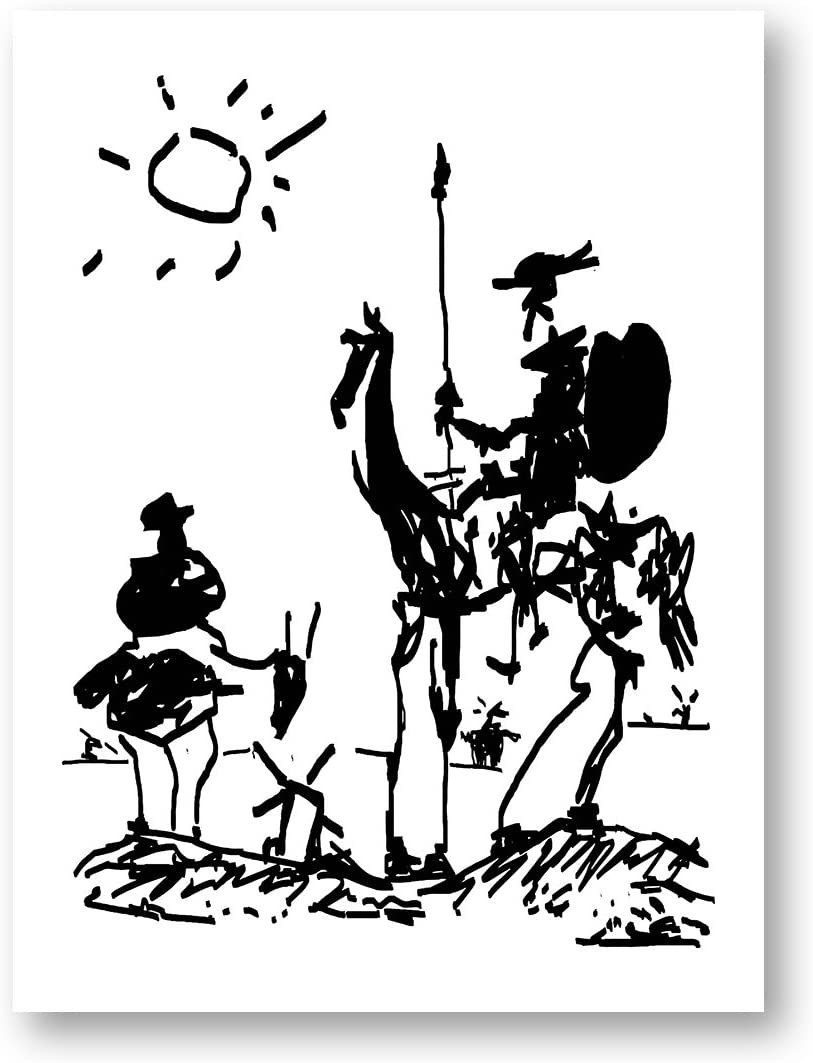
I love that he uses this print of Pablo Picasso's Don Quixote to visually underline this post in which he must feel as if he's "tilting at windmills".
-
-
www.thenewatlantis.com www.thenewatlantis.com
-
What a great about page. Reminds me in part of some of the underlying ethos of the IndieWeb.
Tags
Annotators
URL
-
-
ayjay.org ayjay.org
Tags
Annotators
URL
-
-
www.gq.com www.gq.com
-
-
A description of how George Carlin collected material for his comedy. No discussion of how he further worked on or refined it.
-
-
austinkleon.com austinkleon.com
-
ayjay.org ayjay.org
-
After a good deal of reflection and consultation with my family, I have decided that (aside from pre-existing commitments, of which I have a few) I will no longer give lectures or participate in conferences, whether in person or via video link. I have a great deal that I want to think about and write about, and a dwindling supply of time in which to pursue the tasks I care about most. I understand that this decision might limit sales of my books, and make me even more isolated and ignored than I am already. That’s a trade-off that I simply must make. I feel sure that this is the right thing to do; indeed, the necessary thing to do. I hope that the work I produce in the future will bear out that judgment.
An interesting take on valuing one's time.
-
-
www.tomphillips.co.uk www.tomphillips.co.uk
-
<small><cite class='h-cite via'>ᔥ <span class='p-author h-card'>Alan Jacobs</span> in control and surrender, architecture and gardening – Snakes and Ladders (<time class='dt-published'>07/01/2021 09:42:40</time>)</cite></small>
Tags
Annotators
URL
-
-
buttondown.email buttondown.email
Tags
Annotators
URL
-
- Jun 2021
-
boiledapple.wordpress.com boiledapple.wordpress.com
-
www.nytimes.com www.nytimes.com
-
adactio.com adactio.com
-
bionicjulia.com bionicjulia.com
-
Tell me on Twitter @bionicjulia and have your tweet show up below!
Or alternately write about it on your own site and send a webmention. :)
-
-
www.nytimes.com www.nytimes.com
-
While the op-ed portion comes into play at the very bottom, there is some solid information, history, and questions here about the potential origins of Covid-19.
-
-
beesbuzz.biz beesbuzz.biz
-
Fluffy's work here gives me such hope for the future. :)
-
-
david.shanske.com david.shanske.com
-
I do wonder a bit about the potential misuse/abuse of sending tickets as notifications to people who don't want them.
Hopefully once the system is up and distributed it's relatively easy to ignore or block tickets from bad actors. Email spam is a similar model to this.
-
-
-
-
retrosuburbia.com retrosuburbia.com
-
-
sdi.thoughtstorms.info sdi.thoughtstorms.info
-
I've run into Phil Jones in the digital gardens telegram group, but not looked very closely at [[Cardigan Bay]] before.
Based on the idea of teh [[Smallest Federated Wiki]], Cardigan Bay is a wiki engine in Clojure which can be found on GitHub at interstar/cardigan-bay.
Be sure to invite Jones to [[Gardens and Streams II]].
Tags
Annotators
URL
-
-
blog.archive.org blog.archive.org
-
For example, the Wikipedia article on Martin Luther King, Jr cites the book To Redeem the Soul of America, by Adam Fairclough. That citation now links directly to page 299 inside the digital version of the book provided by the Internet Archive. There are 66 cited and linked books on that article alone.
I'd love to have a commonplace book robot that would do this sort of linking process within it for me. In the meanwhile, I continue to plod along.
This article was referenced today at [[I Annotate 2021]] by [[Mark Graham]].
-
-
asaobinoue.blogspot.com asaobinoue.blogspot.com
-
This article was mentioned/recommended by @RemiKalir earlier today at a session at [[I Annotate 2021]].
-
-
web.hypothes.is web.hypothes.is
-
This is awesome and moves a bit closer in functionality for how one might use the platform as a commonplace book. Not sure how it's different to the main search except that it's geared toward smaller groups rather than the public timeline which is too large to view.
My first impressions:
- It doesn't seem to show within Firefox.
- It overloads in the Public timeline
via: Michael mention at IAnno21
-
-
-
docs.microsoft.com docs.microsoft.com
-
stoa.anagora.org stoa.anagora.orgStoapad1
Tags
Annotators
URL
-
-
happy-aryabhata-c03a3d.netlify.app happy-aryabhata-c03a3d.netlify.app
-
wip.mitpress.mit.edu wip.mitpress.mit.edu
-
Digital Social Reading · Works in Progress by [[Federico Pianzola]] (2021)
Federico mentioned this in the group chat at I Annotate 2021.
-
-
educatorinnovator.org educatorinnovator.org
-
Part of the LEARN: Marginal Syllabus, Spring 2021
Resources:
- “You Can Still Fight”: The Black Radical Tradition, Healing, and Literacies - LEARN Marginal Syllabus
- https://www.youtube.com/watch?v=QHw6bi_gnxU
- Annotations on the video can be found here: https://docdrop.org/video/QHw6bi_gnxU/
- cross reference additional annotations in the National Writing Project Group
-
-
docdrop.org docdrop.org
-
eduardo galliano called in defense of the word
Recommended by Christopher R. Rogers
Tags
Annotators
URL
-
-
uncpress.org uncpress.org
-
<small><cite class='h-cite via'>ᔥ <span class='p-author h-card'>Christopher R. Rogers</span> in (71) “You Can Still Fight”: The Black Radical Tradition, Healing, and Literacies - YouTube (<time class='dt-published'>06/23/2021 21:27:53</time>)</cite></small>
-
-
www.marxists.org www.marxists.org
-
<small><cite class='h-cite via'>ᔥ <span class='p-author h-card'></span>Barrett Swanson Via: [Letter from Los Angeles] The Anxiety of Influencers, | Harper's Magazine (<time class='dt-published'>05/28/2021 11:26:47</time>)</cite></small>
See also: https://en.wikipedia.org/wiki/The_Work_of_Art_in_the_Age_of_Mechanical_Reproduction
-
-
readium.org readium.org
-
I totally want this!
Tags
Annotators
URL
-
-
www.veracode.com www.veracode.com
-
www.futures.design www.futures.design
-
Looks like this is the sort of community that would attempt to put into action some of the ideas behind the book Ruined by Design.
Tags
Annotators
URL
-
-
www.loc.gov www.loc.gov
-
<small><cite class='h-cite via'>ᔥ <span class='p-author h-card'>I Annotate 2021</span> in I Annotate 2021 | Program (<time class='dt-published'>06/19/2021 16:10:21</time>)</cite></small>
Bookmarked on 2021-06-20 at 7:19 PM
-
-
library.educause.edu library.educause.edu
-
wvupressonline.com wvupressonline.com
-
www.jenaecohn.net www.jenaecohn.netWriting1
-
iannotate.org iannotate.org
-
www.manton.org www.manton.org
-
This sounds like lots of fun. Can't wait to see what comes of it.
-
-
en.wikipedia.org en.wikipedia.org
-
en.wikipedia.org en.wikipedia.org
Tags
Annotators
URL
-
-
johncarlosbaez.wordpress.com johncarlosbaez.wordpress.com
-
Thanks for highlighting this!
-
-
en.wikipedia.org en.wikipedia.org
-
<small><cite class='h-cite via'>ᔥ <span class='p-author h-card'>Jeet Heer</span> in Freedom to Teach in North Carolina - The Time of Monsters (<time class='dt-published'>06/17/2021 09:41:33</time>)</cite></small>
-
-
-
<small><cite class='h-cite via'>ᔥ <span class='p-author h-card'>Jeet Heer</span> in Freedom to Teach in North Carolina - The Time of Monsters (<time class='dt-published'>06/17/2021 09:41:33</time>)</cite></small>
-
-
jeetheer.substack.com jeetheer.substack.com
-
threadreaderapp.com threadreaderapp.com
-
www.kaspersky.com www.kaspersky.com
Tags
Annotators
URL
-
-
www.artkavanagh.ie www.artkavanagh.ie
-
<small><cite class='h-cite via'>ᔥ <span class='p-author h-card'>Art Kavanagh </span> in note (<time class='dt-published'>06/16/2021 06:24:59</time>)</cite></small>
-
-
lickability.com lickability.com
-
tchan.substack.com tchan.substack.com
-
Synopsis of two different methods for creating a Zettelkasten in Roam Research:
- page based method
- block reference method
Nothing earth shattering here, though one must wonder about import/export of notes into other potential useful systems.
Nothing dramatically new here.
-
-
jeremyfelt.com jeremyfelt.com
-
-
-
This is badass James!
-
-
www.britannica.com www.britannica.com
-
The “bed of Procrustes,” or “Procrustean bed,” has become proverbial for arbitrarily—and perhaps ruthlessly—forcing someone or something to fit into an unnatural scheme or pattern.
Tags
Annotators
URL
-
-
naildrivin5.com naildrivin5.com
-
It also makes your code harder to follower because you are using SCREAMING_SNAKE_CASE instead of nice, readable methods.
-
-
blog.mahabali.me blog.mahabali.me
-
forum.obsidian.md forum.obsidian.md
Tags
Annotators
URL
-
-
forum.obsidian.md forum.obsidian.md
-
threadreaderapp.com threadreaderapp.com
-
themillions.com themillions.com
-
themillions.com themillions.com
-
This is a phenomenal way to do a look back at a year in reading. I'll have to consider how to pull it off for myself this year.
-
-
www.newyorker.com www.newyorker.com
-
<small><cite class='h-cite via'>ᔥ <span class='p-author h-card'>Jeremy Dean</span> in ‘What I Really Want Is Someone Rolling Around in the Text’ - The New York Times (<time class='dt-published'>06/09/2021 12:13:02</time>)</cite></small>
-
-
booktwo.org booktwo.org
-
<small><cite class='h-cite via'>ᔥ <span class='p-author h-card'>Sam Anderson</span> in ‘What I Really Want Is Someone Rolling Around in the Text’ - The New York Times (<time class='dt-published'>06/09/2021 12:13:02</time>)</cite></small>
-
-
www.theatlantic.com www.theatlantic.com
-
Is Google Making Us Stupid?: What the Internet is doing to our Brains by Nicholas Carr July/August 2008 in The Atlantic
-
-
www.dla-marbach.de www.dla-marbach.de
-
blogs.lse.ac.uk blogs.lse.ac.uk
-
Lynne Kelly's observation that oral cultures revised useful knowledge into their memories appears to me to be a simple precursor to annotation and the idea of the scientific method all in one...
-
-
en.wikipedia.org en.wikipedia.org
-
More history here on the page than I would have thought.
Definitely worth digging into some of the older examples going back to [[Conrad Gessner]] and [[Johann Jacob Moser]].
-
-
jezebel.com jezebel.com
-
numinous.productions numinous.productions
-
samwilson.id.au samwilson.id.au
-
This sounds cool. I sort of wish I could easily do this with my own WikiMedia install.
Tags
Annotators
URL
-
-
narratively.com narratively.com
-
www.bloomberg.com www.bloomberg.com
-
The Plaza maintains a Betsey Johnson-designed suite in honor of Eloise, the capricious six-year-old that fictionally lived on the property.
Because, of course they do!
-
-
www.newyorker.com www.newyorker.com
-
read and annotated an unnamed .pdf copy
Tags
Annotators
URL
-
-
Local file Local file
-
-
snarfed.org snarfed.org
-
copaceticcomics.com copaceticcomics.com
-
<small><cite class='h-cite via'>ᔥ <span class='p-author h-card'>juanjosefernandez</span> in 📚-reading (<time class='dt-published'>06/04/2021 16:32:12</time>)</cite></small>
-
-
Local file Local file
-
Seth Long takes a closer look at the number of memory treatises from 1550-1650 to come up with a more concrete reason for the disappearance of mnemonic imagery (and the method of loci) in English rhetoric and pedagogic traditions. Some writers have attributed it to the rise of more writing and publishing. Long extends Frances Yates' idea of its decline to the rise of Ramism by presenting some general data about the number and quality of memory treatises published during the time period in question. Comparison of this data with European continental publications helps to draw some more concrete conclusions.
In particular, he highlights an example of a Ramist sympathizer re-writing a previous treatise and specifically removing the rhetorical imagery from the piece.
-
von Feinaigle, Gregor.The New Art of Memory: Founded Upon the Principles Taught by M. Gregor von Feinaigle. London, 1813.
I thought this was in my reading list and my library, but perhaps it's not? Doublecheck.
-
Delaney, Ian, Kate Danskin, Erin Clinch, eds.William Fulwood’s The Castel of Memorie. CreateSpace IndependentPublishing, 2013.
-