says, D. S. (2020, April 7). “Inundated, overloaded and bombarded” – Seven insights for communicating research to busy policymakers. Impact of Social Sciences. https://blogs.lse.ac.uk/impactofsocialsciences/2020/04/07/inundated-overloaded-and-bombarded-seven-insights-for-communicating-research-to-busy-policymakers/
2,738 Matching Annotations
- Apr 2020
-
blogs.lse.ac.uk blogs.lse.ac.uk
Tags
- is:blog
- evidence
- synthesis
- lang:en
- policy
- UK
- network
- language
- research
- policymaker
- government
- reputation
- support
- decision
- communication
Annotators
URL
-
-
www.nature.com www.nature.com
-
Powell, K. (2020). Science-ing from home. Nature, 580(7803), 419–421. https://doi.org/10.1038/d41586-020-00935-3
-
-
www.nytimes.com www.nytimes.com
-
Apuzzo, M., & Kirkpatrick, D. D. (2020, April 1). Covid-19 Changed How the World Does Science, Together. The New York Times. https://www.nytimes.com/2020/04/01/world/europe/coronavirus-science-research-cooperation.html
-
-
wellcome.ac.uk wellcome.ac.uk
-
Coronavirus (COVID-19): Sharing research data | Wellcome. (n.d.). Retrieved April 16, 2020, from https://wellcome.ac.uk/coronavirus-covid-19/open-data
-
-
sciencebusiness.net sciencebusiness.net
-
Research on ice across Europe, as all resources are focussed on COVID-19. (n.d.). Science|Business. Retrieved April 16, 2020, from https://sciencebusiness.net/news/research-ice-across-europe-all-resources-are-focussed-covid-19
-
-
www.lorentzcenter.nl www.lorentzcenter.nl
-
Center for Scientific Workshops in All Disciplines—Lorentz-eScience Competition. (n.d.). Retrieved April 16, 2020, from https://www.lorentzcenter.nl/lorentz-escience-competition.html
-
-
www.dimensions.ai www.dimensions.ai
-
Dimensions – The next evolution in linked scholarly information. (n.d.). Dimensions. Retrieved April 8, 2020, from https://www.dimensions.ai/
-
-
www.fwf.ac.at www.fwf.ac.atDetail1
-
Detail. (n.d.). Retrieved April 9, 2020, from https://www.fwf.ac.at/en/news-and-media-relations/news/detail/nid/20200326-2500/
-
-
www.dfg.de www.dfg.de
-
DFG, German Research Foundation—Call for Multidisciplinary Research into Epidemics and Pandemics in Response to the Outbreak of SARS-CoV-2. (n.d.). Retrieved April 15, 2020, from https://www.dfg.de/en/research_funding/announcements_proposals/2020/info_wissenschaft_20_20/
-
-
www.wwtf.at www.wwtf.atCOVID-191
-
COVID-19. (n.d.). Retrieved April 17, 2020, from https://www.wwtf.at/covid/index.php?lang=EN
-
-
www.axa-research.org www.axa-research.org
-
Exceptional Flash Call for Proposals: Mitigating risk in the wake of the... (n.d.). Retrieved April 20, 2020, from https://www.axa-research.org/fr/page/call-for-proposals-mitigating-risk-in-the-wake-of-the-covid-19-pandemic
-
-
www.natureindex.com www.natureindex.com
-
Rapid Registered Reports initiative aims to stop coronavirus researchers following false leads. (n.d.). Retrieved April 20, 2020, from https://www.natureindex.com/news-blog/rapid-registered-report-coronavirus-aims-to-stop-researchers-following-false-research-leads
-
-
www.reddit.com www.reddit.com
-
r/BehSciResearch—Behavioural science research for guiding societies out of lockdown. (n.d.). Reddit. Retrieved April 20, 2020, from https://www.reddit.com/r/BehSciResearch/comments/g2bm09/behavioural_science_research_for_guiding/
-
-
sciencebusiness.net sciencebusiness.net
-
Imperial researchers develop lab-free COVID-19 test with results in less than an hour. (n.d.). Science|Business. Retrieved April 20, 2020, from https://sciencebusiness.net/network-updates/imperial-researchers-develop-lab-free-covid-19-test-results-less-hour
-
-
www.ukri.org www.ukri.org
-
COVID-19 therapy, vaccine, epidemiology and policy development research boosted by twenty-one new projects—UK Research and Innovation. (n.d.). Retrieved April 21, 2020, from https://www.ukri.org/news/covid-19-research-boosted-by-new-projects/
-
-
-
Callaway, E. (2020). Should scientists infect healthy people with the coronavirus to test vaccines? Nature, 580(7801), 17–17. https://doi.org/10.1038/d41586-020-00927-3
-
-
royalsocietypublishing.org royalsocietypublishing.org
-
Tiokhin, L., & Derex, M. (n.d.). Competition for novelty reduces information sampling in a research game—A registered report. Royal Society Open Science, 6(5), 180934. https://doi.org/10.1098/rsos.180934
-
-
sciencebusiness.net sciencebusiness.net
-
Interview: We should tackle COVID-19 head on, but now is not the time to cut basic research. (n.d.). Science|Business. Retrieved April 22, 2020, from https://sciencebusiness.net/news/interview-we-should-tackle-covid-19-head-now-not-time-cut-basic-research
-
-
-
But recent events have made me question the prudence of releasing this information, even for research purposes. The arrest and aggressive prosecution of Barrett Brown had a marked chilling effect on both journalists and security researchers.
-
-
www.mdpi.com www.mdpi.com
-
This all comes as part of a wider global shift towards more open research practices, and the geochemistry community needs to make sure it is engaging widely with these, as well as connected issues like research integrity and reproducibility, if it is to maintain its relevance in the modern research age.
Prinsip utama yang patut menjadi pegangan para peneliti/dosen masa depan adalah: keinginan pribadi (self-driven initiative) untuk menyebar-luaskan berbagai hasil risetnya secara luas.
Untuk itu teknologi digital dan internet harus dimanfaatkan dengan maksimal. Seringkali dosen/peneliti melupakan hal ini, bahwa internet ditemukan untuk mempercepat dan memperluas penyebaran ide.
Integritas riset dan reprodusibilitas adalah dua nilai yang perlu ditonjolkan agar relevan dengan kemajuan era internet, bukan hanya menonjolkan nama jurnalnya dan JIFnya.
-
-
www.reddit.com www.reddit.com
-
LitCovid: Curated literature hub for tracking up-to-date scientific information about the 2019 novel Coronavirus .t3_fp7epr ._2FCtq-QzlfuN-SwVMUZMM3 { --postTitle-VisitedLinkColor: #9b9b9b; --postTitleLink-VisitedLinkColor: #9b9b9b; } methods and toolshttps://www.ncbi.nlm.nih.gov/research/coronavirus/LitCovid is a curated literature hub for tracking up-to-date scientific information about the 2019 novel Coronavirus. It is the most comprehensive resource on the subject, providing a central access to 1724 (and growing) relevant articles in PubMed. The articles are updated daily and are further categorized by different research topics and geographic locations for improved access. You can read more at Chen et al. Nature (2020) and download our data here.
-
-
www.ncbi.nlm.nih.gov www.ncbi.nlm.nih.gov
-
LitCovid is a curated literature hub for tracking up-to-date scientific information about the 2019 novel Coronavirus. It is the most comprehensive resource on the subject, providing a central access to 1737 (and growing) relevant articles in PubMed. The articles are updated daily and are further categorized by different research topics and geographic locations for improved access. You can read more at Chen et al. Nature (2020) and download our data here.
-
- Mar 2020
-
epress.library.okstate.edu epress.library.okstate.edu
-
Research in Educational Technology
This textbook, published by the Oklahoma State University Library ePress, contains a chapter which summarizes the main views of knowledge in educational technology research, including postpositivism, constructivism, advocacy, and pragmatism, as well as each view's research traditions. The chapter suggests an approach to evaluating research articles through the lenses of a consistent learning theory coupled, methodologies that support that learning theory, and the conclusions that are drawn by the researchers supported through their methodologies. This chapter would help educators evaluate how and why they might include technology into their course curriculum. Rating: 7/10
-
-
www.semanticscholar.org www.semanticscholar.org
-
1790 documents
Tags
Annotators
URL
-
-
covid19obs.fbk.eu covid19obs.fbk.eu
-
100000000 twitts
Tags
Annotators
URL
-
-
app.dimensions.ai app.dimensions.ai
-
3343 publications
-
-
github.com github.com
-
1775 public repositories
Tags
Annotators
URL
-
-
academic.microsoft.com academic.microsoft.com
-
1926 publications
-
-
nextstrain.org nextstrain.org
-
1467 genomes
-
1467 genomes
Tags
Annotators
URL
-
-
www.ncbi.nlm.nih.gov www.ncbi.nlm.nih.gov
-
15 popset
Tags
Annotators
URL
-
-
www.clinicaltrials.gov www.clinicaltrials.gov
-
215 clinical trials
-
-
-
4259 publications
Tags
Annotators
URL
-
-
pubmed.ncbi.nlm.nih.gov pubmed.ncbi.nlm.nih.gov
-
1618 publications
Tags
Annotators
URL
-
-
docs.google.com docs.google.com
-
21 datasets
-
337 clinical trials
-
2173 publications
-
-
www.viprbrc.org www.viprbrc.org
-
183 genomes
-
- Feb 2020
-
-
Ways forward
The shift from "review article" to "research proposal" article uses a format that I've been trying to promote for quite some time: the call to research format.
-
-
journals.sagepub.com journals.sagepub.com
-
Social media research ethics faces a contradiction between big data positivism and research ethics fundamentalism. Big data positivists tend to say, ‘Most social media data is public data. It is like data in a newspaper. I can therefore gather big data without limits. Those talking about privacy want to limit the progress of social science’. This position disregards any engagement with ethics and has a bias towards quantification. The ethical framework Social Media Research: A Guide to Ethics (Townsend and Wallace, 2016) that emerged from an ESRC-funded project tries to avoid both extremes and to take a critical-realist position: It recommends that social scientists neither ignore nor fetishize research ethics when studying digital media.Research ethics fundamentalists in contrast tend to say,You have to get informed consent for every piece of social media data you gather because we cannot assume automatic consent, users tend not to read platform’s privacy policies, they may assume some of their data is private and they may not agree to their data being used in research. Even if you anonymize the users you quote, many can still be identified in the networked online environment.
-
Research ethics concerns issues, such as privacy, anonymity, informed consent and the sensitivity of data. Given that social media is part of society’s tendency to liquefy and blur the boundaries between the private and the public, labour/leisure, production/consumption (Fuchs, 2015a: Chapter 8), research ethics in social media research is par-ticularly complex.
-
One important aspect of critical social media research is the study of not just ideolo-gies of the Internet but also ideologies on the Internet. Critical discourse analysis and ideology critique as research method have only been applied in a limited manner to social media data. Majid KhosraviNik (2013) argues in this context that ‘critical dis-course analysis appears to have shied away from new media research in the bulk of its research’ (p. 292). Critical social media discourse analysis is a critical digital method for the study of how ideologies are expressed on social media in light of society’s power structures and contradictions that form the texts’ contexts.
-
Besides conducting qualitative social research with social media users in order to learn about their experiences, interpretations and perspectives, critical digital methods should not completely discard tools for digital data collection and analytics but take their use into a new direction. Critical digital methods should certainly engage in collecting and analys-ing samples of data from social media platforms with the help of tools and services, such as DiscoverText, Tweet Archivist, Netvizz, NodeXL, Gephi, NCapture/NVivo, Sodato, Import.io, InfoExtractor, Google Web Scraper, TAGS, SocioViz and so on.
-
t has, for example, been common to study contemporary revolutions and protests (such as the 2011 Arab Spring) by collecting large amounts of tweets and analysing them. Such analyses can, however, tell us nothing about the degree to which activists use social and other media in protest communication, what their motivations are to use or not use social media, what their experiences have been, what problems they encounter in such uses and so on. If we only analyse big data, then the one-sided conclusion that con-temporary rebellions are Facebook and Twitter revolutions is often the logical conse-quence (see Aouragh, 2016; Gerbaudo, 2012). Digital methods do not outdate but require traditional methods in order to avoid the pitfall of digital positivism. Traditional socio-logical methods, such as semi-structured interviews, participant observation, surveys, content and critical discourse analysis, focus groups, experiments, creative methods, par-ticipatory action research, statistical analysis of secondary data and so on, have not lost importance. We do not just have to understand what people do on the Internet but also why they do it, what the broader implications are, and how power structures frame and shape online activities
-
Studying digital and social media could take inspiration by the tradition going back to Karl Marx and other critical theorists
A need to think about the context and broader social implications of the research being conducted.
-
Who communicates what to whom on social media with what effects? It forgets users’ subjectivity, experiences, norms, values and interpre-tations, as well as the embeddedness of the media into society’s power structures and social struggles. We need a paradigm shift from administrative digital positivist big data analytics towards critical social media research. Critical social media research combines critical social media theory, critical digital methods and critical-realist social media research ethics.
-
de-emphasis of philosophy, theory, critique and qualitative analysis advances what Paul Lazarsfeld (2004 [1941]) termed administrative research, research that is predominantly concerned with how to make technologies and administration more efficient and effective.
-
There is a tendency in Internet Studies to engage with theory only on the micro- and middle-range levels that theorize single online phenomena but neglect the larger picture of society as a totality (Rice and Fuller, 2013). Such theories tend to be atomized. They just focus on single phenomena and miss soci-ety’s big picture
-
-
fivethirtyeight.com fivethirtyeight.com
-
scientific laboratories create an amazing amount of plastic waste, consume large amounts of water, create risks from hazardous chemicals and use significantly more energy
-
-
unix.stackexchange.com unix.stackexchange.com
-
I use this to keep information about processes that were running at any time during last five days. These are 1-min snapshots so something might get lost but I think it is good enough for me. I want to have some data available when I discover there was a peak in resource usage (I use munin for that). I haven't found a better way to keep track of past processes (tried psacct).
-
- Jan 2020
-
www.youtube.com www.youtube.com
-
0:11 / 12:00LiveScroll for details M2 Research Categorization
:30 categorization, def. action or process of placing into classes or groups; a system of classes into which something is sorted.
Tags
Annotators
URL
-
-
dl.acm.org dl.acm.org
-
gregorygundersen.com gregorygundersen.com
-
Summarizing a paper in your own words restructures the content to focus on learning rather than novelty.
In the scientific papers we convey novelty, hence, some of the early readers might confuse themselves that this is the right way to speak in a daily scientific community
-
Blogging has taught me how to read a paper because explaining something is a more active form of understanding. Now I summarize the main contribution in my own words, write out the notation and problem setup, define terms, and rederive the main equations or results. This process mimics the act of presenting and is great practice for it.
Why teaching others/blogging has a great value in terms of learning new topics
-
When I first started teaching myself to program, I felt that I had no imagination. I couldn’t be creative because I was too focused on finding the syntax bug or reasoning about program structure. However, with proficiency came creativity. Programming became less important than what I was building and why.
While learning, don't worry about the creativity, which shall come after gaining proficiency (knowledge base)
-
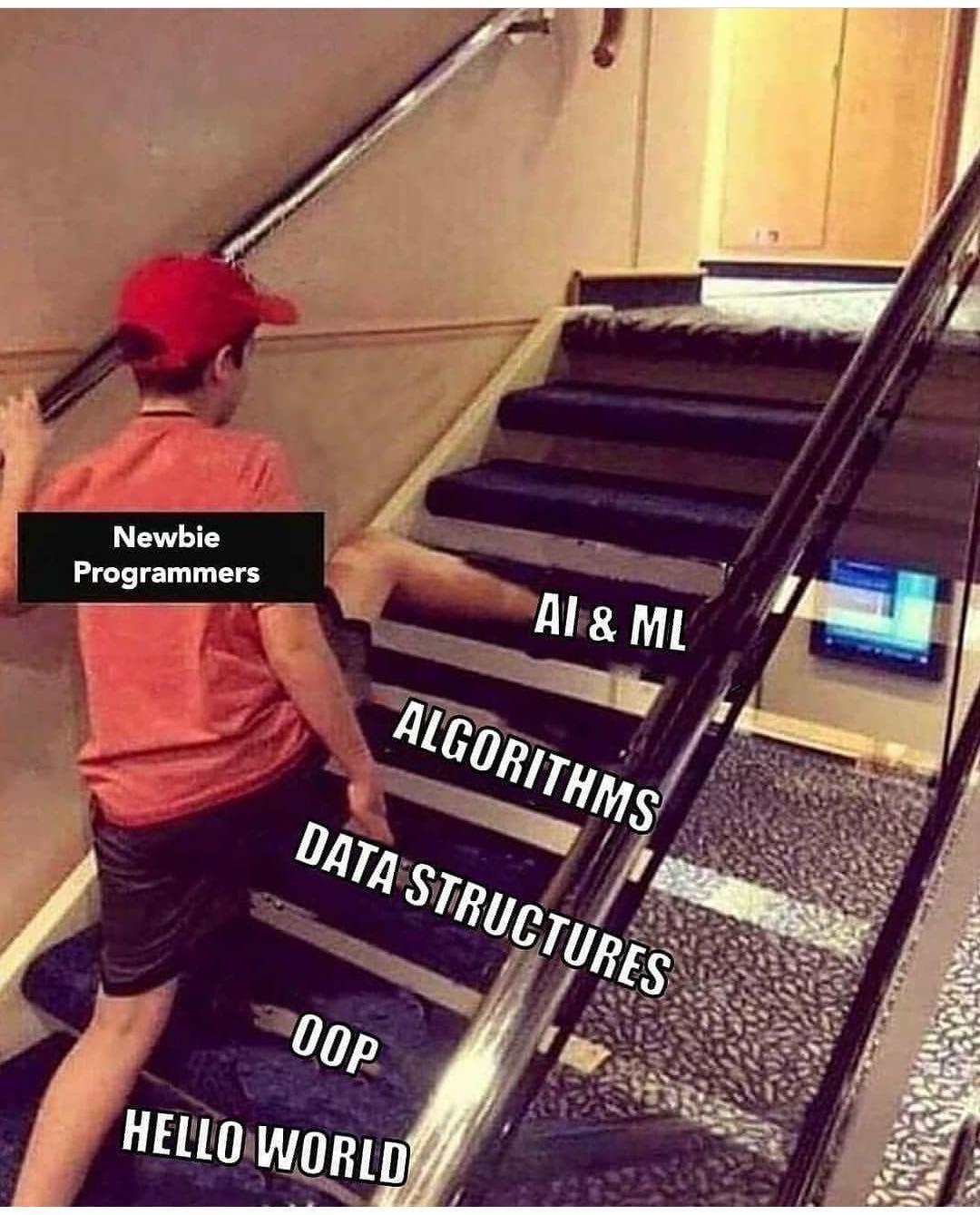
In my opinion the reason most people fail to do great research is that they are not willing to pay the price in self-development. Say some new field opens up that combines field XXX and field YYY. Researchers from each of these fields flock to the new field. My experience is that virtually none of the researchers in either field will systematically learn the other field in any sort of depth. The few who do put in this effort often achieve spectacular results.
I think we all know that...
-
Many of us have done this on exams, hoping for partial credit by stitching together the outline of a proof or using the right words in an essay with the hopes that the professor connects the dots for us.
Often we tend to communicate with a jargon we don't understand just to pretend we know something
-
-
www.drugwiki.net www.drugwiki.netCytomel1
-
L-T3 has proven to be 4-5 times more biologically active and to take effect more quickly than L-thyroxine (L-T4).
Will need to check up on that. I recall T4 being less potent.
Tags
Annotators
URL
-
-
www.scielo.br www.scielo.br
-
In almost all cases the genetic basis of RTH lies in mutation of the carboxyl-terminus of the ß-thyroid hormone receptor. RTH is a dominant disorder, except in one family; most individuals are heterozygous for the mutant allele.
So, given that thyroid hormone resistance does exist, the remaining question is whether it is common enough to explain some cases of CFS or similar conditions. Unfortunately this paper is not in english, but the abstract provides enough information to google more.
Tags
Annotators
URL
-
-
en.wikipedia.org en.wikipedia.org
-
Wikipedia:Articles for deletion/Katie Bouman
El caso de Katie Bouman en la categoría de Articles for Deletion y mi análisis de los comentarios bajo la categoría inicial de not relevant
-
Any relevant material can be mentioned there
Relevant
-
of WP:1E
Wikipedia: Notability (people). Notable
-
Someone who isn't even an assistant professor is certainly not notable as a scientist.
Notable as a scientist
-
Wikipedia:Notability is not inherited.
Notability
-
The Event Horizon Telescope project is notable in itself, and has its own article, but anyone who are in some way (remotely) associated with it are not inherently notable.
Notable
-
-
xtools.wmflabs.org xtools.wmflabs.org
-
Wikipedia:Articles for deletion/Katie Bouman • en.wikipedia.org
Estadísticas sobre el Article for Deletion de Katie Bouman
-
-
github.com github.com
-
Through a process called rehashing, rbenv maintains shims
How does rehashing work?
-
-
www.readcube.com www.readcube.com
-
The Research Parasite Awards
For more perspectives from one of the founders of the award see this related commentary https://doi.org/10.1093/gigascience/giy129
-
-
academic.oup.com academic.oup.com
-
2019 Research Parasite Awards
See the commentary from 2019 Junior Parasite Award winner Claire Duvallet giving her perspective of winning the award https://doi.org/10.1093/gigascience/giz148
-
-
digitallyliterate.net digitallyliterate.net
-
One of the key critiques of the study is that the researchers didn’t log in. That is to say that they could not experience the full impact of the algorithm as it impacts their findings.
As Becca Lewis suggests, is the problem associated with methodology? This reminds me of some of the discussions associated with [social media and teens] (https://collect.readwriterespond.com/social-media-has-not-destroyed-a-generation/)
Tags
Annotators
URL
-
- Dec 2019
-
wellcomeopenresearch.org wellcomeopenresearch.org
-
OPP1151904
Would be nice if that identifier would lead somewhere useful. A web search for it yielded https://doi.org/10.12688/wellcomeopenres.15442.1 , which is also included in the collection "GFBR: The ethics of data sharing and biobanking in health research" available via https://wellcomeopenresearch.org/collections/gfbr18 .
-
-
curriculumanalysis.org curriculumanalysis.org
-
Fourth, inoffering examples of how the tools have been used, I encouragethought about how the tools might be used in other educationalresearchers’ work
further applications to improving research
-
-
en.wikipedia.org en.wikipedia.org
-
A 2009 study of Wikipedia found that most weasel words in it could be divided into three main categories:[13] Numerically vague expressions (for example, "some people", "experts", "many", "evidence suggests") Use of the passive voice to avoid specifying an authority (for example, "it is said") Adverbs that weaken (for example, "often", "probably")
-
-
academic.oup.com academic.oup.com
-
The sodium-restricted diet group received a regimen aiming a maximum intake of 3 g of sodium per day (equivalent to 7.5 g of sodium chloride).
That sounds incredibly high to me. 3000 mg is the absolute maximum intake that could ever be considered 'low' sodium. Under 1500 is usually considered ideal. Would, then, a diet aiming for half the sodium be twice as effective?
-
-
-
Further Research (in html)
- Distribute a survey to library workers to elicit criteria for OA content selection, including quality measures and financial workflow components.
- Research appropriate levels of collective action — local, state, regional, national, international? What is the tipping point between large enough to exert market force and too large to manage? What is the role of consortia in leading collective action efforts?
- Propose and test innovative staffing and workflow changes to meet the needs of an open environment.
- Research the power and agency of the library community with respect to OA content support: ○ Would community criteria, decision-making, or vetting be widely adopted? ○ How is best to consider needs in relation to the diversity of institutional participants and scale of effort? ○ How can the community leverage market power in an equitable and ethical way?
- Create generous spaces and build a common vocabulary, within the library profession and with content providers.
- Expand conversations about these topics to include other stakeholders (OA providers, consortia, agencies, societies, faculty and scholars, administrators, etc.)
- Explore the connection between OER and OA programs. Are there ways to use the momentum from OER programs to develop stronger OA content platforms or services?
Tags
Annotators
URL
-
-
github.com github.com
-
This repo attempts to show how neutrino config can be used to configure storybook
-
- Nov 2019
-
austinkleon.com austinkleon.com
-
“Why don’t you assume you’ve written your book already — and all you have to do now is find it?”
That is heartening...
-
Here’s Stephen Harrigan (talking about his book, Big Wonderful Thing: A History of Texas)
"I think that when it comes to writing books, you have to start before you think you're ready, because you will always feel like you are never ready. I find that as you write the book, the road ahead becomes clearer; before that, the road ahead is just a distraction." ~ Stephen Harrigan
-
In my experience writing books, it isn’t just a “resistance” thing or a “perfectionist” thing or a fear thing, it’s more about research and wondering if you’ve done enough of it. Research becomes your way of procrastinating, because, let’s face it, research is just more fun than writing. (Me, personally, I became a professional writer so I could be a professional reader.)
Research is a pure pleasure included in the process of book writing
-
There’s an awful temptation to just keep on researching. There comes a point where you just have to stop, and start writing. When I began, I thought that the way one should work was to do all the research and then write the book. In time I began to understand that it’s when you start writing that you really find out what you don’t know and need to know.
Why researching during writing is recommended
-
-
neurogroove.info neurogroove.info
-
Wchodziło długo, prawdziwie odurzony byłem po godzinie. Stan, w którym się znalazłem można określić jednym słowem, ale pisanym koniecznie z wielkiej litery: Spokój. Wielki Spokój, jakby nic złego nigdy się nie działo, jakby moje wnętrze było boską harmonią, idealnie zestrojoną z zachwycającym światem wokół. Myślałem i mówiłem bardzo trzeźwo: być może tak trzeźwo, jak nigdy: wyzbyty bowiem byłem z najmniejszych śladów niepewności, wstydu, nerwów, kompleksów... Było tak, jakbym znalazł w umyśle właściwe drzwiczki, tej najwygodniejszy pokój i rozłożył się w nim, delektując się (w nienarcystyczny sposób) sobą, swoim byciem i byciem, które mnie otaczało: świata, przedmiotów, światła, ludzi, Krzyśka, Andrzeja. Wszystko było dobre, a jeśli nie było - nie było godne uwagi. Zdumiewała mnie refleksja nad idiotyzmem wielkiej części moich codziennych zmartwień, wszystkich tych mniejszych i większych narcyzmów, skupienia na naskórku rzeczywistości. Andrzej w międzyczasie znalazł się w bardzo podobnym stanie, tylko, że połączonym z OEVami (opened eyes' visuals), do tego mówił dużo, gestykulując i intonując jak dziecko: "Przecież to wszystko takie proste...! Takie proste! A ludzie się przejmują!".
Mystical experience description detected.
-
-
biblioteca.uoc.edu biblioteca.uoc.edu
-
Units of analysis, then, are those things we examine in arder to create summary descriptions of ali such units and to explain differences among them
Definition of units of analysis
-
Units of Analysis
Definition of units of analysis
-
-
biblioteca.uoc.edu biblioteca.uoc.edu
-
A given variable can sornetimes be measured at different levels. When in doubt, researchers should use the highest leve! of rneasurement ap-propriate to that variable so they can capture the greatest amount of information.
Variable
-
The Importance of Variable Names
Variables
-
Conceptions, Concepts, and Reality
Defining concepts
-
-
www.scribbr.com www.scribbr.com
-
Checklist: Theoretical Framework
Use this checklist with your theoretical framework.
-
Concepts often have multiple definitions, so the theoretical framework involves clearly defining what you mean by each term
It's to know exactly what we mean using a specific concept.
-
In your thesis or dissertation, the theoretical framework is where you define, discuss and evaluate theories relevant to your research problem.
It's a place for definitions, right?
-
-
www.scribbr.com www.scribbr.com
-
Sample theoretical framework
Sample theoretical framework
-
-
www.srdc.org www.srdc.org
-
This article is a great example of a research model in measuring outcomes of adult learning.
-
-
fuel.press fuel.press
-
recruiting volunteers
If you feel like participating leave a comment in this thread.
Tags
Annotators
URL
-
- Oct 2019
-
biblioteca.uoc.edu biblioteca.uoc.edu
-
Conceptualization is the process of specifying observations and measurements that give concepts definite meaning for the purposes of a research study.
What is conceptualization? The way to give meaning to a concept for the ressearch.
-
Concepts are constructs; they represent the agreed-on meanings we assign to terms
Concepts represent agreements
-
Concepts are mental irnages we use as sumrnary devices for bringing together observations and experiences that seem to have something in corn-mon. We use terms or labels to reference these concepts
What is a concept? Mental images.
-
Conceptualization, Operationalization, and Measurement
Conceptualization, Operationalization, and Measurement: an essencial part of this process involves transforming the relatively vague terms of ordinary language into precise objects of study with wel-defined and measurable meanings
-
-
biblioteca.uoc.edu biblioteca.uoc.edu
-
Research Design
Research design
-
-
www.scribbr.com www.scribbr.com
-
The theoretical framework: what and how?
The theoetical framework
-
-
journals.sagepub.com journals.sagepub.com
-
Abstract
Abstract is a sale's pitch, I would say. It summarizes the whole article, and helps the audiences like you and me, to determine whether/how this work might be relevant.
In the following abstract, identify the research question, highlight it, and state it in your own words (because the authors ask something quite different from what they propose in the beginning).
-
-
biblioteca.uoc.edu biblioteca.uoc.edu
-
It is generally agreed that literature surveys and descriptive compilations do not meet the contribution-to-knowledge re-quirement for the dissertation
What is not accepted.
-
Positivist versus postpositivist.
My research is postpositivist
-
Experimental versus descriptive.
My research is going to be descriptive.
-
Quantitative versus qualitative.
My research is qualitative.
-
NEW OR IMPROVED ANALYSIS Analysis may be based on existing evidence or include new data.
Maybe my research leads in this way, but I think is more the previous one.
-
The evidence may be collected by an experiment, simulation, observations, questionnaire, interviews, or measurements.
Maybe my research goes in this way: new or improved evidence.
-
The additive contribution of a dissertation may arise from 1. new or improved evidence; 2. new or improved methodology; 3. new or improved analysis; 4. new or improved concepts or theories.
Four kind of contributions
-
The dissertation should be based on a significant question, problem, or hypothesis.
The power of a good question. That's why we need to learn how and what to ask.
-
Different approaches to testing of important results. If a researcher has reported interesting results with one research technique and a given research population, a doctoral student may consider replicating the experiment, altering either the research technique or the research population.
Open science and reproductible science is key here.
-
Writers of disserta-tions commonly describe further research that needs to be done.
Work on the results of others.
-
If there is likely to be a continuing interest, either academically or otherwise on the topic, then a student can continué to maintin scholarly capability in the área and continué to be a significant authority on the subject.
This is like Bret Victor's Inventing on principle and the question is: what is your principle?
-
A research project will typicaliy have more than one potential outcome. For example, a research experiment may fail to dis-prove the nuil hypothesis, it may disprove it, or it may be incon-clusive.
A database of unsuccessful cases is a good thing to have too.
-
The exploratory investigation, definition of problem, and writing normally take about half of the total time.
I can use this to measure my time.
-
If no theory base can be identified, the topic should be rejected
Theory is mandatory
-
Observations lead to theory to classify, explain, and predict the observations.
Sounds like grounded theory, or at least the prediction is something very useful.
-
Research needed and interesting
Why my research is needed and interesting?
-
In reading dissertations, the student should begin to formúlate a general understanding of the structure and scope of a disserta-tion, and the meaning of contribution to knowledge as applied to doctoral dissertations.
Structure and scope.
-
The Selection of a Dissertation Topic
The selection of a dissertation topic
-
-
www.annualreviews.org www.annualreviews.org
-
INTRODUCTION
In the following section, identify and highlight the research question.
-
-
biblioteca.uoc.edu biblioteca.uoc.edu
-
. To summarize: Your aim is to explain 1. what you are writing about —I am working on the topic of... 2. what you don't know about it—because / want tofind out... 3. why you want your reader to know and care about it—m order to help my reader understand better...
Short and sweet.
-
add a second indirect question that explains why you asked your first question.
Here is the so what? in the sentence you are building.
-
When you add that because I want tofind out how/why/whether clause, you state why you are pursuing your topic: to answer a question important to you.
Back to the beginning: a question important to you.
-
because I want to find out who/what/when/where/whether/ why/how .
This is the flavour: the indirect question.
-
start by naming your project:
Put a name to that baby.
-
SO WHAT?
Miles Davis was right.
-
If you are an experienced researcher, look for questions that other researchers ask but don't answer.
Remember: the idea is to make it interesting. It can lead you where nobody else knows.
-
How does your topic fit into the context of a larger structure or function as part of a larger system?
Structure and composition.
-
Ask about the History of Your Topic
History of the topic
-
So the best way to begin working on your focused topic is not to find all the information you can on it, but to formúlate questions that direct you to just that information you need to answer them
What is my question to find information?
-
If a writer asks no specific question worth asking, he can offer no specific answer worth supporting.
The power of the questions.
-
Caution: Don't narrow your topic so much that you can't find information on it
Where to stop while you are narrowing.
-
We narrowed those topics by adding words and phrases, but of a special kind: conflict, description, contribution, and developing. Those nouns are derived from verbs expressing actions or relation-ships: to conflict, to describe, to contribute, and to develop. Lacking such "action" words, your topic is a .static thing.
Be careful: you need words that describes actions.
-
A topic is probably too broad if you can state it in four or five words
How to narrow a topic.
-
Few experi-enced researchers trust Wikipedia, so under no circumstances cite it as a source of evidence (unless your topic is Wikipedia itself).
Lucky me! I can cite Wikipedia.
-
Google your topic,
Or use DuckDuckGo if you care about your privacy.
-
Once you have a list of topics, choose the one or two that inter-est you most and explore their research potential. Do this:
Choose one or two topics.
-
Start by listing as many interests as you can that you'd like to explore.
Make a list
-
But also ask yourself: What interests me about this tapie? What would interest others?
I should answer this questions.
-
Some questions raise problems; others do not.
Question and problems are not the same.
-
But other questions may intrigue only the researcher:
Write an interesting question is key.
-
A subject is a broad área of knowledge (e.g., climate change), while a topic is a specific interest within that área (e.g., the effect of climate change on migratory birds).
The hierarchy is:
- Subject
- Topic
- Subject
-
As you begin a research project, you will want to distinguish a topic from a sub-ject.
There is a difference between topic and subject.
-
From Topics to Questions
Lectura de Research Design in Social Sciences (GH)
-
-
courses.lumenlearning.com courses.lumenlearning.com
-
All of your main points are contained in the body, and normally this section is prepared well before you ever write the introduction or conclusion. The body of your speech will consume the largest amount of time to present; and it is the opportunity for you to elaborate on facts, evidence, examples, and opinions that support your thesis statement and do the work you have outlined in the specific purpose statement.
Researching the topic is necessary before writing the body of the speech since you may be unaware of the most critical points.
-
- Sep 2019
-
courses.lumenlearning.com courses.lumenlearning.com
-
Shonda
We must check online content for its accuracy and where it originated. The Internet is filled with inaccuracies and biased opinions. A public speaker must validate that the information used in a speech is true and be aware of opposing views that may invalidate a chosen source.
-
-
www.colorado.edu www.colorado.edu
-
shorensteincenter.org shorensteincenter.org
-
Estimating the Effect of Asking About Citizenship on the U.S. Census March 21, 2019, 1:21 pm
This is a really interesting article in so many ways; it speaks to a larger political issue of our time, it uses an innovative method (an experiment!), and it follows a very generic and general structure of a social science research paper. Think of this as an ideal or prototype of social science research.
-
Research Design
Research design is all about telling others what the researchers actually did to answer the RQ(s) they proposed earlier.
It has to be explicit (and detailed enough), so others could replicate this research (i.e., do the same things/ follow the same procedure).
***Do you think this research design section is explicit enough? Would you be able to replicate their research if you wanted?
Please identify the control and treatment group (with the independent variable) in this research, and describe it briefly why you think so. ***
-
- Aug 2019
-
www.unionleader.com www.unionleader.com
-
JOANNE CONROY
Do I know Joanne?
-
-
users.eecs.northwestern.edu users.eecs.northwestern.edu
-
ce. We conclude with a discussion of directions for future research aimed at incorporating comments in the content design pro-cess and for enhancing the user’s experience via new design features in commenting platforms.
changes in the interface itself could transform the situation
-
-
bookbook.pubpub.org bookbook.pubpub.org
-
Moreover, annotation is the agreed upon means of starting and sustaining that conversation.
With this text appearing on bookbook.pubpub.org being an excellent example of just this. #meta
I'm sort of hoping for some discussion of Kathleen Fitzpatrick's process behind her book Planned Obsolescence which was released in draft form for open peer review in fall 2009, much like Annotations. It's the first example I can think of a scholar doing something like this digitally in public, though there may have been other earlier examples.
-
-
oro.open.ac.uk oro.open.ac.uk
-
computational techniques can improve upon and enhance existingapproaches, providing more efficient ways of identifying some typesof anomalies and providing a historical picture of the evolution oflanguage and activity over time
mixed methods are necessary in the digital age
-
- Jul 2019
-
www.ncbi.nlm.nih.gov www.ncbi.nlm.nih.gov
-
Current theories on aging suggest that changes in heterochromatin may be responsible for age-related changes in gene expression and alterations in H3K9me3 may function as a driver of aging
As largre as the implications of this statement are, it has not been said as explicitly as this. research connections. Implied connections through thePPAR and seeking a new involvement of the Circular RNA as a super-gene family. Possible already reference. Aziz Sancar should be the one to tie circular RNA to Circadian.
-
-
www.theverge.com www.theverge.com
-
Their work demonstrates a method of quickly “reading” whole words and phrases from the brain — getting Facebook slightly closer to its dream of a noninvasive thought-typing system.
-
-
www.nature.com www.nature.com
-
One reason for this is publication bias: journal editors, reviewers and authors can favour positive, sometimes eye-catching results over negative findings. But negative results waste research funds and researchers’ time if they do not reach the research community through publication, and, in the case of clinical studies, can lead to fruitless patient involvement.
This particular issue has been highlighted by various people from time to time. No one however seems to take a note of it. I still meet people who keep saying their article was not accepted because it contained negative results.
Tags
Annotators
URL
-
-
neurosciencenews.com neurosciencenews.com
-
The scientists were astonished by the results: selective noradrenaline release re-wired the connectivity patterns between different brain regions in a way that was extremely similar to the changes observed in humans exposed to acute stress. Networks that process sensory stimuli, such as the visual and auditory center of the brain, exhibited the strongest increase in activity. A similar rise in activity was observed in the amygdala network, which is associated with states of anxiety.
Tags
Annotators
URL
-
- May 2019
-
techcrunch.com techcrunch.com
-
Funding organizations like universities and foundations can get in touch with authors to back their future work, or spot trends of where breakthroughs are being made so they can funnel resources correctly
Essentially GoFundMe or Patreon for the science set! This is nearly laughable and unlikely to really happen.
Maybe VC culture can invade science research and screw that up too!
-
-
www.theatlantic.com www.theatlantic.com
-
academics often approach books like “sous-chefs gutting a fish.”
-
-
www.theatlantic.com www.theatlantic.com
-
It’s as if they’d been “describing the life cycle of unicorns, what unicorns eat, all the different subspecies of unicorn, which cuts of unicorn meat are tastiest, and a blow-by-blow account of a wrestling match between unicorns and Bigfoot,” Alexander wrote.
-
“How on Earth could we have spent 20 years and hundreds of millions of dollars studying pure noise?”
-
-
onlinelibrary.wiley.com onlinelibrary.wiley.com
-
student houseless research at pdx,edu
-
- Apr 2019
-
www.irrodl.org www.irrodl.org
-
On the Efficacy of Open Educational Resources: Parametric and Nonparametric Analyses of a University Calculus Class
-
-
www.go-fair.org www.go-fair.org
-
www.ncbi.nlm.nih.gov www.ncbi.nlm.nih.gov
-
www.orfg.org www.orfg.org
Tags
Annotators
URL
-
-
scholarlykitchen.sspnet.org scholarlykitchen.sspnet.org
-
Faculty members are increasingly interested in open access publication models. Approximately 64%
Growing dissatisfaction with a subscription-based publication model with "scholarly research outputs" freely available to public.
-
-
sites.evergreen.edu sites.evergreen.edu
-
stressful but fascinating
It seems like these two words sum up this last week pretty well for a majority of the group. There has been a lot of information to take in, within a short amount of time. Although it has been a bit on the chaotic side here and there, most of the class can agree that the more we see, the more fascinating it becomes. I think everyone is looking forward to attaining more clarity for the program as a whole. The enthusiasm is contagious. It seems the whole process is new for everyone, and everyone is excited for the adventure.
-
-
www.raulpacheco.org www.raulpacheco.org
-
While I would say that Alexander L. George and Andrew Bennett’s book “Case Studies and Theory Development in the Social Sciences“, is neither a new book nor an old one (it was published in 2004), it is definitely a classic and a must-read. Moreover, I’m a comparativist, and someone who undertakes systematic case study comparisons, so George and Bennett’s book is definitely my go-to when I want to revise my research strategy.
https://mitpress.mit.edu/books/case-studies-and-theory-development-social-sciences
-
- Mar 2019
-
fldit-www.cs.uni-dortmund.de fldit-www.cs.uni-dortmund.de
-
Eine beliebte Klassifizierung dynamischer Eigenschaften liefert die Unterscheidung inSicherheitsbedin-gungen(safety conditions) auf der eine Seite undLebendigkeitsbedingungen(liveness conditions) auf deranderen Seite. Nach [14], S. 94, schließt eine Sicherheitsbedingung das Auftreten von etwas Schlechtem aus, wäh-rend eine Lebendigkeitsbedingung das Auftreten von etwas Gutem garantiert. E
-
-
jolle.coe.uga.edu jolle.coe.uga.edu
-
This aspect has led some to claim practitioner research shares many qualities of social movements (e.g., Campano, 2009; Cochran-Smith & Lytle, 2009).
-
-
www.livescience.com www.livescience.com
-
Svante Arrhenius in 1896. His paper, published in the Philosophical Magazine and Journal of Science, was the first to quantify the contribution of carbon dioxide to what scientists now call the "greenhouse effect."
Beginning of research into greenhouse gasses, global warming and CO2 emissions.
-
-
www.inacol.org www.inacol.org
-
What's possible with personalized learning: an overview of personalized learning for schools, families, and communities. This 32 page PDF is included in part due to its credibility and also to its breadth. The focus is personalized learning in schools. All ages are considered and there is a discussion of 'what personalized learning means for teachers.' It is sufficiently readable and rather attractively presented for a report. rating 5/5
-
-
www.inacol.org www.inacol.org
-
A national landscape scan of personalized learning in K-12 education in the United States This is included because it is associated with the Bill and Melinda Gates foundation, among other indicators of credibility, and because it provides (as the title suggests) a portrait of the state of personalized learning in schools, addressing topics that are not addressed by other resources in this list. rating 5/5
-
-
www.tandfonline.com www.tandfonline.com
-
This online journal article is a reflective piece about mobile learning for teachers. It appears to be connected to the work of Argyris and Schon (reflection in action) and it appears that they argue that adoption of mobile learning for teachers is not occurring at a fast pace. While disappointing, the article appears useful. rating 5/5
-
-
www.hanoverresearch.com www.hanoverresearch.com
-
This is a research based report (of which I have found few) that connects professional development and personalized learning. I had hoped to find links that applied to health care and have not found a great many so far, but this article, which is more oriented toward professional development for teachers, still has applications since public health education professionals participate in many of the same practices. rating; 5/5
-
-
www.asist.org www.asist.org
-
This link is for the Association of Information Science and Technology. While many of the resources are available only to those who are association members, there are a great many resources to be found via this site. Among the items available are their newsletter and their journal articles. As the title suggests, there is a technology focus, and also a focus on scientific findings that can guide instructional designers in the presentation and display of visual and textual information, often but not exclusively online. Instructional designers are specifically addressed via the content of this site. A student membership is available. Rating 5/5
-
-
www.tandfonline.com www.tandfonline.com
-
Measuring the impact of a new faculty program using institutional data
-
-
theamericanscholar.org theamericanscholar.org
-
The more recent the research is, the better—or at least, more relevant—it’s assumed to be.
The more recent the better
Tags
Annotators
URL
-
-
news.rice.edu news.rice.edu
-
Do open educational resources improve student learning?
-
-
journalistsresource.org journalistsresource.org
-
Data journalism produced by two of the nation’s most prestigious news organizations — The New York Times and The Washington Post — has lacked transparency, often failing to explain the methods journalists or others used to collect or analyze the data on which the articles were based, a new study finds. In addition, the news outlets usually did not provide the public with access to that data
While this is a worthwhile topic, I would like to see more exploration of data journalism in the 99.99999 percent of news organizations that are NOT the New York Times or the Washington Post and don't have the resources to publish so many data stories despite the desperate need for them across the nation. Also, why no digital news outlets included?
-
Worse yet, it wouldn’t surprise me if we saw more unethical people publish data as a strategic communication tool, because they know people tend to believe numbers more than personal stories. That’s why it’s so important to have that training on information literacy and methodology.”
Like the way unethical people use statistics in general? This should be a concern, especially as government data, long considered the gold standard of data, undergoes attacks that would skew the data toward political ends. (see the census 2020)
-
- Feb 2019
-
www-sciencedirect-com.proxy.bsu.edu www-sciencedirect-com.proxy.bsu.edu
-
However, when asked if they would be willing to participate in action research teaming in the future, preservice teacher candidates were more positive (x̄=6.4)<math><mtext>(</mtext><mtext>x</mtext><mtext>̄</mtext><mtext>=6.4)</mtext></math> than their veteran counterparts (x̄=5.8)<math><mtext>(</mtext><mtext>x</mtext><mtext>̄</mtext><mtext>=5.8)</mtext></math>.
Maybe it's that the preservice teachers are more overwhelmed with learning to teach and they aren't a full staff member in the cooperating district, so potential impact (perception) is decreased.
-
One way to overcome this isolation is to encourage collaboration with informed peers through established frameworks within school communities.
Perhaps restructuring traditional PD to be more longitudinal can help. But, how do I manage so many different teams?
-
-
-
Having the expertise and context of the entire team in the room – the product designer, product manager and the engineers – means the plans are holistic and viable rather than limited to the lens of one of the roles
-
This method allows us to learn before shipping and make sure that we can be more responsible with the design decisions we make
Fail fast, fail often?
This feels much more sustainable without becoming laborious.
-
The matrix reduces the role of bias while giving space for other findings to emerge
-
Focusses on what the user does, not what they say or think
-
User research is about reducing uncertainty in the design process
-
-
insidegovuk.blog.gov.uk insidegovuk.blog.gov.uk
-
Another way of thinking about a good metric is to define a bad one. Bad metrics include those that are:
A really nice list to check your metrics against
-
-
ictdethics.wordpress.com ictdethics.wordpress.com
-
Research methodologies and methods used must be open for full discussion and review by peers and stakeholders.
So does this mean totally open? As in publish your protocols open?
-
to report findings openly and accurately, this includes in particular (where feasible and appropriate) to report findings back to the participants and communities who have engaged in the work, in a form and in language that is useful and accessible for the participants and partners involved;
this seems to be the minimum - how can you take this further? What about community benefit agreements?
-
-
www.literacyworldwide.org www.literacyworldwide.org
-
These discussions can be fraught with power dynamics, resulting in controversial issues appearing unbalanced as more powerful authors block alternative viewpoints.
Students need to know which information is going to be unbiased and true. There are MANY internet sources that use shock value information or biased information rather than presenting corect information.
-
-
mozilla.github.io mozilla.github.io
-
Creating mental and physical representations of digital content focused on accessibility and approachability
Creating visual representations to understand the content being researched.
-
- Jan 2019
-
www.at-the-intersection.com www.at-the-intersection.com
-
No, I started the research, read a little bit about algorithmic trading in looking at different strategies, but I have not developed anything. Just just been researching, reading more about how people do..what Indicators, you know, people are using. Although most of the research I've been doing and one of the books I read was on the equities or algorithms, but they're all based technically so you can interchange markets within them. You just have to tweak whatever your strategy is to match what, what particular market
talking about algorithms
Tags
Annotators
URL
-