Then at some moment I just stumbled upon limitations and inexpressiveness of templates and started to use JSX everywhere — and because JSX was not a typical thing for Vue I switched to React over time. I don’t want to make a step back.
9,639 Matching Annotations
- Oct 2020
-
medium.com medium.com
-
-
Moreover, React team even removed the “highlight updates” feature from dev tools because people used to obsessively haunt wasted renders with no reasoning behind it
-
Svelte takes advantage from its position as compiler to make reactivity a language feature
Tags
- comparison
- limitations
- not good enough reason/rationale/explanation
- taking advantage of something
- rationality
- time wasters
- limitations of templates
- compiler
- not adding feature because of the risk it may be abused / shoot self in foot
- feels like a breath of fresh air
- good/preferred/recommended behavior
- React
- it's hard to go back
- JSX
Annotators
URL
-
-
github.com github.com
-
Optionality — Degrees of Freedom over Forecasting
-
-
en.wikipedia.org en.wikipedia.org
-
According to the endurantist view, material objects are persisting three-dimensional individuals wholly present at every moment of their existence
-
-
docs.google.com docs.google.com
-
-
But it’s really hard to see, because our human brains struggle to think about this Clock function as something for generating discrete snapshots of a clock, instead of representing a persistent thing that changes over time.
-
-
en.wikipedia.org en.wikipedia.org
-
The perdurantist view is that an individual has distinct temporal parts throughout its existence.
-
-
-
Lei, Simon A., et al. "Strategies for improving reading comprehension among college students." Reading Improvement, vol. 47, no. 1, Spring 2010, p. 30+. Gale Academic OneFile, https://link.gale.com/apps/doc/A221203907/AONE?u=azstatelibdev&sid=AONE&xid=6ed72e73. Accessed 12 Oct. 2020.
Description: This article delves into the importance of comprehension and vocabulary for college level students. It outlines different tools students can use online to help them comprehend such as annotations and graphic organizers.
Rating: 9/10
Reasoning for the rating: This article uses many sources as it describes the methods to best comprehend complex texts. It also takes time to explain the importance of comprehension in English classes as well as outside. It supports each method with an example or explanation for the success of the model. Though it touches upon ineffective methods, it does not delve into why they fail.
Tags
Annotators
URL
-
-
www.emergingedtech.com www.emergingedtech.com
-
Description: Banner discusses the correlation between literacy blogs and reading comprehension in students. He outlines the relationship between socialization and motivation. Furthermore, he describes the steps a teacher can use to implement literature blogs in their classroom.
Rating: 7/10
Reason for the rating: Banner uses multiple sources to support his theories and methods. The examples given in the text are well-thought out, but focus on middle school and high school students. Additionally, the website "Emerging Ed Tech" is designed to be a space where educators can discuss how to integrate technology effectively in their classrooms.
-
-
-
MDX seeks to make writing with Markdown and JSX simpler while being more expressive. Writing is fun again when you combine components, that can even be dynamic or load data, with the simplicity of Markdown for long-form content.
Tags
Annotators
URL
-
-
-
Could I get your intuition for why that rule of thumb applies to svelte components but not Javascript functions? I tend to make heavy use of let x = e when writing normal Javascript, as I do in most other languages (though unlambda is a notable exception). How is svelte different?
-
-
github.com github.com
-
I discovered that a solution can be hacked using an {#if}, but a proper one would be nice:
-
-
tech.ebayinc.com tech.ebayinc.com
-
And as an aside, I’m definitely in favor of more debates than sessions in future conferences, since we actually learn more by hearing multiple viewpoints.
-
Every new variation to the view requires updating both the view model and the template. This holds true even for simple variations.
-
Full-of-logic, logic-less, and less-logic solutions
-
-
en.wikipedia.org en.wikipedia.org
-
It is named "Mustache" because of heavy use of braces, { }, that resemble a sideways moustache.
-
-
-
But of course this could be overused.
-
About the argument against it, "{@const will make code less consistent ": I think the same is true now, since people can come up with very different ways of dealing with the "computed value inside each loop/if function" problem. Some extract components, some use functions, some will prepare the array differently beforehand.
-
<p>{(x *= 4)} {(x *= x)} {(x *= x)}</p>
-
-
-
(One can already destructure the loop variable but using a store obtained that way currently throws an error - Stores must be declared at the top level of the component (this may change in a future version of Svelte))
-
-
github.com github.com
-
npm install npm run dev
-
-
github.com github.com
-
This reactive statement is just used to have the store automatically subscribed and unsubscribed.
-
Svelte doesn't re-render, so you need to respond to component mount/dismount and prop changes separately as they are distinct concepts and never tied together, unlike in React.
-
One thing I considered was abusing a custom store for this kind of thing.
Tags
- trying to doing things the same way you did in a different library/framework (learning new way of thinking about something / overcoming habits/patterns/paradigms you are accustomed to)
- lifecycle callbacks
- abuse of feature
- different way of thinking about something
- Svelte: store: custom
- distinction
- UI library: reacting to prop changes
- Svelte: store
- missing feature leading to less-than-ideal workarounds
Annotators
URL
-
-
dylanvann.com dylanvann.com
-
the code is a bit verbose/convoluted
-
-
dylanvann.com dylanvann.com
-
Using another reactive statement with $effect we have Svelte automatically handle subscribing and unsubscribing to the store
-
The Svelte compiler does the dependency tracking work for us, so there’s no dependency array like in React.
-
-
github.com github.com
-
This library takes inspiration from Tailwind and utilizes Otion to provide means of efficiently generating atomic styles from shorthand syntax and appending them to the DOM at runtime.
-
-
medium.com medium.com
-
Sometimes, you may be tempted to write that wrapper. Because all your (React or Vue or insert your reactive framework here) instincts tell you so.Resist the temptation. There is a better way. A svelter way. Introducing: the use-directive (a.k.a. “actions”).
-
However, especially when starting out, it’s very easy to fall into the “this is how I did things in my previous framework” trap.
-
It can feel like a breeze of fresh summer air.
Tags
- trying to doing things the same way you did in a different library/framework (learning new way of thinking about something / overcoming habits/patterns/paradigms you are accustomed to)
- getting a fresh perspective
- different way of thinking about something
- overcoming preconceived opinions
- feels like a breath of fresh air
- Svelte: action (use:)
- Svelte
- paradigm shift
Annotators
URL
-
-
reactjs.org reactjs.org
-
Note how we have to duplicate the code between these two lifecycle methods in class. This is because in many cases we want to perform the same side effect regardless of whether the component just mounted, or if it has been updated. Conceptually, we want it to happen after every render — but React class components don’t have a method like this. We could extract a separate method but we would still have to call it in two places.
-
-
outline.com outline.com
-
fewer faithful supports
(see tag)
Tags
Annotators
URL
-
-
theintercept.com theintercept.com
-
But these lookalike audiences aren’t just potential new customers — they can also be used to exclude unwanted customers in the future, creating a sort of ad targeting demographic blacklist.
-
How consumers would be expected to navigate this invisible, unofficial credit-scoring process, given that they’re never informed of its existence, remains an open question.
-
“It sure smells like the prescreening provisions of the FCRA,” Reidenberg told The Intercept. “From a functional point of view, what they’re doing is filtering Facebook users on creditworthiness criteria and potentially escaping the application of the FCRA.”
-
In an initial conversation with a Facebook spokesperson, they stated that the company does “not provide creditworthiness services, nor is that a feature of Actionable Insights.” When asked if Actionable Insights facilitates the targeting of ads on the basis of creditworthiness, the spokesperson replied, “No, there isn’t an instance where this is used.” It’s difficult to reconcile this claim with the fact that Facebook’s own promotional materials tout how Actionable Insights can enable a company to do exactly this. Asked about this apparent inconsistency between what Facebook tells advertising partners and what it told The Intercept, the company declined to discuss the matter on the record,
-
-
www.bloomberg.com www.bloomberg.com
-
YouTube doesn’t give an exact recipe for virality. But in the race to one billion hours, a formula emerged: Outrage equals attention.
Talk radio has had this formula for years and they've almost had to use it to drive any listenership as people left radio for television and other media.
I can still remember the different "loudness" level of talk between Bill O'Reilly's primetime show on Fox News and the louder level on his radio show.
-
A 2015 clip about vaccination from iHealthTube.com, a “natural health” YouTube channel, is one of the videos that now sports a small gray box.
Does this box appear on the video itself? Apparently not...
Examples:
But nothing on the embedded version:
A screengrab of what this looks like:

-
When Wojcicki took over, in 2014, YouTube was a third of the way to the goal, she recalled in investor John Doerr’s 2018 book Measure What Matters.“They thought it would break the internet! But it seemed to me that such a clear and measurable objective would energize people, and I cheered them on,” Wojcicki told Doerr. “The billion hours of daily watch time gave our tech people a North Star.” By October, 2016, YouTube hit its goal.
Obviously they took the easy route. You may need to measure what matters, but getting to that goal by any means necessary or using indefensible shortcuts is the fallacy here. They could have had that North Star, but it's the means they used by which to reach it that were wrong.
This is another great example of tech ignoring basic ethics to get to a monetary goal. (Another good one is Marc Zuckerberg's "connecting people" mantra when what he should be is "connecting people for good" or "creating positive connections".
-
The conundrum isn’t just that videos questioning the moon landing or the efficacy of vaccines are on YouTube. The massive “library,” generated by users with little editorial oversight, is bound to have untrue nonsense. Instead, YouTube’s problem is that it allows the nonsense to flourish. And, in some cases, through its powerful artificial intelligence system, it even provides the fuel that lets it spread.#lazy-img-336042387:before{padding-top:66.68334167083543%;}
This is a great summation of the issue.
-
Somewhere along the last decade, he added, YouTube prioritized chasing profits over the safety of its users. “We may have been hemorrhaging money,” he said. “But at least dogs riding skateboards never killed anyone.”
-
-
dancohen.org dancohen.org
-
A more active stance by librarians, journalists, educators, and others who convey truth-seeking habits is essential.
In some sense these people can also be viewed as aggregators and curators of sorts. How can their work be aggregated and be used to compete with the poor algorithms of social media?
-
-
techcrunch.com techcrunch.com
-
Meta co-founder and CEO Sam Molyneux writes that “Going forward, our intent is not to profit from Meta’s data and capabilities; instead we aim to ensure they get to those who need them most, across sectors and as quickly as possible, for the benefit of the world.”
Odd statement from a company that was just acquired by Facebook founder's CVI.
-
-
knightcolumbia.org knightcolumbia.org
-
Meanwhile, politicians from the two major political parties have been hammering these companies, albeit for completely different reasons. Some have been complaining about how these platforms have potentially allowed for foreign interference in our elections.3 3. A Conversation with Mark Warner: Russia, Facebook and the Trump Campaign, Radio IQ|WVTF Music (Apr. 6, 2018), https://www.wvtf.org/post/conversation-mark-warner-russia-facebook-and-trump-campaign#stream/0 (statement of Sen. Mark Warner (D-Va.): “I first called out Facebook and some of the social media platforms in December of 2016. For the first six months, the companies just kind of blew off these allegations, but these proved to be true; that Russia used their social media platforms with fake accounts to spread false information, they paid for political advertising on their platforms. Facebook says those tactics are no longer allowed—that they've kicked this firm off their site, but I think they've got a lot of explaining to do.”). Others have complained about how they’ve been used to spread disinformation and propaganda.4 4. Nicholas Confessore & Matthew Rosenberg, Facebook Fallout Ruptures Democrats’ Longtime Alliance with Silicon Valley, N.Y. Times (Nov. 17, 2018), https://www.nytimes.com/2018/11/17/technology/facebook-democrats-congress.html (referencing statement by Sen. Jon Tester (D-Mont.): “Mr. Tester, the departing chief of the Senate Democrats’ campaign arm, looked at social media companies like Facebook and saw propaganda platforms that could cost his party the 2018 elections, according to two congressional aides. If Russian agents mounted a disinformation campaign like the one that had just helped elect Mr. Trump, he told Mr. Schumer, ‘we will lose every seat.’”). Some have charged that the platforms are just too powerful.5 5. Julia Carrie Wong, #Breaking Up Big Tech: Elizabeth Warren Says Facebook Just Proved Her Point, The Guardian (Mar. 11, 2019), https://www.theguardian.com/us-news/2019/mar/11/elizabeth-warren-facebook-ads-break-up-big-tech (statement of Sen. Elizabeth Warren (D-Mass.)) (“Curious why I think FB has too much power? Let's start with their ability to shut down a debate over whether FB has too much power. Thanks for restoring my posts. But I want a social media marketplace that isn't dominated by a single censor. #BreakUpBigTech.”). Others have called attention to inappropriate account and content takedowns,6 6. Jessica Guynn, Ted Cruz Threatens to Regulate Facebook, Google and Twitter Over Charges of Anti-Conservative Bias, USA Today (Apr. 10, 2019), https://www.usatoday.com/story/news/2019/04/10/ted-cruz-threatens-regulate-facebook-twitter-over-alleged-bias/3423095002/ (statement of Sen. Ted Cruz (R-Tex.)) (“What makes the threat of political censorship so problematic is the lack of transparency, the invisibility, the ability for a handful of giant tech companies to decide if a particular speaker is disfavored.”). while some have argued that the attempts to moderate discriminate against certain political viewpoints.
Most of these problems can all fall under the subheading of the problems that result when social media platforms algorithmically push or accelerate content on their platforms. An individual with an extreme view can publish a piece of vile or disruptive content and because it's inflammatory the silos promote it which provides even more eyeballs and the acceleration becomes a positive feedback loop. As a result the social silo benefits from engagement for advertising purposes, but the community and the commons are irreparably harmed.
If this one piece were removed, then the commons would be much healthier, fringe ideas and abuse that are abhorrent to most would be removed, and the broader democratic views of the "masses" (good or bad) would prevail. Without the algorithmic push of fringe ideas, that sort of content would be marginalized in the same way we want our inane content like this morning's coffee or today's lunch marginalized.
To analogize it, we've provided social media machine guns to the most vile and fringe members of our society and the social platforms are helping them drag the rest of us down.
If all ideas and content were provided the same linear, non-promotion we would all be much better off, and we wouldn't have the need for as much human curation.
-
It would allow end users to determine their own tolerances for different types of speech but make it much easier for most people to avoid the most problematic speech, without silencing anyone entirely or having the platforms themselves make the decisions about who is allowed to speak.
But platforms are making huge decisions about who is allowed to speak. While they're generally allowing everyone to have a voice, they're also very subtly privileging many voices over others. While they're providing space for even the least among us to have a voice, they're making far too many of the worst and most powerful among us logarithmic-ally louder.
It's not broadly obvious, but their algorithms are plainly handing massive megaphones to people who society broadly thinks shouldn't have a voice at all. These megaphones come in the algorithmic amplification of fringe ideas which accelerate them into the broader public discourse toward the aim of these platforms getting more engagement and therefore more eyeballs for their advertising and surveillance capitalism ends.
The issue we ought to be looking at is the dynamic range between people and the messages they're able to send through social platforms.
We could also analogize this to the voting situation in the United States. When we disadvantage the poor, disabled, differently abled, or marginalized people from voting while simultaneously giving the uber-rich outsized influence because of what they're able to buy, we're imposing the same sorts of problems. Social media is just able to do this at an even larger scale and magnify the effects to make their harms more obvious.
If I follow 5,000 people on social media and one of them is a racist-policy-supporting, white nationalist president, those messages will get drowned out because I can only consume so much content. But when the algorithm consistently pushes that content to the top of my feed and attention, it is only going to accelerate it and create more harm. If I get a linear presentation of the content, then I'd have to actively search that content out for it to cause me that sort of harm.
-
-
www.newyorker.com www.newyorker.com
-
A spokeswoman for Summit said in an e-mail, “We only use information for educational purposes. There are no exceptions to this.” She added, “Facebook plays no role in the Summit Learning Program and has no access to any student data.”
As if Facebook needed it. The fact that this statement is made sort of goes to papering over the idea that Summit itself wouldn't necessarily do something as nefarious or worse with it than Facebook might.
-
-
www.buzzfeed.com www.buzzfeed.com
-
Having low scores posted for all coworkers to see was “very embarrassing,” said Steph Buja, who recently left her job as a server at a Chili’s in Massachusetts. But that’s not the only way customers — perhaps inadvertently — use the tablets to humiliate waitstaff. One diner at Buja’s Chili’s used Ziosk to comment, “our waitress has small boobs.”According to other servers working in Ziosk environments, this isn’t a rare occurrence.
This is outright sexual harrassment and appears to be actively creating a hostile work environment. I could easily see a class action against large chains and/or against the app maker themselves. Aggregating the data and using it in a smart way is fine, but I suspect no one in the chain is actively thinking about what they're doing, they're just selling an idea down the line.
The maker of the app should be doing a far better job of filtering this kind of crap out and aggregating the data in a smarter way and providing a better output since the major chains they're selling it to don't seem to be capable of processing and disseminating what they're collecting.
-
Systems like Ziosk and Presto allow customers to channel frustrations that would otherwise end up on public platforms like Yelp — which can make or break a restaurant — into a closed system that the restaurant controls.
I like that they're trying to own and control their own data, but it seems like they've relied on a third party company to do most of the thinking for them and they're not actually using the data they're gathering in the proper ways. This is just painfully deplorable.
-
-
daily.jstor.org daily.jstor.org
-
I literally couldn’t remember when I’d last looked at my RSS subscriptions. On the surface, that might seem like a win: Instead of painstakingly curating my own incoming news, I can effortlessly find an endless supply of interesting, worthwhile content that the algorithm finds for me. The problem, of course, is that the algorithm isn’t neutral: It’s the embodiment of Facebook and Twitter’s technology, data analysis, and most crucial, business model. By relying on the algorithm, instead of on tags and RSS, I’m letting an army of web developers, business strategists, data scientists, and advertisers determine what gets my attention. I’m leaving myself vulnerable to misinformation, and manipulation, and giving up my power of self-determination.
-
-
bookbook.pubpub.org bookbook.pubpub.org
-
Safiya Noble, Algorithms of Oppression (New York: New York University Press, 2018). See also Mozilla’s 2019 Internet Health Report at https://internethealthreport.org/2019/lets-ask-more-of-ai/.
-
-
www.economist.com www.economist.com
-
eight years after release, men are 43% more likely to be taken back under arrest than women; African-Americans are 42% more likely than whites, and high-school dropouts are three times more likely to be rearrested than college graduates.
but are these possibly the result of external factors (like racism?)
-
-
dezz.ie dezz.ie
-
And so The Year of Intentional Internet began.
After reading just a few posts by Desiree Zamora Garcia, I'd like to nominate her to give a keynote at the upcoming IndieWeb Summit in June. I totally want to hear her give a talk with the title Year of Intentional Internet.
-
-
www.chronicle.com www.chronicle.com
-
Mr. Duncombe published the results online using CommentPress, open-source software by the Institute for the Future of the Book. Online discussion and commenting is made possible by Social Book, a social-reading platform created by the institute.
-
-
hapgood.us hapgood.us
-
Blogs tend towards conversational and quotative reuse, which is great for some subject areas, but not so great for others. Wiki feeds forward into a consensus process that provides a high level of remix and reuse, but at the expense of personal control and the preservation of divergent goals.
And here it is, the key to the universe!
We need something that is a meld between the wiki and the blog. Something that will let learners aggregate, ponder, and then synthesize into their own voice. A place where they can create their own goals and directions.
-
-
adamcroom.com adamcroom.com
-
Here’s my pitch for a Dumb Twitter app: The app forces you to tweet at the original 140 character tweet length. You can reply. You can’t like or retweet. You most certainly can’t quote tweet. There is no private DMing. Linear tweet stream only.
Perhaps he's unaware of it, but this sounds a lot like the design decisions that micro.blog has made in it's platform which is very similar to DoOO, but for the broader public.
-
-
scripting.com scripting.com
-
Anyone who's dealt with networks knows that the network knows more than the individual."
-
-
wiobyrne.com wiobyrne.com
-
academia is built on the premise (IMHO) of getting a good idea, parlaying that into a job and tenure, and waiting for death. I’ve had a lot of colleagues and acquaintances ask why I would bother blogging. Ask why I share all of this content online. Ask why I’m not afraid that someone is going to steal my ideas.
Though all too true, this is just a painful statement for me. The entirety of our modern world is contingent upon the creation of ideas, their improvement and evolution, and their spreading. In an academic world where attribution of ideas is paramount, why wouldn't one publish quickly and immediately on one's own site (or anywhere else they might for that matter keeping in mind that it's almost trivially easy to self-publish it on one's own website nearly instantaneously)?
Early areas of science were held back by the need to communicate by handwriting letters as the primary means of communication. Books eventually came, but the research involved and even the printing process could take decades. Now the primary means of science communication is via large (often corporate owned) journals, but even this process may take a year or more of research and then a year or more to publish and get the idea out. Why not write the ideas up and put them out on your own website and collect more immediate collaborators? Funding is already in such a sorry state that generally, even an idea alone, will not get the ball rolling.
I'm reminded of the gospel song "This little light of mine" whose popular lyrics include: "Hide it under a bushel? No! / I'm gonna let it shine" and "Don't let Satan blow it out, / I'm gonna let it shine"
I'm starting to worry that academia in conjunction with large corporate publishing interests are acting the role of Satan in the song which could easily be applied to ideas as well as to my little light.
[also on boffosocko.com]
-
-
m.signalvnoise.com m.signalvnoise.com
-
Thanks to the fact that we kept our own domain when we moved to Medium, all the articles and links still work.
-
-
practicaltypography.com practicaltypography.com
-
Boiled down, Medium is simply marketing in the service of more marketing. It is not a “place for ideas.” It is a place for advertisers. It is, therefore, utterly superfluous.
-
-
www.newyorker.com www.newyorker.com
-
I can't help but wonder what Jonah Goldberg's review of this book will be given his prior effort earlier this year?
I'm also reminded here of Mark Granovetter's ideas that getting a job is more closely tied to who you know. One's job is often very closely tied to their identity, and even more so when the link that got them their job was through a friend or acquaintance.
-
-
cstroop.com cstroop.com
-
The other reason I am writing it, however, is that I know that many of my fellow exvies have, like me, struggled for years to make an open break with their families because of the pressure to conform that comes from inherently abusive fundamentalist socialization.
Some of this reminds me of the insularity and abusive practices of the Hasidim in the recent documentary One of Us. I think there are more pockets of people living like this than most people admit or we as a society should allow.
I also think there's a link to Fukuyama's growth of politics here which is highlighted by Jonah Goldberg's Suicide of the West.
-
-
adanewmedia.org adanewmedia.org
-
By the end of the course, my professor encouraged me to purchase my own domain. Her concern was for authorial control that would signal to readers that my content should be treated according to the media and academic logics where citations and attributions are normative. I used a pre-paid credit card to purchase my domain and the website followed me to graduate school.
A great story of the beginning of her Domain of One's Own.
-
-
-
ammienoot.com ammienoot.com
-
However there are going to be lots of scenarios where students are required to use institutional tech. In those cases I still think we need to more willing to delete by default, and not leave the burden on the students. It’s a different mind-set – to purposefully throw away data – but I think it’s becoming a fundamental privacy issue.
A big piece of the DoOO and IndieWeb philosophies is predicate on the student/teacher/other having their own domain name. Thus, even if they're dependent on institutional technology and/or platforms, they can usually easily export their data, move it to another host and/or platform, and then still have all the URLs live on for as long as they like. If they prefer, they can also have control over whether their content is published to the public, or unpublished/password protected so that only they or those they choose have access to it after-the-fact.
-
-
journals.sagepub.com journals.sagepub.com
-
However, although their approaches are different, one thing ASM have in common is their emphasis on network and code pedagogies: that is, trying to help users become coders and technicians, “sociologists of software,” to draw on Simondon (2010), who are far more able to shape ASM to meet their needs. Thus, developers of ASM do more than just make media systems; they teach others how to use them and modify them. As Matt Lee of GNU social argues,it is vitally important to me that anyone can set up a GNU social server on virtually any web hosting. I also want to make it as easy as possible to set up and install. To that end, I will personally help anyone who wants to get set up.
-
-
Local file Local file
-
Affective forecasting is the process by which we attempt to pre-dict how we will feel in the future. One of the ways we fail at this task is called the end of history illusion,which suggests that we’re well aware of how much we’ve changed in the past ten years, but we imagine that that’s it—we’re done changing. When asked how much we think we’ll change in the next ten years, we assume we’re done.
-
The goal of school is for students to learn. What we incentivize, however, is getting good grades.
Example of moral hazard of gameplay.
-
-
www.politico.com www.politico.com
-
Scholars like Annette Gordon-Reed and Woody Holton have given us a deeper understanding of the ways in which leaders like Thomas Jefferson committed to new ideas of freedom even as they continued to be deeply committed to slavery.
I've not seen any research that relates the Renaissance ideas of the Great Chain of Being moving into this new era of supposed freedom. In some sense I'm seeing the richest elite whites trying to maintain their own place in a larger hierarchy rather than stronger beliefs in equality and hard work.
-
-
www.quantamagazine.org www.quantamagazine.org
-
In the meantime, the classification of viruses remains unclear. Tupanviruses seem to be dependent on their hosts for very little, and other viruses, according to one preprint, even encode ribosomal proteins. “The gap between cellular organisms and viruses is starting to close,” Deeg said.
Is there a graph of known viruses categoriezed by the machinery that they do or don't have? Can they be classified and sub-classified so that emergent patterns come forward thus allowing us to trace back their ancestry?
-
-
www.eugenewei.com www.eugenewei.com
-
Almost every social network of note had an early signature proof of work hurdle. For Facebook it was posting some witty text-based status update. For Instagram, it was posting an interesting square photo. For Vine, an entertaining 6-second video. For Twitter, it was writing an amusing bit of text of 140 characters or fewer. Pinterest? Pinning a compelling photo. You can likely derive the proof of work for other networks like Quora and Reddit and Twitch and so on. Successful social networks don't pose trick questions at the start, it’s usually clear what they want from you.
And this is likely the reason that the longer form blogs never went out of style in areas of higher education where people are still posting long form content. This "proof of work" is something they ultimately end up using in other areas.
Jessifer example of three part post written for a journal that was later put back into long form for publication.
-
-
www.theguardian.com www.theguardian.com
-
In this way they have come to dominate what I call “the division of learning in society”, which is now the central organising principle of the 21st-century social order, just as the division of labour was the key organising principle of society in the industrial age.
-
-
www.theatlantic.com www.theatlantic.com
-
Chetty is also using tax data to measure the long-term impacts of dozens of place-based interventions, such as enterprise zones, which use tax and other incentives to draw businesses into economically depressed areas.
It wasn't this particular piece of text, but roughly at about here I had the thought that these communities could be looked at as life from an input /output perspective in relation to homeostasis. Essentially they're being slowly starved out and killed in a quietly moral yet amoral way. As a result entropy is slowly killing them and also causing problems for the society around them that blames the them for their own problems. Giving them some oxygen to breathe and thrive will fix so many of the problems.
-
-
blog.mahabali.me blog.mahabali.me
-
Update again: I annotated Audrey’s post
Alas, Audrey turned off annotations on her site, so these are no longer available. http://hackeducation.com/2017/04/26/no-annotations-thanks-bye
-
-
Local file Local file
-
monk’s tomb in 1886
Apocalypse of Peter was found in the same tomb and manuscript as the Gospel of Peter.
-
-
-
Solid’s State primitive is arguably its most powerful and distinctive one. Through the use of proxies and explicit setters it gives the control of an immutable interface and the performance of a mutable one
-
-
-
Very few were interested in furthering the platform in the places they just took for granted.
-
but everything they were doing started to make sense
-
Over time Adam, Surplus' creator, had less and less time to spend on the project and I decided to take my own shot.
Tags
- not: one of their goals
- finally / at last
- forking
- taken for granted
- better/superior solution/way to do something
- finding time for open-source projects
- abandoned due to lack of free time
- feels natural
- needs to feel right
- constant evolution/improvement of software/practices/solutions
- can we do even better?
- going a different direction
- difficult/hard
- build your own
- finally got it right
Annotators
URL
-
-
-
But Vue’s simplicity runs more deeply in its design.
-
-
en.wikipedia.org en.wikipedia.org
-
Redux, which features a single store, often called a single source of truth
-
-
github.com github.com
-
Transparent debugging: a <div> is just a div.
-
-
www.scientificamerican.com www.scientificamerican.com
-
Stix, Y. Z., Gary. (n.d.). COVID-19 Is Now the Third Leading Cause of Death in the U.S. Scientific American. Retrieved October 9, 2020, from https://www.scientificamerican.com/article/covid-19-is-now-the-third-leading-cause-of-death-in-the-u-s1/
-
-
-
COVID-19 mutation may be evolving to bypass mask-wearing, hand-washing
Overall scientific credibility: 'low', according to scientists who analyzed this article.
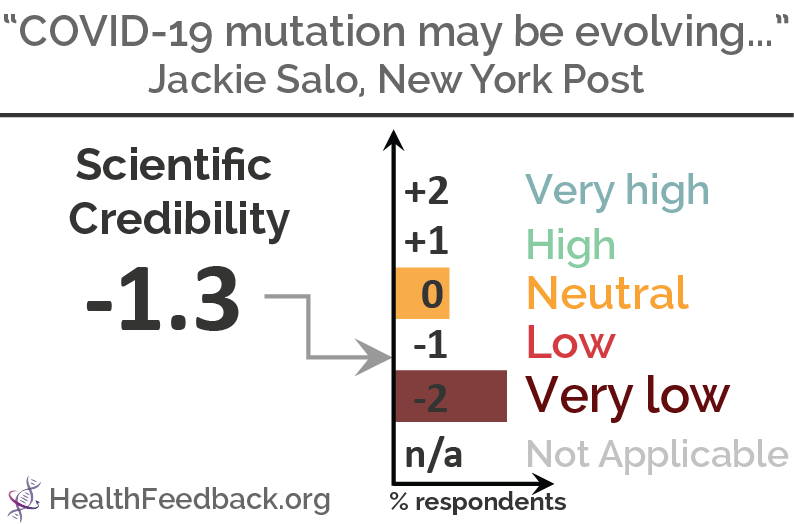
Find more details in Health Feedback's analysis
-
-
impedagogy.com impedagogy.com
-
How To Write This Poem
begin here …with TIME
where words
are layered with text
where the pen
etches into screen …
then go here …
(https://www.vialogues.com/vialogues/play/61205)
… only to leap from one place
to another,
where my mind goes
I hardly every know,
only that it ventures forward …
… heard by hearts,
and scattered stars,
where I see the sky fall,
you find the debris …
our thoughts.
(https://nowcomment.com/documents/234044)
Might we be permitted them?
The dragonfly
rarely yields her ground
to the critics among
us.
-
Kevin's Response
How To Write This Poem
begin here …with TIME
where words
are layered with text
where the pen
etches into screen …
then go here … https://www.vialogues.com/vialogues/play/61205
... only to leap from one place to another, where my mind goes I hardly every know, only that it ventures forward ...
… heard by hearts, and scattered stars, where I see the sky fall, you find the debris …. https://nowcomment.com/documents/234044
Your thoughts?
-
-
covid-19.iza.org covid-19.iza.org
-
IZA – Institute of Labor Economics. ‘COVID-19 and the Labor Market’. Accessed 6 October 2020. https://covid-19.iza.org/publications/dp13683/.
-
-
covid-19.iza.org covid-19.iza.org
-
IZA – Institute of Labor Economics. ‘COVID-19 and the Labor Market’. Accessed 6 October 2020. https://covid-19.iza.org/publications/dp13673/.
-
-
covid-19.iza.org covid-19.iza.org
-
IZA – Institute of Labor Economics. ‘COVID-19 and the Labor Market’. Accessed 6 October 2020. https://covid-19.iza.org/publications/dp13650/.
Tags
- essential workers
- Department of Homeland Security (DHS)
- microdata
- researchers
- men
- disadvantaged minorities
- Hispanics
- frontline workers
- less educated
- lower wages
- is:report
- demographic market
- lang:en
- lockdown
- safety net policy
- immigrants
- social insurance
- policy makers
- American Community Survey
- COVID-19
- labour market
Annotators
URL
-
-
covid-19.iza.org covid-19.iza.org
-
IZA – Institute of Labor Economics. ‘COVID-19 and the Labor Market’. Accessed 6 October 2020. https://covid-19.iza.org/publications/dp13641/.
-
-
blog.cleancoder.com blog.cleancoder.com
-
In 1972 David L. Parnas published a classic paper entitled On the Criteria To Be Used in Decomposing Systems into Modules. It appeared in the December issue of the Communications of the ACM, Volume 15, Number 12. In this paper, Parnas compared two different strategies for decomposing and separating the logic in a simple algorithm. The paper is fascinating reading, and I strongly urge you to study it. His conclusion, in part, is as follows: “We have tried to demonstrate by these examples that it is almost always incorrect to begin the decomposition of a system into modules on the basis of a flowchart. We propose instead that one begins with a list of difficult design decisions or design decisions which are likely to change. Each module is then designed to hide such a decision from the others.”
Parnas published a paper in 1972 about what heuristics are best to decide when to decompose a system into modules.
His conclusion is that it is almost always wrong to start with a representation such as a flowchart (because things change).
Instead he recommends focusing on a list of difficult design decisions, or decisions, once made, that will likely change. Then design each module is designed to hide such decisions from others.
-
-
www.cs.utexas.edu www.cs.utexas.edu
-
"Let me try to explain to you, what to my taste is characteristic for all intelligent thinking. It is, that one is willing to study in depth an aspect of one's subject matter in isolation for the sake of its own consistency, all the time knowing that one is occupying oneself only with one of the aspects. We know that a program must be correct and we can study it from that viewpoint only; we also know that it should be efficient and we can study its efficiency on another day, so to speak. In another mood we may ask ourselves whether, and if so: why, the program is desirable. But nothing is gained —on the contrary!— by tackling these various aspects simultaneously. It is what I sometimes have called "the separation of concerns", which, even if not perfectly possible, is yet the only available technique for effective ordering of one's thoughts, that I know of. This is what I mean by "focussing one's attention upon some aspect": it does not mean ignoring the other aspects, it is just doing justice to the fact that from this aspect's point of view, the other is irrelevant. It is being one- and multiple-track minded simultaneously.
Dijkstra posits that a characteristic of what he calls "intelligent thinking" is the tendency to practice a "separation of concerns". By this he means thinking about concepts separate of one another for the sake of their own consistency, rather than simultaneously, which doesn't help in ordering your thinking.
-
-
-
But maybe this PR should still be merged until he finds time for that?
Tags
- iterative process
- open-source software: progress seems slow
- big change/rewrite vs. continuous improvements / smaller refactorings
- pull request stalled
- not a blocker (issue dependency)
- waiting for maintainers to review / merge pull request / give feedback
- don't let big plans/goals get in the way of integrating/releasing smaller changes/improvements
Annotators
URL
-
-
www.medrxiv.org www.medrxiv.org
-
Kaplan, Edward H, Dennis Wang, Mike Wang, Amyn A Malik, Alessandro Zulli, and Jordan H Peccia. ‘Aligning SARS-CoV-2 Indicators via an Epidemic Model: Application to Hospital Admissions and RNA Detection in Sewage Sludge’. Preprint. Infectious Diseases (except HIV/AIDS), 29 June 2020. https://doi.org/10.1101/2020.06.27.20141739.
-
-
github.com github.com
-
IMO, the conditional needs to be added to detach to fix all manifestations of this error.
-
- Sep 2020
-
github.com github.com
-
remaining: 0, callbacks: [] r: 0, // remaining outros c: [], // callbacks p: outros // parent group
Ugh. Why did he change this?
Similar question here: https://hyp.is/kayb_AN1EeuCb5OkL5-Yqg/github.com/sveltejs/svelte/pull/3209
Answer here: https://github.com/sveltejs/svelte/pull/3209
-
-
github.com github.com
-
Why the obfuscation of remaining to r and callbacks to c? This is fine for function-local variables but in this instance makes the code significantly harder to reason about? There is no notion of what c and r mean.
-
-
stackoverflow.com stackoverflow.com
-
From npm@5.2.0, npm ships with npx package which lets you run commands from a local node_modules/.bin or from a central cache.
-
By default, npx will check whether <command> exists in $PATH, or in the local project binaries, and execute that. Calling npx <command> when <command> isn't already in your $PATH will automatically install a package with that name from the NPM registry for you, and invoke it. When it's done, the installed package won’t be anywhere in your globals, so you won’t have to worry about pollution in the long-term. You can prevent this behaviour by providing --no-install option.
-
-
stackoverflow.com stackoverflow.com
-
Actually just returning the loginDaoCall works fine. I dont really get what's different as it is the looked like it was the same instance, but probably not.
So the posted answer wasn't necessary/correct? Which part of the answer was incorrect/unneeded?
I wish this OP comment included the full version of code that worked.
I don't understand this OP comment. Wasn't OP already returning
loginDaoCall? So maybe the only thing they could mean is that they just needed to change it toreturn loginDaoCall.then(...)instead...That would be consistent with what the answer said:
the promise returned by the further .then() does also get rejected and was not handled.
So I guess the unnecessary part of the answer was adding the
return true/false...
-
-
www.thelancet.com www.thelancet.com
-
Wilkinson, Jack, Kellyn F. Arnold, Eleanor J. Murray, Maarten van Smeden, Kareem Carr, Rachel Sippy, Marc de Kamps, et al. ‘Time to Reality Check the Promises of Machine Learning-Powered Precision Medicine’. The Lancet Digital Health 0, no. 0 (16 September 2020). https://doi.org/10.1016/S2589-7500(20)30200-4.
Tags
- revolution
- improved diagnosis
- lang:en
- challenges
- machine learning powered precision medicine
- electronic health database
- clinical practice
- collaboration
- machine learning
- clinical science
- prediction of individual responses
- algorithmic complexity
- personalised medical approach
- is:report
Annotators
URL
-
-
github.com github.com
-
I don't think we need more tooling here.
-
-
stackoverflow.com stackoverflow.com
-
I used a "specific function". But maybe it could be done within a derived store. A kind of auto reset on ... But I think there is no elagant solution, so I stick with the specific function.
-
-
www.javascriptjanuary.com www.javascriptjanuary.com
-
As you can see, it uses Javascript label syntax to tell the compiler where recalculation should be carefully managed. And you thought that no one uses labels any more.
-
-
twitter.com twitter.com
-
Manic pixie dream gàidheal✨ on Twitter. (n.d.). Twitter. Retrieved September 28, 2020, from https://twitter.com/nicmharcuis/status/1309599281280679941
-
-
www.fda.gov www.fda.gov
-
Commissioner, O. of the. (2020, September 23). Coronavirus (COVID-19) Update: FDA Authorizes First Point-of-Care Antibody Test for COVID-19. FDA; FDA. https://www.fda.gov/news-events/press-announcements/coronavirus-covid-19-update-fda-authorizes-first-point-care-antibody-test-covid-19
Tags
- protection
- lang:en
- antibody test
- FDA
- is:news
- serology
- public health response
- is:webpage
- point-of-care
- COVID-19
- blood sample
- strategy
Annotators
URL
-
-
medium.com medium.com
-
While Webpack is focused on using CommonJS as its primary module system and converting everything to that, Rollup decided to take the opposite approach — focusing on ES Modules instead.
-
Unfortunately, many third party libraries, even though they are written in ESM, are published to npm as CJS modules, so we still need to concatenate them.
-
-
stackoverflow.com stackoverflow.com
-
Wow, no answers to this question. That's too bad. Did you ever find the solution?
-
-
engineering.mixmax.com engineering.mixmax.com
-
After years of copy-pasted, locally-hosted scripts, maybe Bower if you were lucky, npm has finally made it possible to easily distribute client-side packages.
-
But this is only a halfway decent way to clarify that this is an external dependency, because the only way to resolve a peer dependency warning is to install react from npm—there's no way to notify npm that you resolve the dependency to a browser global. So peer dependencies should be avoided in favor of external declarations. Then Rollup will take care of warning about "unresolved dependencies", even if external declarations can't express a particular version range with which your library is compatible like peer dependencies can.
Interesting. Didn't realize. From my perspective, I usually do install packages via npm, so wouldn't have known about this problem.
npm and rollup both try to solve this problem but in different ways that apparently conflict? So if a lib author lists peerDependencies then it can cause problems for those getting lib via browser (CDN)? How come so many libs use it then? How come I've never heard of this problem before?
-
-
medium.com medium.com
-
But library users are more numerous, and so their needs are more important.
-
remember that the needs of the many outweigh the needs of the few
-
small modules allow library authors to become lazy. Why include that six-line helper function when you can do a one-line `require`?
-
These are all things that make your life as a library author easier.
-
possibly making it harder for them to appreciate how severe the discoverability issues are for the rest of us.
-
I think I know why: it’s because the small modules philosophy favours library authors (like Sindre) at the ultimate expense of library users.
Tags
- favoring/catering to the needs of library authors over library users
- lazy
- everyone has different needs
- the needs of the many outweigh the needs of the few
- make one's life easier
- whose needs are more important?
- library users
- favoring/catering to the needs of … over …
- they don't understand/appreciate how it is for the rest of us
Annotators
URL
-
-
github.com github.com
-
What I believe should happen is the Svelte compiler should, when a promise is passed to onMount, realise that a promise has been passed, and await the result of the function to be used as the onDestroy function. i.e, it should behave the exact same way for an async function as it does for a non-async function (if this is possible)
-
-
stackoverflow.com stackoverflow.com
-
-
Also Svelte is so great because developer do not need to worry about class names conflict, except of passing (global) classes to component (sic!).
-
-
github.com github.com
-
Thank you, but this answers the question and means I will be unable to use svelte.
-
The problem with working around the current limitations of Svelte style (:global, svelte:head, external styles or various wild card selectors) is that the API is uglier, bigger, harder to explain AND it loses one of the best features of Svelte IMO - contextual style encapsulation. I can understand that CSS classes are a bit uncontrollable, but this type of blocking will just push developers to work around it and create worse solutions.
Tags
- losing a prospective customer/user because of a deal-breaker
- arbitrary limitations leading to less-than-ideal workarounds
- unfortunate
- Svelte: CSS encapsulation
- trying to prevent one bad thing leading to people doing/choosing an even worse option
- missing out on the benefits of something
- +0.9
- Svelte: how to affect child component styles
- key point
- important point
Annotators
URL
-
-
github.com github.com
-
Svelte will not offer a generic way to support style customizing via contextual class overrides (as we'd do it in plain HTML). Instead we'll invent something new that is entirely different. If a child component is provided and does not anticipate some contextual usage scenario (style wise) you'd need to copy it or hack around that via :global hacks.
-
The main rationale for this PR is that, in my hones opinion, Svelte needs a way to support style overrides in an intuitive and close to plain HTML/CSS way. What I regard as intuitive is: Looking at how customizing of styles is being done when applying a typical CSS component framework, and making that possible with Svelte.
-
Explicit interfaces are preferable, even if it places greater demand on library authors to design both their components and their style interfaces with these things in mind.
-
For my point of view, and I've been annoyingly consistent in this for as long as people have been asking for this feature or something like it, style encapsulation is one of the core principles of Svelte's component model and this feature fundamentally breaks that. It would be too easy for people to use this feature and it would definitely get abused removing the style safety that Svelte previously provided.
-
This is a framework and it comes with certain opinions about how things should be done, this isn't unique to Svelte. And before we can decide whether or not we will allow certain behaviour or encourage it with better ergonomics, we have to have a conversation about whether or not we should be doing things that way. You can't separate the can from the should in an opinionated framework. We want to make building UIs simpler, for sure, but also safer we don't want to add ease of use at the expense of component encapsulation, there has to be a balance
Tags
- differences of opinion
- ugly/kludgey
- reinventing the wheel / not invented here
- forking to add a desired missing feature/change
- consistency
- Svelte: CSS encapsulation
- trying to prevent one bad thing leading to people doing/choosing an even worse option
- abuse of feature
- design goals
- copying/doing the same as how another project/library did it
- core principles
- Svelte: how to affect child component styles
- but _should_ we?
- being explicit
- intuitive
- balance
- forced to fork/copy and paste library code because it didn't provide enough customizability/extensibility / didn't foresee some specific prop/behavior that needed to be overridable/configurable (explicit interface)
- run-time dynamicness/generics vs. having to explicitly list/hard-code all options ahead of time
- maintenance burden
- safety (programming)
- principle of least surprise
- customizable
- maintenance burden to explicitly define/enumerate/hard-code possible options (explicit interface)
- core values
- burden
- opinionated
- explicit interfaces
- workarounds
- component/library author can't consider/know ahead of time all of the ways users may want to use it
Annotators
URL
-
-
github.com github.com
-
This has already forced me to forgo Svelte Material because I would like to add some actions to their components but I cannot and it does not make sense for them to cater to my specific use-case by baking random stuff into the library used by everyone.
-
The point of the feature is to not rely on the third-party author of the child component to add a prop for every action under the sun. Rather, they could just mark a recipient for actions on the component (assuming there is a viable target element), and then consumers of the library could extend the component using whatever actions they desire.
Tags
- run-time dynamicness/generics vs. having to explicitly list/hard-code all options ahead of time
- extensibility
- pass-through arguments/props/options
- reusability
- flexibility
- Svelte: action (use:)
- why this feature is needed
- component/library author can't consider/know ahead of time all of the ways users may want to use it
Annotators
URL
-
-
github.com github.com
-
Your LazyLoad image is now inextensible. What if you want to add a class? Perhaps the author of LazyLoad thought of that and sets className onto the <img>. But will the author consider everything? Perhaps if we get {...state} attributes.
-
I like use. But we would still need a noun to reference them by in the docs or libraries.
-
one problem with 'behavior' is that's the terminology we use to describe all of a component's encapsulated logic — methods, transitions, etc.
Tags
- run-time dynamicness/generics vs. having to explicitly list/hard-code all options ahead of time
- extensibility
- naming convention
- parts of speech
- naming: the importance of good names
- naming
- analogue
- encapsulation
- inextensible
- naming things is hard
- words
- computing: terminology
- component/library author can't consider/know ahead of time all of the ways users may want to use it
Annotators
URL
-
-
-
<LazyLoad component="img" data-src="giant-photo.jpg" class="my-cool-image" />
compare to: https://hyp.is/Ngs_0v7VEeqTL8NOL_ME9A/github.com/sveltejs/svelte/issues/469
-
<LazyLoad> <img data-src='giant-photo.jpg'/> </LazyLoad>
compare to: https://hyp.is/JY10Iv7VEeqVUAs8GYqFng/github.com/sveltejs/svelte/issues/469
-
You'll have to create a new component that brings in the functionality of both. TooltipButton, TooltipLink, Link, and TooltipRoutedLink. We're starting to get a lot of components to handle a bit of added functionality.
-
For the tooltip example, if you had a whole bunch of tooltips on different elements, it would be annoying to have different event listeners and "should it be shown" variables for each one.
-
I'm just pushing on the "is this really a good idea" front
-
You must: reference each element you are extending using refs or an id add code in your oncreate and ondestroy for each element you are extending, which could become quite a lot if you have a lot of elements needing extension (anchors, form inputs, etc.)
-
This is where hooks/behaviors are a good idea. They clean up your component code a lot. Also, it helps a ton since you don't get create/destroy events for elements that are inside {{#if}} and {{#each}}. That could become very burdensome to try and add/remove functionality with elements as they are added/removed within a component.
-
While there is some precedence in other frameworks for using as, the word doesn't fit well. Since you are adding functionality to elements I like the word add better (and it only has 1 more character).
Tags
- run-time dynamicness/generics vs. having to explicitly list/hard-code all options ahead of time
- comparison
- framework taking care of responsibility so users can leverage it and not have to worry about that responsibility themselves
- naming: the importance of good names
- annotation meta: linking to/relationship between annotations
- you aren't going to need it
- feature not needed; better to use a different approach/feature instead
- too hard/difficult/much work to expect end-developers to write from scratch (need library to do it for them)
- +0.8
- naming
- I agree
- scalability
- difficult/hard
- could be easier / more difficult than it needs to be
- from different perspective/point of view
- why this feature is needed
- different way of solving/implementing something
Annotators
URL
-
-
-
Perhaps at that point we're better off settling on a way to pass components through as parameters? <!-- App.html --> <Outer contents={Inner}/> <!-- Outer.html --> <div> <div>Something</div> <[contents] foo='bar'/> </div>
-
But some sort of official way to do that in the language would make this nicer - and would mean I would have to worry less about destroying components when their parent is destroyed, which I'm certainly not being vigilant about in my code.
-
I would hope for it to come with React-like behavior where I could pass in a string (like div or a) and have it show up as a normal div/a element when the child component used it.
Tags
- run-time dynamicness/generics vs. having to explicitly list/hard-code all options ahead of time
- flexibility
- framework taking care of responsibility so users can leverage it and not have to worry about that responsibility themselves
- Svelte: problem: how to pass dynamic element name
Annotators
URL
-
-
github.com github.com
-
On the other hand, we could impose restrictions to the feature in order to avoid these hard paths.
-
I'll work on a preliminary PR (which I expect will need some love from maintainers, sorry!)
-
The lack of spread continues to be a big pain for me, adding lots of difficult-to-maintain cruft in my components. Having to maintain a list of all possible attributes that I might ever need to pass through a component is causing me a lot of friction in my most composable components.
Tags
- restrictions
- run-time dynamicness/generics vs. having to explicitly list/hard-code all options ahead of time
- javascript: spread syntax
- code contribution: doing some of the work but leaving some for others to pick up/finish
- strictly enforced rules/conventions: benefits
- simplicity of design
Annotators
URL
-
-
github.com github.com
-
Use case: Wrapper components that need to render an element (e.g. because they attach event listeners). You'd probably use a <div> there by default but there may be places where this is not desirable for semantic reasons (e.g. in lists).
-
-
-
const components = { Label, Tree, Menu };
-
-
www.nature.com www.nature.com
-
LOD was defined as <x>bi + ksbi, where <x>bi equals the mean of the no-template controls, sbi is s.d. of no-template controls and k = 2.479 (99% confidence interval)
ddPCR
Tags
Annotators
URL
-
-
svelte-forms-lib-sapper-docs.now.sh svelte-forms-lib-sapper-docs.now.sh
-
etc.usf.edu etc.usf.edu
-
yet when I thought of my beloved Elizabeth, of her tears and endless sorrow, when she should find her lover so barbarously snatched from her, tears, the first I had shed for many months, streamed from my eyes,
It's interesting to me that Victor only cries when thinking of how upset Elizabeth is going to be when he's the one who's going to die. He fits the whole "man be rational and women emotional" cultural phenomenon of the time to a tee. He's stone faced going into losing battle, but Elizabeth will be just soooooooooo sad and sooooooooo sorrowful. While I'm on the topic, the characterization of Elizabeth TOTALLY fits in while the "passive wife who's in charge of the emotional side of family," to a point where Mary Shelley is a satirist. Also the use of barbarous to describe the Creature is just textbook Othering in the way that demotes the Creature to a irrational and animalistic creature.
-
They might even hate each other; the creature who already lived loathed his own deformity, and might he not conceive a greater abhorrence for it when it came before his eyes in the female form? She also might turn with disgust from him to the superior beauty of man; she might quit him, and he be again alone, exasperated by the fresh provocation of being deserted by one of his own species.
A lot of misogyny is radiating from these lines. Victor is implying that his female creation might be so ugly that even his male creation will be offended by her existence one he sees her. But on the other hand, what if his creation isn't her type and just abandon's him? It's interesting to see how much thought Victor puts in when it comes to making a female creation...I thought he was trying to create a new species?
-
-
-
There arethree different organizations responding to the flood
Related to possible role delineation for PCS.
-
-
icla2020b.jonreeve.com icla2020b.jonreeve.com
-
As I got near the shore, the clouds gathered black, and the rain came down, drifting in great white sheets of water before the wind. I heard the thunder of the sea on the sand-bank at the mouth of the bay
The description of the environment (terrible weather near the shore, which is Rosanna's favorite place) implies something bad is about to happen (Rosanna's death).
-
I don’t want to force my opinion on you
This is false. Betteredge himself confesses during this conversation that his thoughts were "muddled" until "Mr. Franklin took them in hand, and pointed out what they ought to see". Furthermore, wasn't it Franklin who pushed Betteredge to write his recollection in the first place? Franklin's influence on the Betteredge is apparent, putting into question the reliability of his narrative as well as Franklin's motives.
It again brings up the dichotomy of opinion versus fact, subjective versus objective. This reminds me of "In a Grove" by Ryunosuke Akutagawa, which was adapted into the film "Rashomon" by Akira Kurosawa. Very similar themes and narrative structure.
-
“The Last Rose of Summer”
I looked up a recording of “The Last Rose of Summer”, and the rose in the lyrics/story of the song seem to fit Rosanna (who obviously has “rose” in her name)...the story is about the last rose of summer that has survived all the other roses that have died and faded. Ultimately though, the narrator decides to kill it because it seems so sad that the rose is the last one, saying in the last stanza that they would choose a quick death than to be like the friendless, lonely rose. Could this be parallel to Rosanna being the rose and somehow the narrator being Betteredge/Lady Verinder breaking her off into being with people she doesn’t fit in with as some twisted Christian act in the name of helping the poor?
-
the gentlemen who make a business and a living out of writing books
When the narrator switches into first-person in this new sentence, I wonder if it’s really Collins speaking - especially when he mentions “the gentlemen who make a business and a living out of writing books”; Is this a stream of consciousness (similar to Woolf?)? Can it be measured quantifiably? To me, streams of consciousness, while sometimes inarguably clear, always have something to do with the readers and how they view themselves, a factor that seems so subjective and wildly varying from person to person.
-
-
twitter.com twitter.comTwitter1
-
Muge Cevik {@mugecevik} (2020) Over the last 6 months, we've learned a lot about how SARS-CoV-2 spreadsMicrobe What does the evidence so far tell us about SARS-CoV-2 transmission dynamics, high-risk activities and environments? Thread. Twitter. Retrieved from: https://twitter.com/mugecevik/status/1308080065830363138
-
-
www.datamine.com www.datamine.com
-
react-spectrum.adobe.com react-spectrum.adobe.com
-
React Aria separates the behavior and accessibility implementation for many common UI components out into React Hooks, which enables them to be reused easily between design systems. You remain in complete control over the rendering and styling aspects of your components, but get most of the behavior, accessibility, and internationalization support for free.
-
This leads to web developers at every company needing to rebuild every control from scratch. This represents millions of dollars of investment for each company to duplicate work that many other companies are also doing.
-
Modern view libraries like React allow teams to build and maintain these components more easily than ever before, but it is still extraordinarily difficult to do so in a fully accessible way with interactions that work across many types of devices.
-
-
blog.logrocket.com blog.logrocket.com
-
Yup, which was released six years ago, is obviously a more popular choice at this time. Zod is smaller in size, probably because it doesn’t have as many APIs as Yup, but it’s sure to grow as more features are developed.
-
-
snarp.github.io snarp.github.io
-
If I - knew what his plan was, if I knew what Peter was doing, if I just - (he stops, cuts himself off) Can I? [The low rumble of the Archivist’s static begins to sound in the background. The Archivist makes a few sounds of effort, which begin to grow both louder and more ragged.] [Then the high-pitched static that resembles microphone static layers itself on top with its strange, musical, near-angelic quality, and it becomes clear that the Archivist is putting a lot of effort into this Beholding, and that, as in “Heavy Goods,” it is not clear how much of this he is in control of.] [He continues to struggle through the process, and as he does, the distinct squeaky static of Peter Lukas begins to fade in as well.] [There’s a sound that’s difficult to place, could possibly be some things knocked off of the Archivist’s desk, but which could also be the sound of a door opening. The Archivist groans.] [Then all at once, the static all fades out; the Archivist begins to regain his breath.]
-
-
-
style tags don't currently need to be taught outside of 'this is scoped and safe'.
Tags
Annotators
URL
-
-
github.com github.com
-
But what we should ask is "can we do better than the others".
-
-
github.com github.com
-
What we don't want to happen is to bless an approach that inverts this control, allowing an arbitrary parent to impact the inner-workings of a component.
-
This would be a component that is meant to be styled by its parents, and it would make no logical sense to have every possible type of style available inside the Link component. If I wanted to turn one of these anchor tags into a button, another into a nav-link, and another into a footer link, I should be able to. There's no reason that there shouldn't be a feature to treat a component like a normal HTML element.
-
I understand what you're getting at, but we shouldn't miss out on useful features just because a few developers will abuse it...
-
-
en.wikipedia.org en.wikipedia.org
-
The custom code "fills in the blanks" for the framework, such as supplying a table of menu items and registering a code subroutine for each item
-
in traditional programming, the custom code that expresses the purpose of the program calls into reusable libraries to take care of generic tasks, but with inversion of control, it is the framework that calls into the custom, or task-specific, code.
-
-
css-tricks.com css-tricks.com
-
There is interactive state as well. What about modals that come up because something is clicked? What is the active tab? Is this menu open or closed? What scroll position are they at? There are infinite permutations of this. Imagine a warning bar that shows up seven seconds after the user logs in to warn user about their expired credit card which contains a custom styled select menu which can be in an open or closed state, but only on the user settings page.
-
Remember the timing thing? We might think of timing as one generic form of state. There are countless other things that could be state related. Is the user logged in or not? What plan are they on? Is their credit card expired thus showing some kind of special message? Do situational things like time/date/geolocation change state? What about real-time data? Stuff from an API?
-
-
docs.google.com docs.google.com
-
Slide 13:
“No man ever steps in the same river twice, for it's not the same river and he's not the same man.”
― Heraclitus
Of course it’s not the same river — the river, is, what? The water flowing past your feet? The sound that it makes? These things are different at every moment. Our idea of ‘the river’ doesn’t correspond to anything in the real world. Understanding this concept means getting closer to an understanding of reality itself — once you fully absorb the impact of this idea, it changes you, from a person who didn’t have that understanding into one who does.
And as you bask in your newfound zen-like enlightenment, you discover an almost spiritually calming effect — the world as it is right now is the only thing that matters, not the state of the world as it was yesterday or as it will be tomorrow.
Slide 39:
“No man ever steps in the same river twice, for it's not the same river and he's not the same man.”
― Heraclitus
And I think Heraclitus probably understood it all along. There’s a paradox contained in this statement. If the concept of identity over time is meaningless, then what do we mean by ‘it’ and ‘he’?
-
I’ve seen some version of this conversation happen more times than I can remember. And someone will always say ‘it’s because you’re too used to thinking in the old way, you just need to start thinking in hooks’.
But after seeing a lot of really bad hooks code, I’m starting to think it’s not that simple — that there’s something deeper going on.
-
By the way, stuff like this is why I can’t quit Twitter even though I’d like to — we get to witness, and be part of, conversations like these between world-class programmers like Yehuda and Sebastian. It’s pretty cool!
Tags
- identity (software)
- hard to think like that
- funny
- different way of thinking about something
- philosophy
- hard to change the way you think about something
- react hooks
- subtle problems
- paradox
- that will break for the following subtle reasons
- from different perspective/point of view
- timing is part of state
Annotators
URL
-
-
svelte.dev svelte.dev
-
It gets worse when you're working on a team. No-one dares touch styles authored by someone else, because it's often unclear what they're doing, what markup they apply to, and what disasters will unfold if you remove them. The consequence of all this is the append-only stylesheet. There's no way of knowing which code can safely be removed, so it's common to undo some existing style with another, more specific style — even on relatively small projects.
-
-
css-tricks.com css-tricks.com
-
It’s become increasingly common to divide code into components, rather than by file type. React, for example, allows for the collocation of a components markup and JavaScript. In Svelte, this is taken one logical step further: the Javascript, markup and styling for a component can all exist together in a single `.svelte` file
-
-
eclass.srv.ualberta.ca eclass.srv.ualberta.ca
-
Tree of Life
The 'Tree of Life' has been present throughout many cultures and religions across history. It has been known by many different names but the meaning is always a source of life or a creator. The ancient Egyptians, Christians, Myahs, and Assyrians all believed in this 'Tree of Life.'
Tags
Annotators
URL
-
-
reactjs.org reactjs.org
-
The old mydata and the new mydata are actually the same physical object (only the object’s internal value changed)
-
-
-
I think it'd be nice to find a solution where it's a lot easier to mix React and Svelte components like this, but unfortunately I think that's out of the scope of this library.
-
-
stackoverflow.com stackoverflow.com
-
React is an isomorphic/universal framework. That means that there is a virtual representation of the UI component tree, and that is separate from the actual rendering that it outputs in the browser.
-
-
www.pewresearch.org www.pewresearch.org
-
While I am not homosexual, I have always felt that discrimination against homosexuality is completely ludicrous because I think people should love who they love. This belief that I have has giving me an idea for my research topic for my bibliography project where I look over the state of homosexuality in 2020. I decided to annotate this article because it gave a lot of good information about the state of homosexuality in 2020 and it has some links to other articles about homosexuality.
-
-
greenteapress.com greenteapress.com
-
Chapter 12Tuples
tuples is a sequence of values this can be anytype and they are indexed by integers and tuples are immutable in().operations like addition ,multiplication works on tuples.they can return multiple values. Tuples are immutable which means you cannot update or change the values of tuple elements. An operation that collects multiple arguments into a tuple is known as gather. an operation that makes a sequence behaves like multiple arguments is known as scatter. .And the tuples we cannot modify the values. and we can assign the values to the tuples.
-
Chapter 10Lists
like a strings here lists is a sequence of values in a list that may be any type this values in a list are called elements and list can have different data types Strings are need to be given in single or double codes.And also Strings are immutable which means a string cannot be updated.And another important topic from strings is Slicing of a string which means we can obtain the substring from the given string by following a syntax.
-
Chapter 8Strings
strings is a sequence of characters you can acess the characters at once in bracket opertater ,fruit ='banana' String should be given in single or double codes.Strings are immutable.once we create a string we cannot make any changes in them .We declare strings using square brackets.A segment of a string is called a slice.Many built in functions can be used len(),upper(),lower(),etc.We can use len() function to find length of a string.We can even compare two strings==(equal).The expression in brackets
-
- A String is a sequence of character.you can access the character using bracket operator.
- In string the expression in brackets is called index it calculates the character from 0.
- In index we can do operations and if it is not in integer it gives you error.
- Len means it is a built in function that returns the number of characters in the string.
- A lot of computations involve processing a string and while doing it will do from beginning with each and every string.it is known as traversal wit for loop in string.
- String slice means we can divide a word into two and we can do concatenation.
- In string we cannot use some operators we can only use some operators like in, as,etc.
- . String is immutable we cannot change .
-
-
germanhistorydocs.ghi-dc.org germanhistorydocs.ghi-dc.org
-
loss of Silesia
Conquered from Maria Theresa during the War of Austrian Succession in violation of the Pragmatic Sanction of 1713, to which Frederick was a signatory.
In many ways, this is seen as an example of Realpolitik, in which a nation's strategic strength is the determining factor in how it conducts policy (rather than promises or a sense of honour). This is a concept that will become increasingly important in Prussian policy into the 19th century, under Bismarck.
-
-
twitter.com twitter.com
-
Stephanie deGiorgio on Twitter. (n.d.). Twitter. Retrieved September 10, 2020, from https://twitter.com/DrSdeG/status/1303946431523418112
-
-
-
Thus, Confucius meditated upon water; and the Confucian Xunzi later attempted to systematize the relationship between water’s various forms and people’s moral qualities. This assumption of a correspondence between the principles which inform both water and human conduct was not limited to the Confucians; it was generally assumed in all early philosophical texts. Nor was the imagery the provenance of any particular school. For example, water which moves forward without force, giving life to everything, is described in Xunzi as ‘wuwei’ (without action) or (doing nothing) a term that is particularly associated with Daoism.
CONTEXT: Shuen-fu Lin addresses "the sage", the person with the highest spiritual attainment who was first emulated and thought of in the Wei-Jin movement, following the Han Dynasty. The sage allows the innate tendencies and has all five of the human emotions addressed in the passage, but "...does not act, complies, and does not implement. He eliminates what leads things astray and gets rid of what confuses them." The sage is addressed as exhibiting qualities of both the Daoist way of life and the Confucianist way. The sage is like the image of water that is an unattainable, sage-like, presence and moral conduct, desired by both Daoist and Confucianist beliefs. "Gentlemen" look at water in awe, gazing upon the perfection of its inaction and lack of effort in attaining its intellect, beauty, and respect. The water has of "ziran", or perhaps, is "ziran" that humans are able to express communion with nature and nonpurposive action. This word is also described as spontaneously existing and being "so oneself" -nothing acting behind them. Water does not decide or dwell for too long, it just exists in movement and in detachment which I think human beings desire greatly.
Cai, Zongqi. Chinese Aesthetics: The Ordering of Literature, the Arts, and the Universe in the Six Dynasties. Honolulu: University of Hawaii Press, 2004.
RELATE: In 'The Experience of Nature' by Rachel and Stephen Kaplan, human action and thought is addressed as influenced by our setting/environment whether the setting require immediate responsive action or the response take place in a slower, observational method varies. The authors write, "People are particularly aware of information that is visual, that concerns what they see. That does not mean that people interpret the information in visual terms exclusively; rather, visual stimuli are effective in conjuring associated information. The sight of water provides information about potential opportunities which may or may not be visual in themselves" (Kaplan, 4). Reverie from observation that allows self reflection, thought free from distraction, and intuitive action is typically included in our broader categorization of landscape qualities when we discuss as landscape architects. Human reaction to landscape is so much bigger than the texture, color, or even kinesthetic feeling within the place and can be thought of as artwork in addition- prompting development of thought even subconsciously within the the one experiencing.
Kaplan, Rachel, and Stephen Kaplan. The Experience of Nature: A Psychological Perspective. Cambridge: Cambridge University Press, 1989.
-
-
svelte.dev svelte.dev
-
First class TypeScript support means that both of these two systems do a good job of handling TypeScript code.
-
-
twitter.com twitter.com
-
Johan Hellström on Twitter. (n.d.). Twitter. Retrieved September 7, 2020, from https://twitter.com/jhnhellstrom/status/1301073768748593153
-
-
www.factcheck.org www.factcheck.org
-
Spencer, S. H. (2020, September 1). CDC Did Not “Admit Only 6%” of Recorded Deaths from COVID-19. FactCheck.Org. https://www.factcheck.org/2020/09/cdc-did-not-admit-only-6-of-recorded-deaths-from-covid-19/
-
-
www.excellentwebworld.com www.excellentwebworld.com
-
Looking forward to the upcoming property management trends, there will be a wider range of opportunities, some big economic and social shifts, and a set of new technological trends upping the future of housing market sales numbers across the world.
-
-
www.thelancet.com www.thelancet.com
-
Chatterjee, Patralekha. ‘Is India Missing COVID-19 Deaths?’ The Lancet 396, no. 10252 (5 September 2020): 657. https://doi.org/10.1016/S0140-6736(20)31857-2.
-
-
Local file Local file
-
The moral hazard of gameplay is basically a mismatch between what your goals are and what you’re incentivizing.
-
-
www.researchgate.net www.researchgate.net
-
Chickering and Gamson (1987), forexample, suggested seven principles were central to suchteaching: encouraging faculty/student contact, developing reci-procity and cooperation among students, using active learningstrategies, offering rapid feedback, emphasizing time on task,communicating high expectations, and respecting diversetalents and ways of learning.
Chickering and Gamson's seven principles were the foundation for learner-centered education (1987).
- Encouraging faculty/student contact
- Developing reciprocity and cooperation among students
- Using active learning strategies
- Offering rapid feedback
- Emphasizing time on task
- Communicating high expectations
- Respecting diverse talents and ways of learning
Habanek's (2005) descriptive study of learner-centered syllabus design.
-
we assessed the learner-centeredness of 109 syllabi sampled from Project Syllabus
Each syllabus is a sample from Project Syllabus, hosted by the Society of Teaching of Psychology.
-