Four SARS-CoV-2 positive fecal specimens with high copy numbers were cultured
1,117 Matching Annotations
- Apr 2020
-
jamanetwork-com.ezproxy.rice.edu jamanetwork-com.ezproxy.rice.edu
-
-
www.nytimes.com www.nytimes.com
-
I chose to go to Compton and Watts for a specific reason, which offers a way forward. Harvard economist Raj Chetty recently led a study that showed that though these two neighborhoods are demographically similar and only 2.3 miles apart, 44 percent of the black men who grew up in Watts were incarcerated on April 1, 2010, compared with only 6.2 percent of the black men who grew up in families with similar incomes in Central Compton. Similarly, social mobility was much lower in Watts than in Compton.Why are some neighborhoods, including some in Compton, able to give their kids better chances in life despite so many disadvantages? Chetty points to several factors: better schools, more fathers present in the neighborhoods and more cohesive community organizations.I found all those things in my reporting in Compton — and something else. Watts is part of Los Angeles. Compton is its own city with its own mayor. I met a lot of great people in Watts, but Compton has more civic infrastructure — community groups and locally controlled government agencies. Compton has a lot of homegrown civic reformers, like Rafer Owens, who is a deputy Los Angeles County sheriff and pastor at a Baptist church. There’s also a mentality: We have faith in our ability to take care of ourselves; only people in the neighborhood really know what’s going on.
Fascinating but be careful of descending into structural-solutionism vs the culture. cf Putnam and Italy. Structures arise from (and also, of course, create and sustain) culture.
-
-
markmcgranaghan.com markmcgranaghan.com
-
All startups say they’re ambitious. You better be if you take venture funding!
Stripe’s insight was that tackling ambitious problems doesn’t just make the potential prize bigger. Ambitious efforts are often more feasible than smaller ones, because the strongest people want to work on the most ambitious efforts. In our experience this positive talent effect was stronger than the negative effect of problem difficulty. So, paradoxically, tackling a bigger problem could be both more rewarding for the company and in a sense more tractable.
This probably needs to be qualified. Stripe is set up so that we’re successful when our customers are successful (in real, economic terms). Ambitious problems for Stripe look like enabling more internet businesses and supporting entrepreneurs in more countries, not getting more ad clicks. The talent effect of ambition certainly applies to Stripe-style problems, but I’m not sure if it’d work for something like ads.
Again all startups say “our team is our most important asset”; leaders say “the hardest part of my job is hiring good people”. But what most companies actually do day-to-day on recruiting is disastrous: generic job ads, clueless outside recruiters, screening on brand name, candidate-hostile interview processes, slow response times, etc. The poor recruiting results of most companies reflect the work they put in.
Stripe was different in two respects: effort and thoughtfulness.
In terms of effort, Stripe’s recruiting was absolutely relentless. On the front of the pipeline this meant investing in potential candidates that wouldn’t apply for years, through genuine 1:1 relationships as well as many small events that introduce Stripe and its team. Once candidates were active, Stripe tried to move very quickly. Ideally we'd turn around recruiting steps on the same day: respond to the candidates inbound email the same day, and even decide on and give them an offer on the same day as their interviews. We could close candidates before Google replied to their initial emails.
Stripe was also thoughtful in recruiting processes. This signaled to candidates that the company was clueful and understood the candidate’s perspective. One example is Stripe’s capture the flag program, which not only put Stripe on the radar of a lot of candidates, but also gave them a sense of the strength of the engineering team. Another example was Stripe’s guidance on what to expect for interviews. We’d send candidates a PDF describing exactly how their interviews would be conducted, how they’d be evaluated, and how to prepare. These certainly helped candidates present their best work in the interviews. But they also showed that Stripe actually cares about this, which candidates knew from experience many other companies did not.
-
-
www.slideshare.net www.slideshare.net
-
Whenever I think of entrepreneurship, I'm drawn to a few of the slides (23, 24, 34) from Eric Schmidt's "How Google Works"
First you have to attract your smart creatives. They aren't easily fooled.
This starts with culture. Smart creatives need to care about the place they work.
Never forget that hiring is the most important thing you do.
I also think back to how Jack Welch was famous (ignoring what he was infamous / the final performance of GE) for was spending more than 50% of his time:
getting the right people in the right places and then helping them to thrive. He would involve himself in hiring decisions that most global CEOs would delegate.
-
-
www.gauthierroussilhe.com www.gauthierroussilhe.com
-
la destruction de savoirs techniques permettait aussi de faire disparaître certains pratiques sociales, religieuses et culturelles
technique et culture (au sens de l’identité d’un peuple) sont donc inextricablement liées
-
-
www.sens-public.org www.sens-public.org
-
En Italie, on est habitué à penser que défier les lois est un bien, mais pas en France, par exemple.
le hacking, question de culture<br> (acceptée en Italie, moins en France)
-
Dans l’espace numérique, on est toujours appelé à être des hackers : comprendre le code et le détourner — pas nécessairement de façon très technique : la création d’un profil littéraire fictif sur Facebook est une forme d’hacking. Mais cela implique un vrai digital divide, qui n’est pas celui entre les pays pauvres et les pays riches, mais celui entre ceux qui possèdent une digital literacy et ceux qui n’en possèdent pas.
le hacker, c’est celui qui cherche à comprendre le monde dans ses moindres détails; celui qui cherche à craquer les codes du monde, grâces à ses connaissances et compétences techniques (digital literacy).
-
-
kokociel.blogspot.com kokociel.blogspot.com
-
Asians favour a more crimson red than Western red
-
- Mar 2020
-
www.cnbc.com www.cnbc.com
-
Basecamp has dedicated channels where no work-related discussion is allowed, including message boards for workers to chat about personal interests like food, sports and pets: “just for social stuff, funny things, whatever people want to talk about,” Fried says.
-
In recent days, if a meeting ends early, employees at GitLab will invite their children to take over for a bit.“People will throw out, ‘Anyone have kids home from school who want to chat with my kids?’” says Darren Murph, who leads employee culture and onboarding at GitLab.
-
Around 5 or 6 p.m., a trivia emcee will pose one question to the group, and employees submit guesses in a Slack thread until someone responds with the correct answer. The emcee continues this way for four more questions, and the competition can get fierce.
-
-
www.forbes.com www.forbes.com
-
A healthy company culture is one where empathy and inclusivity are values of the organization. The real value of employee empowerment and engagement in such an organization results in empathy and a healthy company culture. Due to the increased impact of their work through optimization and innovation, employees can feel empowered enough to re-connect with their team, their coworkers and the organization. These empowered workers are excited to help others and to be empathetic to others.
-
The truth is that building an innovative organization from top-down is a dynamic process. It often involves people at all levels of the company. But, the fundamental narrative across the board with innovative organizations is the culture. The company culture has to include employees who feel connected to the organization and want to contribute value.
-
In our age of innovation, most organizations realize the need to innovate. According to entrepreneur coach Theodore Henderson, innovation is often crucial in being able to stay competitive long term in the marketplace. Innovation doesn’t just mean technology innovation. It can be company culture innovation, process innovation, management innovation, data innovation and much more.
-
-
www.osano.com www.osano.com
-
Mission Driven Culture
-
- Feb 2020
-
www.theguardian.com www.theguardian.com
-
These foods are convenient, affordable, highly profitable, strongly flavoured, aggressively marketed – and on sale in supermarkets everywhere. The foods themselves may be familiar, yet the term “ultra-processed” is less so.
This idea is immediately familiar to me despite hearing it rarely.
I commented to an acquaintance just the other day that it seems like a cultural touchstone of American grocery stores that all the processed foods can be found in the center while all the actual foods are found on the outside.
I make it a point to try to shop only on the outside.
-
- Jan 2020
-
www.getcreativesanantonio.com www.getcreativesanantonio.com
-
www.getcreativesanantonio.com www.getcreativesanantonio.com
- Dec 2019
-
www.newyorker.com www.newyorker.com
-
Its extremism goes straight back to Flake’s hero, Senator Barry Goldwater, who saw mainstream liberals as subversive socialists and opposed the Civil Rights Act of 1964 on states’-rights grounds. In that year’s Presidential election, Goldwater received potent support from the best-selling writers Phyllis Schlafly, whose book “A Choice Not an Echo” imagined cabals of liberal Republicans plotting against the Party’s base, and John Stormer, who, in “None Dare Call It Treason,” warned that pro-Communist élites were infesting American institutions. Reagan’s famous half-hour commercial for Goldwater described the welfare state as the path to totalitarianism. Apocalyptic thinking, conspiracy theories, and bigotry haunted the movement from the start.
And this goes deep into US history and culture. cf Hackett Fischer. The violent distrust and dislike of the state was baked into Appalachian (which is a large part of the extreme republican southern culture) from its transplant from the borderlands of England.
The federalism and states rights was what kept the deeply intorelant and different initial 13 states together. The US never reached a reckoning on national culture and the accelerating centralization and homogenization of the 20th century was all but guaranteed to stir up a hornets nest.
Remember New England (itself much less violent, equitable, intelligent etc than Appalachian) flogged quaker preachers who came to Boston in the 17th centuries. They even hung them. This was an intolerant land united only in their shared obsession with liberty born of oppression back home (in England).
-
-
Local file Local file
-
The written records of popular culture included awide range, from almanacs to the scriptures of religious sects. Localoperas or other dramas were organized and enacted at market towns orat the village level or often by lineages. But throughout the popular cul-ture dissident voices were not permitted to be heard and were destroyedif possible.
Dissidence not permitted.
-
With this wide support of morality went the menace of the criminallaw and punishment of malefactors against morality, especially againstthe dynasty. This application of the law against evildoers or the merethreat of evildoing included the uninhibited investigation of people intheir households and personal lives and the use of judicial torture to en-courage confessions. The ankle squeezer used in court was stepped up soas to maximize pressure, and it could turn bones into jelly when skillfullyapplied. When in doubt as to what law had been violated, the magis-trate-judges could fall back on the statute against “doing what ought notto be done,” whatever it might have been.By these rewards and punishments it was hoped the common peoplecould be kept in the proper path. The punishment of relatives was a reg-ular part of the punishment of the criminal. The ancient device of groupresponsibility meant in effect guilt by association.In the theocratic Chinese state that extolled the emperor as Son ofHeaven, heterodoxy was perpetually guarded against. The strategic elitestratum was the local leadership that began with the roughly one millionlower gentry or holders of the first-level (shengyuanorjiansheng)de-grees, which did not qualify one for official appointment but conferred aprivileged status and opportunity to seek higher degrees. To these wereadded possibly five million male commoners, more or less, who hadachieved some amount of classical education. With their help, the indoc-trination of the common people was pursued by the elite as a Neo-Con-fucian duty.As an example let us cite the use of theSacred Edict (shengyu)of theKangxi Emperor issued in 1670 as 16 maxims for the guidance of dailyconduct. Each maxim seven characters long, they conveyed, as VictorMair (in Johnson et al., 1985) says, “the bare bones of Confucian ortho-doxy as it pertained to the average citizen.” After 1670 appeared com-mentaries, paraphrases, adaptations, and so on, in a considerable liter-ature. The idea of explicating classical texts in written colloquialversions seems to have begun in the Yuan dynasty.
Punishment and indoctrination. Key aspects of approach
- Detailed investigation
- Arbitrary power for magistrates as representatives of the imperial authority
- Group responsibility
- Standard maxims circulated for enculturation (cf Mao's Little Red Book)
-
In today’s media environment where citizens observe events directlywith less need but more supply of symbols, it is not easy to appreciate theimportance of ritual and ceremony in an earlier time. One basis of thegovernment of imperial China was the proper performance of ceremo-nies at all levels of society. The son kowtowed to his father as his fathermight do toward the emperor and his officials, for the essence of the civilorder was to differentiate the hierarchy of relationships. Proper conduct,it was hoped, externalized one’s inner values; but even in the absence ofinner feelings, one’s performance of ritual could provide a common for-mal bond with others. In this way the appearance of harmony could as-sure it. As Naquin and Rawski (1987) put it, “luanwas the disorder thatcould arise within the state, the community, the household or the indi-vidual when ethical norms and correct ritual were not followed. The de-sire to promote order and preventluanpermeated Chinese society fromtop to bottom.”
Promoting order and avoiding luan
-
In the domain of literati thinking, the ideas of the statesman-philosopherWang Yangming (Wang Shouren, 1472–1529) gained many adherentsand inspired scholars to follow a new bent in Neo-Confucianism. Wangwas a very competent scholar-official and general who suppressed rebel-lions over a number of years and also devoted himself to building up thelocal community through the use of the Community Compact(xiang-yue).This institution was one of Confucianism’s closest approaches torevivalism. As a philosopher, Wang pursued the idea of Zhu Xi’s contem-porary, Lu Xiangshan, in developing a less practice-centered and morecontemplative approach to moral training and self-cultivation. Wangtaught that the world of principle is a unity and lies within as well as out-side one. Therefore, one should learn to be guided by intuitive knowl-edge achieved through careful thought and meditation. This had Bud-dhist overtones. Wang’s famous insistence on the unity of theory andpractice really demanded, as Willard J. Peterson (1979) notes, “the unityofmoralknowledge andsocialaction.” Wang Yangming’s teaching hadwide influence in Japan as well as in China.
Scholar-officials to the fore once again.
-
- Nov 2019
-
Local file Local file
-
To reach the populace, Zhu Xi used the vernacular and also advo-cated using the periodic local residents’ meeting known as the Commu-nity Compact(xiangyue).Although it came into general use only in theMing dynasty after 1368, this institution originated in a prototype estab-lished in 1077 by the Lü family. It consisted of a monthly assemblywhere food was eaten and a record of proceedings kept. One or twoheads were elected, and quite detailed regulations regarding behaviorwere adopted. Zhu Xi produced an amended version of the Lü family’sregulations that was even more detailed. It stressed hierarchy, for exam-ple by establishing five age-grades with rules for the conduct of all mem-bers of different categories. The aim was obviously to tell educated elitefamilies how to behave. Zhu assumed that the ordinary dress and majorrituals would be those of the elite. Seating by seniority would not applyto the non-elite, if they ventured to be present. Zhu Xi’s amendmentsalso contained detailed instructions on the way to greet a fellow compactmember, when to make calls on fellow compact members, how to invitethem to banquets, and how to conduct banquets—what to wear, whatname cards to use, and so on. What an organization man
What an epitome of cultural-institutional structure. cf the kind of discussion we have in Albion's Seed of food, manners, dress, social organization.
The community compact is also interesting in itself.
-
The examination system became an enormous and intricate institu-tion central to upper-class life. During a thousand years from the Tang to1905 it played many roles connected with thought, society, administra-tion, and politics.
And it is education in a particular form: highly ritualized (examinations are a ritual!), narrow, learned.
It is a particular kind of education and learning. Deep and rich as well as narrow and limited.
-
nized in gradations of inferiority and superiority. This hierarchic princi-ple in turn was the basis for a stress on duties rather than rights, on theevident assumption that if everyone did his duty everyone would getwhat he deserved. Thus, the filial son obedient to his parent would baskin the parent’s approval. With all duties performed, society would be inorder to everyone’s benefit.
The hierarchic principle again
-
Early China’s cosmology (her theory of the universe as an orderedwhole) shows striking points of difference with Western thought. Forexample, the early Chinese had no creation myth and no creator-lawgiver out of this world, no first cause, not even a Big Bang. As JosephNeedham says, they assumed “a philosophy of organism, an orderedharmony of wills without an ordainer.” This view contrasts with the in-veterate tendency elsewhere in the world to assume a supernatural deity.Westerners looking at China have continually imposed their own pre-conceptions on the Chinese scene, not least because the Chinese, thoughthey generally regarded Heaven as the supreme cosmic power, saw it asimmanent in nature, not as transcendent. Without wading further intothis deep water, let us note simply that Han thought as recorded in classi-cal writings built upon the concept of mankind as part of nature andupon the special relationship between the ruler and his ancestors, con-cepts that were already important in Shang thought over a millenniumearlier.
Fascinating. Such a profound difference in thinking (and the Chinese is much more accurate in base intuiton, i think).
Western thought got trapped in causation, in division, the law of the excluded middle, in agency.
That quote: "a philosophy of organism, an ordered harmony of wills without an ordainer."
No wonder Buddhism found such fertile soil in China.
-
Here lies one source of China’s “culturalism”—that is, the devotionof the Chinese people to their way of life, an across-the-board sentimentas strong as the political nationalism of recent centuries in Europe.Where European nationalism arose through the example of and contactwith other nation-states, Chinese culturalism arose from the differencein culture between China and the Inner Asian “barbarians.” Because theInner Asian invaders became more powerful as warriors, the Chinesefound their refuge in social institutions and feelings of cultural and aes-thetic superiority—something that alien conquest could not take away.
Another aspect of Chinese culture is its culturalism: its totemization of "culture" (in the specific self-conscious sense).
-
The contrast between Inner Asia and China proper is a striking onein nearly every respect. On the steppe, population is thinly scattered; to-day there are only a few million Mongols and hardly more than thatnumber of Tibetans in the arid plateau regions that more than equal thearea occupied by over a billion Chinese who trace their ancestry to theHan dynasty (see Table 1). The thinness of population in Inner Asia initself makes the life of the steppe nomads vastly different from thecrowded life of the Han Chinese.
Nice example of environment => culture
-
While the family headship passes intact from father to eldest son, thefamily property does not. Early in their history the Chinese abandonedprimogeniture, by which the eldest son inherits all the father’s propertywhile the younger sons seek their fortunes elsewhere. The enormous sig-nificance of this institutional change can be seen by comparing Chinawith a country like England or Japan, where younger sons who have notshared their father’s estate have provided the personnel for government,business, and overseas empire and where a local nobility might grow upto challenge the central power. In China, the equal division of landamong the sons of the family allowed the eldest son to retain only certainceremonial duties, to acknowledge his position, and sometimes an extrashare of property. The consequent parcelization of the land tended toweaken the continuity of family land-holding, forestall the growth oflanded power among officials, and keep peasant families on the marginof subsistence. The prime duty of each married couple was to produce ason to maintain the family line, yet the birth of more than one son mightmean impoverishment.
Abandoned primogeniture which has major implications. land is subdivided reducing concentration of power beneath the emperor, peasant families on margin of subsistence etc. Nice example of institutions => social structure, inequality, political dynamics etc.
NTS: are there cross-society/cultural studies of e.g. primogeniture rules vs social outcomes etc.
-
The traditional family system was highly successful at preparing theChinese to accept similar patterns of status in other institutions, includ-ing the official hierarchy of the government. The German sociologistMax Weber characterized China as a “familistic state.” One advantageof a system of status is that a man knows automatically where he standsin his family or society. He can have security in the knowledge that if hedoes his prescribed part, he may expect reciprocal action from others inthe system.Within the extended family, every child from birth was involved in ahighly ordered system of kinship relations with elder brothers, sisters,maternal elder brothers’ wives, and other kinds of aunts, uncles, cousins,grandparents, and in-laws too numerous for a Westerner to keep trackof. These relationships were not only more clearly named and differenti-ated than in the West but also carried with them more compelling rightsand duties dependent upon status. Family members expected to be calledby the correct term indicating their relationship to the person addressingthem.In South China the pioneer anthropologist Maurice Freedman(1971) found family lineages to be the major social institutions—eachone a community of families claiming descent from a founding ancestor,holding ancestral estates, and joining in periodic rituals at graves and inancestral halls. Buttressed by genealogies, lineage members might sharecommon interests both economic and political in the local society. InNorth China, however, anthropologists have found lineages organizedon different bases. Chinese kinship organization varies by region. Familypractices of property-holding, marriage dowries, burial or cremation,and the like also have had a complex history that is just beginning to bemapped out.
cf Schwartz values systems. This is the epitome of a hierarchic culture (with some degree of embededness e.g. "One advantage of a system of status is that a man knows automatically where he stands in his family or society."
-
In addition to this common bond of loyalty to family, the old Chinawas knit together by the common experience of a highly educated localelite, who were committed from childhood to studying and following theclassical texts and teachings. Motherly nurture and fatherly disciplinecombined to concentrate the young scholar’s effort on self-control andon the suppression of sexual and frivolous impulses. Instead, as JonSaari’s (1990) study of upper-class childhood in the late nineteenth cen-tury reiterates, the training of youth was in obedience above all. Once aboy entered his adolescent years, open affection from parents gave wayto intensive training aimed at proper character formation.
Note the "obedience above all". Chinese emphasis on scholarship and education was not about independence of thought or individualism.
-
The trembling bride left herown family behind and became at once a daughter-in-law under the con-trol of her husband’s mother. She might see secondary wives or concu-bines brought into the household, particularly if she did not bear a maleheir. She could be repudiated by her husband for various reasons. If hedied, she could not easily remarry. All this reflected the fact that awoman had no economic independence. Her labor was absorbed inhousehold tasks and brought her no income. Farm women were almostuniversally illiterate. They had few or no property rights.
Hierachical and gender aspect. Men dominate women, husbands their wives.
-
To Americans and Europeans with their higher material standard ofliving, the amazing thing about the Chinese farming people has beentheir ability to maintain a highly civilized life under these poor condi-tions. The answer lies in their social institutions, which have carried theindividuals of each family through the phases and vicissitudes of humanexistence according to deeply ingrained patterns of behavior. These insti-tutions and behavior patterns are among the oldest and most persistentsocial phenomena in the world. China has been a stronghold of the fam-ily system and has derived both strength and inertia from it.Until very recently the Chinese family has been a microcosm, thestate in miniature. The family, not the individual, was the social unit andthe responsible element in the political life of its locality. The filial pietyand obedience inculcated in family life were the training ground for loy-alty to the ruler and obedience to the constituted authority in the state.This function of the family to raise filial sons who would becomeloyal subjects can be seen by a glance at the pattern of authority withinthe traditional family group. The father was a supreme autocrat, withcontrol over the use of all family property and income and a decisivevoice in arranging the marriages of the children. The mixed love, fear,and awe of children for their father was strengthened by the great respectpaid to age. An old man’s loss of vigor was more than offset by hisgrowth in wisdom. As long as he lived in possession of his faculties, thepatriarch had every sanction to enable him to dominate the family scene.According to the law, he could sell his children into slavery or even exe-cute them for improper conduct. In fact, Chinese parents were by customas well as by nature particularly loving toward small children, and theywere also bound by a reciprocal code of responsibility for their childrenas family members. But law and custom provided little check on paternaltyranny if a father chose to exercise it.The domination of age over youth within the old-style family wasmatched by the domination of male over female. Even today, Chinesebaby girls seem more likely than baby boys to suffer infanticide.
Highly hierarchical nature of Chinese culture / society.
-
This different relation of human beings to nature in the West andEast has been one of the salient contrasts between the two civilizations.Man has been at the center of the Western stage. The rest of nature hasserved as either neutral background or as an adversary. Thus Western re-ligion is anthropomorphic, and early Western painting anthropocentric.To see how great this gulf is, we have only to compare Christianity withthe relative impersonality of Buddhism, or compare a Song landscape, itstiny human figures dwarfed by crags and rivers, with an Italian primi-tive, in which nature is an afterthought.Living so closely involved with family members and neighbors hasaccustomed the Chinese people to a collective life in which the groupnormally dominates the individual. In this respect the Chinese experi-ence until recently hardly differed from that of other farming peopleslong settled on the land. It is the modern individualist, be he seafarer, pi-oneer, or city entrepreneur, who is the exception. A room of one’s own,more readily available in the New World than in the crowded East, hassymbolized a higher standard of living. Thus, one generalization in thelore about China is the absorption of the individual not only in the worldof nature but also in the social collectivity.
Tags
Annotators
-
- Oct 2019
-
www.awmemorypalace.com www.awmemorypalace.com
-
While having a sandwich, Gould customarily empties a bottle or two of ketchup on his plate and eats it with a spoon.
Americans in general like ketchup, though obviously not always to this extent of dumping out an entire bottle. Got a steak that doesn't taste too good? put some ketchup on it. Got some fries that aren't salty? put some ketchup on it. Your only main source of food is a chair cushion? Put some ketchup on it. It'll taste good! However, in this case, most Americans don't put so much ketchup out. It's disgusting, and even Gould admits it. In the end, he really just wants the free shit, and the restaurants aren't exactly happy in regards to that.
-
blackballed
Blackballing is a rejection in a traditional form of secret ballot, where a white ball or ballot constitutes a vote in support and a black ball signifies opposition.
-
He has given names to some of them. “Come here, Boss Tweed,” he says.
From this little exchange, I can tell from history, that this pigeon named "boss tweed" is most likely an incredibly greedy pigeon. It's a reference to the corrupt politician during the Gilded age, and he's VERY infamous in New York. So I wonder, which pigeon is Thomas Nast?
https://www.britannica.com/biography/Boss-Tweed
-
nudist
Nudism is the belief in or the practice of being nude in a nonsexual social setting and as a conscious choice of lifestyle. Germany is the country which many nudist (naturist) practice nudism. It has been considered as a persuit of freedom.
The first nudist congress in New York was organized by a German immigrant according to a article on the New York Times. Source from https://www.nytimes.com/2019/08/31/world/europe/germany-nudism.html.
-
Bowery
In general, it refers to the beggar's society, where the poor people are.
-
Negro evangelist
It is not just the racist language but also it highlights what era this was written in.
A "Negro" is most often a derogatory term for an African American.
An evangelist is basically a Christian preacher.
-
the Raven Poetry Circle
The Raven Poetry Circle was formed near Washington Sqaure Park in 1933. As introduced in the following of the article, the founder was Mr. McCrudden, a retired New York Telephone Company employee.
Members of this group included bohemians, published poets, students, city employees etc and they were known as "Ravens". The annual exhibitions would be held and the attendees could buy the poetry that hang on display in the open area.
The founder, according to the members, was
a quiet, hardworking scholarly man who valued a writer’s sincere expression of sentiments. Mcrudden could not tolerate “mere rhymers, wise- cracking doggereleers and other nuts” and such individuals were not welcome into the Ravens".
Source from
-
Newsstand
 It can usually be found in urban city
 -
Salvation Army song
-
aristocrats
The word Aristocracy derives from the Greek aristokratia, meaning "the rule of the best". It is a class that is considered as the highest in the society. The Brahman caste in India is an example of aristocracy.
-
Yankee
It can be used as a term for an "American." However, in this context, it is more than likely that it's referring to someone who's from New England. https://www.dictionary.com/browse/yankee
-
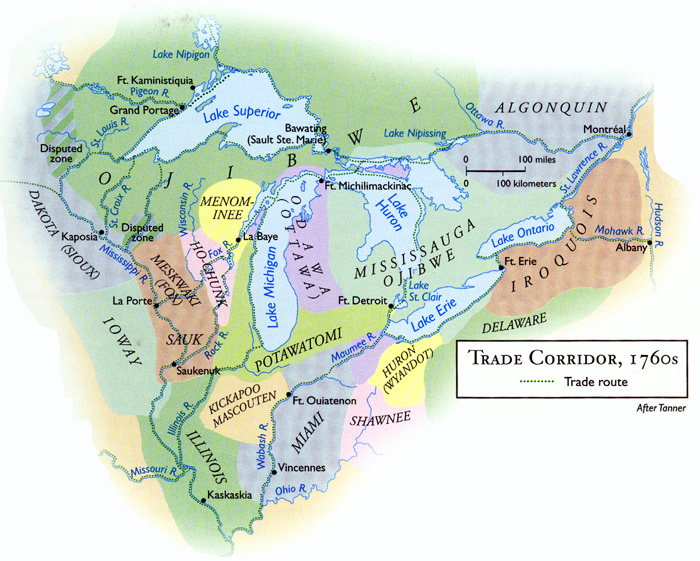
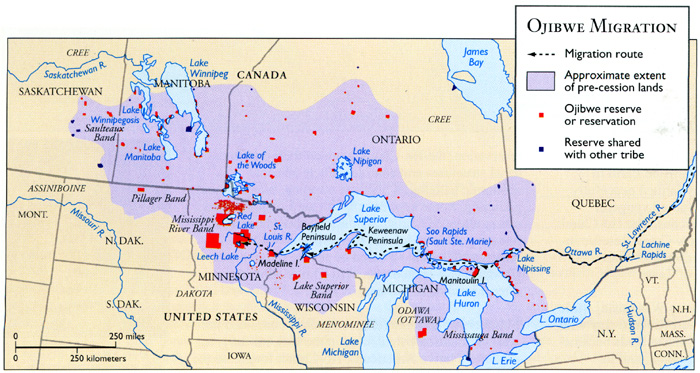
Chippewas
Source from http://www.geo.msu.edu/extra/geogmich/ojibwe.html.
-
-
www.nature.com www.nature.com
-
the Petaka culture plate (Celartia) maintains viability for up to two weeks of shipping or storage at ambient temperature
-
- Sep 2019
-
Tags
Annotators
URL
-
-
atomicobject.com atomicobject.com
Tags
Annotators
URL
-
-
atomicobject.com atomicobject.com
-
MASTERY, AUTONOMY, PURPOSE
-
- Aug 2019
-
www.scmp.com www.scmp.com
-
Japanese attractions are refusing entry to tourists, and it’s easy to see why
-
-
bookbook.pubpub.org bookbook.pubpub.org
-
However one might debate both the merit and the form of Prince’s note, we consider “slave” a provocative example of what can count as annotation and how annotation can spark - and shape - conversation.
Perhaps another historical example, though with different meaning is the placard cum annotation INRI which stood for "Iesus Nazarenus Rex Iudaeorum" a Latin phrase translated as "Jesus of Nazareth, King of the Jews." It was the notice Pontius Pilate nailed over Jesus as he was crucified.
Historians generally agree that this is one of the few facts that one can discern from the New Testament about the historical Jesus because it both runs at cross purposes to the ideas of early Christianity and it is multiply attested (Matthew 27:37, Mark 15:26, Luke 23:38, John 19:19).
It's an annotation which was remembered in oral tradition long enough to have been written down multiple times and which has sent both religious and cultural ripples throughout the ages.
-
-
truthout.org truthout.org
-
audit culture (a culture characterized by a call to be objective and an unbridled emphasis on empiricism). Audit cultures support conservative educational policies
Audit culture and conservative educational policies.
-
- Jul 2019
-
www.youtube.com www.youtube.com
-
"when school day is over"-curious learning is done Participatory Culture -communities producing media to share among themselves -people produce media to share with each other, not for money -passing of skills -social mode of production -drive to share for sharing's sake -Harry POtter Alliance -participatory culture and changing the world -bringing PC into educational culture -Wikipedia example
Tags
Annotators
URL
-
-
www.nature.com www.nature.com
-
Science is part of culture, and how science is done depends on the culture in which it is practised. Consider how many medical studies were based on male mice and male patients, and so missed important biomedical insights.
Blaming various cultures as being anti-science has come a long way for the western world. Their viewpoint however is based on the kind of socio-cultural backdrop of their own society and fails to understand or accommodate ideas from cultures that are different from theirs.
Tags
Annotators
URL
-
- Jun 2019
- May 2019
-
believermag.com believermag.com
-
www.npr.org www.npr.org
-
Xian missionary epistemology: salvation as the telos of culture
-
- Apr 2019
-
blogs.lse.ac.uk blogs.lse.ac.uk
-
This huge spread reflects the difference between two groups of people giving different answers to a highly innocuous question: ‘Is it more important for a child to be considerate or well-mannered?’ The answers sound almost identical, but social psychologists know that ‘considerate’ taps other-directed emotions while ‘well-mannered’ is about respect for authority. People’s answer to this question matters for Trump support because it taps into a cultural worldview sometimes known as Right-Wing Authoritarianism (RWA). Rather than RWA, which is a loaded term, I would prefer to characterise this as the difference between those who prefer order and those who seek novelty. Social psychologist Karen Stenner presciently wrote that diversity and difference tends to alarm right-wing authoritarians, who seek order and stability. This, and not class, is what cuts the electoral pie in many western countries these days. Income and material circumstances, as a recent review of research on immigration attitudes suggests, is not especially important for understanding right-wing populism.
-
-
unravellingmag.com unravellingmag.com
-
Cantonese: Language or dialect?
Tags
Annotators
URL
-
-
www.sciencedaily.com www.sciencedaily.com
-
Speaking a tonal language (such as Cantonese) primes the brain for musical training
-
-
www.sciencemag.org www.sciencemag.org
-
Tonal languages arose in humid climates
-
-
www.amybucherphd.com www.amybucherphd.com
-
The Language of Power Distance
Tags
Annotators
URL
-
-
www.theguardian.com www.theguardian.com
-
A discovery I and my team published in Science is that the strength of a culture’s norms isn’t random. Though they were separated by miles, and in some cases centuries, tight cultures as diverse as Sparta and Singapore have something in common: each faced (or faces) a high degree of threat, whether from Mother Nature – disasters, diseases, and food scarcity – or human nature – the chaos caused by invasions and internal conflicts. Strong norms are needed in these contexts to help groups survive. And when we look at loose cultures, from classical Athens to modern New Zealand, we see the opposite pattern: they enjoy the luxury of facing far fewer threats. This safety is used to explore new ideas, accept newcomers, and tolerate a wide range of behaviour. In contexts where there are fewer threats and thus less of a need for coordination, strong norms don’t materialise.
-
-
www.skyscrapercity.com www.skyscrapercity.com
-
'The Ritz'
BAN dumb names. Just "123 Main Street" allowable.
-
-
www.skyscrapercity.com www.skyscrapercity.com
-
Incredible stuff. So different.
Tags
Annotators
URL
-
- Mar 2019
-
aestheticsforbirds.com aestheticsforbirds.com
-
Notice that the Rawlsian Theory of Food Culture is different from my Airport Principle of Food. The Airport Principle says that, in an area which is really good at Food X, the airport version of Food X will probably be better than the very best version of Food X at many other places. The fish tacos in the LA airport, which are just part of a local SoCal chain, are better than the best fish tacos in all of New England. The chili dogs in the Detroit airport are better than any chili dog I’ve had on the whole of the West Coast. The Chicago deep dish pizza in the Chicago airport is a pale shadow of Chicago’s best, but so many leagues beyond the best Californian attempt that it blows my mind.
-
Anthony Bourdain wrote that that, after a lifetime of bouncing around New York and having his fill of crappy, thoughtless food, his first trip to Saigon almost shredded his soul. Every single bite of food he had was amazing. Every single person he could find selling food had made it with care and attention and sensitivity.
-
Let me suggest a corollary: the Rawlsian Theory of Food Culture. The Rawlsian Theory of Food Culture says that, if you want to judge the quality of a food culture, don’t look at its finest restaurants and best food. Look to its low-end. Look to its street carts, its gas-station snacks. Look to what you can get in the airport at 2 AM. Any community can spit up a few nice places to eat, if they throw enough money at it. What shows real love for food, and real caring, is when people make good food when they could get away with making crap.
-
-
-
Eun Heekyung cho biết hiện nay công chúng Hàn Quốc đang đắm chìm trong văn hóa đại chúng là các loại hình nghe nhìn. "Trong khi văn chương có tác dụng làm cho người ta nhận thức được giá trị cuộc sống, làm người ta hạnh phúc hơn khi đắm mình vào cuộc sống".
-
-
-
Psychological safety is an organizational climate in which individuals feel they can speak truthfully and openly about problems without fear of reprisal.
-
-
www.indiewire.com www.indiewire.com
-
Asked which of his films are his personal favorites, Kore-eda — in characteristic fashion — expounded upon a familiar adage until it felt new: “It’s like asking someone which of their 10 kids you like the most. You may have one child who’s just ridiculously successful and making tons of money, and then you have this other child who’s living in poverty, but they’re just so lovable.” He grew silent for a moment, and then went on: “I would say there are two children who are most similar to myself. ‘Nobody Knows’ is the film that I became a director to make. ‘Still Walking’ is special to me because I made it shortly after losing my mother. Having said that, I also have to mention ‘Like Father, Like Son,’ because that film took me to the next level, to the point where I couldn’t believe this was really my career.”
-
The truth, as always, is more complicated. Kore-eda cited the formative experience he had with “After Life” in 1998, which premiered at the Toronto International Film Festival after a programmer sent the director a handwritten fax proclaiming his love for the movie. But a gala debut wasn’t enough to get the movie sold. The director sighed: “I received very blunt information from the agent saying that this isn’t the kind of film that people want — they didn’t want to see people in heaven, they wanted the kind of typical Japanese film that would be representative of a national cinema.” Emotionally inhibited parents drinking sake on tatami mats, rogue samurai wandering the countryside, geishas scuffling around the Gion, that sort of thing. It could have been a devastating moment, but Kore-eda chose to see it as a call to action. “That process made me realize that I don’t have to make what other people want,” he said. “‘After Life’ led me to have confidence that if I make something that I love, there will be fans and critics out there who will love it also, and won’t start putting labels on it.” To his point, “After Life” now regularly appears on (American) lists of the best films of the ’90s. “I feel really fortunate that I’ve been able to find those people,” Kore-eda continued, “even when I’ve wanted to make films just because I liked them.”
-
“The traditional concept of family was already being dismantled or destroyed in Japan, and 3/11 just made it obvious that was happening. I believe you can no longer interpret the true value or purpose of family based on the antiquated traditional tropes of Japanese society. In ‘Shoplifters,’ I was looking at three generations living together, because that’s typically what you’d find in a Japanese household. But I wanted to play with that, and show that even within those terms the nuclear family is undergoing a permanent change.”
-
To watch Kore-eda’s films — and certainly to hear him talk about them — it’s clear that he’s not interested in judging this perceived degradation of traditional norms. These movies don’t lament what’s been lost so much as they wonder about what’s been found, a dynamic that allows even the most devastating pieces of Kore-eda’s work to feel intrinsically hopeful (his thoughts on the ending of “Shoplifters” were too spoiler-heavy to share here, but they made it clear the director savors that bittersweet aftertaste). His films are less concerned with passing a verdict on the state of things than they are in studying the various mechanisms that bind people together, and the performative elements required to keep us that way.
-
-
www.vulture.com www.vulture.com
-
That’s exactly right. What’s the technique to avoiding that stance?I don’t think it’s a technique. I don’t think that’s something you can make up, or trick people into believing through your filmmaking. It comes from the fundamental worldview, the sense of humanity. It comes from the depth of the work’s creator. If you have that empathy, you won’t go down the road of voyeurism. You can’t just sympathize; you have to make visible what is invisible. Make visible the factors that have brought the impoverished to this point, so that the audience can see them in a fuller and more complex way. That skirts the trap of poverty porn. Regarding your initial question: I don’t want to present the film in such a way so that when the audience leaves the theater, they say, “Well, it’s the government’s fault! It’s the system’s fault!” That’s not what I’m trying to portray. They’re part of it, but the people watching the film are part of it, too, and they need to feel that by the end.
-
I’ve read that you visited an actual orphanage while researching this subject. What sort of emotional response did you have at that time?I did not go to an “orphanage,” per se. I went to a facility run by the government that houses children with parents who are dysfunctional in some way, through alcoholism or domestic abuse or something like that. Just wanted to clarify that first. While I was there, a young girl in grade three had just come back from school, and she read for me the book Swimmy by Leo Lionni. I happened to be there in time to witness this. The people who worked at the facility went, “Oh, no, don’t bother him; he doesn’t want to listen to this.” But she completely ignored them and kept reading this book right to the end. And at the very end, I applauded because she had done so wonderfully. The girl was absolutely thrilled by this, and she smiled a big smile, and it occurred to me that it was her parents that she wanted to have witness this reading of Swimmy. This moved me. That was the feeling I took with me when I made Shoplifters. The young boy in the film reads Swimmy, to show to his parents that he’s reading. That sense of pride and joy that the little girl had was something I held with me.
-
-
app.getpocket.com app.getpocket.comPocket2
-
Sakura Ando gives a phenomenal performance as Nobuyo. Can you talk about your collaboration with her? I agree that she is phenomenal. To answer quite honestly, I first heard about Sakura Ando through actors or cameramen who are friends of mine or who I worked with. They all said she was amazing. I was still unsure she’d be right for my film because the part of Nobuyo was written for someone who’s in their 40s. However I ran into her in the neighborhood and we just talked for a little while. And then I ran into her a second time. After that I thought she might be the best person for this role [despite her age] and I offered her the job. You are a director who has successfully directed children in many of your films. How do you work with them? Thank you saying they are successful. For 15 years the way that I have worked with children is I never give them a script. They have no idea about the full story. Everyday when they come on set, I tell them each individual line when they need to know it. So I whisper in their ears this is your line, this is what you are going to talk about, sometimes they choose their own words. But also during auditions I choose children who specifically seem to respond to that method well. Once I’ve chosen them I organize activities to create trust and a relationship with them. My goal is to have them come to set every day smiling, excited and looking forward to the work. That’s my approach.
-
There is a density and depth to your stories and characters that’s reminiscent of novels. I’m interested in your writing process and how you come about it? That is a difficult question. First there's the person, a human. Then the situation and what if that situation causes the human to do something? I don’t know if it’s right or wrong but I don’t actually sit down and write all the details about each character, their whole history. If you were to attend a screenwriting course, often they’d tell you to sit down and define each character before writing the script. I don’t believe in that, I don't think character development is the way to go. For me it’s the relationships. The relationship between one person and the person standing in front of them. It’s the way they move, the way they react, and how they relate to each other. That’s what defines them. Take for example the character of the father Osamu, he’s defined by the context of the relationships around him. The story comes out of the numerous interactions between these different people.
Tags
Annotators
URL
-
-
moveablefest.com moveablefest.com
-
Thinking of happy accidents, it looked like Miyu Sasaki, who plays the young Juri, really did lose a tooth. Is that something you had to incorporate into the script? On the first day of shooting, we were shooting the scene where she’s discovered on the veranda and it just happened that the tooth came out. [And she yelled] “Oh no, my tooth came out!” We talked about fixing it so there was a fake tooth there, but then I thought I might as well write a scene about losing her tooth. [SPOILERS AHEAD] Then I thought what would be really interesting would be to write a scene where the grandmother who has no teeth dies and the granddaughter loses her teeth and then you throw the teeth up on the roof, so I thought the combination of those two things would make it very interesting and I wrote it into the script.
-
Was the family’s home on screen a set or a real location? We did use a real house [for exteriors]. There was a small house that existed within all those high-rises, but most of the interior scenes were shot on set. There’s a scene where [you see] the entrance to the home [where] they’re on a little corridor or a little porch outside and when I went to see the house, I was just looking around it with my crew. it’s very near Sumida River, which is very famous for the fireworks coming up, so I just thought, “Oh, it’s very near the river, but [the family] would never be able to see the fireworks,” [which] stayed with me, so I decided to write a scene about it.
-
Is it true you got to shoot the first scenes of the film in the summer and then go back later to shoot the rest of the film, after you had an idea of how they might interact with one another? Yes. When we started shooting in the summer, the truth is the script wasn’t really finished. I hadn’t really had a complete script by that point and we shot it anyways because we thought we might need it. I told all the actors we may not even keep this scene and Kiki Kirin [who plays the grandmother] said, “Well, in that case, it probably won’t stay. It won’t survive.” [laughs] But then there’s the scene where it rains suddenly and where [the family] finds the cicada, so it was fortuitous when those things all happened. And then when I went back and wrote the script properly in the autumn, I incorporated some of those things in it.
-
There is a bit of a fantastical quality to the film, which comes through subtly through the score, and I loved how visually, there are often boxes created throughout the frame, particularly inside the family’s house. How did you go about getting the tone right aesthetically? In terms of the visual, in terms of Kondo [Ryuto, the cinematographer], when he talked to me about how he viewed it, he really wanted a poetic state, so visually we were looking at poetic images around their lifestyle and after about a certain amount of filming, I just let Kondo-san go — he was the one that decided the framing, so it was his sensibility that created those lines that you’re talking about. With Honoso [Haruomi, the composer], it was more the image of swimming, so the family were like a bunch of little fishes at the bottom of an ocean swimming around and they would look up at the surface and see the sparkling night, but the sound of that sparkling night would come down to the bottom and twinkle around it.
-
You’ve acknowledged that “After the Storm” marked a bit of a turning point where you’d start making films about broader Japanese society. What inspired that shift? I look at it a little bit differently because for me, from “Still Walking” to “After the Storm,” that thread was really very much about me looking at what went on inside of a family, inside of the home, [with] a narrow and deep perspective. But that was more the exception. With “The Third Murder,” I felt I went back to where I started, which was with “Nobody Knows” and looking at the family within society. That’s the thread I was following and then I got disrupted by my own personal inquiry.
Tags
Annotators
URL
-
-
slate.com slate.com
-
Shoplifters’ question of whether this family counts as a “real” one does occasionally feel belabored. But its exploration of the layers, and limits, within this unlikely clan is so moving and observant that one can easily overlook that foible. Like nearly every mystery in the film, it isn’t meant to be resolved anyway. To spend time with the Shibatas is to make peace with a lack of answers. In so doing, Shoplifters achieves that ultimate goal of art as expressed by the artist Robert Filliou: It’s art that makes life more interesting than art.
-
-
www.latimes.com www.latimes.com
-
All well and good, but what makes Kore-eda's movie so quietly devastating, the work of a master in full command of his art, is that its emotional rewards stem from a deep engagement with the world rather than a retreat from it. It's the rare movie indeed that can unite a jury without even remotely smacking of compromise.
-
-
www.criterion.com www.criterion.com
-
Crazed Fruit: Imagining a New Japan—The Taiyozoku Films
-
-
www.theatlantic.com www.theatlantic.com
-
Though this genre has existed for quite some time, it really blossomed the decade following World War II thanks to so-called “sun tribe” youth movies (these featured teens interested in violence and sex, similar to America’s Rebel Without A Cause). In the decades since, seishun eiga have generally focused on the ups and downs of adolescence, particularly high schoolers. “Seishun eiga offer the sort of clear window into Japan’s national culture, society and psyche that other, more internationally popular, genres don’t. Most Japanese survived high school; relatively few joined yakuza gangs,” the Japan Times film critic Mark Schilling has written. Since these movies can be loaded with cliches and melodrama, the laziest iterations of this style are often deeply formulaic.
-
-
vnexpress.net vnexpress.net
-
Theo bà Ngô Phương Lan, năm 2017, Việt Nam đạt 3.250 tỷ đồng trong lĩnh vực điện ảnh. Trong đó, doanh thu từ phim Việt chiếm 28% nhờ quy định số suất chiếu phim Việt ở mỗi rạp phải chiếm 20% trên tổng số (theo nghị định 54). Tuy vậy, phim trong nước vẫn bị phim ngoại lấn át về sức cạnh tranh.
-
-
www.smh.com.au www.smh.com.au
-
Korea's booming film industry and what it means for Australian cinema
-
-
japantoday.com japantoday.com
-
3 reasons Japanese movies today suck, according to distributor and producer Adam Torel
-
-
-
“Korea is very dynamic, it is undergoing social and political change. Its culture reflects that. Its films are rooted in change,” Rayns said. “In Japan I don’t see that. I see stasis. I still see same right wing politicians denying the existence of comfort women, the same old stuff we’ve heard for 20, 30 or 40 years. Until we see some challenge to the establishment [in Japan] I don’t think you will see the same dynamism as in Korean cinema.”
-
-
www.midnighteye.com www.midnighteye.com
-
The situation today is much less dynamic. Filmmaking in Japan has largely polarised, with very high budgets (by Japanese standards, i.e. US$ 10 million or a multiple of it) on the one extreme and no-budget indie (or amateur) filmmaking on the other. Films in the former category seek to emulate the Hollywood blockbuster formula and are produced by "film committees": consortia of production partners, the majority being television stations, advertising agencies and talent agencies rather than traditional film production companies. Each partner has a stake and a say in the filmmaking and the result more often than not literally comes across as something made by committee rather than artistic vision. It is a type of filmmaking that takes no chances: all the stories are based on hit properties (TV series, manga, novels) and the lead actors are pop musicians or TV talento, while the important share of media companies in the production committees is resulting in self-censorship and/or conservative political stances in line with the policies of Shinzo Abe’s government.
-
-
-
Asura flops, but shines a light on China’s increasingly sophisticated film audience
-
- Feb 2019
-
Local file Local file
-
“Gramsci therefore concluded that political questions become ‘insoluble" when ‘disguised as cultural ones’” (Harvey) “Appeals to traditions and cultural values bulked large in all tif this. An open project around the restoration of economic power tb a small elite would probably not gain much popular support. But programmatic attempt to advance the cause of individual freedomis could appeal to a mass base and so disguise the drive to restoife class power.” (Harvey) The Republican Party “also appealed to the cultural nationalism of the white working classes and their besieged sense of moral righteousness (besieged because this class lived under conditions of chronic economic insecurity and felt excluded from many of the benefits that were being distributed through affirmative action and other state programmes). This political base could be mobilized through the positives of religion and cultural nationalism and negatively through coded, ü' not blatant, racism, homophobia, and anti- feminism. The problem was not capitalism and the neoliberaliza- tion of culture, but the ‘1iberals’ who had used excessive state power to provide for special groups (blacks, women, environ- mentalists, etc.). (Harvey)
-
-
dougengelbart.org dougengelbart.org
-
In amplifying our intelligence, we are applying the principle of synergistic structuring that was followed by natural evolution in developing the basic human capabilities. What we have done in the development of our augmentation means is to construct a superstructure that is a synthetic extension of the natural structure upon which it is built. In a very real sense, as represented by the steady evolution of our augmentation means, the development of "artificial intelligence" has been going on for centuries.
Engelbart explicitly noted that what he was trying to do was not just hack culture, which is what significant innovations accomplish, but to hack the process by which biological and cultural co-evolution has bootstrapped itself to this point. Culture used the capabilities provided by biological evolution -- language, thumbs, etc. -- to improve human ways of living much faster than biological evolution can do, by not just inventing, but passing along to each other and future generations the knowledge of what was invented and how to invent. Engelbart proposes an audio-visual-tactile interface to computing as a tool for consciously accelerating the scope and power of individual and collective intelligence.
-
For instance, an aborigine who possesses all of our basic sensory-mental-motor capabilities, but does not possess our background of indirect knowledge and procedure, cannot organize the proper direct actions necessary to drive a car through traffic, request a book from the library, call a committee meeting to discuss a tentative plan, call someone on the telephone, or compose a letter on the typewriter.
In other words: culture. I'm pretty sure that Engelbart would agree with the statement that someone who could order a book from a library would likely not know the best way to find a nearby water source, as the right kind of aborigine would know. Collective intelligence is a monotonically increasing store of knowledge that is maintained through social learning -- not just social learning, but teaching. Many species engage in social learning, but humans are the only primates with visible sclera -- the whites of our eyeballs -- which enables even infants to track where their teacher/parent is looking. I think this function of culture is what Engelbart would call "C work"
A Activity: 'Business as Usual'. The organization's day to day core business activity, such as customer engagement and support, product development, R&D, marketing, sales, accounting, legal, manufacturing (if any), etc. Examples: Aerospace - all the activities involved in producing a plane; Congress - passing legislation; Medicine - researching a cure for disease; Education - teaching and mentoring students; Professional Societies - advancing a field or discipline; Initiatives or Nonprofits - advancing a cause.

B Activity: Improving how we do that. Improving how A work is done, asking 'How can we do this better?' Examples: adopting a new tool(s) or technique(s) for how we go about working together, pursuing leads, conducting research, designing, planning, understanding the customer, coordinating efforts, tracking issues, managing budgets, delivering internal services. Could be an individual introducing a new technique gleaned from reading, conferences, or networking with peers, or an internal initiative tasked with improving core capability within or across various A Activities.

C Activity: Improving how we improve. Improving how B work is done, asking 'How can we improve the way we improve?' Examples: improving effectiveness of B Activity teams in how they foster relations with their A Activity customers, collaborate to identify needs and opportunities, research, innovate, and implement available solutions, incorporate input, feedback, and lessons learned, run pilot projects, etc. Could be a B Activity individual learning about new techniques for innovation teams (reading, conferences, networking), or an initiative, innovation team or improvement community engaging with B Activity and other key stakeholders to implement new/improved capability for one or more B activities.
In other words, human culture, using language, artifacts, methodology, and training, bootstrapped collective intelligence; what Engelbart proposed, then was to apply C work to culture's bootstrapping capabilities.
-
Our culture has evolved means for us to organize the little things we can do with our basic capabilities so that we can derive comprehension from truly complex situations, and accomplish the processes of deriving and implementing problem solutions. The ways in which human capabilities are thus extended are here called augmentation means, and we define four basic classes of them: 2a4 Artifacts—physical objects designed to provide for human comfort, for the manipulation of things or materials, and for the manipulation of symbols.2a4a Language—the way in which the individual parcels out the picture of his world into the concepts that his mind uses to model that world, and the symbols that he attaches to those concepts and uses in consciously manipulating the concepts ("thinking"). 2a4b Methodology—the methods, procedures, strategies, etc., with which an individual organizes his goal-centered (problem-solving) activity. 2a4c Training—the conditioning needed by the human being to bring his skills in using Means 1, 2, and 3 to the point where they are operationally effective. 2a4d The system we want to improve can thus be visualized as a trained human being together with his artifacts, language, and methodology. The explicit new system we contemplate will involve as artifacts computers, and computer-controlled information-storage, information-handling, and information-display devices. The aspects of the conceptual framework that are discussed here are primarily those relating to the human being's ability to make significant use of such equipment in an integrated system.
To me, this is the most prescient of Engelbart's future visions, and the seed for future study of culture-technology co-evolution. I talked with Engelbart about this passage over the years and we agreed that although the power of the artifacts, from RAM to CPU speed to network bandwidth, had improved by the billionfold since 1962, the "softer" parts of the formula -- the language, methodology, and training -- have not advanced so much. Certainly language, training methods and pedagogy, and collaborative strategies have evolved with the growth and spread of digital media, but are still lagging. H/LAMT interests me even more today than it did thirty years ago because Engelbart unknowingly forecast the fundamental elements of what has come to be called cultural-biological co-evolution. I gave a TED talk in 2005, calling for an interdisciplinary study of human cooperation -- and obstacles to cooperation. It seems that in recent years an interdisciplinary understanding has begun to emerge. Joseph Henrich at Harvard, for one, in his recent book, The Secret of Our Success, noted:
Drawing insights from lost European Explorers, clever chimpanzees, hunter-gatherers, cultural neuroscience, ancient bones and the human genome, Henrich shows that it’s not our general intelligence, innate brain power, or specialized mental abilities that explain our success. Instead, it’s our collective brains, which arise from a combination of our ability to learn selectively from each and our sociality. Our collective brains, which often operate outside of any individual’s conscious awareness, gradually produce increasingly complex, nuanced and subtle technological, linguistic and social products over generations.
Tracking this back into the mist of our evolutionary past, and to the remote corners of the globe, Henrich shows how this non-genetic system of cultural inheritance has long driven human genetic evolution. By producing fire, cooking, water containers, tracking know-how, plant knowledge, words, hunting strategies and projectiles, culture-driven genetic evolution expanded our brains, shaped our anatomy and physiology, and influenced our psychology, making us into the world’s only living cultural species. Only by understanding cultural evolution, can we understand human genetic evolution.
Henrich, Boyd, and RIcherson wrote, about the social fundamentals that distinguish human culture's methods of evolving collective intelligence in The Origin and Evolution of Culture:
Surely, without punishment, language, technology, individual intelligence and inventiveness, ready establishment of reciprocal arrangements, prestige systems and solutions to games of coordination, our societies would take on a distinctly different cast. Thus, a major constraint on explanations of human sociality is its systemic structure
-
-
static1.squarespace.com static1.squarespace.com
-
cultivate a language
Lots of cultivation going on for Vico. Community cultivates young, community cultivates language, language cultivates community, language cultivates young.
-
cu
Now to figure out a definition of culture... sensus communis? Faces and places? Bound by language? Bound by values? It's like rhetoric--it doesn't want to be defined.
-
-
educationaltechnologyjournal.springeropen.com educationaltechnologyjournal.springeropen.com
-
The kind of participatory connected learning experiences that we are advocating for arenot easily described
What are some ways we who seem to "grok" participatory connected learning (or think we do) can make this concept more accessible to colleagues who lament the failure of "sit-and-get" faculty development/PD, but don't know what to do next? I was reminded of this a few days ago in a "mixed" meeting of faculty, staff, and administrators. We all meant well, but could have done better in planning some upcoming sessions that (we hope) will become a Community of Practice. I think a way to describe participatory culture in a room full of people who don't already know Henry Jenkins and Mimi Ito would help.
-
- Jan 2019
-
static1.squarespace.com static1.squarespace.com
-
new media
This is what sparked Lanham's chapter, right? The affirmation of the authority/superiority of the book itself over other media as a means to "preserve culture."
-
-
www.theguardian.com www.theguardian.com
-
Because European and American debates today about whether western culture is fundamentally Christian inherit a genealogy in which Christendom is replaced by Europe and then by the idea of the west.
This is striking to me, because I have lived in the Middle East, Eastern and Western Europe, and in the United States; so the amount of cultures I have seen I believe is what made me who I am today. The differences between the cultures also interest me when entertaining the idea of how much western culture influences the world. Especially when these ideals being replicated, are those that go against the religion that certain cultures don't practice.
-
For Arnold, culture was the “pursuit of our total perfection by means of getting to know, on all the matters which most concern us, the best which has been thought and said in the world”. Arnold wasn’t interested in anything as narrow as class-bound connoisseurship: he had in mind a moral and aesthetic ideal, which found expression in art and literature and music and philosophy.
This is a concept of culture, I never thought of. For me, culture was always something pertaining to a group of people, something that makes that group who they are. However, when reading this, I realized culture isn't as materialistic and as manufactured as I had originally thought. Culture is more so a mindset, a set of values, a way of living that a group of people share and defines them.
-
-
static1.squarespace.com static1.squarespace.com
-
while brains may be wired to seethe world, how and what is seen is never without a cultural component.
In my research on coffee talks with Bosnian/Bosniak women, there's a (recent) story I came across in which a family of four (mom, dad, daughter, son) who are part of the diaspora living in America are visited by grandma, who grew up and continues to live in Bosnia. Upon arrival, the grandma witnesses American coffee culture first-hand when her daughter, son-in-law, and grandkids gather around the kitchen table one morning and drink their coffee -- which was made by a machine -- quickly and quietly before running off to work or school. She is deeply horrified -- offended even -- so much so that she shortens her trip from one month to a week. In Bosnia, what kind of coffee you drink, how you make it, who you drink it with, when, and for how long, what you talk about while drinking it -- these are all very significant things. In America, not so much.
-
entanglement of culture with environments and things
How might the "entanglement of culture" influence the definition of rhetoric? This interwoven nature calls for further examination.
-
-
drive.google.com drive.google.com
-
Rhetoric has a number of overlapping meanings
Connecting to Rickert's claim involving the interwoven/entangled notion of culture in terms of rhetoric.
Tags
Annotators
URL
-
-
www.bitwig.com www.bitwig.com
-
Try something crazy
DAWs typically don’t mesh so well with prototyping culture. When Ableton brought clip launching through Live, its flagship DAW, it had some of this effect: experiment with clips then play with them instead of just playing them. Of course, Cycling ’74 has been all about prototyping, long before Ableton bought the company. But “Max for Live” devices are closer to plugins in that users expect to just be able to use them, not have to create them from scratch. What this marketing copy is emphasizing is that this really is about getting a box of LEGO blocks, not just about getting a DIY kit to create your own instance of something which somebody else designed. The framing sure is specific.
-
-
-
I respect the idealism of blockchain developers who, I believe, are sincere in their faith that they are building a better world. But I am confounded by their inability to see that they are falling victim to exactly the same fallacies their hacker forebears embraced: this notion that we can code ourselves out of the deep holes we’ve dug; that we are building utopias in our virtualities that will finesse away the imperfections of human character.
<big>评:</big><br/><br/>将区块链与互联网发展史作同类比较,的确能发现相似的轨迹,但也难逃倚老卖老的嫌疑。从何时起,我们给自己立下了「后来者无论成功与失败,始终跑在前人滑破的气流里」这一金科玉律?值得一提的是,见证时代前沿发展的进步主义者,在世界观上大多并不前沿,甚至很前现代。<br/><br/>试问:你渴望完美无缺的人设吗?若是,那你又可否期待「能加速该进程」的技术横空出世?自渡与普渡,向来是技术社群必须直面的哲学迷思。
-
-
www.maritime-executive.com www.maritime-executive.com
-
Contrary to mainstream thinking that this new technology is unregulated, it’s really quite the opposite. These systems apply the strictest of rules under highly deterministic and predictable models that are regulated through mathematics. In the future, industry will be regulated not just by institutions and committees but by algorithms and mathematics. The new technology will gradually out-regulate the regulators and, in many cases, make them obsolete because the new system offers more certainty. Antonopoulos explains that “the opposite of authoritarianism is not chaos, but autonomy.”
<big>评:</big><br/><br/>1933 年德国包豪斯设计学院被纳粹关闭,大部分师生移民到美国,他们同时也把自己的建筑风格带到了美利坚。尽管人们在严格的几何造型上感受到了冷漠感,但是包豪斯主义致力于美术和工业化社会之间的调和,力图探索艺术与技术的新统一,促使公众思考——「如何成为更完备的人」?而这一点间接影响到了我们现在所熟知的美国式人格。<br/><br/>区块链最终会超越「人治」、达到「算法自治」的状态吗?类似的讨论声在人工智能领域同样不绝于耳。「绝对理性」站到了完备人格的对立面,这种冰冷的特质标志着人类与机器交手后的败退。过去有怀疑论者担心,算法的背后实际上由人操控,但随着「由算法生成」的算法,甚至「爷孙代自承袭」算法的出现,这样的担忧逐渐变得苍白无力——我们有了更大的焦虑:是否会出现 “blockchain-based authoritarianism”?
-
- Dec 2018
-
kfitz.info kfitz.info
-
It’s the nature of the more more more culture: if you can run two miles, isn’t it better to run five? If you can write an article about something, isn’t it better to turn it into a book? If you can speak in four places this semester, isn’t it better to add on just… one… more…?
It's like the old saying, I can't turn a profit with low numbers, so we'll make it up in volume.
Tags
Annotators
URL
-
- Nov 2018
-
www.the-hospitalist.org www.the-hospitalist.org
-
“Any time when nurse practitioners and other providers get together, there is always this challenge of professions,” he says. “You’re doing this or you’re doing that, and once you get people who understand what the capabilities are past the title name and what you can do, it’s just amazing.”
-
“It didn’t shock me at the time because I had already made major changes in our intensive-care unit at the hospital, which were unpopular,” Dr. Gorman says, adding all of the changes were good for patients and produced “fabulous” results. “But it was new. And it was different. And people don’t like to change the status quo.”
-
-
currents.dwrl.utexas.edu currents.dwrl.utexas.edu
-
culture industry
Theodor Adorno, The Culture Industry
-
- Oct 2018
-
digitalpedagogy.mla.hcommons.org digitalpedagogy.mla.hcommons.org
-
Liss LaFleur
Lady-sounding name. See also Fleur Delacour.
-
-
reallifemag.com reallifemag.com
-
The end game of a surveillance society, from the perspective of those being watched, is to be subjected to whims of black-boxed code extended to the navigation of spaces, which are systematically stripped of important social and cultural clues. The personalized surveillance tech, meanwhile, will not make people less racist; it will make them more comfortable and protected in their racism.
Tags
Annotators
URL
-
-
www.powazek.com www.powazek.com
-
I think the internet's core message can be summed up in one word: Share.
An early reference to the sharing economy?
-
- Sep 2018
-
www.nytimes.com www.nytimes.com
-
Mr. Dolby, born Thomas Robertson, took his stage name from Dolby Laboratories because of his fascination with audio technology. He said that he decided to use his nerd persona as a way of distinguishing himself from the “good-looking lads” on the 1980s pop scene — Sting, Simon Le Bon, Adam Ant.But, he added, “I am no more comfortable in my geek skin now than in 1982.”
I'm seeing a slight contradiction here, when Thomas Robertson calls himself Dolby to distinguish himself from the "goodlooking lads", but also implies that he wasn't comfortable in his geek skin. He seems to wear his geek identity proudly but is simultaneously ashamed of it?
-
-
anarchistnews.org anarchistnews.org
-
known as charivari or casserole
I wonder what the connection is between this term and the dish?
-
-
-
Tolerating all ideas does not mean becoming a supporter of them. Saying everything does not mean accepting everything.
Try telling that to the censor-happy neolibs.
-
- Aug 2018
-
learningpolicyinstitute.org learningpolicyinstitute.org
-
Indeed, school exclusion, without these supports, can exacerbate a bad situation. In the Parkland case, the fact that Nikolas Cruz had been expelled from school may have contributed to driving an angry young man who felt isolated to take out his frustration and anger by killing students and staff at his former school. In theory, zero-tolerance policies deter students from violent or illegal behavior because the punishment for such a violation is harsh and certain. However, research shows that such policies ultimately increase illegal behavior and have negative effects on student academic achievement, attainment, welfare, and school culture.
-
-
www.danah.org www.danah.org
-
the kids are all right
Given danah's age, I would suspect that with a copyright date of 2014, she's likely referencing the 2010 feature film The Kids are Alright.
However that film's title is a cultural reference to a prior generation's anthem in an eponymous song) by The Who which appeared on the album My Generation. Interestingly the lyrics of the song of the same name on that album is one of their best known and is applicable to the ideas behind this piece as well.
-
-
cstroop.com cstroop.com
-
In reading this I almost suspect that it may have been more valuable to have had a book-length version of this a la JD Vance's Hillbilly Elegy to have become popular before the 2016 election than to have had Hillbilly Elegy.
-
I think it’s important for liberal Americans who do not come from a patriarchal religious background to hear our stories and to sit with that shock. Why? Because I remain convinced that if American civil society and the American press fail to come to grips with just how radically theocratic the Christian Right is, any kind of post-Trump soft landing scenario in which American democracy recovers a healthy degree of functionality is highly unlikely.
I haven't directly experienced this patriarchal religious background to the extreme that the writer has, but I grew up in "Jesus Land" and know it exists. I suspect he's largely correct here.
-
- Jul 2018
-
www.kqed.org www.kqed.org
-
In a strong culture, there are many, overlapping, and cohesive interactions among all members of the organization.
Important for faculty development centers - being a site where interactions can happen. But how to ensure they're "cohesive" interactions?
-
-
wendynorris.com wendynorris.com
-
From the above we can see that Virilio understands human history in terms of a race with time, of ever-increasing speeds that transcend humans' biological capacity. To theorize culture without the dromosphere, that is, the sphere of beings in motion, he therefore sugges,ts, misses the key point of cultural activity and the uniqueness of the industrial way of life. Without an explicit conceptualization of the contemporary dromosphere -or in my terms timescape -it is thus difficult to fully understand the human-technology-science-economyequity-environmenr constellation. Moreover, it becomes impossible to appreciate that people are che weakest link when the time frames of action are compressed to zero and effects expand to eternity, when transmission and transplantation are instantaneous but their outcomes extend into an open future, when instantaneity and eternity are combined in a discordant fusion of all times.
Adam's critique of Virilio's incomplete theory on time compression as it related to cultural transformation. Claims it lacks adequate theoretical description/understanding of how people in the high-tempo dromosphere in his writings, (timescape in her work) interact with time.
Adam further notes how important it is to understand how people factor into discordant time compressions through everyday sociocultural interactions -- which she refers to as "the human-technology-science-economy-equity-environment constellation."
This is pretty dense theoretical work. Would help to find an example or two in the SBTF time study to make this idea a little more accessible.
-
-
wendynorris.com wendynorris.com
-
Given our tendency to reify social reality (Berger and Luckmann 1967, pp. 89-92, 134-136), we often regard the association of particular "signifiers" with particular "signifieds" (Saussure 1959, p. 67) as inevitable. Such symbolic relations, however, are essentially conventional and, quite often, arbitrary (Durkheim 1965, pp. 261-265; Mead 1934, pp. 117-125; Peirce 1932, Vol. 2, pp. 165-169; Saussure 1959, pp. 67
Time symbols have cultural contexts.
-
Culture, according to semiotics, is a communicational system consisting of various messages conveyed by and to members through the use of certain codes (Leach 1976; Lvi-Strauss 196
Definition of culture.
-
-
www.sapiens.org www.sapiens.org
-
This system of demonstrating tasks to one robot that can then transfer its skills to other robots with different body shapes, strengths, and constraints might just be the first step toward independent social learning in robots. From there, we might be on the road to creating cultured robots.
-
Soon we might add robots to this list. While our fanciful desert scene of robots teaching each other how to defuse bombs lies in the distant future, robots are beginning to learn socially. If one day robots start to develop and share knowledge independently of humans, might that be the seed for robot culture?
-
If we didn’t have social learning, we wouldn’t have culture. As zoologists Kevin Laland and Will Hoppitt argue, “culture is built upon socially learned and socially transmitted information.” Socially acquired knowledge is distinct from what we learn individually and from information inherited through genes or through imitation.
-
- Apr 2018
-
s18.pdarrington.net s18.pdarrington.net
-
Atthecruxofthisbook,underlyingeachcontributionandinformingthecollectiveenterprise,liesasharedconcernwiththearticulationofhistoricalsignificanceanditsproduction.
The history of an object is very important when considering the culture of it. Knowing the history and production will connect to many ideas and thoughts of the creator.
-
Themoreself-consciousonebecomes,themorecomplexone’srelationshiptoanobjectbecomes,physicallyandocularlyaswellaspsychologicallyandexperientially.
If you become more self-conscious, what really allows one to become more connected to a certain object?
-
-
www.bbc.com www.bbc.com
-
music and art were important in helping those early modern humans forge a sense of group identity and mutual trust that enabled them to become so successful.
Forging those group identities helped set up a strong base for creating different cultures.and also set up future pathways for ideas and theories among these groups.
-
-
annotatingausten.sfsuenglishdh.net annotatingausten.sfsuenglishdh.net
-
Mr. Bennet’s property consisted almost entirely in an estate of two thousand a year, which, unfortunately for his daughters, was entailed, in default of heirs-male, on a distant relation; and their mother’s fortune, though ample for her situation in life, could but ill supply the deficiency of his. Her father had been an attorney in Meryton, and had left her four thousand pounds.
Women could not inherit the money that their fathers/husbands made and would have to go to the closes male heir. Thus one of the main reasons in which Mrs. Bennet wanted to marry off her daughters so quickly, and especially those with money so they would be well off. Source: www.janeaustensworld.wordpress.com/2007/11/27/the-fee-entail-in-pride-prejudice/
-
-
www.forbes.com www.forbes.com
-
Fashion can change overnight. It takes a decade or two to change architecture, because it takes so long to become an architect. You have to go through a rigorous training program. The Cultural Revolution arrested the development of architecture in China. It has taken this long for it to start coming back. The architecture schools are starting to become confident enough that they are starting to encourage students to draw their inspiration from their own environment and culture. Until now, they have pretty much been borrowing from the West. Finally, the professors that weren’t happy about the Cultural Revolution are dying or retiring, and younger, less cynical professors are coming forward and saying, “Being a Chinese architect is good. “ Wang Shu won the Prizker Prize not because he was the world’s great architect, but because he was one of the first in his generation of Chinese architects to be original and be Chinese at the same time, and not borrow from the West. That will happen more and more.
-
When was Japan on fire in late '80s to early '90s, every famous architect in the world was in Japan. Every major hotel lobby would be filled with famous architects. Today, there’s nobody there. The Japanese architects have taken control of their own country. Now, the only people going work in Japan are Japanese architects. I have to believe that one day, the only people doing architecture in China will be Chinese architects
-
-
content.time.com content.time.com
-
Is China's Architectural Ambition Leaving Its Own Talent Behind?
-
-
info.moravia.com info.moravia.com
-
Japanese people tend to require more information before reaching a purchasing decision. So for printed brochures, it is standard practice for Japanese companies to create one text-heavy version for the Japanese domestic market, and another “rest of the world” version that gets localized into multiple languages for markets worldwide. Often the Japanese domestic version goes into more detail and mentions this or that technology as part of a product’s appeal. The non-Japan version focuses more on user benefits, oftentimes not even mentioning the technology that makes those benefits possible. Western thinking is, consumers want to acquire an experience, not a technology. Japanese thinking is, those promises feel more real when somehow linked to technology.
-
-
-
He has since tested his hypothesis in India, which also shows a clear divide in wheat and rice growing regions, with similar results. Almost all the people he questioned are not directly involved in farming, of course – but the historical traditions of their regions are still shaping their thinking. “There’s some inertia in the culture.”
-
The divide did not seem to correlate with measures of wealth or modernisation, but he noticed that one difference could be the kind of staple crop grown in the region: rice in most southern areas, and wheat in the north. “It splits almost neatly along the Yangtze River,” says Talhelm.Growing rice requires far greater cooperation: it is labour-intensive and requires complex irrigation systems spanning many different farms. Wheat farming, by contrast, takes about half the amount of work and depends on rainfall rather than irrigation, meaning that farmers don’t need to collaborate with their neighbours and can focus on tending their own crops.
-
When questioned about their attitudes and behaviours, people in more individualistic, Western societies tend to value personal success over group achievement, which in turn is also associated with the need for greater self-esteem and the pursuit of personal happiness. But this thirst for self-validation also manifests in overconfidence, with many experiments showing that Weird participants are likely to overestimate their abilities. When asked about their competence, for instance, 94% of American professors claimed they were “better than average”.This tendency for self-inflation appears to be almost completely absent in a range of studies across East Asia; in fact, in some cases the participants were more likely to underestimate their abilities than to inflate their sense of self-worth. People living in individualistic societies may also put more emphasis on personal choice and freedom.
-
But why did the different thinking styles emerge in the first place? The obvious explanation would be that they simply reflect the prevailing philosophies that have come to prominence in each region over time. Nisbett points out that Western philosophers emphasised freedom and independence, whereas Eastern traditions like Taoism tended to focus on concepts of unity. Confucius, for instance, emphasised the “obligations that obtained between emperor and subject, parent and child, husband and wife, older brother and younger brother, and between friend and friend”. These diverse ways of viewing the world are embedded in the culture’s literature, education, and political institutions, so it is perhaps of little surprise that those ideas have been internalised, influencing some very basic psychological processes.
-
- Mar 2018
-
-
use ‘本を貸していただけませんでしょうか’ to make it even politer.
book PRT-OBJ lend/give-TE_FORM it-is-acceptable-NEG COPULA-SUGGESTIVE PRT-INTERROGATIVE. "Is it not acceptable to give me your book?"
-
‘本を貸してくださいませんか’ (Can’t you lend me your book?)
(your) book PRT-OBJ give-TE_FRM please-NEG (cannot) PRT-INTEROG (?). "Can't you give/lend me your book?"
Using くださいません is the negative of ください which, when coupled with か makes a polite order in the form of a question: instead of "Please give me your book," it is "Can't you lend me your book?"
-
By asking questions, the listeners feel that they have a choice to say no and thus are not offended by your request. In Japanese, you should also ask questions when you ask for a favor.
When you ask a question, you give the other person(s) the choice to say "Yes" or "No." This is much more polite than any order using 下さい.
-
when you ask the same people to do something FOR you, e.g. lend you a book or sign a recommendation letter for you, you can’t just use ください.
This is like a homeless person saying "give me money, sir." It is still an order.
-
-
ds-pages.swarthmore.edu ds-pages.swarthmore.edu
-
The group has long been internally divided by dilemma as to whether its striving upward, should be aimed at strengthening its inner cultural and group bonds, both for intrinsic progress and for offensive power against caste; or whether it should seek escape wherever and however possible into the surrounding American culture.
I feel like either path invites criticism. When nonwhite communities strengthen their own boundaries and attempt to celebrate their culture, they are criticized as being disruptive and not making an effort to "become American." Yet people of color are also actively discouraged from integrating into white spaces due to fear and unfamiliarity, or are accused of whitewashing themselves. There's no winning here for people of color.
-
- Feb 2018
-
www.med.uottawa.ca www.med.uottawa.ca
-
Cultural differences can be wonderfully subtle. Consider this distinction: "Do not do unto others as you would not have them do to you" (Chinese Confucian). This prohibits harmful acts. "Do unto others as you would wish them to do to you" (Judeo-Christian). This promotes helpfulness.
-
Another dimension of culture that is relevant to health is the tendency to trust others: this is the notion of "social capital". Perhaps surprisingly, people from individualistic cultures tend to trust strangers more highly than do people from collectivistic cultures. In surveys that ask questions on agreement with statements such as “Most people can be trusted”, Nordic societies score highest, although China is also very high. Several Latin American countries and East Europe score low.
Tags
Annotators
URL
-
-
www.theatlantic.com www.theatlantic.com
-
While it’s foolish to assign coherent political meaning to Rodriguez’s film, it cannot be denied that the machete is a powerful symbol of violent, popular revolt, a tool/weapon freighted with centuries of significance.
Media shapes culture, culture shapes society, and society can shape politics. It is cultural examples such as these that really show how influential media can be. Especially in movies that glorify tools to be weapons. Haltman states that there are metaphysical aspect that embody culture.
-
However, one thing remains constant: those who use it as a tool in their daily lives are also the most likely to turn to it as a weapon, because it is often the only option available to the slave, the peasant, or the proletariat within the agricultural regions of the tropics.
The writer bring in the view of revolt which runs deep in American culture since really the foundation of America was based on revolutions. This article was most likely published to feature an American audience so by bridging its emotional and cultural history is a great persuasive tactic. Though it never explicitly said revolts the use of slaves and pheasants using machetes as a weapon can imply such. The writer is trying to discretely imply this notion to the reader in order to make them think and have a deeper and more personal connection with the topic.
-
A story like Walker’s illustrates why the machete so well captures the problem of the tool vs. the weapon. This simple object is imbued with enormous symbolic political power, because its practical value can never be isolated from its violent potential.
Object can signify any form of history, culture or emotion depending on how it presented. As Haltman puts it the views on objects can be potentially limitless but why do some views have more significance than the others. Well it all comes down to the culture of it. A recent bate on gun violence have surged popular media both main and social. Historically in America guns were used as a point of self-defense and a balance of power but recent tragedies in Parkland and Las Vegas and any other mass shooting in America has depicted them as killing machines. As practical as a "tool" maybe the cultural significance will always tip the scale to what society depicts it to be.
-
-
scholarworks.lib.csusb.edu scholarworks.lib.csusb.edu
-
lthough less obviously ‘difficult’ than The Waste Land, Moulin Rouge!makes effective use of the dense layering effect allusion allows.This complex layering is put into the service of a simple, melodramatic love story, rather than a meditation on the spiritual aridity of modern life. Moulin Rouge!’s innocent, sentimental celebration of love could, in fact, be read as Luhrmann’s response the kind of dislocation Eliot portrays in The Waste Land.
I really find this argument fascinating. The "less obviously difficult" perspective as it relates to many works that have been in-part inspired by The Waste Land. I like the idea of nuanced allusion, you don't necessarily need to know all the allusion to understand the storyline. This manifests itself well in works with more plot-based writing. The novel or cinema might be better at achieving the "less obviously difficult" allusion because it has a strong narrative already. The allusion comes alongside of it, or in the case of Moulin Rouge, the allusions are a part of the pop culture the audience is already familiar with.
-
- Jan 2018
-
s18.pdarrington.net s18.pdarrington.net
-
Prowniananalysis
A means of identifying, analyzing and categorizing objects in Historical Archaeology.
-
- Dec 2017
-
aeon.co aeon.co
-
Some cases of fitness are frequency-dependent, which means that certain traits acquire a stable distribution in a population only if they are not universal.
what are some examples?
- Perhaps:
- Greed - tragedy of the commons?
- Mentioned:
- Doves and Halks example
- Perhaps:
-
-
engagements2017-18.as.virginia.edu engagements2017-18.as.virginia.edu
-
And, in general, to observe with intelligence & faithfulness all the social relations under which he shall be placed.
It's refreshing to see an optimistic hope for people. In my Empirical Engagement (Thinking Like A Scientist) we discussed how people come to believe the things they believe, and how we can't really trust people to look at things with a healthy dose of skepticism. Jefferson here has hope that people will use their "intelligence & faithfulness" to carry them through social interaction. He believes in them because they're using their knowledge to their advantage by applying, as he knows they will.
-
Statics, respect matter generally, in a state of rest, and include Hydrostatics, or the Laws of fluids particularly, at rest or in equilibrio Dynamics, used as a general term include Dynamics proper, or the Laws of solids in Motion and Hydrodynamics, or Hydraulics, those of fluids in Motion Pneumatics teach the theory of air, its Weight, Motion, condensation, rarifaction &c Acoustics or Phonics, the theory of sound Optics the Laws of Light & vision Physics or Physiology in a general sense, mean the doctrine of the Physical objects of our senses
It is interesting to note that all these subjects, so succinctly explained here, are all under the umbrella term "Physics" now. During Jefferson's time, there probably wasn't a standard of learning to follow, so he had to list out the specifics here. We've come far in that now mentioning to physics to someone with some schooling will mean them considering some of these things instead of just "the doctrine of Physical objects of our senses."
-
-
engagements2017-18.as.virginia.edu engagements2017-18.as.virginia.edu
-
and what chains them to their present state of barbarism & wretchedness, but a besotted veneration for the supposed supe[r]lative wisdom of their fathers and the preposterous idea that they are to look backward for better things and not forward, longing, as it should seem, to return to the days of eating acorns and roots rather than indulge in the degeneracies of civilization.
This can be considered to be quite an insulting progression of thoughts. The founders classify the indigenous populations as barbaric and wretched, deeming their conservative methods and practices preposterous. This leads me to question how much the founders valued respecting others' cultures and traditions; it seems as if they jump to conclusions without properly understanding or appreciating the indigenous population as a collective society.
It's also quite ironic that the founders ridicule the indigenous populations for respecting and looking to their fathers for advice and knowledge, yet, expect future members of the University of Virginia community to consult this document for guidance.
-
- Nov 2017
-
www.educause.edu www.educause.edu
-
"it's not about the technology" because "the technology is neutral."
Right. Technology isn’t neutral. Nor is it good or bad. It’s diverse and it’s part of a broader context. Can get that some educators saying that it’s not about technology may have a skewed view of technology. But, on its own, this first part can also lead to an important point about our goals. It’s about something else. But, of course, there are some people who use the “bah, the technology doesn’t matter as long as we can do what we do” line to evade discussion. Might be a sign that the context isn’t right for deep discussion, maybe because educators have deeper fears.
-
-
wrapping.marthaburtis.net wrapping.marthaburtis.net
-
I never have to be part of an HOA.
-
I sought to shut down a startup culture at the school that was resulting in sites built with decidedly unregulated palettes and proportions.
-
representation of race and gender in our culture
-
the breaking and fixing of things is where the most learning can occur
-
-
-
„Gość Niedzielny": „Młodzi ludzie nie kryją, że noszenie patriotycznych ciuchów jest z ich strony formą manifestacji poglądów, wręcz swoistym wyznaniem wiary".On Interia: „Rośnie zainteresowanie odzieżą z symboliką patriotyczną. Noszą ją ludzie na ulicach, biegacze w parkach czy celebryci. To już nie jest chwilowa moda".„Polska The Times Plus": „Jedni mówią przy tej okazji o renesansie patriotyzmu, inni o modzie bardzo powierzchownej, bo istotą patriotyzmu jest wnętrze człowieka".
2017.11 RZ "Red is bed"
-
- Oct 2017
-
www.williamgibsonbooks.com www.williamgibsonbooks.com
-
Amazon.com : You're annotated out there. Gibson: Yeah it's sort of like there's this nebulous extended text.
-
-
f.hypotheses.org f.hypotheses.org
-
Avant d’être des biens économiques, la culture et l’information fondent notre humanité
La culture et l'information participent à la construction de notre personne en ce sens qu'à travers elles, nous avons les ressources et les outils favorables à notre épanouissement.
-
-
engagements2017-18.as.virginia.edu engagements2017-18.as.virginia.edu
-
What, but education, has advanced us beyond the condition of our indigenous neighbours? and what chains them to their present state of barbarism & wretchedness,
This line of thought follows the belief in some sort of hierarchy of culture, as if one can truly be more "advanced." We have been led to believe this is a natural line of thinking, when in reality, it is society perpetuating this ideology. Culture does not follow a hierarchy from barbaric to advanced but rather is a dynamic process constantly being influenced. Education has not 'advanced' them but has been used to disenfranchise their "indigenous neighbors."
-
- Sep 2017
-
engagements2017-18.as.virginia.edu engagements2017-18.as.virginia.edu
-
within the powers of a single professor.
This is interesting because, currently, one professor often does not teach more than one class. There has been an increasing amount of specialization as the University and the curriculum has grown. It's possible that it was easier at the time to teach more than one class because the requirements were lesser than today and the general knowledge on the topics were different. In addition, each class has significantly less students than today.
-
Spanish is highly interesting to us, as the language spoken by so great a portion of the inhabitants of our Continents, with whom we shall possibly have great intercourse ere long; and is that also in which is written the greater part of the early history of America.
Though they excluded non-whites, the founders of UVA wanted to create a curriculum that reflected the culture of North America. They realized they no were longer in Europe and creating the most complete education meant teaching a primary language of North America. Spanish was also valuable for academic reasons, as the sentence mentions. Many historical documents were in Spanish.In the pursuit of knowledge, Spanish was a crucial language. UVA created an education with many of values we admire today, including the emphasis on learning about other cultures. They accomplished an inclusive curriculum while failing to include the actual people of other cultures.
-
To harmonize & promote the interests of agriculture
This quote is significant because it highlights the importance of agriculture at the time period. Jefferson believed that the United States should be a group of small farmers and not a place that centered around urban planning and development. It was a very agrarian-centered society. This contrasts to the University's ideals today because there is not a huge press on an agricultural program. The word we picked is culture because it involves the people of Virginia's priorities at the time: farming.
-
-
www.nps.gov www.nps.govCHAPTER1
-
Park-specific documents
Resources for researching NPS Historic furniture
-
-
rampages.us rampages.us
-
ystander behaviors can tell us there is a difference, but not much more.
How would you analyze this via SNA? What networks would shape bystander intervention? Networks at the party? Personal or friendship networks? Networks on campus? Could you think about doing something on this for your small paper?
Tags
Annotators
URL
-
- May 2017
-
-
“An individual building, the style in which it is going to be designed and built, is not that important. The important thing, really, is the community. How does it affect life?” I.M. Pei
-
- Apr 2017
-
criticalgerontology.com criticalgerontology.com
-
fears have not diminished and may have prompted calls and means for voluntary euthanasia. This process appears to have occurred in parallel with what has been described as the ‘Alzheimerisation of ageing’. Reinforced by media reports of ‘institutional abuse’ in nursing homes, the intensified search for ‘a cure’, and the dire predictions of demographic apocalypse. The Alzheimerisation of ageing seems to contribute to the propagation of an associated and potentially negative ‘neuro-culture’ spread across the whole of society (Williams, Higgs & Katz, 2012).
Dementia and old age as part of negative neuro-culture'
Tags
Annotators
URL
-
-
static1.squarespace.com static1.squarespace.com
-
making poetry in the streets
One of the cool things about signifyin' is how much it blurs boundaries between everyday speech/language practices and things like writing and speeches which have traditionally been the modes of communication that rhetoric scholars have concerned themselves with. High and low culture is very interconnected, which is something we see not just here but I think also in literature of the Harlem renaissance and of modernist literature (might be worth noting that the Harlem renaissance was during modernism).
Tags
Annotators
URL
-
- Mar 2017
-
tachesdesens.blogspot.com tachesdesens.blogspot.com
-
I realized that what sold was not the script but the connection of excitement, the acceleration of a heart beat, the comic tone, the sudden absurd eruption in the life of another.
Facts count for nothing.
Excitement. - Career? Power? Attachment? Identification? Meaning? Numbers?
-
-
tachesdesens.blogspot.com tachesdesens.blogspot.com
-
Who do children identify with? Superman? Spiderman? Ironman? Barbie? Gandhi?
International.
-
I identified immediately with their show. I reckon that this must be like Mr Benn. We need characters who somehow capture our imagination.
Identification Narrative culture
-
Yesterday, I started the day with a blog post entitled 'In the Tribble Valley' inspired by a series of tweets between people who I had never met
Imaginary space. What shape does it have?
-
during the week we had students reading my blog, seeing their snow hat from last winter being commented on by people all around the world and retweeted by Rihanna (a robot - I kept that quiet not to spoil the effect) on Twitter.
Modeling reflective practice.
Narrative connected
-
I have indeed succeeded in my ambition, I even referred to Mr Benn in a conference I did in Plymouth in 2011 entitled "In Search of Nomad's Land".
vulnerability storytelling child/adult Historical Body Discourses
-
a writer...(now, I come to think of it, I could say that now, I had never assumed that costume before)
Writer.
Blogger at least.
-
-
tachesdesens.blogspot.com tachesdesens.blogspot.com
-
whose story are we telling 'objectively'?
KEY "Whose story are we telling?"
-
Another star discovered with my brother's telescope might have made a blemish in their cultural landscape...
innnovation outlier culture belonging belief
-
-
nfnh2017.scholar.bucknell.edu nfnh2017.scholar.bucknell.edu
-
strangers in their own land
Berger expresses how the Native people felt like “strangers in their own land”. The more the Qallunaat or white people started to live on the natives land, the more the Native people felt as if they could not share land with these people. Many Inuit people believed their culture was being lost in the ways of the white people. But now we start to see that while many people still believe the Inuit culture is being lost they have also received and adapted to certain Qallunaat ways. The white people introduced things such as riffles for hunting and the use of snow mobiles instead of dog sleds. The more the Inuit are using the new technologies and ways of the white people, the further and further they get from the culture and the way they used to live on the land. The land that the native people have lived in for centuries are being over taken and changed by white people. The culture and ways that the natives once knew are no longer what is relevant on the land. The hunting has changed, the people have changed, and the ecosystems have changed, and this has caused native people to wonder how their land has shifted so far away from the culture and ways that they have always known. Some native people and cultures have started to feel as though they are gaining back control by governing their own land, but native people will never live on their land as their ancestors once had.
 Edmund (Ned) Searles (2010): Placing Identity: Town, Land, and Authenticity in Nunavut, Canada, Acta Vorealia, 27:2, 151-166.
Tags
Annotators
URL
-
-
static1.squarespace.com static1.squarespace.com
-
Law and custom were of course largely re-sponsible for these strange intermissions of si-lence and speech. When a woman was liable, as she was in the fifteenth century, to be beaten and flung about the room if she did not marry the man of her parents' choice, the spiritual atmos-phere was not favourable to the production of works of art
Unfortunately, these stifling customs are still present in many areas around the world, making me wonder what sorts of works of art have the capability to be produced if not for certain cultures and laws
-
- Feb 2017
-
static1.squarespace.com static1.squarespace.com
-
They arc deeply immersed in illusions and in dream images; their eyes merely glide over the surface of things and sec "forms." Their senses nowhere lead to truth; on the contrary, they are content to receive stimuli and, as it were, lo en-gage in a groping game on the backs of things. Moreover, man permits himself to be deceived in f I his dreams every night of his life.
So much of this piece reminds me of the films of David Lynch, specifically Mulholland Drive. Much as Nietzsche is fascinated by language as a sign of something rather than something in itself, Mulholland Drive is a film that is more interested in exploring the vapid nature of cinema and the nothingness of film. Throughout the film, Lynch pulls the rug out from under his audience repeatedly, bluntly drawing attention to the fact that film is only the representation of genuine experience or emotion, leaving viewers alone with the nothingness that film actually is. Everything in Mulholland Drive is a "surface of things" (as Nietzsche would put it) rather than an actual thing. The best example of this is the "Club Silencio" scene in which the club's emcee repeatedly yells "No Hay Banda." However, when a number of musicians emerge on stage immediately after this proclamation, viewers still are surprised when these acts are revealed to be nothing but hollow, fraudulent performances, merely a "surface of things."
The deception of dreams that Nietzsche touches on here is also another central theme of Mulholland Drive as Lynch explores the disorientation and terror of nightmares.
The moral of this annotation is Mulholland Drive is a brilliant film that you absolutely must watch.
-
tropes "are considered to be the most artistic means of rhetoric.
Nietzsche's use of "trope" here is interesting; the positive connotation is certainly distinctive from the negative connotation that the word has in our 2017 society. However, his high praise of tropes is fascinating and relevant, and though it is probably only tangentially related, it reminds me of this article from io9 which discusses how tropes in science fiction films ought to be viewed as positive artistic devices instead of negative ones:
"Even when a movie gleefully steals from everything it can get its grubby mitts on, as in the case of James Cameron's Avatar, that doesn't necessarily make it any less of an "original" story. Cameron may have admitted Avatar is basically Dances With Wolves in space, but he still came up with a cool new world (including the telepathic fiber-optic connection between people and creatures) and the neat plot device of a human occupying a genetically engineered alien body. Plus there was still no existing Avatar fanbase saying "if it doesn't have the big red dragon, I'm rioting."
Avatar is terrible, but not because of its use of tropes.
-
-
arstechnica.com arstechnica.com
-
Although anonymous comments are "six times more likely to be an attack," they represent less than half of all attacks on Wikipedia. "Similarly, less than half of attacks come from users with little prior participation," the researchers write in their paper. "Perhaps surprisingly, approximately 30% of attacks come from registered users with over a 100 contributions." In other words, a third of all personal attacks come from regular Wikipedia editors who contribute several edits per month. Personal attacks seem to be baked into Wikipedia culture.
Personal attacks come from frequent editors.
-
-
nfnh2017.scholar.bucknell.edu nfnh2017.scholar.bucknell.edu
-
The North
Generally, when Canadians spoke or speak of "the North," they are referring to both a particular geographical region as well as an idea with rich symbolic value. Geographically, "the North" usually references the area within Canada that lies above the 60th parallel, which roughly corresponds with the territories of the Yukon Territory, the Northwest Territories, and Nunavut. Sometimes, commenters distinguish between this "territorial north" and the "provincial north," since there are lands within the Canadian provinces (and thus below the 60th parallel) that have features typically considered "northern": sparsely populated, vegetation and animals common in boreal and tundra environments, and infrastructures that are more common in rural rather than urban settlements. Canadians also have historically viewed "the North", as Berger says here, as a frontier, and thus imbued it with rich symbolic value. Since the confederation of Canada in 1867, "The North" has figured prominently in nationalist views of progress, usually in the context of economic development, defense and geopolitics. Over the 20th century, Canadians began including ideas associated with "the North" into expressions of their national identity. For instance, the lyric "the true north strong and free" can be found in the national anthem. Berger's foregrounding and usage of "the North" here is meant to bring the reader into what will be a very different view of a place that many people think they know well.
Annotation drawn from Sherrill Grace, Canada and the Idea of North (Toronto: McGill-Queen's University Press, 2007).
-
- Jan 2017
-
www.jacobinmag.com www.jacobinmag.com
-
Despite all evidence to the contrary, blaming black culture for racial inequality remains politically dominant. And not only on the Right.
Tags
Annotators
URL
-
-
hybridpedagogy.org hybridpedagogy.org
-
The point is that all universities are deeply embedded in specific cultures and societies, which are also interconnected with other societies and cultures: this is the condition of globality today. The digital slips and slides across national and international borders, and changes or re-infuses national cultures with pan-global aspirations. The national mission of education has not become redundant but is in constant interplay and tension with the reach and impact of the digitally global. Studying such contradictions and developing the intellectual and cultural wherewithal to engage them in the pursuit of equality, justice, and peace can be a promising undertaking for the digital humanities within and beyond the university.
-
-
sites.google.com sites.google.com
-
Punctually at midday he opened his bag and spread out his professional equipment, which consisted of a dozen cowrie shells, a square piece of cloth with obscure mystic charts on it, a notebook and a bundle of palmyra writing. His forehead was resplendent with sacred ash and vermilion, and his eyes sparkled with a sharp abnormal gleam which was really an outcome of a continual searching look for customers, but which his simple clients took to be a prophetic light and felt comforted. The power of his eyes was considerably enhanced by their position—placed as they were between the painted forehead and the dark whiskers which streamed down his cheeks: even a half-wit’s eyes would sparkle in such a setting. To crown the effect he wound a saffron-coloured turban around his head. This colour scheme never failed. People were attracted to him as bees are attracted to cosmos or dahlia stalks. He sat under the boughs of a spreading tamarind tree which flanked a path running through the Town Hall Park. It was a remarkable place in many ways: a surging crowd was always moving up and down this narrow road morning till night. A variety of trades and occupations was represented all along its way: medicine-sellers, sellers of stolen hardware and junk, magicians and, above all, an auctioneer of cheap cloth, who created enough din all day to attract the whole town. Next to him in vociferousness came a vendor of fried groundnuts, who gave his ware a fancy name each day, calling it Bombay Ice-Cream one day, and on the next Delhi Almond, and on the third Raja’s Delicacy, and so on and so forth, and people flocked to him. A considerable portion of this crowd dallied before the astrologer too. The astrologer transacted his business by the light of a flare which crackled and smoked up above the groundnut heap nearby. Half the enchantment of the place was due to the fact that it did not have the benefit of municipal lighting. The place was lit up by shop lights. One or two had hissing gaslights, some had naked flares stuck on poles, some were lit up by old cycle lamps and one or two, like the astrologer’s, managed without lights of their own. It was a bewildering crisscross of light rays and moving shadows. This suited the astrologer very well, for the simple reason that he had not in the least intended to be an astrologer when he began life; and he knew no more of what was going to happen to others than he knew what was going to happen to himself next minute. He was as much a stranger to the stars as were his innocent customers. Yet he said things which pleased and astonished everyone: that was more a matter of study, practice and shrewd guesswork. All the same, it was as much an honest man’s labour as any other, and he deserved the wages he carried home at the end of a day.He had left his village without any previous thought or plan. If he had continued there he would have carried on the work of his forefathers—namely, tilling the land, living, marrying and ripening in his cornfield and ancestral home. But that was not to be. He had to leave home without telling anyone, and he could not rest till he left it behind a couple of hundred miles. To a villager it is a great deal, as if an ocean flowed between.He had a working analysis of mankind’s troubles: marriage, money and the tangles of human ties. Long practice had sharpened his perception. Within five minutes he understood what was wrong. He charged three pies per question and never opened his mouth till the other had spoken for at least ten minutes, which provided him enough stuff for a dozen answers and advices. When he told the person before him, gazing at his palm, ‘In many ways you are not getting the fullest results for your efforts, ’ nine out of ten were disposed to agree with him. Or he questioned: ‘Is there any woman in your family, maybe even a distant relative, who is not well disposed towards you?’ Or he gave an analysis of character: ‘Most of your troubles are due to your nature. How can you be otherwise with Saturn where he is? You have an impetuous nature and a rough exterior.’ This endeared him to their hearts immediately, for even the mildest of us loves to think that he has a forbidding exterior.
Using Durkheim's concepts of the "sacred" and the "profane", what do these paragraphs reveal about what Narayan is saying about India?
Or in short, how are the paragraphs like the image below?

-
- Dec 2016
-
sites.google.com sites.google.com
-
You gotta go for what you knowMake everybody see, in order to fight the powers that beLemme hear you sayFight the Power
This shows how Public enemy started a physical movement among the people. Many took to the streets to participate in non-violent protests for the cause. Many were forced to hear what they had to say and there was a push for change. Public Enemy never wanted the protest to be violent, they just wanted change.
-
- Nov 2016
-
hypothes.is hypothes.is
-
Uberisation is basically known as the application age or the advanced age where people are becoming advanced and using the applications for everything. This application culture is known as the uberisation culture. http://blog.selectmytutor.co.uk/tutoring-becomes-part-rising-uberisation-culture/
Tags
Annotators
URL
-
-
artstor.wordpress.com artstor.wordpress.com
-
Americans celebrate Halloween on October 31 by trick-or-treating, displaying jack-o’-lanterns (carved pumpkins) on their porches or windowsills, holding costume parties, and sharing scary stories.
Is this another reference to Western culture influence on the rest of the world?
-
- Oct 2016
-
teaching.lfhanley.net teaching.lfhanley.net
-
The river’s tent is broken: the last fingers of leaf Clutch and sink into the wet bank.
The "magic" is now gone from a "magical" place that once inspired poets to write about love and beauty- now it's empty and becoming polluted.
-
