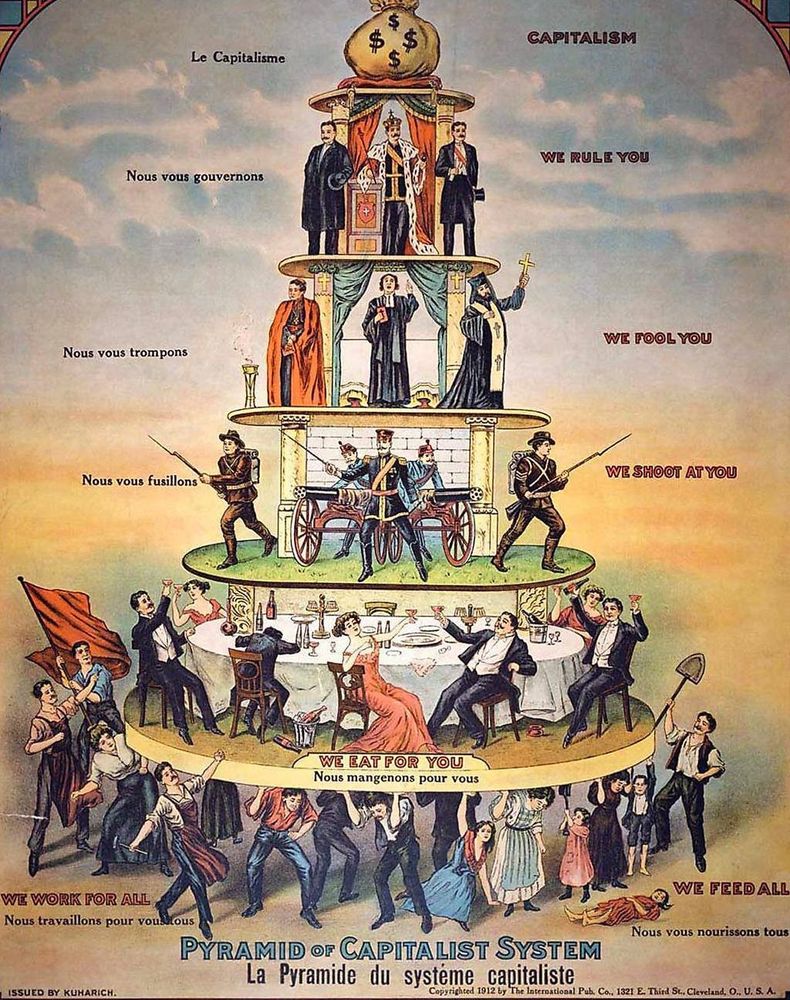
9,195 Matching Annotations
  1. Oct 2024
    1. "We believe in academic freedom, but it should not and cannot be used to excuse away behavior that harms others." (STATEMENT FROM HAMLINE UNIVERSITY) The above statements shows the struggle that Hamline faced when deciding to fire Erika Lopez Prater. A tension between academic freedom and insulting others.

      1:05 A good point by Safi is that the statements of the director was assuming that the freedom of speech was in direct opposition to the feelings of Muslims. This is not the case. A difference between iconical devotion within the Islamic tradition (both Sunni and Shia) and Charlie Hebdo examples.

      03:00 Both to respect students and expand their horizons. Not everyone needs to agree with it.

    1. The 'polycrisis' is real enough. But it’s a surface level symptom of multiple, simultaneous phase transitions at the core of the ‘hardware’ and ‘software’ systems that define human civilisation – which together can be understood as a planetary phase shift. But if all we see and respond to is the polycrisis – the symptoms of this process as it weakens industrial structures – that will derail the planetary phase shift to a new life cycle.

      for - comparison - to - book - The Ascent of Humanity - chapter 8 - The Gaian Birthing - Charles Eisenstein - quote - making sense of the polycrisis - a symptom of multiple phase transitions - (see below) - The 'polycrisis' is real enough. - But it’s a surface level symptom - of multiple, simultaneous phase transitions at the core of the ‘hardware’ and ‘software’ systems that define human civilisation - which together can be understood as a planetary phase shift. - But if all we see and respond to is the polycrisis - the symptoms of this process as it weakens industrial structures - that will derail the planetary phase shift to a new life cycle.

      comparison - to - book - The Ascent of Humanity - chapter 8 - The Gaian Birthing - Charles Eisenstein - Ahmed's writing about the polycrisis masking the planetary phase shift is very reminiscent of Charles Eisenstein's writing in the Ascent of Humanity in which he compares the great transition we are undergoing to - the perilous journey a neonate takes as it leaves the womb and enters the greater space awaiting

      to - book - The Ascent of Humanity - Chapter 8 - The Gaian Birthing - Charles Eisenstein - https://hyp.is/r8scTpG_Ee-gLTujlli5hQ/charleseisenstein.org/books/the-ascent-of-humanity/eng/the-gaian-birthing/

    2. for - rapid whole system change - Nafeez Ahmed - planetary phase shift - Nafeez Ahmed - planetary adaptive cycle - Nafeez Ahmed - essay - The End of Scarcity? From ‘Polycrisis’ to Planetary Phase Shift - Nafeez Ahmed - 2024 Oct 16 - to - book - The Ascent of Humanity - chapter 8 Self and Cosmos: The Gaian Birthing - stillborn and the perilous journey through the womb - Charles Eisenstein

      summary - This is a good article that makes sense of the inflection point that humanity now faces as it contends with multiple existential crisis - It summarizes the complexity of our polycrisis and its precarity and lays the theory for looking at the polycrisis from a different perspective: - as a planetary phase shift towards the potential end of scarcity and the next stage of our species evolution - Through the lens of ecologist Crawford Stanley Holling's lens of the adaptive cycle of ecological population dynamics, - and especially his 2004 paper "From Complex Regions to Complex Worlds" - Nafeez extends Holling's argument that we are undergoing a planetary adaptive cycle in which the back-loop is the dying industrial era. - In this sense, it is reminiscent of the writings of Charles Eisenstein in his book "The Ascent of Humanity", chapter 8: Self and Cosmos:, The Gaian Birth. - Eisenstein uses the the perilous journey of birth through the womb door as a metaphor of the transition we are currently undergoing.

      to - paper - From Complex Regions to Complex Worlds - Crawford Stanley Holling - 2004 - https://hyp.is/KYCm2pFrEe-_PEu84xshXw/www.ecologyandsociety.org/vol9/iss1/art11/main.html?ref=ageoftransformation.org - book - The Ascent of Humanity - Chapter 8 - The Gaian Birthing - Charles Eisenstein - https://hyp.is/r8scTpG_Ee-gLTujlli5hQ/charleseisenstein.org/books/the-ascent-of-humanity/eng/the-gaian-birthing/

    3. Our most powerful asset will be the collective capability to recognise the dynamics of the planetary phase shift now underway, its unprecedented risks and unfathomable opportunities, and most crucially, its role as a precursor to the next stage in human and planetary evolution as one and the same thing.

      for - similar to - polycrisis and planetary phase shift - Charles Eisenstein's metaphor of birth process - dangerous passage through the womb door

    4. These seemingly paradoxical trends are twin manifestations of the same fundamental process: an emerging planetary-scale cultural phase transition. The regressive sentiment is symptomatic of the decline of the industrial life cycle; the emerging shared moral vision signals the potential for a new life cycle altogether.

      for - in other words - paradoxical trends of increased division and emergence of shared values - the manifestation of the familiar aspects of human behavior - conservatism - progressive / liberalism

    5. This new way of seeing the world should place humanity’s emergence as a planetary species at its centre. That reveals the biggest information gap of all: the inability to see that we are in the midst of a great transformation that could entail the dawn of a whole new life cycle for humanity on a planetary scale.

      for - whole system change - big picture - back loop of planetary adaptive cycle - entering the reorganization phase - regional to planetary life cycle

    6. the emergence of greater vulnerability because of the increasing number of interconnections that link that wealth, and those who control it, in efforts to sustain it

      for - quote / insight - decreased resiliency due to tight network of elites - From Complex Regions to Complex Worlds Crawford Stanley Holling - 2004 - creative alternatives - liminal spaces - rapid whole system change

      quote / insight - decreased resiliency due to tight network of elites - (see quote below) - The front-loop phase is more predictable, - with higher degrees of certainty. - In both the natural and social worlds, - it maximizes production and accumulation. - We have been in that mode since World War II. - The consequence of this is not only an accumulation and concentration of wealth, - but also the emergence of greater vulnerability because of - the increasing number of interconnections that link that wealth, and - those who control it, - in efforts to sustain it. - Little time and few resources are available for alternatives that explore different visions or opportunities. - Emergence and novelty is inhibited. - This growing connectedness leads to increasing rigidity in its goal to retain control, - and the system becomes ever more tightly bound together. - This reduces resilience and the capacity of the system to absorb change, - thus increasing the threat of abrupt change. - We can recognize the need for change but become politically stifled in our capacity to act effectively.

      to - quote - we are now in a back-loop of a planetary adaptive cycle - From Complex Regions to Complex Worlds - Crawford Stanley Holling - 2004 - https://hyp.is/FTRDoJFuEe-rsvdKeYjr0g/www.ecologyandsociety.org/vol9/iss1/art11/main.html?ref=ageoftransformation.org

      comment - These ideas are quite important for those change actors working to emerge creative alternatives - liminal spaces - rapid whole system change

    7. constructal law

      for - definition - constructal law - Adrian Bejan - to - The constructal law of design in evolution and nature

      to - The constructal law of design in evolution and nature - https://hyp.is/ZRIXfo76Ee-5yZdY2quRaQ/pmc.ncbi.nlm.nih.gov/articles/PMC2871904/ - youtube explainer video - constructal theory - flow - Adrian Bejan - https://hyp.is/R7V4Yo79Ee-52gO6UYAaYQ/www.youtube.com/watch?v=tgEBTPee9ZM

    8. To survive, living systems need to process information from their environment so they can predict environmental conditions. They then translate this information into organising their material structures to maximise the efficiency with which they extract and dissipate energy.

      for - question - entropy definition of life - investigate further - entropy definition of life

      question - I'm not fully appreciating his explanation. This requires further investigation - This physical explanation of life appears to be aimed at showing that the hardware and software aspects of life work together to dissipate physical energy - Is he saying that life's purpose is to accelerate the heat death of the universe?

    9. Culture as the ‘genetic code’ of the next leap

      for - article - The End of Scarcity? From ‘Polycrisis’ to Planetary Phase Shift - Nafeez Ahmed - gene-culture coevolution - adjacency - indyweb dev - individual / collective evolutionary learning - provenance - tracing the evolution of ideas - gene-culture coevolution

      adjacency - between - indyweb dev - individual / collective evolutionary learning - provenance - tracing the evolution of ideas - gene-culture coevolution - adjacency relationship - As DNA and epigenetics plays the role of transmitting biological adaptations, language and symmathesy play the role of transmitting cultural adaptations

    Tags

    Annotators

    URL

    1. Ein internationales Team von Forschenden kommt in einer zusammenfassenden Arbeit zu dem Ergebnis, dass das Erdsystem in die neue Epoche des Anthropozän eingetreten ist. Dafür sei vor allem das Energieungleichgewicht durch Treibhausgase verantwortlich. Das Anthropzän werde wesentlich länger dauern als.das. Holozän, in dem stabile.Umweltbedingungen die.Entwicklung der menschlichen Zivilisation begünstigten https://science.orf.at/stories/3227245/

      Paper: https://www.sciencedirect.com/science/article/pii/S0921818124002157?via%3Dihub

    1. Why should we have philanthropy?The reason that we have charities and NGOs and all of this is to fix the problems of corporations.

      for - meme - abolish philanthropy - to - critique - Andrew Carnegie essay - The Gospel of Wealth

      meme - abolish philanthropy - Agree. Corporations, through externalizing social and ecological impacts, have created a majority of the problems of the polycrisis, that non-profits are created to solve - It would be far more efficient to NOT create those problems to begin with - see my annotations on Andrew Carnegie's "Gospel of Wealth" - where I critique Carnegie's philosophy

      to - critique - Andrew Carnegie - essay - The Gospel of Wealth - https://hyp.is/go?url=https%3A%2F%2Fwww.carnegie.org%2Fabout%2Four-history%2Fgospelofwealth%2F&group=world

    2. what is the nature of the invitation.

      for - group dynamics of expanding and converging groups

      group dynamics of expanding and converging groups - It is natural for groups to expand and grow and when they do, it changes the dynamics of the social interactions - Effort is required to know each other. It requires time to share and absorb what is shared - That legacy knowledge becomes the unspoken and implicit ground for future discourse - When new people are introduced to a group, or new groups are introduced to each other, - a minimum amount of sharing is required to establish common ground, common understanding - When members of a group have unique ideas to share, - a standardized, shareable documentation may become necessary for greater efficacy of sharing - the constitutions that are often at the heart of institutions became necessary for the same reasons

    3. Is it that we each do our own thing and we develop some form of in a collegiality between us, how to go forward?

      The plan is to create a pool of learning and documents so that any one of us can apply for funding to create an FSC with a 501c3 as the legal entity with FSC bye laws that can be adapted

      The emergenrt natur eis that we are holding spoace for the creation of an eco system of 501c3's with FSC bye laws

    4. annotation work

      We are hoping to create a COLLECTIVE COMMONS for our annotations The ancient model is the Celtic SPirtual ANNAL such as the book of kells or Leabhar Gabhala (Book of INvasions) where multipel wisodm keepers over generations add their wisdom IN BETWEEN THE LINES

      For now, Gyuri and Gien call it Hyperpost

      We are using hypothesis (as in this annotation) to play with what tools we have now

      Gyuir and Gien intend to make it CROSS PLATFORM

      They are using the term INDYWEB and INDRAS NETS

    5. Meeting Purpose Explore the potential of Fair Shares Commons and strategize on implementation in Kansas/Missouri region.

      Thank you so much for creating the meeting and for holding space It is not intended that any one person ought to be a central point of contact We are to become autocatalytic - energies arise and fall and all that is is and all that is not is not Some people will not show up Some people will show up all the time We are all equally included We are all One

    1. Die von Waldbränden außerhalb der Tropen verursachten Emissionen haben sich seit 2001 fast verdreifacht. Weltweit haben die Emissionen durch Waldbrände in dieser Zeit um 60% zugenommen. Ursache dafür ist die Kombination von heißerem und trockenerem Wetter mit dem schnelleren Wachstum der Wälder durch die höheren Temperaturen. Die Wälder können durch die Brände jahrzehntelang zu Emittenten werden. Damit ist die Funktion der Wälder als Kohlenstoffsenken gefährdet. Das bedeutet auch, dass sie andere anthropogene Emissionen weniger kompensieren und die Fähigkeit verlieren, nach einem Überschreiten der 1,5°-Grenze C0<sub>2</sub> aus der Atmosphäre zu entfernen. Außerdem müssten diese von Menschen verursachten Emissonen den C0<sub>2</sub>-Budgets der Nationalstaaten zugeordnet werden.

      https://theconversation.com/forest-fires-are-shifting-north-and-intensifying-heres-what-that-means-for-the-planet-241337

    1. Erstmals wurde genau erfasst, welcher Teil der von Waldbränden betroffenen Gebiete sich auf die menschlich verursachte Erhitzung zurückführen lässt. Er wächst seit 20 Jahren deutlich an. Insgesamt kompensieren die auf die Erhitzung zurückgehenden Waldbrände den Rückgang an Bränden durch Entwaldung. Der von Menschen verursachte – und für die Berechnung von Schadensansprüchen relevante – Anteil der CO2-Emissione ist damit deutlich höher als bisher angenommen https://www.carbonbrief.org/climate-change-almost-wipes-out-decline-in-global-area-burned-by-wildfires/

    1. Value of knowledge in a zettelkasten as a function of reference(use/look up) frequency; links to other ideas; ease of recall without needing to look up (also a measure of usefulness); others?

      Define terms and create a mathematical equation of stocks and flows around this system of information. Maybe "knowledge complexity" or "information optimization"? see: https://hypothes.is/a/zejn0oscEe-zsjMPhgjL_Q

      takes into account the value of information from the perspective of a particular observer<br /> relative information value

      cross-reference: Umberto Eco on no piece of information is superior: https://hypothes.is/a/jqug2tNlEeyg2JfEczmepw

      Inspired by idea in https://hypothes.is/a/CdoMUJCYEe-VlxtqIFX4qA

    2. Here's my setup: Literature Notes go in the literature folder. Daily Notes serve as fleeting notes. Project-related Notes are organized in their specific project folders within a larger "Projects" folder.

      inspired by, but definitely not take from as not in evidence


      Many people have "daily notes" and "project notes" in what they consider to be their zettelkasten workflow. These can be thought of as subcategories of reference notes (aka literature notes, bibliographic notes). The references in these cases are simply different sorts of material than one would traditionally include in this category. Instead of indexing the ideas within a book or journal article, you're indexing what happened to you on a particular day (daily notes) or indexing ideas or progress on a particular project (project notes). Because they're different enough in type and form, you might keep them in their own "departments" (aka folders) within your system just the same way that with enough material one might break out their reference notes to separate books from newspapers, journal articles, or lectures.

      In general form and function they're all broadly serving the same functionality and acting as a ratchet and pawl on the information that is being collected. They capture context; they serve as reminder. The fact that some may be used less or referred to less frequently doesn't make them necessarily less important

    1. Is "Scoping the subject" a counter-Zettelkasten approach?

      Sounds like you're doing what Mortimer J. Adler and Charles van Doren would call "inspectional reading" and outlining the space of your topic. This is both fine and expected. You have to start somewhere. You're scaffolding some basic information in a new space and that's worthwhile. You're learning the basics.

      Eventually you may come back and do a more analytical read and/or cross reference your first sources with other sources in a syntopical read. It's at these later two levels of reading where doing zettelkasten work is much more profitable, particularly for discerning differences, creating new insights, and expanding knowledge.

      If you want to think of it this way, what would a kindergartner's zettelkasten contain? a high school senior? a Ph.D. researcher? 30 year seasoned academic researcher? Are the levels of knowledge all the same? Is the kindergartner material really useful to the high school senior? Probably not at all, it's very basic. As a result, putting in hundreds of atomic notes as you're scaffolding your early learning can be counter-productive. Read some things, highlight them, annotate them. You'll have lots of fleeting notes, but most of them will seem stupidly basic after a month or two. What you really want as main notes are the truly interesting advanced stuff. When you're entering a new area, certainly index ideas, but don't stress about capturing absolutely everything until you have a better understanding of what's going on. Then bring your zettelkasten in to leverage yourself up to the next level.

      • Adler, Mortimer J. “How to Mark a Book.” Saturday Review of Literature, July 6, 1940. https://www.unz.com/print/SaturdayRev-1940jul06-00011/
      • Adler, Mortimer J., and Charles Van Doren. How to Read a Book: The Classical Guide to Intelligent Reading. Revised and Updated edition. 1940. Reprint, Touchstone, 2011.

      reply to u/jack_hanson_c at https://old.reddit.com/r/Zettelkasten/comments/1g9dv9b/is_scoping_the_subject_a_counterzettelkasten/

    1. Finnland hatte sich beim Ziel der CO2-Neutralität 2035 darauf verlassen, dass große Mengen von CO2 von Wäldern, Böden und Feuchtgebieten absorbiert werden. Inzwischen ist das Land dort keine Kohlenstoffsenke mehr. Dazu trägt die globale Erhitzung selbst bei, durch die viele Bäume sterben, aber auch die Abholzung des Waldes. Finnland ist ein Beispiel für die Schwächung der ländlichen Kohlenstoffsenken, von der viele Länder betroffen sind. https://www.theguardian.com/environment/2024/oct/15/finland-emissions-target-forests-peatlands-sinks-absorbing-carbon-aoe

    1. 2023 haben Böden und Landpflanzen fast kein CO2 absorbiert. Dieser Kollaps der Landsenken vor allem durch Dürren und Waldbrände wurde in diesem Ausmaß kaum vorausgesehen, und es ist nicht klar, ob auf ihn eine Regeneration folgt. Er stellt Klimamodelle ebenso in Frage wie die meisten nationalen Pläne zum Erreichen von CO2-Neutralität, weil sie auf natürlichen Senken an Land beruhen. Es gibt Anzeichen dafür, dass die steigenden Temperaturen inzwischen auch die CO2-Aufnahmefähigkeit der Meere schwächen. Überblicksartikel mit Links zu Studien https://www.theguardian.com/environment/2024/oct/14/nature-carbon-sink-collapse-global-heating-models-emissions-targets-evidence-aoe

    1. Adrian Poisson grew up studying science and math by day and art after hours beginning at the age of five

      for - Adrian Bejan - constructal law - childhood - art and science - from - The End of Scarcity? From ‘Polycrisis’ to Planetary Phase Shift - Nafeez Ahmed - 2024, Oct 16

      Summary - Good explainer video about constructal theory and flow

      from - The End of Scarcity? From ‘Polycrisis’ to Planetary Phase Shift - Nafeez Ahmed - 2024, Oct 16 - https://hyp.is/Qt8IMI74Ee--f4O18QMPFQ/ageoftransformation.org/the-end-of-scarcity-from-polycrisis-to-planetary-phase-shift/

    1. Ein „mediterraner Zyklon“ verursacht an diesem Wochenende überall in Italien extreme Unwetter. In der vergangenen Woche kam es in Ligurien stellenweise innerhalb weniger Stunden zu Niederschlägen von 300 mm (an einigen Punkten Frankreichs zu 600mm). Bei Piombino fielen in einer Stunde 120 mm Regen. Diese „tropischen“ Niederschlagsmengen weichen deutlich vom gewohnten mediterranen Klima ab. https://www.repubblica.it/italia/2024/10/19/news/previsioni_meteo_weekend_maltempo_nubifragi_allerta_rossa-423564680/

    1. for - polycrisis - organized crime - Daily Maverick article - organized crime - Cape Town - How the state colludes with SA’s underworld in hidden web of organised crime – an expert view - Victoria O’Regan - 2024, Oct 18 - book - Man Alone: Mandela’s Top Cop – Exposing South Africa’s Ceaseless Sabotage - Daily Maverick journalist Caryn Dolley - 2024 - https://viahtml.hypothes.is/proxy/https://shop.dailymaverick.co.za/product/man-alone-mandelas-top-cop-exposing-south-africas-ceaseless-sabotage/?_gl=11mkyl5s_gcl_auODI2MTMxODEuMTcyNjI0MDAwMg.._gaNzQ5NDM3NzE0LjE3MjMxODY0NzY._ga_Y7XD5FHQVG*MTcyOTM1MjgwOS4xLjAuMTcyOTM1MjgxOS41MC4wLjkyNTE5MDk2OA..

      summary - This article revolves around the research of South African crime reporter Caryn Dolley on the organized web of crime in South Africa - She discusses the nexus of - trans-national drug cartels - local Cape Town gangs - South African state collusion with gangs - in her new book: Man Alone: Mandela's Top Cop - Exposing South Africa's Ceaseless Sabotage - It illustrates how on-the-ground efforts to fight crime are failing because they do not effectively address this criminal nexus - The book follows the life of retired top police investigator Andre Lincoln whose expose paints the deep level of criminal activity spanning government, trans-national criminal networks and local gangs - Such organized crime takes a huge toll on society and is an important contributor to the polycrisis. - Non-linear approaches are necessary to tackle this systemic problem - One possibility is a trans-national citizen-led effort

    1. Das von den französischen Grünen regierte Lyon reagiert auf die globale Erhitzung mit einer „Strategie der durchlässigen Stadt“. Dazu gehört es, bei ausnahmslos jedem neuen Bauprojekt Wasser versickern zu lassen statt es abzuleiten. Eine Vizepräsidentin der Region erklärt die Strategie - und den Unwillen des Staats zur finanziellen Unterstützung der Stadt -im Gespräch mit der Libération aus Anlass der extremen Regenfälle im Département Rhône https://www.liberation.fr/societe/inondations-dans-la-metropole-de-lyon-nous-payons-des-annees-damenagements-urbains-qui-nont-pas-tenu-compte-du-dereglement-climatique-20241018_FT2OJG5YNVFWBJMHM37NJGB634/?redirected=1

    1. Der Stress, dem die Wassersysteme der Welt ausgesetzt sind, wird dazu führen, dass das 2030 die Nachfrage nach Wasser 40% höher sein wird als das Angebot. Der Bericht der Globalen Komission für die Wasserökonomie stellt fest, dass ohne radikale Gegenmaßnahmen die Hälfte der Nahrungsproduktion der Welt in den kommenden 25 Jahren gefährdet ist. Trotz der Verbundenheit der globalen Wasserressourcen werde Wasser noch nicht als globales Gemeingut gemanagt. https://www.theguardian.com/environment/2024/oct/16/global-water-crisis-food-production-at-risk

      Bericht: https://economicsofwater.watercommission.org/

    1. Eine Studie weist erstmals systematisch den Einfluss von Dürren und zunehmender Trockenheit auf die Binnenmigration in vielen verschiedenen Ländern nach. Es migrieren vor allem Mitglieder mittlerer Einkommensgruppen, die die dazu nötigen Ressourcen haben. Die klimabedingte Migration trägt deutlich zur Urbanisierung bei https://www.derstandard.at/story/3000000240733/mehr-binnenmigration-durch-klimawandel

      Studie: https://www.nature.com/articles/s41558-024-02165-1.epdf?sharing_token=zQaNIIlE0D5VSVhiEeWSRdRgN0jAjWel9jnR3ZoTv0N5BsSsWDa3LuiqvifrZZqQ9PHrGw0G8JwyXN4l5XLwHLyMEPxhNDlwsm_I7HyLLBL-PIsL8iWYBirASOxKiB3OvY5CyEDs2OqdYzcj0HqqPZGigOJmwF7H97HsKHpUv2tEjBvnMf7i4DKmBH78sfFsx7iymr6A4PFpKfrKe6IDSxkyQgZFpa8kBrt8lM6HkbU%3D&tracking_referrer=www.derstandard.at

    1. What conditions nurture collaboration?🔮 What conditions prevent or squash it?🔮 Can we expand our collective collaborative literacy with a wider, deeper repertoire to navigate wisely and well through the inherently messy and often difficult iterations of true collaboration?

      for - questions - collaboration literacy - Donna Nelham - to - book - The Birth and Death of Meaning - Ernest Becker -

      questions - collaboration - Donna Nelham - These three questions are all related - To get to the root of collaboration, it is helpful to examine the roots of human psychology to understand the fundamental relationship between - the individual and - the group - In his work "The Birth ad Death of Meaning, Ernest Becker argues, citing other peers, that - the self concept needs to emerge for effective group collaboration to develop and - the self concept requires others in order to construct it - Hence, other is already implicated in the construction of our own self - In Deep Humanity terminology, we call this intertwingledness of the self and other the "individual / collective gestalt"

      to - book - The Birth and Death of Meaning - Ernest Becker - https://hyp.is/40fZHv9CEe6bTovrYzF92A/www.themortalatheist.com/blog/the-birth-and-death-of-meaning-ernest-becker

    1. beyond our power to alter, and therefore to be accepted and made the best of. It is a waste of time to criticize the inevitable.

      for - quote / critique - it is upon us, beyond our power to alter, and therefore to be accepted and made the best of. It is a waste of time to criticize the inevitable. - Andrew Carnegie - The Gospel of Wealth - alternatives - to - mainstream companies - cooperatives - Peer to Peer - Decentralized Autonomous Organization (DAO) - Fair Share Commons - B Corporations - Worker owned companies

      quote / critique - it is upon us, beyond our power to alter, and therefore to be accepted and made the best of. It is a waste of time to criticize the inevitable. - Andrew Carnegie - The Gospel of Wealth - This is a defeatist attitude that does not look for a condition where both enormous inequality AND universal squalor can both eliminated - Today, there are a growing number of alternative ideas which can challenge this claim such as: - Cooperatives - example - Mondragon corporation with 70,000 employees - B Corporations - Fair Share Commons - Peer to Peer - Worker owned companies - Cosmolocal organizations - Decentralized Autonomous Organization (DAO)

    2. Thus is the problem of Rich and Poor to be solved. The laws of accumulation will be left free; the laws of distribution free. Individualism will continue, but the millionaire will be but a trustee for the poor; intrusted for a season with a great part of the increased wealth of the community, but administering it for the community far better than it could or would have done for itself.

      for - quote / critique / question - Thus is the problem of Rich and Poor to be solved. The laws of accumulation will be left free; the laws of distribution free. Individualism will continue, but the millionaire will be but a trustee for the poor; intrusted for a season with a great part of the increased wealth of the community, but administering it for the community far better than it could or would have done for itself. - The Gospel of Wealth - Andrew Carnegie

      quote / critique / question - Thus is the problem of Rich and Poor to be solved. The laws of accumulation will be left free; the laws of distribution free. Individualism will continue, but the millionaire will be but a trustee for the poor; intrusted for a season with a great part of the increased wealth of the community, but administering it for the community far better than it could or would have done for itself. - The Gospel of Wealth - Andrew Carnegie - The problem with this reasoning is that it is circular - By rewarding oneself an extreme and unfettered amount of wealth for one's entrepreneurship skills creates inequality in the first place - Competition that destroys other corporations ends up reducing jobs - At the end of life, the rich entrepreneur desires to give back to society the wealth that (s)he originally stole - If one had reasonable amounts of rewarding innovation instead of unreasonable amounts, the problem of inequality can be largely mitigated in the first place whilst still recognizing and rewarding individual effort and ingenuity

    3. destruction of Individualism

      for - critique - destruction of Individualism - The Gospel of Wealth - Andrew Carnegie - individual / collective Gestalt - Deep Humanity

      critique - destruction of Individualism - The Gospel of Wealth - Andrew Carnegie - From a Deep Humanity perspective, the individual and the collective are intertwingled - This is the individual / collective gestalt - Communism and Capitalism are both extreme poles - the truth lies somewhere in the middle - which acknowledges both are individual AND collective nature simultaneously - and works to balance them

    4. the right of the laborer to his hundred dollars in the savings bank, and equally the legal right of the millionaire to his millions.

      for - critique - extreme wealth inequality cannot be avoided for the greater improvement of society - The Gospel of Wealth - Andrew Carnegie - stats - Mondragon corporation - comparison of pay difference between highest paid and lowest paid - adjacency - Gandhi quote - Andrew Carnegie beliefs in The Gospel of Wealth

      critique - extreme wealth inequality cannot be avoided for the greater improvement of society - The Gospel of Wealth - Andrew Carnegie - It's a matter of degree - Wealth differences within US corporations of 344 to 1 are obscene and not necessary, as proven by - Wealth difference of 6 to 1 in Mondragon federation of cooperatives - To quote - Gandhi, there is enough to meet everyone's needs but not enough to meet everyone's greed - The great problem with such large wealth disparity is that those who know how to game the system can earn obscene amounts of money - and since the concept of luxury goods is made desirable and proportional to monetary wealth, it creates a positive feedback loop of insatiability - The combination of engaging in ever greater luxury lifestyle and power is intoxicating and addictive

      to - stats - Mondragon corporation - comparison of pay difference between highest paid and lowest paid - https://hyp.is/QAxx-o14Ee-_HvN5y8aMiQ/www.csmonitor.com/Business/2024/0513/income-inequality-capitalism-mondragon-corporation

    5. That this talent for organization and management is rare among men is proved by the fact that it invariably secures for its possessor enormous rewards, no matter where or under what laws or conditions.

      for - critique - extreme wealth a reward for rare management skills - Andrew Carnegie - The Gospel of Wealth - Mondragon counterexample - to - stats - Mondragon pay difference between highest and lowest paid - article - In this Spanish town, capitalism actually works for the workers - Christian Science Monitor - Erika Page - 2024, June 7

      critique - extreme wealth a reward for rare management skills - Andrew Carnegie - The Gospel of Wealth - Mondragon counterexample - This is invalidated today by large successful cooperatives such as Mondragon

      to - stats - Mondragon corporation - comparison of pay difference between highest paid and lowest paid - https://hyp.is/QAxx-o14Ee-_HvN5y8aMiQ/www.csmonitor.com/Business/2024/0513/income-inequality-capitalism-mondragon-corporation

    6. for - from - MSN article - How a poor boy from Scotland became the richest man on Earth - The life of Andrew Carnegie - Daniel Coughlin - essay - The Gospel of Wealth - Andrew Carnegie - philanthropy adjacency - Carnegie - The Gospel of Wealth - Anthropocene - critique

      summary - It is interesting to read this article from the perspectives of a commons activist - The link to the MSN article that led me to Carnegie's essay is below and it provides a good summary of his life. - He came from a very challenging life of poverty, growing up in a family and in circumstances where they were constantly struggling to make ends meet - His is the story of the deep imprint of poverty providing him with motivation to escape it - Having risen to become the world's richest man, and then giving his fortune away due to the deep imprint of poverty experienced in childhood, - he formed an opinion on inequality and capitalist material production that was borne out of his experience as a successful entrepreneur and the contrast of quality of life between: - a pre-industralized society in which he was familiar from childhood experiences and - the profound material improvements accessible to all due to mass production that he helped to pioneer - In the essay, he sees the inequality found in society to be the price that needed to be paid for everyone to have access to a higher standard of living - This is where critical analysis from a modern post-Marxist, post-Capitalist perspective might provide an interesting critique, - especially from the anthropocene perspective, where the epitome of the system Carnegie praised has led to a state of environmental destruction so vast that Carnegie could never have foreseen it - A question: would Carnegie have written his essay differently were he alive to witness the environmental destruction of the Anthropocene?

      from - MSN article - How a poor boy from Scotland became the richest man on Earth - The life of Andrew Carnegie - Daniel Coughlin - https://hyp.is/urXCfo1hEe-OdSMr4kqwyg/www.lovemoney.com/news/135656/the-astonishing-rags-to-riches-story-of-andrew-carnegie

    Tags

    Annotators

    URL

    1. The income disparity between the highest- and lowest-paid employees in Mondragon’s cooperatives is capped at a ratio of 6-to-1, compared with a typical ratio of 344-to-1 in the United States. (It’s typically 77-to-1 in Spain.)

      for - stats - Mondragon corporation - pay difference comparison between highest paid and lowest paid - from - essay - The Gospel of Wealth - Andrew Carnegie - Carnegie organization

      from - essay - The Gospel of Wealth - Andrew Carnegie - Carnegie organization - https://hyp.is/dIoiDo16Ee-0n2OpOK3lwg/www.carnegie.org/about/our-history/gospelofwealth/

      stats - Mondragon corporation - comparison of pay difference between highest paid and lowest paid - Modragon - 6 to 1 - typical US - 344 to 1 - typical Spain - 77 to 1

    1. Reporter John Dickerson talking about his notebook.

      While he doesn't mention it, he's capturing the spirit of the commonplace book and the zettelkasten.

      [...] I see my job as basically helping people see and to grab ahold of what's going on.

      You can decide to do that the minute you sit down to start writing or you can just do it all the time. And by the time you get to writing you have a notebook full of stuff that can be used.

      And it's not just about the thing you're writing about at that moment or the question you're going to ask that has to do with that week's event on Face the Nation on Sunday.

      If you've been collecting all week long and wondering why a thing happens or making an observation about something and using that as a piece of color to explain the political process to somebody, then you've been doing your work before you ever sat down to do your work.

      <div style="padding:56.25% 0 0 0;position:relative;"><iframe src="https://player.vimeo.com/video/169725470?h=778a09c06f&title=0&byline=0&portrait=0" style="position:absolute;top:0;left:0;width:100%;height:100%;" frameborder="0" allow="autoplay; fullscreen; picture-in-picture" allowfullscreen></iframe></div> <script src="https://player.vimeo.com/api/player.js"></script>

      Field Notes: Reporter's Notebook from Coudal Partners on Vimeo.

    1. Who were the Physiocrats?

      for - definition - physiocrats - Steve Keen - economy - history - economic flow as biomimicry of body's circulation system

      definition - physiocrat - During the 18th and 19th century, a group of mostly French "economists" led by Francois Quesnay, physician to the King of France at the time, performed some of the first autopsies of the time. - Autopsies were banned for the longest time for religious reasons - When Quesnay performed autopsies, he discovered networks of tubes in the circulation system and this led him to surmise a network of circulation in another field, economics - Quesnay advised the king, hence the name physiocrat - So modern economics has its roots in biology - it was a case of biomimicry!

    1. for - article - Why Human (Contributive) Labor remains the creative principle of human society - Michael Bauwens - PhD thesis - From Modes of Production to the Resurrection of the Body: A Labor Theory of Revolutionary Subjectivity & Religious Ideas (2016) - Benjamin Suriano - to - P2P Foundation - more detailed presentation of Benjamin Suriano's PhD paper

      Summary - This is a review and high recommendation of the PhD dissertation of Benjamin Suriano by Michael Bauwens - The subject is the historical analysis of labour in medieval times, and - how Christian monasticism provided a third perspective on labour that was an important alternative to the false dichotomy of - cleric - warrior - that was inclusive of the alienated within class majority - a proposal for revival the spirit of this spiritual view of labour - as a means to mitigate modernity's meaning crisis as it relates to the lack of purpose usually associated with work in contemporary society

      to - P2P Foundation - more detailed presentation of Benjamin Suriano's PhD paper - https://hyp.is/7PeMMIxtEe-NOmuU08T3jg/wiki.p2pfoundation.net/From_Modes_of_Production_to_the_Resurrection_of_the_Body

    1. for - from - recommendation - from - Michel Bauwens - on Fair Share Commons chat thread, 2024 Oct 17 - context Karl Marx liberation of the individual - to - substack article - Why Human (Contributive) Labor remains the creative principle of human society - Michel Bauwens article details - title: From Modes of Production to the Resurrection of the Body: A Labor Theory of Revolutionary Subjectivity & Religious Ideas" (2016) - author: Benjamin Suriano

      to - Substack article - Why Human (Contributive) Labor remains the creative principle of human society - Michel Bauwens - https://hyp.is/go?url=https%3A%2F%2F4thgenerationcivilization.substack.com%2Fp%2Fwhy-human-contributive-labor-remains&group=world

    1. what really I was really interested in was the idea that Marx wasn't really Keen or was sort of hostile to the idea of equality which I'm guessing will come as a surprise to many people

      for - interesting perspective - Karl Marx - He wasn't principally interested in equality - book - Capitalism: the word and the thing - perspectival knowledge of - Michael Sonenscher - misunderstanding - modern capitalists - misunderstand Karl Marx's work - Michael Sonenscher - Karl Marx and Capitalism - Maximizing each individual's freedom while not trampling on the same aspiration of other individuals within a society

      Interesting perspective - Karl Marx wasn't principally interested in equality - Sonenscher offers an interesting interpretation and perspectival knowledge of Karl Marx's motivation in his principal work paraphrase - Marx's thought centered on is interest in individuality and the degree to which in certain respects being somebody who is free and able to make choices about his or her lives and future activities is going to depend on each person's: - qualities - capabilities - capacities - preoccupations - values, etc - For Marx, freedom is in the final analysis something to do with something - particular - specific and - individual w - What matters to me may not matter entirely in the same sort of way to you because ultimately - in an ideal State of Affairs, my kinds of concerns and your kinds of concerns will be simply specific to you and to me respectively - For Marx, the problems begin as is also the case with Rosseau - when these kinds of absolute qualities are displaced by - relative qualities that apply equally to us both - For Marx, things like - markets - prices - commodities and - things that connect people - are the hallmarks of equality because they put people on the same kind of footing prices and productivity - Whereas the things that REALLY SHOULD COUNT are - the things that separate and distinguish people that make each individual fully and and entirely him or herself and - the idea for Marx is that capitalism - which is not a term that Marx used, - puts people on a kind of spurious footing of equality - Getting beyond capitalism means getting beyond equality to a state of effect in which - difference , - particularity, - individuality and - uniqueness - in a certain kind of sense will prevail

      comment - This perspective is quite enlightening on Marx's motivations on this part of his work and is likely misconstrued by those mainstream "capitalists" who vilify his work without critical analysis - Of course freedom - within a social context - is never an absolute term. - It is not possible to live in a society in which everyone is able to actualize their full imaginations, something pointed out in the work of two other famous thought leaders of modern history: - Thomas Hobbes observed in his famous work, Leviathan, and - Sigmund Freud also made a primary subject of his ID, Ego and Superego framework. - Total freedom would lead - first to anarchy and then - the emergence within that anarchy of those which possess the most charisma, influence, self-seeking manipulative skills and brutality - surfacing rule by authority - Historically, as democracy attempts to surface from a history of authoritarian, patriarchal governance, - democracy is far from ubiquitous and authoritarian governance is still alive and well in many parts of the world - The battle between - authoritarian governments among themselves and - authoritarian and democratic governments - results in war, violence and trauma that creates the breeding ground for the next generation of authoritarian leaders - Marx's main intent seems to be to enable the individual existing within a society to live the fullest life possible, - by way of enabling and maximizing their unique expression, - while not constraining the same aspiration in other individuals who belong to the same society

    1. Michael Sonenscher

      for - capitalism - etymology - modern - book Capitalism: The Word and the Thing - Michael Sonenscher - from - Discussion of "spiritual capitalism" on Kansas Missouri Fair Shares Commons chat thread - to - youtube - New Books Network - interniew - Captialism: The word and the thing - Michael Sonenscher

      Summary - Michael Sonenscher discusses the modern evolution of the word "capitalism". Adding the suffix "ism" to a word implies a compound term. - Capitalism is a complex, compound concept whose connotations from the use in 18th and 19th century France and England is quite different from today's. - How meaning evolved can give us insight into our use of it today.

      to - youtube - New Books Network - interniew - Captialism: The word and the thing - Michael Sonenscher - https://hyp.is/ftWWfoxQEe-FkUuIeSoZCA/www.youtube.com/watch?v=ZpNaxyPpOf0

    1. We use the term“eeting notes” not because they’re of a particularly high value, but becauseof the value we place on the notes they’ll become.

      There are some fleeting ideas which are truly great and the entire purpose of writing them down is to maintain their value. ("I was in the bath one day...") Others ideas aren't particularly genius, but may need to be kept for later use or actionability. Still other ideas are just useless and these get flushed out in the wash.

      BD doesn't do an exceptional job of looking at the entirety of the spectrum of ideas here, which could be useful and illustrative, but instead focuses on moving things toward what he's calling "main notes", and even these can have different levels of value to a particular person.

    1. Der neue Bericht der Europäischen Umweltbehörde zum Wasser stellt fest, dass sich nur 37% der Oberflächengewässer in einem guten oder sehr guten Zustand befinden. Vor allem die Landwirtschft belastet die Gewässer durch Pestizide und Dünger. Die globale Erhitzung führt außer zu mehr Überschwemmungen zu zunehmendem Wasserstress durch Dürren. Die Qualität der Gewässer verschlechtere sich. Europa sei auf dem Weg, seine Ziele beim Schutz der Wasserversorgung zu vefehlen https://www.derstandard.at/story/3000000240721/europas-wasserversorgung-laut-eu-agentur-vor-gro223en-herausforderungen

      Bericht: https://www.eea.europa.eu/en/newsroom/news/state-of-water

    1. BP investiert in die Erschließung neuer fossiler Lagerstätten und hat damit den Plan aufgegeben, seine Öl- und Gasproduktion bis 2030 um 25% zu senken. Dieser Plan war bereits eine Abschwächung des ursprünglichen Ziels einer Reduktion um 40%. Wie andere große Ölfirmen konzentriert sich BP auf kurzfristige zusätzliche Gewinne aus dem Öl- und Gasgeschäft statt auf die - ohnehin zu geringen - Investitionen in die Energiewende. DIEEE Stategie treibt die globale Erhitzung weiter an. https://www.theguardian.com/business/2024/oct/07/bp-abandoning-plan-to-cut-oil-output-angers-green-groups

    1. In mehr als 50% der Flussgebiete der Erde herrschten 2024 wie schon in den beiden Vorjahren nicht die normalen Bedingungen. Meist war es zu trocken, oft extrem trocken. Der Bericht der WMO zu den globalen Wasserressourcen stellt fest, dass sich der Wasserkreislauf durch die globale Erhitzung beschleunigt hat. 3,6 Mrd. Menschen haben wenigstens einen Monat im Jahr zu wenig Zugang zu Wasser. Ihre Zahl droht bis 2050 auf 5 Mrd. zu steigen.https://www.theguardian.com/environment/2024/oct/07/climate-warning-as-worlds-rivers-dry-up-at-fastest-rate-for-30-years

      Bericht: https://wmo.int/publication-series/state-of-global-water-resources-2023

    1. To mark Main Headingsyou might have coloured Cards, for instance, blue Cards,or else larger Cards.

      Using larger cards for main headings as Miles suggests (1905/1899) is very similar to using tabbed dividers. When were these invented for separating groups?

      The original tags from antiquity did this sort of functionality as they stuck out from the shelves as a finding aid.

    2. But, the more heexamines the subject, and the more he goes by hispersonal experience, the more he will find it worthwhile to spend time on, and to practise carefully,fthisfirst department of Composition, as opposed to the mereExpression^] Indeed one might almost say that, if thisfirst department has been thoroughly well done, that isto say, if the Scheme of Headings and Sub-Headingshas been well prepared, the Expression will be a com-paratively easy matter.

      Definition of the "first department of composition": <br /> The preparation (mise en place) for writing as opposed to the actual expression of the writing. By this he likely means the actions of Part II (collecting, selecting, arranging) of this book versus Part III.

    3. In order to give the reader some chance of havinga good Collection of Headings, and less chance ofomitting the important Headings, I have offered (e.g.on pp. 83, 92) a few General Lists, which are not quitecomplete but yet approach to completeness ; two ofthese Lists will be found sufficient for most purposes.One of these is called the List of Period- Headings,such as Geography, Religion, Education, Commerce,War, etc. (see p. 83); the other is called the List ofGeneral Headings, and includes Instances, Causes andHindrances, Effects, Aims, etc. : this latter List will befound on p. 92.
    4. He must analysethe whole stroke, and must not attempt to do it asif it were a single unit. It is true that the bornplayer, by the light of genius, does the whole stroke asa whole stroke, and perhaps is not aware that it can feedivided into parts : he may even deny it. None theless it has often been proved that it can be divided intoparts, and that to master each part separately is a mucheasier .process than to -master the whole -at once. It is -notgoing too far to say that for average people to masterthe whole stroke at once is an absolute impossibility.

      Interesting to see this tennis analogy in writing in 1905 from a top-notch player who will win a silver metal in the 1908 Olympics...

    1. What is a Certified Translation? Understand the common uses and requirements of a certified translation and download sample statements. Home / Client Assistance / What is a Certified Translation?

      What is a Certified Translation?

      Understand the common uses and requirements of a certified translation and download sample statements.

      Home / Client Assistance / What is a Certified Translation?

      What are the basics of a certified translation?

      In the United States, anyone can certify a translation. A translator does not need to be certified in order to provide a certified translation. The individual translator can certify their translations, as can an employee of a translation company.

      A translator may also certify someone else's translation—as long as the translator has fully reviewed the translation for accuracy and completeness and the translation will not be changed after being certified. That is why translation companies can certify translations provided by their employees or freelance translators.

      The certification statement must specify whether the signer has translated or reviewed the translation.

    1. We provide the concept with a substantive definition

      for - paper - Global polycrisis - the causal mechanisms of crisis entanglement

      paper details - title: Global polycrisis - the causal mechanisms of crisis entanglement - authors: Michael Lawrence, Thomas Homer-Dixon, Schott Janzwood, Johan Rockstrom, Ortwin Renn, Jonathan F. Donges - publication: Global Sustainability, 2024, January 17

      summary - This paper provides a scientific definition of "polycrisis"

    1. For many years, scientists, including a group of more than 15,000, have sounded the alarm about the impending dangers of climate change driven by increasing greenhouse gas emissions and ecosystem change (Ripple et al. 2020).

      for - scientists warning - 2024 state of the climate report - adjacency - 2024 US election - Trump - scientists warning - state of the climate - cognitive dissonance - 4P knowledge framework - Johan Rockstrom, Michael Mann, William Ripple, Christopher Wolf, Timothy Lenton, Jillian Gregg, Naomi Oreskes, Stefan Rahmstorf, Thomas Newsome

      adjacency - between - 2024 state of the climate report - scientists warning - political polarization - Trump reelection - climate communication - cognitive dissonance - adjacency relationship - The scientists warning are having limited effect as a tool for mass climate communications - The fact that so many people are supporting climate denying candidates like Trump demonstrates the cognitive dissonance and lack of effective climate communications strategy - It is insightful to analyze from 4P knowledge framework: - propositional knowledge - perspectival knowledge - participatory knowledge - procedural knowledge - Every person is situated and located somewhere unique and specific in life - 4 P knowledge is concurrent - When climate scientists communicate propositional knowledge via mass media, it is a kind of broadcast message that can lose salience if the other 3 types of knowledge have a mismatch: - without perspectival knowledge context, the knowledge can have no meaning or priority - without procedural knowledge, the knowledge is theoretical and does not lead to a better life - without participatory knowledge, the receiver feels alienated

    1. The Periplus also describes the route from China to India, where silk was shipped by land via Bactria to Barygaza and then via the Ganges River to Limyrike. This passage provides evidence of connections between China and Rome during the first century of the Common Era. The trade links were significant, with many travelers focusing on trade, particularly silk, which formed an important part of the economies of several societies.
    1. 1:21:54 If a community moved to a WELLNESS model rather than an ILLNESS model, it would generate millions of dollars in saved resources 1:21:54 If a community moved to a PREVENTION model rather than a CURE Model, it would generate millions of dollars in resources

    2. 1:06:53 The true constraints are the resources that are available (and if those resources will co-create together for the good of the WHOLE).

    3. 1:02:29 The national debt is a historical record of the cumulative money that a government spent dollars than it took out which were transformed into US Treasuries

    4. 53:36 A community can set up a CONTRIBUTION which everyone agrees to pay in the currency issued by the community issuer 53:48 Therefore a Debt Free Currency System really means a COMMUNITY TRIBUTE money system where the debt is a contribution to the community, payable in the currency of the issuer 55:45 A community can set up its own CENTRAL BANK that sets the interest rate at zero for the money in the community

    5. 50:32 Currency is the governments I.O.U. 52:04 When the government gets its tax, it no longer has the debt so it burns the currency which was an I.O.U.

    Tags

    Annotators

    URL

    1. Kurz vor der COP16 zur Biodiversität geht die EU immer deutlicher von ihrer bisherigem Politik zum Schutz der Biodiversität ab. Man nimmt Rücksicht auf konventionelle Landwirt:innen, rechtsradikale und auch zunehmend antiökologisch agierende konservative Parteien. An die Stelle des Green Deal tritt das Bestreben, die Unternehmen im globalen Wettbewerb konkurrenzfähiger zu machen und die Wirtschaft wachsen zu lassen. Ajit Niranjan berichtet zusammenhängend über diese Entwicklungen und verweist auf wichtiger Meilensteine in der Geschichte von Abkommen zum Schutz der Biodiversität. https://www.theguardian.com/environment/2024/oct/09/europe-eu-green-deal-backsliding-nature-biodiversity-farmers-far-right-cop16-aoe

    1. Indeed, there is no denying that utility app demand is growing quickly. People are looking for apps to help them with little tasks. Building any particular utility application is advantageous. Keep in mind that to build a utility app for iOS or Android smartphones, you must get in touch with the top app development business. If there were any bugs in the app, a lot of users would reject it right away. Hire utility app developers from HireMobileDevelopers(HMD) to achieve success by associating with the brightest minds with years of experience.

      Unlock the potential of utility app development to streamline everyday tasks and enhance user productivity. At HireMobileDevelopers, they specialize in building intuitive, feature-rich utility apps that cater to various business needs. From organizing tasks to managing daily operations, a well-designed utility app can significantly improve user efficiency and engagement.

    1. to compel people to change their emissions, it may be less about a number, and more about a feeling. “To get people to act, my hypothesis is, you need to reach them not just by convincing them to be good citizens and saying it’s good for the world to keep below 1.5 degrees, but showing how they individually will be impacted,” says Eltahir

      for - quote - climate crisis - behavioral change - system change - importance of showing impacts - example - climate departure project

      quote - climate crisis - behavioral change - system change - importance of showing impacts - example - climate departure project - Eltahir - To get people to act, my hypothesis is, you need to reach them - not just by convincing them to be good citizens and saying it’s good for the world to keep below 1.5 degrees, but - showing how they individually will be impacted,”

    1. Progressive Web Apps (PWA) are a new trend in mobile application development that are rapidly gaining popularity due to their ability to mimic the experience of native mobile applications while running directly from a user's web browser. Comment Progressive Web Apps are built using web technologies like HTML, CSS, and JavaScript, but are optimised for smaller screens and limited internet connectivity. They are more reliable, engaging, and faster than traditional web apps and can work seamlessly on any device and platform.

      Deliver Progressive Web Apps with the capability of allowing fast, reliable, and engaging user experiences across platforms. PWAs are the best of both worlds, taking all that a web app has to offer you and pairing it with everything that its rival-the mobile application-provides, thus including offline functionality, push notifications, and an interface similar to that of an app-but without the app store. Whether better engagement or performance, PWAs are a cost-effective option for business companies.

    1. The rise of on-demand delivery service apps epitomizes a consumer-driven revolution. No longer confined by rigid schedules, we dictate when and where we access our favorite TV shows and indulge in Chinese cuisine, all thanks to seamless delivery options. Public transportation is no longer the primary choice, with personalized mobility solutions available at our fingertips.

      Find out the 6 most dominant types of on-demand delivery service apps popular in the market today. From foods, groceries to healthcare and logistic-based service requests, these apps are really changing the way people get their goods and services. Discover their key features and the growing trends of the on-demand economy.

    1. Aunt Lydia stands up, smooths down her skirt with both hands, and stepsforward to the mike. "Good afternoon, ladies," she says, and there is aninstant and earsplitting feedback whine from the PA system. From among us,incredibly, there is laughter.

      She's presented also pathetically in front of the wives, diminished of dignity and/or power, and yet she creates such a menacing aura in Offred's eyes so much that she shivers.

    1. Cohen (Independence of the Axiomof Choice; The Independence of the Continuum Hypothesis I, I1) completed theproof of independence for each by showing neither could be deduced from theexisting axioms (by showing the negation of each could consistently be added tothe Zermelo—Fraenkel axiom scheme). See P. J. Cohen (Set Theory and theContinuum Hypothesis) for a discussion of these results and his intuition about thecontinuum hypothesis. Another expository reference is Cohen (IndependenceResults in Set Theory).

      In 1963 Paul Cohen completed the work of Gödel by proving the independence of the axiom of choice and the continuum hypothesis from the Zermelo-Fraenkel set theory axioms. He did this by showing that neither could be deduced from the existing axioms and specifically by showing that the negation of each could be added to ZF consistently.

    2. Godel (The Consistency of the Axiom of Choice and of the Generalized Con-tinuum Hypothesis with the Axioms of Set Theory) proved in 1940 that additionof either the axiom of choice or the continuum hypothesis to existing set theoreticaxioms would not produce a contradiction.

      Gödel's breakthrough in 1940 was to prove that one could extend the axioms of set theory to include the axiom of choice or the continuum hypothesis without introducing contradictions.

    1. In the beginning of the film, a message appears that states the film encompasses historical facts as well as free personal impressions about Muhammad. Accordingly, some of the film's events did not actually take place in real life, but are indeed similar to events in Muhammad's biography.[6] Majidi stated that the objective behind presenting these scenes is to show that the whole existence could feel Muhammad's presence as well as his mercy.

      Interesting. This is a general problem with historical movies. There is almost no such thing as objectivity. By making a movie, you make choices, you select what makes the cut and what doesn't. and by doing so, you form a certain image of the prophet, in this case. The free personal impressions of Majid are in fact a way to represent a certain image of Muhammad.

      From what I have read, Majid is blamed for putting forward a Shi'ite Muhammed forward in the movie. Perhaps his free personal impressions are expressed in this regard?

    2. By the order of Abraha, King of Habasha, one of his army commanders launches an attack on Mecca in order to destroy the Kaaba. He leads a well-equipped force of thousands of soldiers, horses and elephants. As the army approaches Mecca, the elephants respond to divine order by halting and refusing to continue. Millions of small birds then release a hail of stones onto Abraha's forces and the army is annihilated. A month later, Muhammad is born. The film depicts pre-Islamic Arabia as seen through the eyes of Muhammad from birth to the age of 13.[1]
    1. The common swift (Apus apus) is a medium-sized bird, superficially similar to the barn swallow or house martin but somewhat larger, though not stemming from those passerine species, being in the order Apodiformes. The resemblances between the groups are due to convergent evolution, reflecting similar contextual development. The swifts' nearest relatives are the New World hummingbirds and the Southeast Asian treeswifts.

      These birds are mentioned as ebabil in Surah al-Fil.

    1. for - Book - Society of the Spectacle - 1967 - Guy Debord - Advertising - critique

      Summary - This is a youtube that presents the work of French Marxist theorist Guy Debord and his important book "The society of the spectacle" that critically examines the power of mass media to shape our reality and transform us - from an active participant to - a passive spectator (hence the "spectacle" and consumer - When mass media fabricates images that become the aspirations for large swaths or the population,<br /> - it can implant market ideology that channels their future consumerist behaviour to conform with elitist hidden agenda - The idea emerged from a group of leftist scholars and activists called the Situationist International that dissolved in 1972 but - the idea is quite relevant to describing global capitalism and information systems in modernity

      to - Wikipedia - Situationist International - https://hyp.is/L4ObqISEEe-gJpNANP04Mw/en.wikipedia.org/wiki/Situationist_International

    2. the false reality governed by images facilitates the work of the cap capitalist system the system gives you the illusion of having Free Will and choosing what you consume but in reality everything has already been decided for you

      for - society of the spectacle - insight - quote - illusion and free will

      society of the spectacle - insight - quote - illusion and free will - The false reality governed by images - facilitates the work of the capitalist system - The system gives you the illusion of having Free Will and choosing what you consume - but in reality everything has already been decided for you

    3. the new subtlety added by the B is the creation of the spectacle by the market economy or by capitalism and here lies the main difference of his critique so what's the objective of the spectacle the spectacle aims to produce the same passive and predictable individual everywhere a spectator this new being is a passive consumer instead of an active participant in society

      for - question - the society of the spectacle - is it just another critique of capitalism?

      question - the society of the spectacle - is it just another critique of capitalism? - In short, no. It adds something new. - The new subtlety added by the creation of the spectacle by the market economy or by capitalism is that - the spectacle aims to produce the same passive and predictable individual everywhere - ** A SPECTATOR!" - This new being is - a passive consumer instead of - an active participant in society - The Spectator - sacrifices his authenticity to fit in society and - isn't a decision maker in his life anymore - The spectator is a passive human being who just awaits orders to execute (and consume)

    4. the rulers are no longer Kings presidents or prime ministers but the market economy for the B this is the first time that the ruler is an economic agent instead of a political one

      for - adjacency - the largest companies in the world have more capital than many countries - the society of the spectacle - lobby industry

      adjacency - between - the largest multi-national companies in the world have more capital than many countries - the society of the spectacle - adjacency relationship - It is a well publicized fact that the world's largest multi-national companies have more capital than many countries - This fact is a prime example of the conclusions of the society of the spectacle, - Governments are coopted to serve the needs of the multi-nationals through corporate lobbyists - In fact, multi-national corporations are called "multi-national" precisely because they are so large that they exceed the boundaries of nation states, they are LARGER than nation states - Advertising, movies and products all flow trans-nationally across political boundaries - Military weapons developed by the military industrial complex and sold to nation states make modern warefare between them exponentially more harmful - In the end, the elites within such corporations benefit from the most from the consumption - The diversion is towards maximizing their profits at the expense of all else: - people - the environment - life on earth

    5. it's a new mode of living and perceiving the world

      for - adjacency - the society of the spectacle - internet society of modernity - Deep Humanity - BEing journey - to discover the society of the spectacle

      Being journey - to discover the society of the spectacle - Modernity, so steeped in social media and the internet is INDEED a new mode of living and perceiving the world - To discover the extend to which we have socially normalized a social pathology, we can introduce BEing journeys that help us explore how a life that is freed from the social norm feels like

    6. term spectacle refers to

      for - definition - the spectacle - context - the society of the spectacle - cacooning - the spectacle - social media - the spectacle

      definition - the spectacle - context - the society of the spectacle - A society where images presented by mass media / mass entertainment not only dominate - but replaces real experiences with a superficial reality that is - focused on appearances designed primarily to distract people from reality - This ultimately disconnects them from - themselves and - those around them

      comment - How much does our interaction with virtual reality of - written symbols - audio - video - two dimensional images - derived from our screens both large and small affect our direct experience of life? - When people are distracted by such manufactured entertainment, they have less time to devote to important issues and connecting with real people - We can sit for hours in social isolation, ignoring our bodies need for exercise and our emotional need for real social connection - We can ignore the real crisis going on in the world and instead numb ourselves out with contrived entertainment

    7. the Society of the spectacle is a society of secrecy and diversion

      for - insight - society of the spectacle - secrecy and diversion is inherent to it

      insight - society of the spectacle - secrecy and diversion is inherent to it - it's a society where things happen normally like in any other society but - where we don't know who is pulling the strings - Its main objective is - to divert people's attention by - hiding the real and - promoting the Irrelevant

    1. recuperation

      for - book - The Society of the Spectacle - definition - recuperation - from - youtube - The Society of the Spectacle - politics - Marxist group - Situationist International

      definition - recuperation - A technique of the spectacle whereby - Official culture is considered a "rigged game" - Conservative powers forbid subversive ideas to have direct access to public discourse - Subversive ideas must first - get trivialized - get sterilized - before they are safely incorporated back within mainstream society - where they lose their agential power and - they can be exploited to add new flavors and bolster the status quo dominant ideas of the rigged game

      from - youtube - The Society of the Spectacle - https://hyp.is/K2b2OIR5Ee-khSfaPJUKWg/www.youtube.com/watch?v=93jXDJhi6_c

    1. . In thediscursive construction of creativity, the analysis reveals an emphasis on productive outcomesof creative efforts, positioning makers as designers, engineers, and the like, and raising ques-tions about other kinds of making that might be ignored in makerspaces. Finally, when dis-cussing learning, the analysis argues that polarized accounts present in the data set positionformal educational content, styles, and pedagogies in negative ways and oversimplify thedistinctions between formal and informal learning settings.

      This analysis finds that often, discussions of makerspaces in educational and library settings are contradictory, disjointed, and lack evidence to support their claims.

    2. this article reveals howcommon themes are being discursively constructed in relation to the future of public libraries,maker cultures, and informal learning. The analysis highlights tensions and questions thatemerge through the discursive construction of making, makers, and makerspaces in the field oflibrary and information studies. The article employs discourse analysis to examine professionallibrary journal articles and blog posts published from 2011–14 that focus on makerspaces inpublic libraries.

      This section of the abstract highlights that the article is a literature review that will be looking at other published articles on Maker education

    3. The analysis in this article reveals how key themes—the future of public libraries, DIY andmaker cultures, and informal learning—are being constructed in current discussions aboutmakerspaces in public libraries

      This first line of the conclusion succinctly relays the purpose of this article - to collect, analyze, and discuss common themes and conclusions in conversations and research around Maker education in libraries.

    1. Oliver Sacks Archive Heads to the New York Public Library by [[Jennifer Schuessler]]

      The voluminous papers of the celebrated neurologist include letters, notebooks, drafts and other traces of a man who couldn’t stop writing.

      You have to love the boos, notebooks, papers, fountain pen, typewriter, computer, printer, and even writing software all pictured in this... Add the glasses and it just reeks of someone who reads and writes.

    1. After three years of costly fighting, the insurrection was finally brought to an end when, in a daring operation on March 23, 1901, led by Gen. Frederick Funston, Aguinaldo was captured in his secret headquarters at Palanan in northern Luzon. Aguinaldo took an oath of allegiance to the United States, was granted a pension from the U.S. government, and retired to private life.

      With the overwhelming forces of the United States, it's reasonable for Aguinaldo to surrender by taking an oath of allegiance to his captors. From the start until the end of the insurrection, Aguinaldo was courageous to serve his motherland. Although this may seem he's surrendering the country and his honor also, this was a courageous act for honor's sake. Aguinaldo admits that the United States overwhelmed them, and to continue fighting will only lead to more lives lost to a losing battle. Aguinaldo's courageous act to preserve his men is courage in itself and an honor to their lives. He knew the condemnations he will receive, yet to courageously act in fear of them is not honoring what could've been lost and a courageous act to begin with.

      For although brave men are passionate, nevertheless they choose courageous acts (in part) for honor's sake, knowing the perils which lie ahead (Aristotle: Nichomachean Ethics, book 3).

    2. By the morning of February 5 the Filipinos, who had fought bravely, had been defeated at all points. While the fighting was in progress, Aguinaldo issued a proclamation of war against the United States, which immediately sent reinforcements to the Philippines. The Filipino government fled northward. In November 1899 the Filipinos resorted to guerrilla warfare.

      The "courage" of the citizen-soldier, who faces danger because he is ashamed of the reproach of his peers and wants to win honor (Aristotle, Nichomachean Ethics).

      Aguinaldo demonstrated the courage of a citizen-soldier by facing a superpower, United States, to avoid the shame of being a subject of it. Due to the firepower of the United States, the Filipino government, led by Aguinaldo, had to flee northward and resort to guerrilla warfare. This course of action was not a cowardly one but a wise decision to keep their numbers and prepare to fight the Americans through guerilla warfare.

      At times courageous soldiers do not stand their post but withdraw to attack later, as the Spartans at Platea (Plato, Laches, 191c).

    1. Beyond the cards mentioned above, you should also capture any hard-to-classify thoughts, questions, and areas for further inquiry on separate cards. Regularly go through these to make sure that you are covering everything and that you don’t forget something.I consider these insurance cards because they won’t get lost in some notebook or scrap of paper, or email to oneself.

      Julius Reizen in reviewing over Umberto Eco's index card system in How to Write a Thesis, defines his own "insurance card" as one which contains "hard-to-classify thoughts, questions, and areas for further inquiry". These he would keep together so that they don't otherwise get lost in the variety of other locations one might keep them

      These might be akin to Ahrens' "fleeting notes" but are ones which may not easily or even immediately be converted in to "permanent notes" for one's zettelkasten. However, given their mission critical importance, they may be some of the most important cards in one's repository.

      link this to - idea of centralizing one's note taking practice to a single location

      Is this idea in Eco's book and Reizen is the one that gives it a name since some of the other categories have names? (examples: bibliographic index cards, reading index cards (aka literature notes), cards for themes, author index cards, quote index cards, idea index cards, connection cards). Were these "officially" named and categorized by Eco?

      May be worthwhile to create a grid of these naming systems and uses amongst some of the broader note taking methods. Where are they similar, where do they differ?


      Multi-search tools that have full access to multiple trusted data stores (ostensibly personal ones across notebooks, hard drives, social media services, etc.) could potentially solve the problem of needing to remember where you noted something.

      Currently, in the social media space especially, this is not a realized service.

    1. St Columba Columba (521-597), known as Colm Cille in Ireland, went to the west coast of Scotland and to the island of Iona to do penance and escape from the blood spilled in his family battles at home in Ireland.

      for - from - AnMaonaigh - annotation - Christian Monastic Communities - from article - Why Human (Contributive) Labor remains the creative principle of human society - Michel Bauwens - Substack - https://hyp.is/iITCrH2hEe-nIc9iOR4VeQ/4thgenerationcivilization.substack.com/p/why-human-contributive-labor-remains