How to Read (and Understand) Hard Books<br /> Jared Henderson https://www.youtube.com/watch?v=laXcJyx9xCc
A short overview of Adler and Van Doren's How to Read a Book
Not bad, though Henderson accidentally reads "syntopical" as "synoptical".
How to Read (and Understand) Hard Books<br /> Jared Henderson https://www.youtube.com/watch?v=laXcJyx9xCc
A short overview of Adler and Van Doren's How to Read a Book
Not bad, though Henderson accidentally reads "syntopical" as "synoptical".
https://www.youtube.com/watch?v=Yf1DfAXFpGE how to identify a typewriter
Next Step for your Cornell Notes? by Dr Maddy<br /> https://www.youtube.com/watch?v=QZFrR-u9Ovk
Like that someone in the space is thinking about taking Cornell notes and placing them into the linked note taking framing.
She doesn't focus enough on the questions or the spaced repetitions pieces within Cornell. How might this be better built into a UI like Protolyst, Obsidian, etc.? Where is this in people's note taking workflows?
SIMPLER First Zettelkasten from Scratch by Dr Maddy https://www.youtube.com/watch?v=TRrKO6TNN6w
Protolyst has an "atom" functionality for short quick notes.
The UI of Protolyst looks nice, but I wonder how well it holds up when one is at 10,000 notes? Is it still as simple?
Sönke Ahrens' Concept of "Permanent Notes" in a Zettelkasten is Completely False
https://www.youtube.com/watch?v=J6jt7SPbhMs
One snippet of brief insight which he could have built upon, but instead he sandwiches it in multiple shills for his book, shills for his newsletter, and several heaping servings of zettelkasten cultish religion.
sigh
Given the presentation here, one wonders how long Scott spent looking through the main portion of Luhmann's ZK to verify that, in fact, that section did not appear. It's nice that he found the bilbliography card related to the footnote, but I don't see enough evidence for deep search to indicate that it might not actually exist somewhere. I also know from experience that Scott doesn't have enough strength in German to potentially pull off such a search, particularly given two different translators of Luhmann's German into English. It may have been the case that Scott missed it.
The better example would have been to use Goitein whose writing output far exceeded that of Luhmann with a fraction of the cards.
Beginner tutorial for Obsidian Dataview by Danny Hatcher<br /> https://www.youtube.com/watch?v=G8eOF61wmzI
Not bad at all and has a few nice examples that slowly build on themselves.
Making A Medieval Book By Hand - Part 5 - FINALE - Leather Tooling - Brass Hardware - Final Assembly <br /> https://www.youtube.com/watch?v=S7LCldA51XE
Making A Medieval Book By Hand - Part 4 - Paring and Applying Leather https://www.youtube.com/watch?v=Y9j9MqyoyYA
Making A Medieval Book By Hand - Part 3 - Wooden Boards, Carving & Mortising, Attaching the Covers https://www.youtube.com/watch?v=lzJujQGBbak
Making A Medieval Book By Hand - Part 2 - Trimming & Rounding, Edge Decoration, Sewing Endbands https://www.youtube.com/watch?v=AFRrbxyjerE
Making A Medieval Book By Hand - Part 1 - Folding Pages, Endpapers, Piercing & Sewing<br /> https://www.youtube.com/watch?v=iFuWfhESpFc
Ruben Puentedura. Technology In Education: A Brief Introduction, 2013. https://www.youtube.com/watch?v=rMazGEAiZ9c.
Overview of a few teaching models.
How to Apply the SAMR Model with Ruben Puentedura, 2016. https://www.youtube.com/watch?v=ZQTx2UQQvbU.
https://www.youtube.com/watch?v=ZQTx2UQQvbU
Enhancement:<br /> - Substitution: Tech acts as a direct tool substitute with no functional improvement - Augmentation: Tech acts as a direct tool substitute with functional improvement
Transformation - Modification: Tech allows for significant task redesign - Redefinition: Tech allows for the creation of new tasks, previously inconceivable
https://www.youtube.com/watch?v=RYmLhurh_a4
Scott Scheper shows an outline of his spaced repetition practice for vocabulary words. He also shows his random "chaos" boxes with random notes that he keeps unfiled and unorganized.
If I Were To Start Over... How I'd Build a Zettelkasten Today<br /> Scott P. Scheper<br /> https://www.youtube.com/watch?v=hh890Uhom5M
Just another shill for his book... pass
https://www.youtube.com/watch?v=ux1GXpzXt0U
Yet another PKM Guru channel. A mixture of (he says) Tiago Forte (BASB, CODE), zettelkasten, and PKM.
Uses Craft, Canva, Figma, Spotify (for ambient focus).
He's actively creating/using some of the words and definitions of others, but also creating his own "system" definition. (hubs, etc.) He redefines Forte's C.O.D.E. to give it his own spin: Capture, Connect, Create Share.
He's got a subtle proselytizing Christian underlying message. Mentions Bible. Has hat with word "WRSHP". "Adding value to someone else's life" by sharing. Personal conversation is important to him (proselytizing). Speaking at his church about what "God has put in his heart."
Turning notes into "diamonds"
There's an outline of a system here, but he doesn't show actual practice, which is possibly the most important part, otherwise it may be unusable theory. To be able to do this system, I think, one would need to already be conversant in what is going on generally in the space or have Forte's system under control. By this point, what is Wheeler's real contribution other than a small example?
meh....
Zettelkasten Was NOT About Notetaking: A Look Inside Niklas Luhmann's Writing Process by Scott P. Scheper <br /> https://www.youtube.com/watch?v=aiffkT_hk3I
25% shilling
https://www.youtube.com/watch?v=NMVUzlrSjiw
As an index card guy, you gotta love that their onboarding begins with index cards instead of paper....
https://www.youtube.com/watch?v=Dfk2KNXH6Go
Marketing video/unboxing-esque...
https://www.youtube.com/watch?v=k_6BjUzwJX8
via https://everbookforever.com/
Leather sheet folded into four sections onto itself like a book cover. It holds six folders of pieces of paper (most of them folded in half making mini-booklet pages): - blank paper for future note taking use - templates (project pack, weekly schedule/to do template, project list, project templates) - logbook, journal like, dated, - contains notes, outlines, brain storms, and scratch pad - next actions/workstation (to do lists for email, home, work, calls ) - Project Pack (9 projects for the quarter, each has their own page or mini folder with details) - Work Week or the Weekly Review Folder (areas of focus/project list, yearly calendar on a page for planning, whatever folder, wild ideas,
When done, all the pages of folders are packed up and wrapped with an elastic band for easy carrying. It's like a paper (looks like A5) notebook deconstructed and filed into paper folders and wrapped in a pretty leather cover.
As sections are finished/done they can be archived into small booklets and presumably filed.
This looks shockingly like my own index-card productivity system based on a variety of Memindex/Bullet Journal/GTD.
9:58 / 10:00
Robert Greene's Proven System For Writing Like A Pro <br /> by Robert Greene 2023-03-08 (00:10:00) https://www.youtube.com/watch?v=E0S9DhDecWE
He touches on some of his method, though focuses on structure and having a personal, catchy idea.
Not what I was hoping for.
FULL note-taking session for my PhD with DETAILED commentary! by morganeua https://www.youtube.com/watch?v=Sf4T2MuOI8I
Karl Marx. Documentary. Thames Television, 1983. https://www.youtube.com/watch?v=0JkyiHbBhss.
Scott continues in his efforts not to make any main notes, but is pushing the indexing of ideas where they live directly in books using only a topic in his index and a page number.
He calls this practice, which he himself practices, sacrilegious. 00:00:27
What happened to pushing knowledge-building?!?
This is the second video I've seen him do this. (Previously: https://hypothes.is/a/28AkYFadEe6ZH_MjTZlnLQ). So his Antinet zettelkasten is now primarily an index and bibliographic cards with fleeting notes. He's specifically leaving out any of what he has previously called main notes.
https://www.youtube.com/watch?v=OrN0kaE6DkY<br /> Is The Zettelkasten Method Really The Best Personal Knowledge Management System? by Anthony Metivier
meh...
Boroditsky, Lera. How Language Shapes the Way We Think. Streaming Video. TED | TEDWomen 2017, 2017. https://www.ted.com/talks/lera_boroditsky_how_language_shapes_the_way_we_think.
https://www.youtube.com/watch?v=fskc7vBWcbw
Another video about Coppola's prompt book for The Godfather. Nothing new here.
frank danielle at the 1:29 american film institute 1:30 who was dean of the school uh center for 1:33 advanced film studies 1:34 and he taught a way to do it 1:39 um you get yourself a pack of three by 1:42 five cards 1:44 and you write a scene 1:47 on each card and when you have 70 scenes 1:52 you have uh a feature film 1:56 so on each card you write the heading of 1:58 the scene 1:59 and then the next card the second scene 2:00 the third scene four scenes so you have 2:03 70 cards 2:04 each with the name of the scene then you 2:07 flesh out each of the cards 2:09 and walk away you got a script
David Lynch described the method from Frank Daniel (1926-1996) of the American Film Institute and Dean of advanced film studies who taught students to plot out their screenplays using 3 x 5" index cards. One would write out a total of 70 cards each with scene headings. Once fleshed out, one would have a complete screenplay.
Die Umweltexpertin und Klima-Aktivistin Hoang Thi Minh wurde in Vietnam wegen angebllicher Steuerhinterziehung zu drei Jahren Haft verurteilt. Mindestens vier ähnliche Urteile sind bekannt. Unter dem Vorwurf der Steuehinterziehung wurde im September auch die prominente Umweltexpertin Ngo Thi To Nhien verhaftet. Zivilgesellschaftliches Engagement gegen die Klimakrise wird in Vietnam durchgehend kriminalisiert und verfolgt.https://taz.de/Klimaaktivistin-in-Vietnam-in-Haft/!5959470/
https://www.youtube.com/watch?v=H6Ty-9pHd2o via morganeua
An analog ZK user who prefers that format because "out of sight is out of mind". (mentioned in beginning of the video)
Overview: Brief conversation about ZK followed by taking some notes and turning them into a Luhmann-artig system.
https://lacountylibrary.libnet.info/event/9097350
https://www.youtube.com/watch?v=xMF37TXAV5w
Presenter Lawrence Mak broke down types of notes into the following three categories:<br /> - general notes (projects, ideas, journals, recipes, budgeting, homework, etc.)<br /> - lists (groceries, reading, gifts, to dos, assignments) - reminders (birthdays, bills, maintenance, health)
(~6:00) Discussion of messiness as a record of working - notes don't need to be "perfect".
(9:08) He shows the wikipedia page for waste book with my additions :)
(late) quote from Georg Christoph Lichtenberg's waste books about waste books
https://www.youtube.com/watch?v=QdeOHF-fu9I
A brief overview of Newton's note taking in his waste book
https://www.youtube.com/watch?v=1iRzF_ZAdUI
Scott Sheper demonstrates one of the lowest forms of zettelkasten: simply indexing an idea from a book into one's index. This includes skipping the step of excerpting the idea into it's own card.
He describes it as zettelkasten knowledge building for busy people. It's definitely a hard turn from his all-in Luhmann-esque method.
In the end it comes down to where one puts in the work. Saving the work of having done some reading for a small idea one may tangentially reference later is most of the distance, but he's still going to have to do more work later to use the idea.
https://www.youtube.com/watch?v=40MTSRdQZPs
For when your analog Zettelkasten grows too big for just a few filing cabinets and you're ready to automate some of your slip finding work!
https://www.youtube.com/watch?v=2U3lGD2mNRY
Calling Homer "poetry" here may be slightly helpful, but modern baggage of the concept is unhelpful. It also leaves out the rich texture of orality inherent in Homer, which she only touches on briefly.
https://www.youtube.com/watch?v=-rZIpsFE6Yw
Attended live on 2023-09-07
https://www.youtube.com/watch?v=N5xs2z2Vns0
Ran into Michael Grossman who said he also attended this.
GTD on Paper Index Cards. Experimental Encounters, 2023. https://www.youtube.com/watch?v=vww7JLcrJl4.
https://www.youtube.com/watch?v=vww7JLcrJl4
8:05 - 16:20 GTD - Capture - Clarify - What is it? - Is it actionable? What is the action? - Is it a project? - Batching - Reflect - Review over lists/calendars daily/weekly - Engage
17:30 They use the phrase "atomic" paper based index cards, so they've been infected by the idea of "atomic notes" from somewhere, though it seems as if he's pitching that he's "invented" his card system as if from scratch.
19:45 He mentions potentially using both sides of the card, against the usual (long term) advice.
20:00 Analogizes his cards as ballerinas which work together, but each have their own personalities and function within the ballet
He's using a leather cover for Moleskine pocket notebook and Manufactum A7 index cards, as well as a box
Sections of his box: - to erase - inbox - next actions - projects (3 categories of projects) - someday - to delegate - tickler (by month and by day; 12 months and 31 days) - blank cards
Mentions erasing cards as he finishes them rather than archiving them.
Inspiration by How to Take Smart Notes by Ahrens
Recommends one item per card to make things easier and more actionable; also improves focus versus having a longer list. (28:00)
Portability
Sustainable (he erases)
High quality textile experience
The ability to shift between associative modes and sequential modes seems to work well with such a system.
They distinguish between atomic notes and "stellar" notes. Stellar being longer lists or more dense notes/outlines/etc.
Project cards<br /> titles and project numbers (for reference) Project numbers in the top right with a P and/or M below it for<br /> - P for paper<br /> - M for email data<br /> - D for digital files which helps him find reference materials
Weekly review with all cards out on the table
Expansion pack includes: - action - calendar - waiting
Search was quick and easy, but had to carry his box back and forth to work.
Stopping doing it because he was losing the history (by erasing it). Moving to notebook and he likes fountain pens. He likes the calendar portion in his notebook.
He tried it out for the sake of experiment.
In the paper world things are more present and "in your face" versus digital formats where things can disappear.
https://www.facebook.com/watch/?v=2839019692842995
00:06:19 segment Laughter in the Vaults from “Famous Donors.” Stories from the Vaults, September 2007. Season 1, Episode 1. The Smithsonian Channel. https://www.smithsonianchannel.com/episodes/1wyzyg/stories-from-the-vaults-famous-donors-season-1-ep-1.
1955 Diller was a suburban housewife with 5 children. Her first stage appearance was at 37 years old at Purple Onion Night Club in San Francisco, CA, and her last show was in 2002 at 84 years old.
Broadway costume from Hello Dolly
Phyllis Diller points to her card index in the video and calls it her "gag file". Curator Dwight Bowers called it her "joke file".
Tom Canavagh, actor/comedian<br /> Dwight Blocker Bowers, curator at Smithsonian
Indigenous Storytelling: Our Smallest Warriors, Our Strongest Medicine. Hopkins at Home. Baltimore, MD: Johns Hopkins University, 2021. Indigenous Storytelling: Our Smallest Warriors, Our Strongest Medicine. Hopkins at Home. Baltimore, MD: Johns Hopkins University, 2021. https://hopkinsathome.vhx.tv/humanities/videos/indigenous-storytelling. .
https://zettelkasten.de/posts/textmate-zettelkasten/
TextMate could be used as a Zettelkasten app, but doesn't do active links for files and the search is very basic.
https://www.youtube.com/watch?v=d5XqqylBW7M
Building up Christopher Nolan's IMAX 70mm version of Oppenheimer.
IMAX splices use zigzag cuts in the film to create more surface length to tape the film ends together.
Christopher Nolan now holds the record for the longest IMAX film ever made. IMAX needed to extend the length of their platters to accommodate his prints of Oppenheimer for release in 2023.
Also on YouTube??? I think I've seen a version of this elsewhere.
https://www.youtube.com/watch?v=b1_RKu-ESCY
Lots of controversy over this music video this past week or so.
In addition to some of the double entendre meanings of "we take care of our own", I'm most appalled about the tacit support of the mythology that small towns are "good" and large cities are "bad" (or otherwise scary, crime-ridden, or dangerous).
What are the crime statistics per capita about the safety of small versus large?
Availability bias of violence and crime in the big cities are overly sampled by most media (newspapers, radio, and television). This video plays heavily into this bias.
There's also an opposing availability bias going on with respect to the positive aspects of small communities "taking care of their own" when in general, from an institutional perspective small towns are patently not taking care of each other or when they do its very selective and/or in-crowd based rather than across the board.
Note also that all the news clips and chyrons are from Fox News in this piece.
Alternately where are the musicians singing about and focusing on the positive aspects of cities and their cultures.
https://www.youtube.com/watch?v=-7r9t9T9Aww
Nothing new or exciting for me here. They're rehashing the Project Zero compass points creativity idea for zettelkasten use.
Creation, (Samuel Goldwyn Films, 2009) https://www.kanopy.com/en/product/creation-2?vp=lapl
Torn between faith and science, and suffering hallucinations, English naturalist Charles Darwin struggles to complete 'On the Origin of Species' and maintain his relationship with his wife.
Director Jon Amiel Featuring: Jennifer Connelly, Benedict Cumberbatch, Toby Jones, Paul Bettany, Ian Kelly
https://www.youtube.com/watch?v=x6jyFE9Ps_Q
Possible example for zettelkasten output project
https://www.youtube.com/watch?v=K3uHeNgy5GM
Possible example for zettelkasten output project.
See also: https://quoteinvestigator.com/2019/02/27/tell/ for details on misattribution on Benjamin Franklin quote in the video.
OEG Live: Audiobook Versions of OER Textbooks (and AI Implications)
Host: Alan Levine<br /> Panelists: Brian Barrick (LA Harbor College), Delmar Larsen, Brenna, Jonathan, Amanda Grey (KPU), Steel Wagstaff (Pressbooks).
Find out more information and discuss this topic on OEG Connect: https://oeg.pub/439V1Bc
Zettelkasten Lesson Plan Intro
Not much here beyond his longer article, though it does have a sample format for zettel which can be useful for those starting out.
https://www.youtube.com/watch?v=dU7efgGEOgk
I wish he'd gotten into more of the detail of the research and index card making here as that's where most of the work lies. He does show some of his process of laying out and organizing the cards into some sort of sections using 1/3 cut tabbed cards. This is where his system diverges wildly from Luhmann's. He's now got to go through all the cards and do some additional re-reading and organizational work to put them into some sort of order. Luhmann did this as he went linking ideas and organizing them up front. This upfront work makes the back side of laying things out and writing/editing so much easier. It likely also makes one more creative as one is regularly revisiting ideas, juxtaposing them, and potentially generating new ones along the way rather than waiting until the organization stage to have some of this new material "fall out".
Enlightened Academia: Harnessing AI & PKM for Stress-Free Publishing
via https://www.linkingyourthinking.com/lytcon-2023/dr-jeremy-nguyen
chat transcript: https://download.filekitcdn.com/d/dv87Nny89souiCFyZqnEgh/3ehgF6TjsNGBWm18LYm7E
https://www.youtube.com/watch?v=T9ftjfhvIDA
Nice mixture of loglines as a tool in academic research, but overall, nothing new and exciting here for me.
Short advertising video from the company's home page.
unemployed diaries - ep. 01 - book haul, my commonplace notebook system
found via Richard Carter
Really nice example of someone using colour-coding and marginal notes/cross-references in a (paper) commonplace book. (My link skips the first 09:20 of the video, which comprises a book unboxing and notebook description.) #PKM<br /> cc. @chrisaldrich https://youtu.be/90gb7Eo8uMk?t=560
Physical vs Digital Note Systems
There's a lot of useful detail hiding in this 15 minutes as an overview, but nothing new/interesting for me.
I will say that he completely misses a lot of the subtleties of indexing and multiple storage within the analog space, but it's likely because he's not done it personally or doesn't have enough experience there.
https://letterboxd.com/bitdepth/lists/
bitdepth has some interesting lists, including films directed by women.
https://www.youtube.com/watch?v=dvLkVimqv8E
Review of the Analog productivity system. Quick overview with generally positive tenor.
The creator mentions that he collects productivity systems like Pokémon! A sort of affliction of shiny object syndrome in the productivity space.
Passing mention of Patrick Rhone's dash/plus system
https://www.youtube.com/watch?v=czfHE6CN41c
Introducing BOOX Tab Ultra C: Let the Colors Help You Work Better
They're primarily touting one of the few e-ink tablets that does color (beginning in 2023), but it's fascinating to see the Boox marketing department using this video to sell the idea of color on a screen as a tool for thought this way.
It's subtle and something we take for granted, so they have a point, but somehow odd none the less, perhaps because of its ubiquity.
Let the colors help you think, organize, and work better.
Let the colors help you work better.
Colors inspire
How To Use The ACE Framework This Week
ACE Framework - Add - Connect - Express
yet another acronym
hmmm... because... as a tool for building/developing thoughts
More than just taking notes - Learning exhaust by Nicole van der Hoeven
https://www.youtube.com/watch?v=3L24rKggMX8
Nice framing to broadly define note taking as a form of learning exhaust, but broadly nothing new here for me.
Map of Content Vizualized (VMOC)
a start of thinking on the space of converging written and visual thinking, but not as advanced as even Raymond Llull or indigenous ways of knowing which more naturally merge these modes of thinking.
Western though is just missing so much... sigh
Fireside Chat with @kepano, CEO of Obsidian
Nothing new here for me, but useful vision and direction for those not familiar with Obsidian.
An Inside Look into Obsidian Book Club
Several nice mentions of me throughout...
https://www.youtube.com/watch?v=IcmKWrDzEIw
For a 9 x 13 pan of approximately 30 smallish bars: - 3 cups of rolled oats (toast 15 - 25 minutes if desired; longer if self-rolled) - 2 cups of almonds - 2 cups of pitted dates - 1/2 cup honey - 1/2 cup peanut butter - 1 cup of chocolate chips
https://www.youtube.com/watch?v=pKrh4Q5ucow
"Channel your inner rooster!"
https://www.youtube.com/watch?v=0wTt8VGyBdk
https://www.youtube.com/watch?v=aaHEgPk0tNM
Rowan Williams quote - not who I thought he was
Patricia Highsmith | American Author | Good Afternoon | 1978
Patricia Highsmith talks a bit about her writing process. She talks about her early family life and her current personal life, but doesn't mention her sexuality at all.
The tail end of the interview mentions the prevalence for murder within one's family. (When did this truism emerge within culture or at least within the crime space?)
Loving Highsmith (2022)<br /> https://www.imdb.com/title/tt15239466/
recommended by Patricia Highsmith's Cahiers by [[Jillian Hess]]
https://www.youtube.com/watch?v=nUWlZ7yoQmc
Has a somewhat touchy-feely approach, but there are some interesting touchstones worth exploring here from a cultural perspective.
King Arthur in the Latin ChroniclesLecture 3
https://www.wondrium.com/king-arthur-history-and-legend?tn=632_tray_Course_1_0_2444&lec=3
Tinderbox Meetup - May 7, 2023: A Discussion with Sönke Ahrens, Author of How to Take Smart Notes. Tinderbox Meetup, 2023. https://www.youtube.com/watch?v=nx1Ax8z_eDY.
Tagging and linking with AI (Napkin.one) by Nicole van der Hoeven
https://www.youtube.com/watch?v=p2E3gRXiLYY
Nicole underlines the value of a good user interface for traversing one's notes. She'd had issues with tagging things in Obsidian using their #tag functionality, but never with their [[WikiLink]] functionality. Something about the autotagging done by Napkin's artificial intelligence makes the process easier for her. Some of this may be down to how their user interface makes it easier/more intuitive as well as how it changes and presents related notes in succession.
Most interesting however is the visual presentation of notes and tags in conjunction with an outliner for taking one's notes and composing a draft using drag and drop.
Napkin as a visual layer over tooling like Obsidian, Logseq, et. al. would be a much more compelling choice for me in terms of taking my pre-existing data and doing something useful with it rather than just creating yet another digital copy of all my things (and potentially needing sync to keep them up to date).
What is Napkin doing with all of their user's data?
https://www.youtube.com/watch?v=EbGUVjOF2uw
He still seems iffy about the value of using WD-40 on crinkle cut finish, primarily because of the smell.
Others use brass bristle brushes for applying the WD-40 instead of nylon brushes.
Hermes Rocket Typewriter Case Cleaning — Crazy Results, Simple Tools
A few hours with some mild soap and water and a toothbrush will clean up most of a plastic typewriter case.
A mild solvent like isopropyl alcohol can generally get the remainder of any tough spots or gummy spills.
WD-40 for Crinkle Finish Typewriters — Does it work??
https://www.youtube.com/watch?v=nz1t6QtARyI
WD-40, which has paraffin wax as an ingredient, can be brushed onto the crinkle finish of a typewriter to clean it up and give it some shine. Use a rag to wipe off excess and take care not to get any in the segment comb. The difference on a generally clean typewriter appears to be negligible and primarily results in a WD-40 smell.
Would something like Armor All work better? Car wax might also work as well. Powder coating polish could work, but it may act as a gentle abrasive as it is also meant to lift stains.
Typewriter Cleaning and Repair Basics #3 Bell Fixed
Keep in mind that some typewriters don't have hard mechanical margin stops, but rely on the user to hear the bell to know the margin is approaching and return the line manually.
Bell hammer mechanisms may simply need to be cleaned to get them into functioning order. Dirt and grime may prevent the hammer mechanism from having enough force to strike the bell. Beyond this replacing the spring may be necessary.
Typewriter Cleaning and Repair Basics #2 Type Bars, Case, and Crinkle Finish
https://www.youtube.com/watch?v=82O_iUAI5og
Segment comb cleaning - isopropyl alcohol (gentler solvent) - odorless mineral spirits - Lacquer thinner (maybe a bit too aggressive) - naphtha (lighter fluid) take care for flammability and ventilation
Work solvent into bearing between type bar and segment comb. To dry things out one can used compressed air when done or just air dry.
If sticking keys not due to being gummed up, bend portions slightly for better alighment.
Do not lubricate the segment comb.
Only lubricate the carriage rails when necessary.
Exterior cleaning
Brass bristle or nylon bristle brushes (toothbrushes) can be used to clean the exterior of the typewriter and/or cases with mild detergents or other solvents. Depending on the finish, try the brush and solvent on a small portion to determine colorfastness and potential scratching first.
Typewriter Cleaning and Repair Basics #1 Assessment and Testing
Recommends against any lubrication on the key mechanism, just keep it clean. Lubrication in some cases may actually gum up the works and cause the keys to return slowly.
He suggests Krud Kutter as a cleaner/degreaser.
Das Chaco in Paraguay ist seit 2000 eine der Regionen mit der intensivsten Entwaldung für die Rindfleischproduktion durch die globalisierte Agroindustrie. Die Leidtragenden in dem von der globalen Erhitzung besondere betroffenen Gebiet sind die indigenen Gruppen. Der Grundbesitz ist extrem konzentriert. https://www.liberation.fr/international/amerique/deforestation-au-paraguay-une-politique-de-boeufs-20230430_25EUIC7BRNCB3C62DYIJVD2H7E/
Emergent note taking: what ants can teach us about notes
Nothing new to me, but interesting to see part of Nicole van der Hoeven's process.
How I annotate books as a PhD student (simple and efficient)
She's definitely not morally against writing in her books, but there are so many highlights and underlining that it's almost useless.
She read the book four times because she didn't take good enough notes on it the first three times.
Bruno Latour's Down to Earth
Tools: - sticky tags (reusable) - purple for things that draw attention - yellow/green referencing sources, often in bibliography - pink/orange - extremely important - highlighter - Post It notes with longer thoughts she's likely to forget, but also for writing summaries in her own words
Interesting to see another Bruno Latour reference hiding in a note taking context. See https://hypothes.is/a/EbNKbLIaEe27q0dhRVXUGQ
Tinderbox Meetup April 23, 2023 Video - On Zettelkasten with Sascha Fast from Zettelkasten.de
Attended this live this morning from about 9:20 - 10:34 am.
Notes archived at https://forum.eastgate.com/uploads/short-url/pnp5ngylsg5XNbRicbnD27SwZLa.zip
Original details and other discussion at https://forum.eastgate.com/t/tinderbox-meetup-sunday-april-23-2023-what-does-it-mean-to-use-tinderbox-as-a-zettelkasten-tool-or-tool-for-what-ever-method-we-individually-might-use/6599/32
Zettelkasten - How Categories Emerge by Nicolas Gatien
Gatien uses Scheper's suggested top level categories, but shows that it doesn't take long for things to end up in dramatically disparate areas. As a result, why bother with a pre-defined set of categories in the first place?
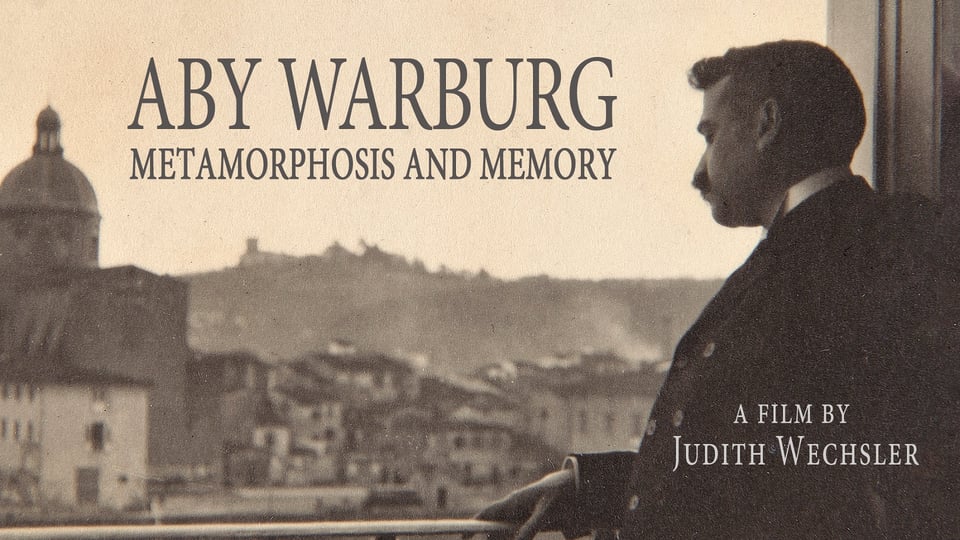
Aby Warburg: Metamorphosis and Memory. Documentary, Biography, 2016. https://www.kanopy.com/en/lapl/video/5913764.
Written, Directed and Produced by Judith Wechsler<br /> Wechsler2016
does my zettelkasten make writing... harder?
Worried about self-plagiarizing in the future? Others like Hans Blumenberg have struck through used cards with red pencil. This could also be done with metadata or other searchable means in the digital realm as well. (See: https://hypothes.is/a/mT8Twk2cEe2bvj8lq2Lgpw)
General problems she faces: 1. Notetaking vs. writing voice (shifting between one and another and not just copy/pasting) 2. discovery during writing (put new ideas into ZK as you go or just keep writing on the page when the muse strikes) 3. Linearity of output: books are linear and ZK is not
Using transclusion may help in the initial draft/zero draft?<br /> ie: ![[example]] (This was mentioned in the comments as well.)
directional vs. indirectional notes - see Sascha Fast's article
Borrowing from the telecom/cable industry, one might call this the zettelkasten "last mile problem". I've also referred to it in the past as the zettelkasten output problem. (See also the description and comments at https://boffosocko.com/2022/07/12/call-for-model-examples-of-zettelkasten-output-processes/ as well as some of the examples linked at https://boffosocko.com/research/zettelkasten-commonplace-books-and-note-taking-collection/)
Many journal articles that review books (written in English) in the last half of the 20th century which include the word zettelkasten have a negative connotation with respect to ZK and frequently mention the problem that researchers/book writers have of "tipping out their ZKs" without the outlining and argument building/editing work to make their texts more comprehensible or understandable.
Ward Cunningham has spoken in the past about the idea of a Markov Monkey who can traverse one's atomic notes in a variety of paths (like a Choose Your Own Adventure, but the monkey knows all the potential paths). The thesis in some sense is the author choosing a potential "best" path (a form of "travelling salesperson problem), for a specific audience, who presumably may have some context of the general area.
Many mention Sonke Ahrens' book, but fail to notice Umberto Eco's How to Write a Thesis (MIT, 2015) and Gerald Weinberg's "The Fieldstone Method (Dorset House, 2005) which touch a bit on these composition problems.
I'm not exactly sure of the particulars and perhaps there isn't enough historical data to prove one direction or another, but Wittgenstein left behind a zettelkasten which his intellectual heirs published as a book. In it they posit (in the introduction) that rather than it being a notetaking store which he used to compose longer works, that the seeming similarities between the ideas in his zettelkasten and some of his typescripts were the result of him taking his typescripts and cutting them up to put into his zettelkasten. It may be difficult to know which direction was which, but my working hypothesis is that the only way it could have been ideas from typescripts into his zettelkasten would have been if he was a "pantser", to use your terminology, and he was chopping up ideas from his discovery writing to place into contexts within his zettelkasten for later use. Perhaps access to the original physical materials may be helpful in determining which way he was moving. Cross reference: https://hypothes.is/a/BptoKsRPEe2zuW8MRUY1hw
Some helpful examples: - academia : Victor Margolin - fiction/screenwriting: - Dustin Lance Black - Vladimir Nabokov - others...
1. Zettelkasten for INTERMEDIATE users of Obsidian
Buttons for coprolites and oosik... 🤣
His templates look a lot like some of the work and templates I use to import annotations/notes from Hypothes.is into Obsidian.
Typewriter Tips: Budgeting (AKA How to get cheap typewriters!)
Hunting tips - look for cases, folks they often don't know what's in them or think they're luggage - look under things - negotiate<br /> - bundle items as a group to negotiate<br /> - Tell friends and you'll get an army looking for you
The rise in popularity of typewriters
Didn't do a good job tying typewriters into linotype and letterpress here.
anecdotal evidence for resurgence for love of typewriters....
TYPEWRITER TOUR: How I ended up with 17 typewriters (story time)
California Typewriter got Sara into collecting.
She names her typewriters.
She likes the consistency of the Corona Pacemaker, the IBM Selectric II, and the Olympia Electric.
How to Write Using a Typewriter
Interesting example of an individual writer's process which includes a typewriter.
“Tom Hanks, Typewriter Enthusiast.” CBS News Sunday Morning. CBS, October 15, 2017. https://www.youtube.com/watch?v=UTtDb73NkNM.
What a fantastic documentary. Everyone in Pasadena should be forced to watch this.
We need better answers for these problems....
Satire in the Age of Murdoch and Trump. The Problem With Jon Stewart Podcast, 2023-03-09. https://www.youtube.com/watch?v=pbOiXmMnyw4.
Watched most of this passively while reading on 2023-04-06
Two years later, he produced Mr. De Palma’s comic drama about a disfigured composer who sells his soul, “Phantom of the Paradise,” which has become a cult favorite.
Hypothesis Animated Intro, 2013. https://www.youtube.com/watch?v=QCkm0lL-6lc.
This was an early animation for Hypothes.is as a tool. It was on one of their early homepages and is (still) a pretty good encapsulation of what they do and who they are as a tool for thought.
Kathleen Coleman, “The Thesaurus Linguae Latinae” Paideia Lectures 2022, 2022. https://www.youtube.com/watch?v=s98hTIOW1Ug.
Forschung: Der Thesaurus linguae Latinae. Munich, Germany: Bayerische Akademie der Wissenschaften, 2019. https://www.youtube.com/watch?v=C3Eqt2QBKNs.
https://www.youtube.com/watch?v=geChDY3MQj8
Similar to TUL disk bound notebooks.
Paper is nice for fountain pens.
On the expensive side.
Richards, Olly. Interview with Michel Thomas Publisher Sue Hart, 2017. https://www.youtube.com/watch?v=abjrsATBc5A.
Thomas had a secretive nature and did most communication either over phone or in person. He didn't write letters. Sue Hart felt that it was the result of his experience in World War II. (Potentially relationship with spycraft?)
He was a bit of a showman and enjoyed dropping names. He enjoyed his fame and status. Thomas seemed to enjoy people listening to him and didn't appreciate confrontation and dealt with it by shutting people off and walking away.
Nothing deep here about his method really. All just background.
https://www.tiktok.com/@bronwenlewismusic/video/7103936171306142981<br /> Running up that Hill
Michel Thomas method also includes: - atomic pieces built up as building blocks into larger pieces - lots of encouragement to prevent the feeling of failure
Downsides: - there is no failure mode which can nudge people into a false sense of performance when using their language with actual native speakers
This reviewer indicates that there is some base level of directed mnemonic work going on, but the repetition level isn't such that long term retention (at least in the space repetition sort of way) is a specific goal. We'll need to look into this piece more closely to firm this up, however.
The Michel Thomas Method in a nutshell
https://www.youtube.com/watch?v=U9Xh-by50pI
This video indicates that small mnemonic hooks are inserted for some words in the Michel Thomas method. This was not immediately apparent or seen in the 1997 BBC documentary about his method and wasn't immediately apparent in Harold Goodman's discussion.
Is it apparent in Goodman's session with his nephews? Was it part of Thomas' method originally or was it added later? Is it truly necessary or does it work without it as in the SSiW method which doesn't use it.
The Language Master<br /> BBC - Michel Thomas<br /> [English CC]<br /> [Leg. PT-BR]
Michel Thomas is one of the most brilliant language teachers in the world. His usual clients are movie stars and business leaders. This programme takes him to a Sixth Form College in London to work with school pupils, to test his claim that he can teach anyone a language in a week - with no reading, writing or homework. The film also explores his personal history - as a hero of the French Resistance during WW II.
The Michel Thomas method involves: - slow build up of words, phrases, natural grammar - forced production of the language through practice - positive interaction - patience - no stress - no judgement - encouragement - constant evidence of progress
How does "understanding" of the language evolve out of this method? It's more like revelation rather than understanding...
This method appears much more atomic than that of SSiW (Aran Jones), but some of this is down to the fact that there's a live person who is able to unjudgementally prompt one with pieces which they've missed. The teacher has the context whereas the taped instructors do not. Presumably this sort of interpersonal prompting and context isn't necessarily required, but it can help to better lower the learner's stress and potentially speed up the learning process. It would require some standardization to set up a specific experiment to test between these two modes to tease this data out.
Reference key: [[Levy1997]]<br /> “The Language Master.” 1:33 : 1, color. London, UK: BBC 2, March 23, 1997. https://www.youtube.com/watch?v=O0w_uYPAQic.
My Ten Years With Michel Thomas - Dr. Harold Goodman
Michel Thomas taught languages conversationally in both languages by creating absolutely no pressure or worry and always keeping students in the "now".
Find:<br /> Kaplan, Howard. “The Language Master.” The Jerusalem Report, August 11, 1994.
Watch:<br /> “The Language Master.” 1:33 : 1, color. London, UK: BBC 2, March 23, 1997. https://www.youtube.com/watch?v=O0w_uYPAQic.
1-click Beautiful Screenshots on Windows
Interesting workflow here for taking a screenshot quickly, saving it as a file, saving it to clipboard, and sharing it to various services.
Einblicke in das System der Zettel - Geheimnis um Niklas Luhmanns Zettelkasten, 2015. https://www.youtube.com/watch?v=4veq2i3teVk.
Watched 2023-03-13
Mentioned elsewhere, but there's a segment here that he used whatever paper he happened to have around including the receipts from a brewery, tax papers, and even his children's art papers.
Dans le fichier de Roland Barthes. Bibliothèque nationale de France, 2021. https://www.youtube.com/watch?v=eQX7jWqoq4o.
Watched 2023-03-03 at 11:55 AM
New book 'Myth America' examines misinformation in U.S. history<br /> https://www.youtube.com/watch?v=HLAPfRqBHYs
https://www.youtube.com/watch?v=mwKjuBvNi40
Ben Rowland uses index cards to outline the plot of his screenplays. This is a common practice among screenwriters. Interestingly he only uses it for plot outlining and not for actual writing the way other writers like Vladimir Nabokov may have. Both Benjamin Rowland and Duston Lance Black use cards for outlining but not at the actual writing stage.
<small><cite class='h-cite via'>ᔥ <span class='p-author h-card'>Billy Oppenheimer</span> in The Notecard System: Capture, Organize, and Use Everything You Read, Watch, and Listen To (<time class='dt-published'>11/03/2022 16:53:44</time>)</cite></small>
Nothing stupendous here. Mostly notes on cards and then laid out to outline. Most of the writing sounds like it happens at the transfer stage rather than the card and outline stage.
This process seems more akin to that of Victor Margolin than Vladimir Nabokov.
Stop Procrastinating With Note-Taking Apps Like Obsidian, Roam, Logseq https://www.youtube.com/watch?v=baKCC2uTbRc by Sam Matla
sophisticated procrastination - tweaking one's system(s) or workflow with the anticipation it will help them in the long run when it is generally almost always make-work which helps them feel smart and/or productive. Having measurable results which can be used against specific goals will help weed this problem out.
Part 2: Search & Inspect. Denote as a Zettelkasten, 2023. https://share.tube/w/4ad929jjNYMLc6eRppVQmc.
His file naming convention and search operation in this is really fantastic:
20230226155400==51a3b--note-title__tag1_tag2.org
This allows one to search the file by date/time, signature, title or tags, by using the =, - or _ along with text.
Beyond this however, there's a fair amount of context to build to use this system including using regex search.
Part 1: What Do We Need? Denote as a Zettelkasten, 2023. https://share.tube/w/mu7fMr5RWMqetcZRXutSGF.
It starts and ends with Denote, but has an excellent overview of the folgezettel debate (or should one use Luhmann-esque identifiers within their digital zettelkasten system?)
Some of the tension within the folgezettel debate comes down to those who might prefer more refined evergreen (reusable) notes in many contexts, or those who have potentially shorter notes that fit within a train of thought (folgezettel) which helps to add some of the added context.
The difference is putting in additional up-front work to more heavily decontextualize excerpts and make them reusable in more contexts, which has an uncertain future payoff versus doing a bit less contextualization as the note will speak to it's neighbors as a means of providing some of this context. With respect to reusing a note in a written work, one is likely to remove their notes and their neighbors to provide this context when needed for writing.
(apparently I didn't save this note when I watched it prior to number 2, blech....)
Ahrens, Sönke. “How to Take Smart Notes.” Presented at newcrafts: Professional Developer’s Conference at Paris, France, May 17, 2018. https://www.youtube.com/watch?v=nPOI4f7yCag.
annotations at https://docdrop.org/video/nPOI4f7yCag/
We tend to think in terms of our tools.<br /> ᔥ Christian Tietze in Eco's 'How to Write a Thesis' Available in English at 2015-03-17<br /> (accessed:: 2023-02-23 11:26:16)
https://www.youtube.com/watch?v=kX2p-1afdRA
wrt: https://hypothes.is/a/uDIE9q70Ee2xxiszhAZGOQ<br /> I'll give him a little credit that he's at least aliasing his notes as he "files" them, but I suspect that over time he's making more work for himself than not. This seems unsustainable over time.
It also seems like he's doing a lot more make-work here than he otherwise ought to?
Notice that he's making this to sell a course: https://joshduffney.gumroad.com/l/take-smart-notes-obsidian
He doesn't directly link the GitHub repo as he indicated, but it can be found here: https://github.com/Duffney/smart-notes. In looking at it, the timestamped notes will become problematic.
This was from 2021-10-17. I'm curious what his "system" looks like today? Has it changed through time and experience?
https://www.youtube.com/watch?v=47p2TfnEewc
academics: Joshua Fishman and Bernard Spolsky
https://www.youtube.com/watch?v=LyBIT0Q7fOc
Dealing with someone who is passive aggressive:
https://www.youtube.com/watch?v=43Fag8ZQcz4
Pretty powerful video here.
Reminiscent of Michael Sheen's World Cup inspiration speech: <br /> https://www.youtube.com/watch?v=1fpV0OFC0vc
https://www.youtube.com/watch?v=pZgMpjjgCRA
Combining sketchnotes with Cornell Notes in a fairly straightforward manner.
He mentions anecdotally that teachers who have used custom icons for their subjects see students drawing some of them on their exam papers as mental associative tags. This is the same sort of use that drolleries had in medieval manuscripts.
https://www.youtube.com/watch?v=vLV4EDBtuas
Quotes I've made that I never expected to be excerpted... 🤣
Perry analogizes many people's experience of writing to passing a kidney stone and then contrasts it with me talking about the Mozart composing/cow peeing analogy.
https://www.youtube.com/watch?v=5qGRPOzMWnA
Watched the first 46:39 on 2023-02-02. His personal communication style is a bit off-putting, but remedied slightly by watching at 1.25 or 1.5x speed. He's broadly covering pieces directly from his text which seems much more compact and elegant. Questions from the viewers in real time is a bit muddy with respect to understanding what they're saying.
I gave up on the video due to streaming issues.
https://www.thecrimson.com/article/2023/2/2/donovan-forced-leave-hks/
This is a massive loss for HKS, but a potential major win for the school that picks the project up.
It seems to be a sad use of "rules" to shut down a project which may not jive with an administrations' perspective/needs.
Read on Fri 2023-02-03 at 7:14 PM
https://www.youtube.com/watch?v=QuzRkac2n-c
Beginning to realize that some of the pattern that I describe as productivity porn is more likely done as a means of creativity, art, or even therapeutic use.
In this one (at the end), she's got a notebook specifically for putting washi tape into because it's calming and therapeutic.
https://www.youtube.com/watch?v=Q2zY7l2tzoQ
Ugh... another short mediocre introduction. Repeats the origin myth.
Seems to take a very Ahrens' based framing, but screws up a few pieces. More focus on "hub notes" and completely misses the idea of an index somehow?!?
The last section of 2+ minutes really goes off the rails and recommends converting notes from other places and muddles about "Favorite problems" (ostensibly a reference to Feynman's 12 Favorite Problems, but isn't direct about it?).
Also encourages the "Feynman technique"...
3.1 Guest Lecture: Lauren Klein » Q&A on "What is Feminist Data Science?"<br /> https://www.complexityexplorer.org/courses/162-foundations-applications-of-humanities-analytics/segments/15631
https://www.youtube.com/watch?v=c7HmG5b87B8
Patricia Hill Collins' matrix of domination - no hierarchy, thus the matrix format
What are other broad theories of power? are there schools?
Bright, Liam Kofi, Daniel Malinsky, and Morgan Thompson. “Causally Interpreting Intersectionality Theory.” Philosophy of Science 83, no. 1 (January 2016): 60–81. https://doi.org/10.1086/684173.
about Bayesian modeling for intersectionality
Where is Foucault in all this? Klein may have references, as I've not got the context.
How do words index action? —Laura Klein
The power to shape discourse and choose words - relationship to soft power - linguistic memes
Color Conventions Project
20:15 Word embeddings as a method within her research
General result (outside of the proximal research) discussed: women are more likely to change language... references for this?
[[academic research skills]]: It's important to be aware of the current discussions within one's field. (LK)
36:36 quantitative imperialism is not the goal of humanities analytics, lived experiences are incredibly important as well. (DK)
https://www.youtube.com/watch?v=HwkRfN-7UWI
Abolitionist movement
There are some interesting analogies to be drawn between the abolitionist movement in the 1800s and modern day movements like abolition of police and racial justice, etc.
Topic modeling - What would topic modeling look like for corpuses of commonplace books? Over time?
wrt article: Soni, Sandeep, Lauren F. Klein, and Jacob Eisenstein. “Abolitionist Networks: Modeling Language Change in Nineteenth-Century Activist Newspapers.” Journal of Cultural Analytics 6, no. 1 (January 18, 2021). https://doi.org/10.22148/001c.18841. - Brings to mind the difference in power and invisible labor between literate societies and oral societies. It's easier to erase oral cultures with the overwhelm available to literate cultures because the former are harder to see.
How to find unbiased datasets to study these?
aspirational abolitionism driven by African Americans in the 1800s over and above (basic) abolitionism
https://www.youtube.com/watch?v=YU5pk-Hc758
Dr. Gwilym Morus-Baird
https://www.youtube.com/watch?v=NPqjgN-pNDw
When did the switch in commonplace book framing did the idea of "second brain" hit? (This may be the first time I've seen it personally. Does it appear in other places?) Sift through r/commonplace books to see if there are mentions there.
By keeping one's commonplace in an analog form, it forces a greater level of intentionality because it's harder to excerpt material by hand. Doing this requires greater work than arbitrarily excerpting almost everything digitally. Manual provides a higher bar of value and edits out the lower value material.
https://www.youtube.com/watch?v=5u8lp0axRgk
Possibly the best e-ink/e-note/e-reader currently on the market.
https://www.youtube.com/watch?v=ifDi2SsQjQM
Comparing the various e-note/e-reader devices, Kit Betts-Masters ranks them overall as follows: - Boox Note Air 2 - Supernote A5X - Remarkable 2 - Bigme Inknote - Kobo Elipsa - Boyue P10
Erasure of culture
Memory and place names
"A nation which forgets its past has no future." - Winston Churchill (check quote and provenance)
https://www.youtube.com/watch?v=vZklLt80wqg
Looking at three broad ideas with examples of each to follow: - signals - patterns - pattern making, pattern breaking
Jane Kent for witchcraft
250 years with ~200,000 trial transcripts
Can be viewed as: - storytelling, - history - information process of signals
All the best trials include the words "Covent Garden".
Example: 1163. Emma Smith and Corfe indictment for stealing.
19:45 Norbert Elias. The Civilizing Process. (book)
How do people understand the act of diary-writing?
Diaries are:
Leo Tolstoy
a convenient way to evaluate the self
Franz Kafka
a means to see, with reassuring clarity [...] the changes which you constantly suffer.
Virginia Woolf'
a kindly blankfaced old confidante
Diary entries in five categories - spirit - routine - literary - material form (talking about the diary itself) - interpersonal (people sharing diaries)
Are there specific periods in which these emerge or how do they fluctuate? How would these change between and over cultures?
The pattern of talking about diaries in this study are relatively stable over the century.
pre-print available of DeDeo's work here
Individuals, institutions, and innovation in the debates of the French Revolution
the idea of revolution through tedium and boredom is fascinating.
speeches broken into combinations of patterns using topic modeling
(what would this look like on commonplace book and zettelkasten corpora?)
emergent patterns from one speech to the next (information theory) question of novelty - hi novelty versus low novelty as predictors of leaders and followers
Robespierre bringing in novel ideas
How do you differentiate Robespierre versus a Muppet (like Animal)? What is the level of following after novelty?
Four parts (2x2 grid) - high novelty, high imitation (novelty with ideas that stick) - high novelty, low imitation (new ideas ignored) - low novelty, high imitation - low novelty, low imitation (discussion killers)
Could one analyze television scripts over time to determine the good/bad, when they'll "jump the shark"?
https://www.youtube.com/watch?v=5pSGniUOyLc
Digital humanities aka Humanities Analytics
5:54 Simon DeDeo mentioned Alastair McKinnon the philosopher in the 60s did a stylopheric study of Kierkegaard pseudonyms - Kierkegaard's Pseudonyms: A New Hierarchy by Alastair McKinnon https://www.jstor.org/stable/20009297
Tools for supplementing research and scholarship
core audience is Ph.D. students